










1 / 10 Questions
0 Points

How many bones are in a giraffe's neck?

Seven

Fourteen

Twenty-five

Forty

Points won
0
Correct score
0%

More Questions

More Articles

Did You Know These Quick Facts About Currency?

Did You Know These Quick Facts About Currency?

⏱️ 5 min read

Currency serves as the lifeblood of global commerce, facilitating billions of transactions every single day. Yet despite its ubiquitous presence in daily life, most people know surprisingly little about the fascinating history, unique characteristics, and remarkable quirks of the money they use. From ancient trade systems to modern digital innovations, currency has evolved dramatically over millennia, accumulating countless interesting facts along the way.

The Ancient Origins of Money

Long before coins and paper bills existed, humans engaged in barter systems, directly exchanging goods and services. The first standardized currency appeared around 600 BCE in Lydia, an ancient kingdom in modern-day Turkey, where merchants created coins from electrum, a naturally occurring alloy of gold and silver. This innovation revolutionized commerce by providing a portable, divisible, and universally accepted medium of exchange.

China independently developed currency systems even earlier, with cowrie shells serving as money as far back as 1200 BCE. The Chinese also pioneered paper money during the Tang Dynasty in the 7th century, though it didn't become widespread until the Song Dynasty. This invention wouldn't reach Europe for another six centuries, demonstrating how advanced Chinese monetary systems were compared to their Western counterparts.

Surprising Facts About Modern Banknotes

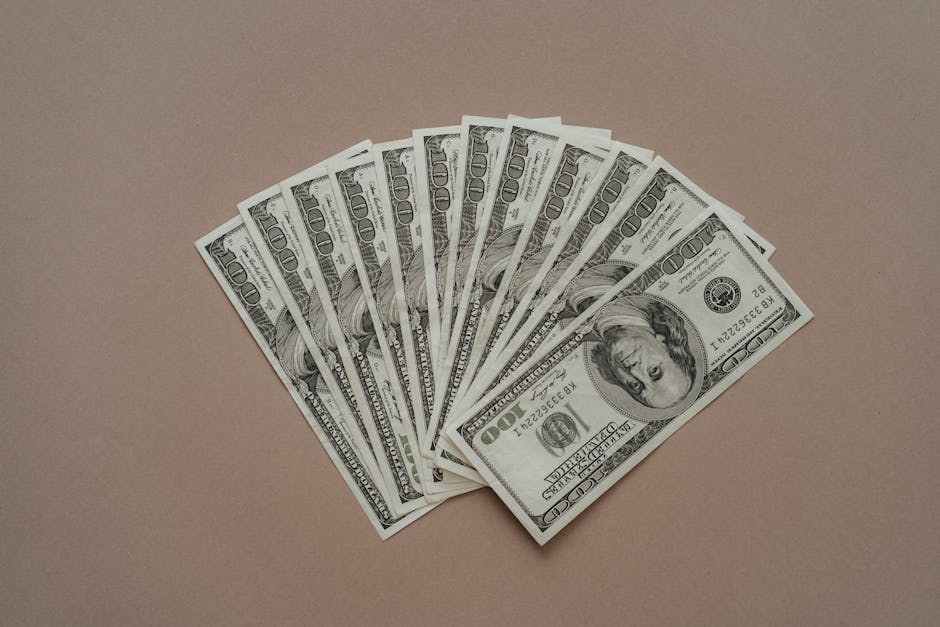
Contemporary paper currency contains numerous security features and unusual characteristics that most people never notice. United States dollar bills, for instance, aren't actually made from paper at all. They consist of a blend of 75% cotton and 25% linen, which explains why they can survive a trip through the washing machine relatively intact. This durable fabric composition allows bills to withstand approximately 4,000 double folds before tearing.

The average lifespan of a dollar bill varies significantly depending on its denomination. A one-dollar bill typically lasts about 6.6 years in circulation, while a hundred-dollar bill can remain in use for approximately 22.9 years. This discrepancy occurs because smaller denominations change hands more frequently, experiencing greater wear and tear.

Hidden Security Measures

Modern banknotes incorporate sophisticated anti-counterfeiting technologies that remain invisible to casual observers. Many currencies include security threads woven into the paper that glow under ultraviolet light, microprinting too small to reproduce accurately with standard copiers, and color-shifting ink that changes appearance when tilted. The euro, for example, contains a holographic stripe, raised printing that can be felt by touch, and a see-through register that aligns perfectly when held up to light.

The Economics of Coin Production

In a curious economic irony, many countries lose money by producing their own coins. In the United States, it costs approximately 2.06 cents to manufacture a single penny and about 8.52 cents to produce a nickel. This means the government loses money on every penny and nickel minted, a situation that has led to ongoing debates about whether these denominations should be discontinued.

Canada addressed this problem in 2013 by eliminating its penny entirely from circulation. Other countries including Australia, Brazil, Finland, Israel, and the Netherlands have made similar decisions. Despite the penny's removal, the Canadian economy continues functioning smoothly, with cash transactions rounded to the nearest five cents.

Unusual Currencies Throughout History

Humanity has used remarkably diverse objects as currency over the centuries. On the Pacific island of Yap, enormous circular stone disks called Rai stones served as money, with some weighing up to four metric tons. Ownership of these immovable stones changed hands through verbal agreements and communal memory rather than physical transfer.

Other peculiar forms of currency have included:

  • Cacao beans in Mesoamerican civilizations, which were so valuable that counterfeiting occurred by filling empty bean husks with dirt
  • Salt in ancient Rome, from which the word "salary" derives
  • Parmesan cheese in Italy, where some banks accept it as collateral for loans
  • Peppercorns in medieval Europe, considered so valuable that rent could be paid with them
  • Squirrel pelts in medieval Russia, which were called "kunas" and gave rise to modern currency terminology

The Smallest and Largest Denominations

The United States once issued currency in denominations far exceeding today's hundred-dollar bills. The largest denomination ever printed for public circulation was the $10,000 bill, featuring Salmon P. Chase, though $100,000 gold certificates existed exclusively for transactions between Federal Reserve Banks. These high-denomination bills were discontinued in 1969 due to concerns about money laundering and organized crime.

Conversely, Hungary holds the record for the highest denomination currency note ever issued: the 100 quintillion pengő note printed in 1946 during a period of hyperinflation. This astronomical figure demonstrates the economic devastation that can occur when currency loses its stability and public confidence.

Digital Currency and the Future of Money

The 21st century has witnessed a dramatic shift toward digital currencies and cashless transactions. Sweden is leading the charge toward becoming the world's first completely cashless society, with many businesses refusing to accept physical currency entirely. In 2020, only 9% of Swedes reported using cash for their most recent purchase, down from 40% just a decade earlier.

Cryptocurrencies represent perhaps the most radical reimagining of currency since the invention of coins. Bitcoin, created in 2009, introduced the concept of decentralized digital money that operates without government control or central bank oversight. While controversial and volatile, cryptocurrencies have sparked serious discussions among economists, regulators, and financial institutions about the future nature of money itself.

These fascinating facts reveal that currency is far more complex and interesting than the simple tools we use for daily transactions. Understanding the history, production, and evolution of money provides valuable insight into human civilization, economic systems, and the innovative ways societies create and exchange value.

Top 10 Most Valuable Sports Franchises Today

Top 10 Most Valuable Sports Franchises Today

⏱️ 6 min read

The global sports industry has evolved into a multi-billion dollar enterprise, with elite franchises commanding valuations that rival major corporations. These organizations represent more than just athletic competition—they are powerful brands that generate revenue through media rights, merchandise, sponsorships, and premium fan experiences. The most valuable sports franchises in the world today span across multiple leagues and continents, reflecting the universal appeal of professional sports and the business acumen of their ownership groups.

The Elite Circle of Sports Franchises

1. Dallas Cowboys - America's Team Dominates Valuation Rankings

The Dallas Cowboys consistently hold the title of the world's most valuable sports franchise, with a valuation exceeding $9 billion. Despite not winning a Super Bowl since 1996, the Cowboys have mastered the art of brand building and revenue generation. Owner Jerry Jones transformed the franchise into a marketing powerhouse, with AT&T Stadium serving as a state-of-the-art venue that hosts not only football games but concerts, college championships, and other major events. The team's merchandising dominance and lucrative sponsorship deals ensure its position at the top remains secure.

2. New York Yankees - Baseball's Billion-Dollar Empire

Valued at approximately $7.1 billion, the New York Yankees represent baseball's most prestigious franchise. With 27 World Series championships and a legacy spanning over a century, the Yankees have built an unparalleled brand in professional sports. Their YES Network provides a dedicated media platform that generates substantial revenue, while Yankee Stadium attracts millions of visitors annually. The franchise benefits from operating in the world's largest media market and maintains one of the most recognizable logos in all of sports.

3. New York Knicks - Basketball's Most Valuable Property

The New York Knicks hold a valuation of around $6.6 billion, making them the NBA's most valuable franchise despite limited on-court success in recent decades. Madison Square Garden's iconic status and prime Manhattan location provide the Knicks with unmatched revenue potential. The team benefits from the NBA's global popularity and New York City's status as a international business hub. Premium seating and corporate sponsorships command astronomical prices, reflecting the prestige associated with Knicks ownership and attendance.

4. Golden State Warriors - Silicon Valley's Basketball Jewel

Valued at approximately $7 billion, the Golden State Warriors have experienced meteoric growth in franchise value, particularly following their dynasty years that produced four NBA championships between 2015 and 2022. The move to the Chase Center in San Francisco's Mission Bay neighborhood positioned the franchise at the intersection of sports and technology. The team attracts investment and sponsorships from Silicon Valley's tech giants, while their success has built a global fanbase that extends far beyond the Bay Area.

5. Los Angeles Lakers - Hollywood's Basketball Institution

The Los Angeles Lakers command a valuation near $6.4 billion, cementing their status as one of basketball's most storied franchises. With 17 NBA championships and a history of superstar players from Magic Johnson to Kobe Bryant to LeBron James, the Lakers have maintained consistent excellence and cultural relevance. The franchise benefits from Los Angeles's entertainment industry connections, celebrity fanbase, and global media presence. Their partnership with the Crypto.com Arena and premium broadcasting deals ensure continued financial success.

6. New England Patriots - Dynasty-Built Football Fortune

Valued at approximately $6.4 billion, the New England Patriots transformed from a struggling franchise into one of sports' most valuable properties. Under owner Robert Kraft's leadership and the Tom Brady-Bill Belichick era that delivered six Super Bowl championships, the Patriots built a winning culture that translated into massive financial gains. Gillette Stadium serves as a year-round revenue generator, while the team's success created a passionate fanbase throughout New England and beyond.

7. New York Giants - Metropolitan Football Power

The New York Giants maintain a valuation around $6.3 billion, reflecting the value of operating in the nation's largest media market. Sharing MetLife Stadium with the Jets, the Giants benefit from one of the NFL's most modern facilities while carrying a rich history that includes four Super Bowl championships. The franchise's broad appeal across the New York metropolitan area and strong corporate partnerships ensure consistent revenue generation regardless of on-field performance.

8. Los Angeles Rams - Super Bowl Success Drives Value

With a valuation approaching $6.2 billion, the Los Angeles Rams have capitalized on their return to the nation's second-largest market. The opening of SoFi Stadium—a $5 billion architectural marvel—provided the franchise with one of sports' most impressive venues. The Rams' Super Bowl LVI victory in their home stadium validated the investment, while Los Angeles's entertainment connections and corporate sponsorship opportunities continue driving franchise value upward.

9. Chicago Bears - Historic Franchise with Modern Ambitions

The Chicago Bears hold a valuation near $6.1 billion, supported by their status as one of the NFL's founding franchises and a passionate Midwest fanbase. Despite playing in one of the league's oldest stadiums, the Bears benefit from Chicago's major market status and plans for a new stadium promise to increase value further. The franchise's rich history, including nine NFL championships, provides cultural cache that translates into strong merchandising and sponsorship revenues.

10. Real Madrid - Soccer's Global Financial Leader

Real Madrid, valued at approximately $6.1 billion, represents the most valuable soccer franchise globally. The Spanish giant's 14 UEFA Champions League titles and roster of legendary players have built worldwide recognition. Unlike North American franchises, Real Madrid operates under a membership model, yet generates enormous revenue through broadcasting rights across multiple continents, merchandising to a global fanbase, and lucrative sponsorships. The Santiago Bernabéu Stadium's recent renovation further enhances the club's revenue-generating capabilities.

The Business Behind the Billions

These ten franchises demonstrate that sustained value comes from multiple revenue streams beyond ticket sales. Media rights deals, particularly in the age of streaming, provide guaranteed income that insulates franchises from performance fluctuations. Stadium ownership or favorable lease agreements allow teams to capitalize on premium seating, luxury suites, and non-game day events. Merchandising and licensing extend brand reach globally, while sponsorships from major corporations add substantial annual revenue.

The concentration of top-valued franchises in major metropolitan markets—particularly New York and Los Angeles—highlights the importance of market size and corporate presence. However, franchises like the Dallas Cowboys prove that exceptional branding and business strategy can overcome geographic limitations. As sports continue globalizing and new revenue opportunities emerge through technology and media, these valuations will likely continue their upward trajectory, cementing professional sports franchises as some of the world's most valuable entertainment properties.