
⏱️ 5 min read
Currency serves as the lifeblood of global commerce, facilitating billions of transactions every single day. Yet despite its ubiquitous presence in daily life, most people know surprisingly little about the fascinating history, unique characteristics, and remarkable quirks of the money they use. From ancient trade systems to modern digital innovations, currency has evolved dramatically over millennia, accumulating countless interesting facts along the way.
The Ancient Origins of Money
Long before coins and paper bills existed, humans engaged in barter systems, directly exchanging goods and services. The first standardized currency appeared around 600 BCE in Lydia, an ancient kingdom in modern-day Turkey, where merchants created coins from electrum, a naturally occurring alloy of gold and silver. This innovation revolutionized commerce by providing a portable, divisible, and universally accepted medium of exchange.
China independently developed currency systems even earlier, with cowrie shells serving as money as far back as 1200 BCE. The Chinese also pioneered paper money during the Tang Dynasty in the 7th century, though it didn’t become widespread until the Song Dynasty. This invention wouldn’t reach Europe for another six centuries, demonstrating how advanced Chinese monetary systems were compared to their Western counterparts.
Surprising Facts About Modern Banknotes
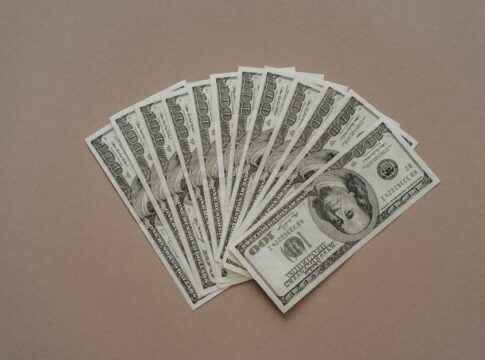
Contemporary paper currency contains numerous security features and unusual characteristics that most people never notice. United States dollar bills, for instance, aren’t actually made from paper at all. They consist of a blend of 75% cotton and 25% linen, which explains why they can survive a trip through the washing machine relatively intact. This durable fabric composition allows bills to withstand approximately 4,000 double folds before tearing.
The average lifespan of a dollar bill varies significantly depending on its denomination. A one-dollar bill typically lasts about 6.6 years in circulation, while a hundred-dollar bill can remain in use for approximately 22.9 years. This discrepancy occurs because smaller denominations change hands more frequently, experiencing greater wear and tear.
Hidden Security Measures
Modern banknotes incorporate sophisticated anti-counterfeiting technologies that remain invisible to casual observers. Many currencies include security threads woven into the paper that glow under ultraviolet light, microprinting too small to reproduce accurately with standard copiers, and color-shifting ink that changes appearance when tilted. The euro, for example, contains a holographic stripe, raised printing that can be felt by touch, and a see-through register that aligns perfectly when held up to light.
The Economics of Coin Production
In a curious economic irony, many countries lose money by producing their own coins. In the United States, it costs approximately 2.06 cents to manufacture a single penny and about 8.52 cents to produce a nickel. This means the government loses money on every penny and nickel minted, a situation that has led to ongoing debates about whether these denominations should be discontinued.
Canada addressed this problem in 2013 by eliminating its penny entirely from circulation. Other countries including Australia, Brazil, Finland, Israel, and the Netherlands have made similar decisions. Despite the penny’s removal, the Canadian economy continues functioning smoothly, with cash transactions rounded to the nearest five cents.
Unusual Currencies Throughout History
Humanity has used remarkably diverse objects as currency over the centuries. On the Pacific island of Yap, enormous circular stone disks called Rai stones served as money, with some weighing up to four metric tons. Ownership of these immovable stones changed hands through verbal agreements and communal memory rather than physical transfer.
Other peculiar forms of currency have included:
- Cacao beans in Mesoamerican civilizations, which were so valuable that counterfeiting occurred by filling empty bean husks with dirt
- Salt in ancient Rome, from which the word “salary” derives
- Parmesan cheese in Italy, where some banks accept it as collateral for loans
- Peppercorns in medieval Europe, considered so valuable that rent could be paid with them
- Squirrel pelts in medieval Russia, which were called “kunas” and gave rise to modern currency terminology
The Smallest and Largest Denominations
The United States once issued currency in denominations far exceeding today’s hundred-dollar bills. The largest denomination ever printed for public circulation was the $10,000 bill, featuring Salmon P. Chase, though $100,000 gold certificates existed exclusively for transactions between Federal Reserve Banks. These high-denomination bills were discontinued in 1969 due to concerns about money laundering and organized crime.
Conversely, Hungary holds the record for the highest denomination currency note ever issued: the 100 quintillion pengő note printed in 1946 during a period of hyperinflation. This astronomical figure demonstrates the economic devastation that can occur when currency loses its stability and public confidence.
Digital Currency and the Future of Money
The 21st century has witnessed a dramatic shift toward digital currencies and cashless transactions. Sweden is leading the charge toward becoming the world’s first completely cashless society, with many businesses refusing to accept physical currency entirely. In 2020, only 9% of Swedes reported using cash for their most recent purchase, down from 40% just a decade earlier.
Cryptocurrencies represent perhaps the most radical reimagining of currency since the invention of coins. Bitcoin, created in 2009, introduced the concept of decentralized digital money that operates without government control or central bank oversight. While controversial and volatile, cryptocurrencies have sparked serious discussions among economists, regulators, and financial institutions about the future nature of money itself.
These fascinating facts reveal that currency is far more complex and interesting than the simple tools we use for daily transactions. Understanding the history, production, and evolution of money provides valuable insight into human civilization, economic systems, and the innovative ways societies create and exchange value.