
By TrivBits, History Desk — Published November 24, 2026
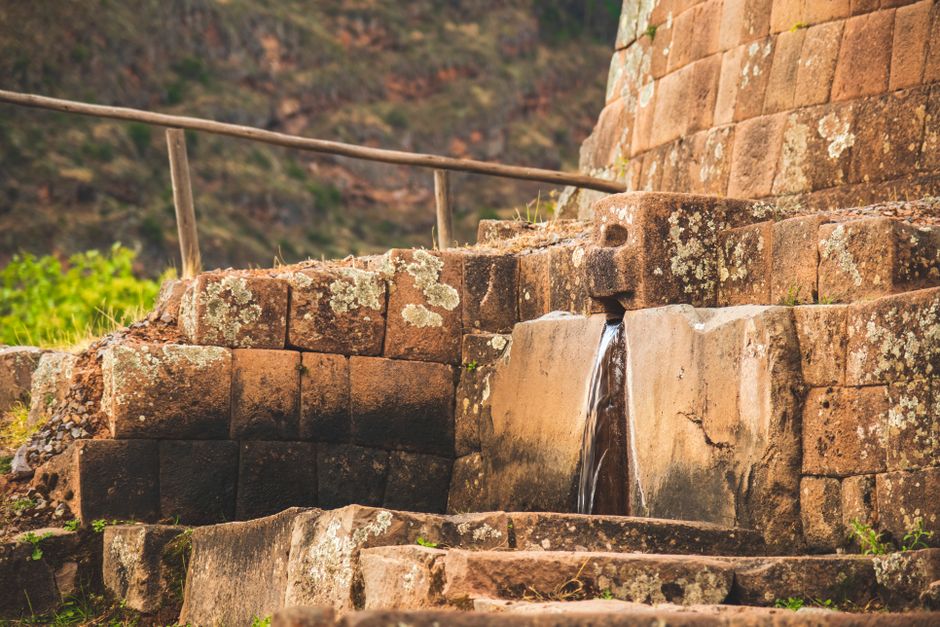
Table of Contents
- Key Takeaways
- The Mystery Behind Inca Engineering Feats in Ancient Civilizations
- Nine Engineering Achievements That Defy Modern Understanding
- Comparing Inca Construction to Modern Methods
- Why These Engineering Mysteries Matter Today
- Frequently Asked Questions
- Sources
The Inca Empire dominated western South America for centuries, constructing some of the most remarkable structures in human history. What makes these inca engineering feats truly astounding is that modern scientists, armed with advanced technology and centuries of accumulated knowledge, still struggle to understand how this ancient civilization achieved such precision and durability without the wheel, iron tools, or written plans.
From towering mountain cities to earthquake-proof walls, the Inca left behind puzzles that challenge our assumptions about what was possible in the past. Let’s explore nine engineering accomplishments that continue to baffle researchers today.
Key Takeaways
- The Inca built structures using massive stones fitted so precisely that not even a blade can slip between them, without mortar or modern tools
- Many Inca constructions have survived devastating earthquakes that destroyed later Spanish colonial buildings
- The empire’s road system stretched over 25,000 miles through some of the world’s most challenging terrain
- Inca engineers manipulated water with sophisticated hydraulic systems that still function today
- The civilization thrived at extreme altitudes where modern construction faces significant challenges
- Most Inca building techniques were never documented and remain subjects of ongoing scientific debate
The Mystery Behind Inca Engineering Feats in Ancient Civilizations
The Inca Empire flourished during the 15th and early 16th centuries, building an empire that stretched from modern-day Colombia to Chile. Unlike other great civilizations of that era, the Inca achieved their architectural marvels without several technologies historians typically associate with advanced construction. They had no written language to record their methods, no wheeled vehicles to transport materials, and no iron tools to shape the incredibly hard stones they used.
This historical context makes their accomplishments even more remarkable. When Spanish conquistadors arrived in the 1530s, they were astounded by what they found. Many colonial-era chroniclers documented their amazement, yet the actual techniques died with the empire. Today’s engineers and archaeologists continue studying these sites, proposing theories but rarely reaching consensus on how the Inca accomplished what they did.
Nine Engineering Achievements That Defy Modern Understanding
1. Polygonal Stone Masonry With Impossible Precision
The most iconic inca engineering feats involve massive stones cut into complex, irregular shapes that fit together with breathtaking precision. In Cusco and other sites, you’ll find walls where multi-ton boulders with dozens of angles interlock perfectly. No mortar holds them together. The joints are so tight that even after centuries of earthquakes and weathering, you cannot insert a knife blade between stones. Modern stonemasons, even with laser-guided tools, find this level of precision extraordinarily difficult to replicate. The Inca somehow achieved it with bronze chisels and stone hammers.
2. Earthquake-Resistant Architecture
Cusco sits in a seismically active zone. Over the centuries, powerful earthquakes have repeatedly struck the region, toppling Spanish colonial churches and modern buildings. Yet Inca walls remain standing. Their secret lies in a technique called ashlar masonry, where stones are cut to fit so precisely that they can move slightly during seismic activity without collapsing. The stones actually “dance” during earthquakes, then settle back into place. Modern engineers study this flexibility, recognizing that the Inca understood principles of seismic engineering that weren’t formally described until centuries later.
3. Machu Picchu’s Drainage System
Machu Picchu receives substantial rainfall, yet the site has never experienced the flooding or erosion that would typically destroy a mountain settlement. The Inca built an intricate drainage system with approximately 130 channels that efficiently direct water away from structures and prevent soil saturation. These channels were engineered with precise gradients that maintain proper water flow. After more than 500 years, this system still functions effectively. Modern hydrologists marvel at how the Inca calculated the necessary slopes and capacities without contemporary surveying instruments.
4. The Sacsayhuamán Megalithic Walls
Just outside Cusco, the fortress of Sacsayhuamán features some of the largest stones ever used in construction. Some blocks weigh over 120 tons. They were quarried from sites miles away, transported across difficult terrain, lifted into place, and fitted with the same impossible precision found elsewhere. No one knows for certain how the Inca moved these massive stones. Theories range from earthen ramps to sophisticated pulley systems, but none fully explains the logistics. The stones’ weight would challenge modern cranes and trucks.
5. Agricultural Terraces at Extreme Altitudes
The Inca built thousands of agricultural terraces throughout their mountainous empire, some at altitudes exceeding 13,000 feet. These weren’t simple stepped fields. Each terrace incorporated multiple engineered layers: large stones for drainage at the bottom, smaller stones above, then sand, then topsoil. This sophisticated design prevented erosion, regulated temperature, and optimized water distribution. The terraces created microclimates that allowed crops to thrive in otherwise inhospitable conditions. Many still function today, and some Andean communities continue using them for farming.
6. The Qhapaq Ñan Road Network
The Inca road system spanned more than 25,000 miles, connecting the entire empire from coastal deserts to mountain peaks to jungle lowlands. This wasn’t just trails worn by foot traffic. The Inca built paved roads, suspension bridges, tunnels through rock, and staircases carved into cliffsides. The roads maintained consistent widths and grades despite traversing some of Earth’s most challenging geography. Without surveying technology or maps as we know them, Inca engineers plotted routes that remain impressive by modern standards. Some sections are still in use today.
7. Rope Bridges Spanning Massive Gorges
To connect their road network across deep canyons, the Inca wove suspension bridges from grass. These weren’t primitive rope swings. The bridges were sophisticated engineering projects, some spanning over 150 feet, strong enough to support laden llamas and human traffic. The Q’eswachaka bridge, still rebuilt annually using traditional methods, demonstrates the complexity involved. The cables are woven from specific grass varieties in patterns that distribute weight effectively. The engineering principles mirror modern suspension bridge design, yet the Inca developed them independently using biodegradable materials.
8. Water Management at Tipon
The Tipon archaeological site showcases Inca hydraulic engineering at its finest. A series of fountains, canals, and waterfalls demonstrates precise control over water pressure and flow. The channels are angled perfectly to maintain consistent water velocity. The fountains operate without pumps, relying purely on gravity and careful calculation of elevation changes. Water flows through the system as reliably today as it did centuries ago. Hydraulic engineers studying Tipon have found that the Inca understood fluid dynamics concepts that Western science didn’t formally describe until much later.
9. Stone Shaping Without Iron Tools
Perhaps the most fundamental mystery is how the Inca shaped their stones at all. They worked with granite, andesite, and other extremely hard rocks. Their tools were bronze chisels and stone hammers, materials softer than the rocks they were cutting. Some researchers theorize they used wooden wedges that expanded when wet. Others suggest they employed a lost technique involving plants or minerals that could soften stone. Experimental archaeology has replicated some results, but no theory fully explains how they achieved such precision on such hard materials so efficiently. The technique remains one of history’s best-kept secrets.
Comparing Inca Construction to Modern Methods
| Aspect | Inca Methods | Modern Equivalents |
|---|---|---|
| Stone Cutting | Bronze tools, stone hammers, unknown techniques | Diamond saws, laser cutting, pneumatic tools |
| Earthquake Resistance | Flexible ashlar masonry, no mortar | Steel reinforcement, shock absorbers, base isolation |
| Heavy Stone Transport | Human labor, possibly ramps and rollers | Cranes, hydraulic lifts, heavy machinery |
| Precision Measurement | Unknown methods, possibly templates | Laser levels, GPS, computer-aided design |
| Construction Time | Decades for major projects | Years with modern equipment |
Why These Engineering Mysteries Matter Today
Understanding Inca construction techniques isn’t just academic curiosity. Modern engineers face challenges the Inca solved centuries ago. Building earthquake-resistant structures in seismic zones remains a critical concern. Sustainable construction using local materials is increasingly important. Water management in mountainous terrain affects millions of people. The Inca accomplished all this without fossil fuels, electricity, or industrial manufacturing.
Their methods also challenge assumptions about technological progress. We often imagine history as a straight line from primitive to advanced. The Inca remind us that ancient civilizations developed sophisticated solutions perfectly adapted to their environments. Some of their techniques might actually be superior to modern approaches in specific contexts. Several contemporary projects in Peru have incorporated traditional Inca engineering principles, finding them more effective than imported modern methods.
Frequently Asked Questions
Did the Inca have any form of written plans or blueprints?
No, the Inca had no written language as we understand it. They used quipu, a system of knotted strings, primarily for record-keeping and accounting. How they communicated complex architectural plans remains unknown. Most likely, they relied on oral tradition, physical models, and master builders who held knowledge passed down through generations. This makes their precision even more remarkable.
How long did it take the Inca to build structures like Machu Picchu?
Machu Picchu was likely built over several decades during the mid-15th century, though exact timelines are debated. Major Inca construction projects typically took many years, involving thousands of workers fulfilling their labor obligations to the empire. The precise stonework couldn’t be rushed, and transporting materials to remote mountain sites was time-intensive even with large workforces.
Could modern engineers replicate Inca construction today?
With modern tools, engineers can create similar-looking structures, but replicating the exact Inca methods remains challenging. Experimental archaeologists have attempted to recreate Inca stonework using only period-appropriate tools, with mixed success. While they can shape stones, achieving the same precision and efficiency the Inca demonstrated has proven difficult. Some techniques appear to be genuinely lost to history.
Why did the Spanish conquerors not learn these building techniques?
The Spanish conquest was violent and rapid, destroying much of Inca society and its knowledge systems. The Spanish considered their own building methods superior and showed little interest in learning indigenous techniques. Master Inca builders either died, were enslaved, or deliberately didn’t share their knowledge with conquerors. By the time anyone recognized the value of these techniques, the knowledge had largely disappeared.