The burning of the Library of Alexandria stands as one of history's most mourned cultural catastrophes—except it didn't happen the way most people imagine. The truth about the Library of Alexandria is far messier than a single dramatic inferno erasing humanity's knowledge in one night. This ancient institution, which housed countless scrolls from across the Mediterranean world, met its end not through one cataclysmic event but through a slow decline spanning several centuries. Understanding what really happened requires looking past Hollywood dramatics to examine the complex history of this legendary center of learning.
The library's fate reflects the turbulent era of its existence, caught between shifting empires and the religious transformations that reshaped the ancient world. No single villain destroyed it, and no exact date marks its demise.
Key Takeaways
The Library of Alexandria was likely destroyed gradually over several centuries, not in a single catastrophic fire
Multiple incidents damaged the library complex, including Julius Caesar's military campaign in 48 BCE, attacks in the third century CE, and possibly religious conflicts in the fourth century
Ancient sources disagree significantly about when and how the library met its end, making definitive conclusions impossible
The library was part of a larger research institution called the Mouseion, dedicated to the Muses and funded by Egypt's Ptolemaic dynasty
Estimates of the library's collection range from 40,000 to 400,000 scrolls, though exact numbers remain uncertain
The loss represents not just books but irreplaceable works of literature, science, and philosophy from Mediterranean civilizations
What the Library Actually Was
Founded in the third century BCE under the Ptolemaic rulers of Egypt, the Library of Alexandria formed part of the Mouseion—essentially the ancient world's first major research university. The Ptolemies, successors to Alexander the Great's empire in Egypt, sought to make Alexandria the intellectual capital of the Mediterranean. They didn't just collect scrolls; they employed scholars, funded research, and created an environment where knowledge from Greek, Egyptian, Persian, and other civilizations could be studied and preserved.
The library's collection methods were aggressive. Ships docking at Alexandria's harbor had their books confiscated for copying. The originals sometimes stayed in Alexandria while copies went back to the owners. Ptolemaic agents scoured the Mediterranean purchasing texts. The ambition was comprehensive: to gather all human knowledge in one place.
Scholars at the Mouseion made remarkable contributions. Eratosthenes calculated Earth's circumference with surprising accuracy. Euclid wrote his foundational geometry texts there. Astronomers mapped the stars, doctors studied anatomy, and poets composed verses that would influence literature for centuries—at least, the ones that survived.
The Multiple "Destructions" Throughout History
The first major damage likely occurred in 48 BCE during Julius Caesar's military campaign in Alexandria. Caesar set fire to Egyptian ships in the harbor during his involvement in the civil war between Cleopatra and her brother. Ancient historians report that this fire spread to buildings near the docks, potentially destroying part of the library's collection or warehouses holding scrolls. But Caesar's fire almost certainly didn't destroy the main library building.
The library appears in historical records for centuries after Caesar's time. The Roman emperor Claudius added a new wing in the first century CE. Scholars continued working there into the third century. But Alexandria suffered significant damage during the crisis of the third century, when the Roman Empire faced invasions, civil wars, and economic collapse. The emperor Aurelian's forces damaged much of the city's royal quarter—where the main library stood—during fighting in 272 CE.
By the fourth century CE, the library's fate becomes even murkier. The rise of Christianity transformed Alexandria. The Serapeum, a temple complex that housed a "daughter library," was destroyed in 391 CE amid religious conflicts between pagans and Christians. Whether significant numbers of scrolls remained there by that point is unknown. Some scholars suggest the main library had already ceased functioning decades or even centuries earlier, its collection dispersed, damaged, or simply neglected as Alexandria's fortunes declined.
Why the Myths Persist About a Single Catastrophe
The dramatic story of knowledge going up in flames in one terrible moment appeals to our sense of tragedy. It's cleaner than the messy reality of gradual institutional decline, budget cuts, changing priorities, and the slow deterioration of papyrus scrolls in a humid climate. Popular culture reinforces the single-fire narrative because it creates a clear villain and a definable loss.
Medieval Islamic sources sometimes attributed the library's destruction to the Muslim conquest of Egypt in 641 CE, claiming the caliph ordered the scrolls burned. Modern historians largely reject this account as a fabrication from centuries later, designed to discredit Muslim rulers. No contemporary sources support it, and the story first appears in writings from the 1200s—six centuries after the alleged event.
The truth is less cinematically satisfying. The library probably died the way most institutions do: through a combination of disasters, funding problems, political instability, and changing cultural priorities. Ancient libraries required constant maintenance and copying to preserve their collections, as papyrus scrolls deteriorated. When resources dried up and scholars left, the collection would have degraded naturally.
What Was Actually Lost
The library's destruction—however it occurred—represents an incalculable loss to human knowledge. Works by ancient playwrights, historians, scientists, and philosophers that existed nowhere else simply vanished. We know of many lost texts only through references in surviving works. Entire plays by Sophocles and Euripides. Scientific treatises. Historical accounts of empires and civilizations. Mathematical discoveries that had to be rediscovered centuries later.
Consider what survived: we have roughly 7 of Sophocles' 120 plays. A fraction of the hundreds of Greek tragedies and comedies performed in ancient theaters. The mathematical and scientific knowledge preserved by scholars in Baghdad and other centers during the medieval period represents only a portion of what Alexandria once held. The loss shaped which aspects of ancient civilization we can access today.
Frequently Asked Questions
Did Julius Caesar really burn down the Library of Alexandria?
Caesar's forces likely damaged part of the library's collection during fighting in 48 BCE, but historical evidence shows the library continued functioning for centuries afterward. The main library building probably survived his military campaign, though warehouses containing scrolls near the harbor may have burned.
How many books were in the Library of Alexandria?
Ancient sources provide wildly different estimates, ranging from 40,000 to over 400,000 scrolls. The exact size remains unknown, and ancient "books" were scrolls rather than bound volumes, making direct comparisons to modern libraries difficult. The collection was certainly the largest in the ancient Mediterranean world.
When did the Library of Alexandria finally close?
No definitive date exists for the library's end. It likely declined gradually between the third and fifth centuries CE due to various disasters, civil conflicts, and reduced funding. By the time of the Arab conquest in 641 CE, the library had probably been defunct for centuries.
Could any scrolls from the Library of Alexandria still exist?
While possible, it's highly unlikely any scrolls from the library survive today. Papyrus deteriorates over time, especially in humid conditions. Some texts from the library may have been copied and preserved elsewhere, meaning their content survived even if the original scrolls did not.
The real tragedy isn't just what burned or crumbled, but that we'll never know the full extent of what was lost. Somewhere in those thousands of scrolls might have been ideas that could have accelerated human progress by centuries—or simply beautiful poems and compelling stories that deserved to endure. The Library of Alexandria's destruction reminds us that preserving knowledge requires constant effort, and that what seems permanent can vanish more easily than we'd like to believe.
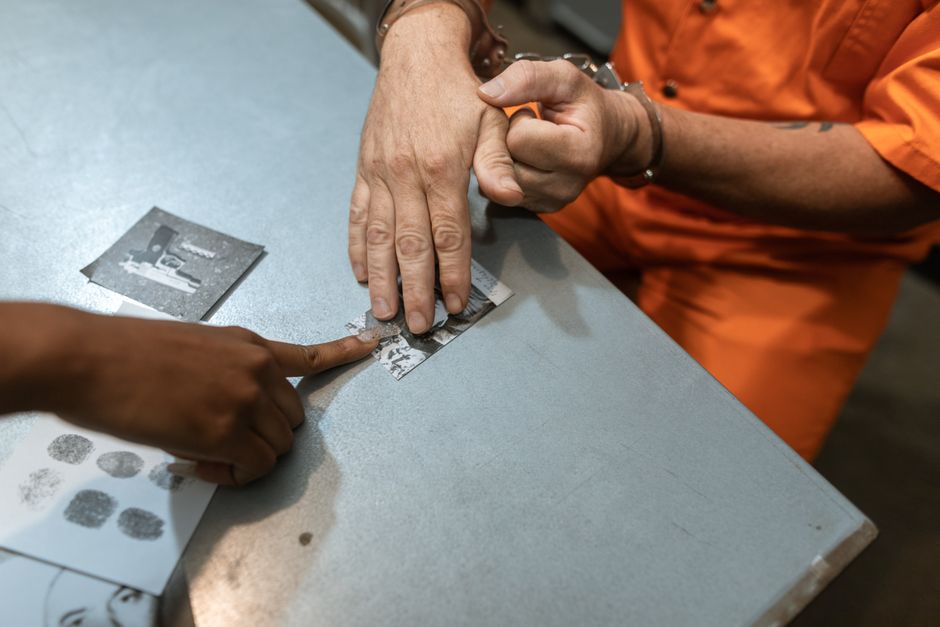
For over a century, fingerprints have been treated as the gold standard of identification in criminal investigations. We've been told since childhood that no two fingerprints are alike—not even identical twins share the same patterns. But did you know that the scientific foundation supporting fingerprints as unique evidence isn't as solid as you might think? Surprising truths about fingerprint analysis challenge what we've long accepted as forensic fact.
The reality is more nuanced than courtroom dramas suggest. While fingerprints remain valuable investigative tools, interesting questions about their reliability as definitive proof have emerged from decades of research and real-world cases.
Key Takeaways
No large-scale study has ever proven that all fingerprints are truly unique across the entire human population
Fingerprint matching relies heavily on subjective human interpretation rather than objective scientific measurement
Error rates in fingerprint analysis exist but have historically been difficult to quantify accurately
Partial prints—the most common type found at crime scenes—are significantly less reliable than full prints
The "individualization" claim in fingerprint testimony lacks the rigorous statistical foundation found in DNA analysis
International standards for how many matching points constitute a match vary widely between countries
Understanding Fingerprints as Unique Evidence in Forensic Science
The assumption that fingerprints are unique evidence stems from observations made in the late 1800s. Sir Francis Galton studied thousands of prints and calculated astronomical odds against two people sharing identical patterns. His work laid the groundwork for fingerprint identification systems worldwide. But here's the catch: Galton never examined billions of fingerprints. He extrapolated from a relatively small sample.
Modern fingerprint examiners operate on an assumption, not proven fact. The sheer number of humans who have ever lived—over 100 billion—means a comprehensive uniqueness study is practically impossible. We believe fingerprints are unique because we haven't found duplicates, not because we've proven they can't exist. This distinction matters tremendously in scientific methodology.
The forensic community has acknowledged this gap. A 2009 report by the National Academy of Sciences in the United States highlighted that fingerprint analysis lacks the rigorous statistical foundation supporting other forensic methods. The report didn't dismiss fingerprints entirely but called for honest acknowledgment of their limitations.
The Subjective Nature of Pattern Matching
Unlike DNA analysis, which relies on precise molecular measurements, fingerprint comparison depends on human judgment. Examiners look for corresponding ridge characteristics between prints—points where ridges end, split, or form islands. But how many matching points are enough?
The answer varies dramatically. Some countries historically required 12 matching points. Others accepted 8. The United States abandoned a minimum point standard entirely, leaving the decision to individual examiners' expertise. This inconsistency reveals an uncomfortable truth: if fingerprint matching were purely objective science, the standards wouldn't differ so wildly across borders.
Studies have shown that the same examiner can reach different conclusions when shown the same prints at different times. Context matters too. When examiners know a suspect has confessed, they're more likely to declare a match than when working blind. These cognitive biases don't make examiners incompetent—they make them human.
1. No Statistical Database Proves Universal Uniqueness
Despite fingerprints being used in criminal justice for over a century, no comprehensive statistical database exists to calculate the probability of two people sharing sufficiently similar prints. DNA analysis can tell you the odds of a random match might be one in several billion. Fingerprint examiners traditionally claim absolute certainty—zero chance of error—a claim that statisticians find scientifically unsupportable. The absence of probability calculations means juries hear definitive statements that exceed what the data actually supports. Recent reforms in some jurisdictions now require examiners to use more measured language, acknowledging that while matches are highly probable, absolute certainty cannot be scientifically guaranteed.
2. Partial Prints Dominate Real Crime Scenes
Television crime shows often depict perfect, complete fingerprints lifted from surfaces. Reality is messier. Crime scene prints are usually partial, smudged, or overlapping. A full fingerprint contains roughly 150 individual ridge characteristics. A partial print might show only 20 or 30. The smaller the sample, the higher the theoretical chance that another person could share those same visible features. Yet partial prints regularly appear as evidence in court. The FBI's own study found that latent prints from crime scenes are frequently of poor quality, yet examiners still make identification calls. This raises questions about whether the "match" truly represents the same statistical improbability as matching a complete, high-quality print.
3. Documented Cases of Examiner Error Exist
The 2004 Madrid bombing case shook the fingerprint community. The FBI initially matched a partial print from the attack to Brandon Mayfield, an Oregon lawyer with no connection to the bombing. He was arrested and held for two weeks. Spanish authorities later identified the actual source—an Algerian national. The FBI's error resulted from a combination of poor print quality and confirmation bias. This wasn't a rookie mistake; experienced, respected examiners made the call. The case demonstrated that fingerprint analysis, despite its aura of infallibility, remains vulnerable to human error. Proficiency tests have revealed error rates, though the exact percentages remain debated within the forensic science community.
4. The "ACE-V" Method Lacks Standardized Application
Most fingerprint examiners follow the ACE-V protocol: Analysis, Comparison, Evaluation, and Verification. It sounds systematic and scientific. The problem is that ACE-V doesn't specify objective thresholds for decision-making. Two examiners might analyze the same prints using ACE-V and reach opposite conclusions—both following proper procedure. The method provides a framework but not the kind of standardized, reproducible protocol that defines rigorous scientific methodology. Critics argue this makes fingerprint examination more craft than science, relying on apprenticeship and experience rather than measurable, testable standards. The verification step helps catch errors, but it's not foolproof, especially when the verifying examiner knows the first examiner's conclusion.
5. Environmental Factors Alter Print Appearance
Your fingerprints aren't static. They change slightly over time due to scarring, aging, and wear. Manual laborers develop different ridge wear patterns than office workers. Burns, cuts, and skin conditions alter ridge details. More significantly, the way a finger contacts a surface affects which features transfer. Pressure, angle, surface texture, and contaminants all influence the resulting print. Two impressions from the same finger made under different conditions can look surprisingly different. This variability introduces another layer of interpretation into the matching process. Examiners must decide whether differences result from the same finger under different conditions or from two different fingers entirely—a judgment call, not a measurement.
6. International Standards Remain Inconsistent
If fingerprint science were universal and objective, you'd expect global consensus on standards. Instead, practices vary considerably. Some countries require specific training certifications; others don't. Minimum quality standards for admissible prints differ. The philosophical approach varies too—some systems emphasize conservative, cautious matching, while others encourage bolder calls. This patchwork of standards suggests the field hasn't reached scientific maturity. When different jurisdictions using the same evidence type can't agree on basic protocols, it indicates that subjective judgment plays a larger role than many realize. International efforts to harmonize standards are ongoing, but significant differences persist.
7. Legal Challenges Have Increased Scrutiny
Courts once accepted fingerprint evidence without question. That's changing. Defense attorneys increasingly challenge the scientific basis of fingerprint testimony, citing the lack of error rate data and statistical foundations. Some judges have limited how examiners can testify, prohibiting claims of absolute certainty. A few cases have excluded fingerprint evidence entirely when quality was questionable. This legal pressure has prompted professional organizations to reform practices, encourage research, and adopt more scientifically defensible language. The field is evolving, acknowledging limitations rather than maintaining claims of infallibility. This represents healthy scientific progress, even if it complicates prosecutions. Truth in testimony matters more than convenient certainty.
Comparing Fingerprint Evidence to DNA Analysis
Characteristic
Fingerprint Analysis
DNA Analysis
Basis of Comparison
Visual pattern matching
Molecular sequencing
Probability Calculations
Generally not provided
Specific statistical probabilities given
Standardization
Varies by jurisdiction
Highly standardized protocols
Examiner Subjectivity
Significant human interpretation
Minimal interpretation of results
Error Rate Documentation
Limited and contested
Well-documented and quantified
The Path Forward for Fingerprint Science
None of this means fingerprints are useless. They remain powerful investigative tools that have helped solve countless crimes. The issue isn't whether fingerprints have value—it's whether we've been honest about their limitations.
Progressive changes are underway. Researchers are developing automated fingerprint identification systems that apply consistent algorithms. Professional organizations now emphasize ongoing competency testing. Training programs incorporate lessons from wrongful convictions. Most significantly, the culture is shifting from absolute certainty toward probability-based conclusions.
Some examiners now testify that a print is "highly likely" to match rather than claiming zero possibility of error. This modest language better reflects scientific reality. It doesn't weaken good cases built on quality prints and corroborating evidence. It simply brings fingerprint testimony in line with how other scientific fields communicate uncertainty.
Frequently Asked Questions
Are fingerprints actually unique to each person?
Fingerprints are very likely unique, but this has never been scientifically proven across the entire human population. The assumption of uniqueness is based on observations of millions of prints without finding exact duplicates, but with billions of people throughout history, a comprehensive study confirming absolute uniqueness for every human is impossible to conduct. The patterns are certainly highly distinctive, making them valuable for identification, but claiming absolute, proven uniqueness overstates the scientific evidence.
How often do fingerprint examiners make mistakes?
Error rates in fingerprint examination are difficult to quantify precisely because real-world conditions vary dramatically from controlled tests. Proficiency tests have shown that examiners can and do make errors, though rates vary depending on print quality and examiner experience. Studies suggest error rates might range from less than one percent to several percent, but the forensic community debates these figures. What's clear is that errors occur, contrary to earlier claims of infallibility.
Can two people have the same fingerprint?
No confirmed cases of two people sharing identical complete fingerprints have been documented. However, partial prints—which are what crime scenes typically yield—can share enough similarities to potentially cause confusion. The smaller the portion of fingerprint available for comparison, the higher the theoretical possibility that another person could share those specific visible characteristics. This is why print quality and the amount of detail available significantly affect identification reliability.
Why are fingerprints still used if they're not perfect evidence?
Fingerprints remain valuable because they're still highly distinctive and often available when other evidence isn't. The key is using them appropriately—as strong corroborative evidence rather than infallible proof standing alone. When combined with other evidence and when examiners testify honestly about confidence levels and limitations, fingerprints contribute meaningfully to investigations. The goal isn't to abandon fingerprints but to present them with scientific accuracy rather than exaggerated certainty.