
By TrivBits, Staff Writer — Published November 8, 2026
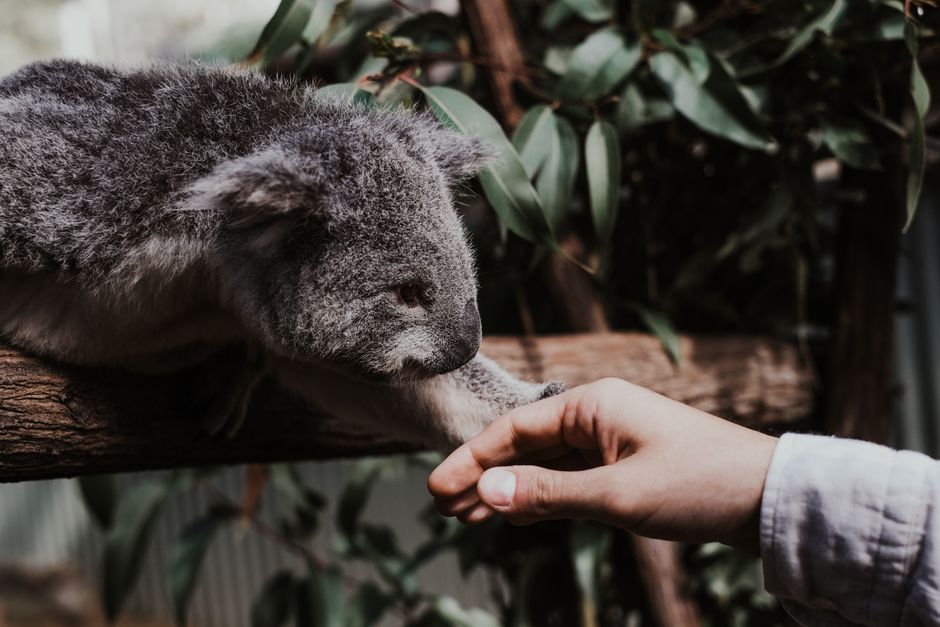
Table of Contents
- Key Takeaways
- How Fingerprints Koalas Match Human Patterns So Closely
- Why Did Koalas Evolve Fingerprints?
- The Science of Convergent Evolution
- Could Koala Prints Actually Contaminate Crime Scenes?
- Other Animals With Fingerprints
- Frequently Asked Questions
- Sources
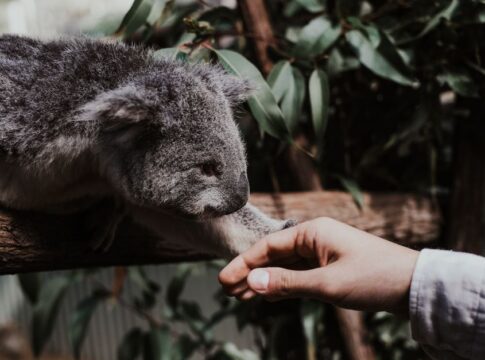
Did you know that if you examined a koala’s paw under a microscope, you might mistake its prints for human fingerprints? This surprising fact sounds like fiction, but it’s absolutely true. Koalas possess fingerprints so remarkably similar to ours that even trained experts using standard forensic equipment can struggle to tell them apart. Among all the interesting trivia in the animal kingdom, this peculiar shared trait between humans and marsupials stands out as one of nature’s most puzzling convergences.
The discovery raises fascinating questions about evolution, adaptation, and what makes fingerprints so special in the first place. Why would a tree-dwelling marsupial develop the same intricate skin patterns found on primate hands?
Key Takeaways
- Koala fingerprints are virtually indistinguishable from human fingerprints, featuring loops, whorls, and arches in remarkably similar patterns.
- Only a handful of animals possess true fingerprints: humans, other primates, and koalas are the primary examples.
- The similarity is a case of convergent evolution, where unrelated species independently develop similar features to solve comparable environmental challenges.
- Koalas evolved fingerprints to improve grip and tactile sensitivity when selecting and handling eucalyptus leaves in trees.
- The resemblance is so precise that koala prints could theoretically contaminate crime scenes, though this remains more theoretical than practical.
- This unusual shared feature reveals how evolution can arrive at identical solutions through completely different evolutionary pathways.
How Fingerprints Koalas Match Human Patterns So Closely
When scientists first examined koala paws in detail, they were startled by what they found. The ridges on koala fingertips contain the same basic pattern types seen in human fingerprints. Loops curve back on themselves. Whorls spiral in circular formations. Arches rise and fall in gentle waves.
Under a microscope, the similarity becomes even more striking. The individual ridges are approximately the same width. The spacing between ridges falls within comparable ranges. Even the tiny details—the way ridges split, merge, and end—mirror human fingerprint minutiae that forensic experts use for identification.
This isn’t just a superficial resemblance. The dermal ridges on koala paws are formed by the same underlying biological structures as human fingerprints: raised skin patterns created by the interface between the epidermis and dermis layers of skin. The precision of this parallel is genuinely remarkable given that humans and koalas last shared a common ancestor roughly 160 million years ago, long before either species developed fingerprints.
Why Did Koalas Evolve Fingerprints?
The answer lies in their specialized lifestyle. Koalas spend nearly their entire lives in eucalyptus trees, gripping smooth branches and carefully selecting specific leaves to eat. Not just any eucalyptus leaf will do—koalas are extraordinarily picky eaters, choosing leaves based on subtle differences in toxicity, moisture content, and nutritional value.
Fingerprints serve two crucial functions for koalas. First, they dramatically improve grip. The ridges increase friction between the koala’s paws and smooth bark, preventing slips that could prove fatal for an animal living high in the canopy. Second, and perhaps more importantly, fingerprints enhance tactile sensitivity.
Those ridges amplify subtle vibrations and textures, functioning like biological sensors. When a koala touches a leaf, the fingerprints help it detect minute differences in leaf texture, thickness, and even moisture content. This heightened sense of touch allows koalas to make critical feeding decisions without relying solely on sight or smell.
Humans developed fingerprints for similar reasons. Our primate ancestors needed superior grip for climbing and manipulating objects. The enhanced tactile feedback helped with tool use and fine motor control. Two completely different evolutionary paths led to the same ingenious solution.
The Science of Convergent Evolution
Koala fingerprints represent a textbook example of convergent evolution—when unrelated species independently evolve similar traits. This phenomenon occurs throughout nature. Birds, bats, and insects all developed wings, but through entirely different evolutionary mechanisms. Sharks and dolphins both evolved streamlined bodies and fins, despite one being a fish and the other a mammal.
What makes the koala-human fingerprint similarity so extraordinary is the level of detail involved. Convergent evolution typically produces broad functional similarities, not near-identical microscopic structures. The fact that koala and human fingerprints are so precisely alike suggests that there may be a limited number of optimal solutions to the problem of creating enhanced grip and tactile sensitivity through skin ridge patterns.
Interestingly, other primates like chimpanzees and gorillas also have fingerprints, which makes sense given our shared evolutionary history. But koalas developed their prints completely independently, making them a fascinating outlier in the mammalian world.
Could Koala Prints Actually Contaminate Crime Scenes?
This question has captured public imagination, though the reality is more nuanced than sensational headlines suggest. In theory, a koala print left at a crime scene could be mistaken for a human print if examined casually. The ridge patterns are that similar.
However, several practical factors make this scenario highly unlikely. First, koalas live exclusively in Australia and have very limited contact with human environments where crimes occur. Second, trained forensic experts would likely notice subtle differences upon close examination—koala prints come from smaller digits and show different pressure distribution patterns.
The real significance isn’t about crime scene contamination. Rather, it’s what this similarity tells us about the fundamental principles of biology and evolution. When nature needs to solve a specific problem—in this case, creating better grip and touch sensitivity—it can arrive at remarkably similar solutions through completely independent paths.
Other Animals With Fingerprints
Koalas aren’t the only non-human animals with fingerprints, but the club is remarkably exclusive. Chimpanzees, gorillas, and other great apes possess fingerprints, which isn’t surprising given their close evolutionary relationship to humans. More surprisingly, some monkey species have developed similar ridge patterns, though generally less refined than those of great apes.
Beyond primates and koalas, very few animals have true fingerprints. This rarity makes the koala case even more exceptional. Of all the mammals that climb trees, grip branches, and manipulate food, only koalas independently evolved this specific adaptation. Other tree-dwelling marsupials like possums and gliders have textured paw pads, but not the intricate ridge patterns that define true fingerprints.
Frequently Asked Questions
Are koala fingerprints exactly the same as human fingerprints?
While remarkably similar, koala fingerprints aren’t absolutely identical to human prints. They share the same basic patterns—loops, whorls, and arches—and similar ridge structures, but subtle differences exist in size, spacing, and the overall shape of the digit. Trained experts can distinguish them upon careful examination, but the similarities far outweigh the differences compared to any other animal.
Can other marsupials besides koalas have fingerprints?
No, koalas are unique among marsupials in possessing true fingerprints with the characteristic ridge patterns. Other marsupials, including close relatives of koalas, have various paw pad textures that aid in gripping, but they lack the specific dermal ridge formations that constitute actual fingerprints. This makes koalas a remarkable evolutionary exception.
When did scientists first discover that koalas have fingerprints?
Scientists have known about koala fingerprints for decades, though the discovery didn’t gain widespread public attention until more recently. As microscopy and forensic techniques improved, researchers were able to document just how strikingly similar koala and human prints truly are, leading to renewed interest in this unusual evolutionary parallel.
Do baby koalas have fingerprints from birth?
Koala joeys, like human babies, develop their fingerprints during gestation. The ridge patterns form in the womb and remain unchanged throughout the koala’s life, just as human fingerprints do. This consistency makes fingerprints useful for identification purposes across an individual’s entire lifespan, whether human or koala.
The next time you look at your own fingertips, consider that a eucalyptus-munching marsupial on the other side of the world shares this intricate feature with you. Evolution, working independently across millions of years and thousands of miles, arrived at the same elegant solution twice. That’s the kind of truth that makes reality more fascinating than any myth.