











1 / 10 Questions
0 Points

What sport uses a birdie and a shuttlecock?

Squash

Pickleball

Tennis

Badminton

Points won
0
Correct score
0%

More Questions

More Articles

Top 10 Fun Facts You Can Share at Any Party

Top 10 Fun Facts You Can Share at Any Party

⏱️ 6 min read

Looking to become the most interesting person at your next social gathering? Having a collection of fascinating facts at your disposal can transform any conversation and make you a memorable presence. These unexpected tidbits of knowledge span various subjects, from nature and science to history and human behavior, ensuring you'll have something intriguing to share no matter the crowd or context.

Conversation-Starting Facts Worth Knowing

1. Honey's Eternal Shelf Life

Among all food items, honey stands alone as the only one that never spoils. Archaeologists have discovered pots of honey in ancient Egyptian tombs that are over 3,000 years old and still perfectly edible. This remarkable preservation occurs due to honey's unique chemical composition: it's extremely low in moisture and highly acidic, creating an inhospitable environment for bacteria and microorganisms. Additionally, bees add an enzyme that produces hydrogen peroxide, giving honey natural antibacterial properties. This means that jar in your pantry could theoretically last for millennia.

2. Bananas Are Technically Berries, But Strawberries Aren't

The botanical definition of a berry often contradicts what we commonly think. In botanical terms, a berry must develop from a flower with one ovary and typically has seeds embedded in the flesh. Bananas perfectly fit this definition, as do grapes, kiwis, and even pumpkins. Strawberries, however, fail to qualify because their seeds are on the outside, and they develop from a flower with multiple ovaries. What we eat as the "strawberry" is actually the enlarged receptacle of the flower. This surprising classification extends to raspberries and blackberries, which are actually aggregate fruits, not berries at all.

3. The Human Body Contains Enough Carbon to Make 900 Pencils

The human body is essentially a walking chemistry set, containing enough carbon to manufacture approximately 900 pencils. Beyond carbon, the average adult body contains enough iron to forge a 3-inch nail, sufficient sulfur to kill all fleas on a typical dog, enough fat to make seven bars of soap, and adequate phosphorus to create 2,200 match heads. These elements combine to create the complex biological machine that is the human body. This composition demonstrates that we're literally made of the same fundamental materials as the world around us.

4. A Single Cloud Can Weigh Over One Million Pounds

Despite their fluffy, weightless appearance, clouds are surprisingly heavy. Scientists estimate that a typical cumulus cloud weighs approximately 1.1 million pounds, roughly equivalent to 100 elephants floating in the sky. This weight comes from the countless water droplets suspended in the air. These droplets are so small and dispersed that air currents easily keep them aloft. The cloud appears to float because its weight is distributed across such a vast area, and the water droplets are tiny enough that air resistance prevents them from falling quickly.

5. Octopuses Have Three Hearts and Blue Blood

The octopus possesses one of nature's most unusual circulatory systems. Two of its three hearts pump blood to the gills, where it picks up oxygen, while the third heart circulates that oxygenated blood to the rest of the body. Even more fascinating, their blood is blue rather than red. This occurs because octopuses use a copper-based protein called hemocyanin to transport oxygen, rather than the iron-based hemoglobin that makes human blood red. This adaptation makes their blood more efficient at transporting oxygen in cold, low-oxygen environments where many octopus species live.

6. The Eiffel Tower Grows Taller in Summer

The iconic Eiffel Tower can actually grow by more than 6 inches during hot summer days. This phenomenon occurs due to thermal expansion: when iron heats up, its particles move more and take up more space, causing the metal to expand. On particularly hot days, the sun-facing side of the tower expands more than the shaded side, causing the tower to lean slightly away from the sun. When temperatures cool, the structure contracts back to its original size. This same principle affects countless metal structures worldwide, though few are as precisely measured as this famous landmark.

7. Sharks Predate Trees on Earth

Sharks have been swimming in Earth's oceans for approximately 400 million years, while the earliest trees appeared around 350 million years ago. This means sharks existed for roughly 50 million years before trees. These ancient predators survived four of the five major mass extinction events, demonstrating remarkable evolutionary resilience. Modern sharks bear surprising similarities to their ancient ancestors, proving that their body design is exceptionally well-suited for survival. This makes sharks living fossils that provide insights into life long before dinosaurs walked the Earth.

8. A Day on Venus Is Longer Than Its Year

Venus exhibits one of the solar system's strangest rotational quirks. The planet takes approximately 243 Earth days to complete one rotation on its axis, but only 225 Earth days to orbit the sun. This means a single day on Venus (one complete rotation) actually lasts longer than a Venusian year (one complete orbit around the sun). Additionally, Venus rotates in the opposite direction of most planets in our solar system, meaning the sun rises in the west and sets in the east. Scientists believe a massive collision in Venus's past may have caused this unusual rotation.

9. Your Brain Uses More Energy Than Any Other Organ

Despite representing only about 2% of total body weight, the human brain consumes approximately 20% of the body's total energy. This energy powers approximately 86 billion neurons that constantly communicate through electrical and chemical signals. The brain requires this substantial energy even during sleep, as it consolidates memories, removes toxins, and maintains vital functions. This high energy demand explains why mental fatigue feels as draining as physical exhaustion and why glucose is so critical for cognitive function.

10. Cleopatra Lived Closer to the iPhone Than to the Pyramids

Cleopatra VII ruled Egypt from 51 BCE to 30 BCE, while the Great Pyramid of Giza was completed around 2560 BCE. This means approximately 2,500 years separated Cleopatra from the pyramid's construction. The first iPhone was released in 2007, making Cleopatra's reign closer to our smartphone era than to the age of pyramid building. This fact provides striking perspective on just how ancient the pyramids truly are and how much Egyptian civilization itself spanned across millennia.

Making Facts Memorable

These ten facts offer perfect conversation starters because they challenge common assumptions and reveal the unexpected nature of our world. From the peculiar biology of octopuses to the surprising mathematics of astronomical bodies, each fact provides an opportunity to engage others and share knowledge. The next time conversation lulls at a gathering, drawing upon these fascinating tidbits can reinvigorate discussion and establish you as someone who brings interesting perspectives to any social situation. Remember, the best party guests are those who share knowledge that enlightens, entertains, and sparks curiosity in others.
Why Carrots Were Originally Purple: Forgotten Truth

Why Carrots Were Originally Purple: Forgotten Truth

By TrivBits, Staff Writer — Published October 26, 2026

Why Carrots Were Originally Purple: Forgotten Truth — Food & Drink trivia by TrivBits

Table of Contents

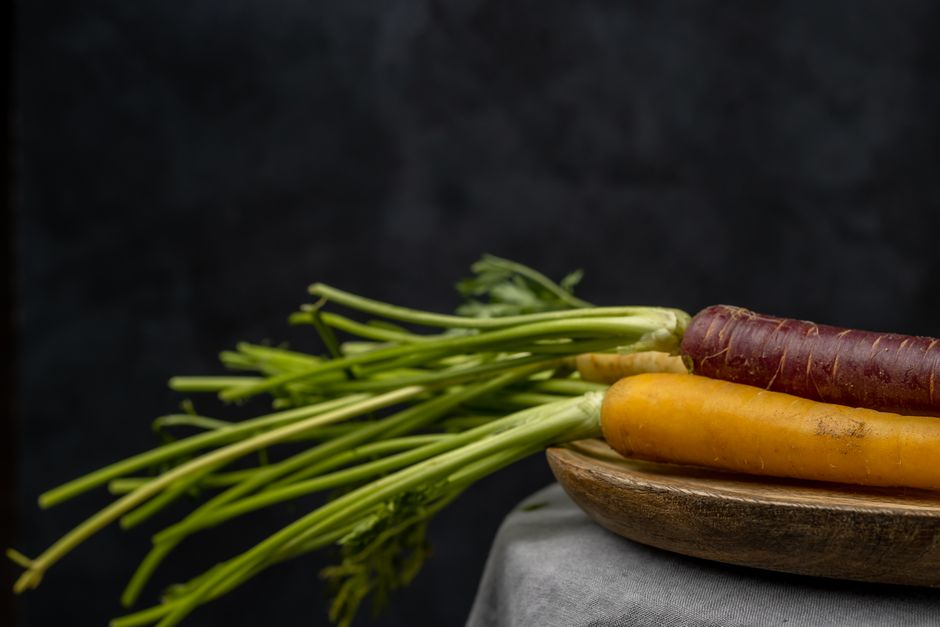
Did you know the bright orange carrot you crunch on today is actually a relatively modern invention? For most of their history, carrots originally purple, yellow, red, and white dominated gardens and markets. The surprising truth is that orange carrots didn't become widespread until a few centuries ago, making them newcomers in the long story of this root vegetable. This interesting bit of food trivia reveals how human cultivation and perhaps a dash of national pride transformed what we think of as a "normal" carrot.

The journey from ancient purple roots to today's orange standard is a fascinating tale of agriculture, politics, and selective breeding. Let's dig into the unknown facts and myths surrounding this colorful vegetable.

Key Takeaways

  • Carrots originally purple, yellow, white, and red were the dominant varieties for thousands of years before orange carrots appeared.
  • Wild carrots first domesticated in Central Asia around 1,000 years ago came in colors other than orange.
  • Orange carrots likely emerged in the Netherlands during the 16th or 17th century through selective breeding.
  • The purple pigment in original carrots comes from anthocyanins, the same compounds found in blueberries and red cabbage.
  • Today, heirloom purple, yellow, and white carrot varieties are making a comeback in farmers markets and specialty stores.
  • The shift to orange carrots wasn't just about taste—it involved better carotene content and possibly national symbolism.

The Ancient Roots: When Carrots Originally Purple Ruled the World

The wild ancestor of the modern carrot grew in what is now Afghanistan, Iran, and neighboring regions of Central Asia. These early carrots bore little resemblance to the sweet, crunchy vegetables we know. They were thin, tough, and often bitter. But here's the fascinating part: they came in a rainbow of colors, with purple and yellow being the most common.

Purple carrots get their distinctive color from anthocyanins, powerful antioxidant compounds. These are the same pigments that make blueberries blue and red cabbage purple. Yellow and white carrots, meanwhile, lack these pigments but contain other beneficial compounds. Ancient civilizations valued these colorful roots not primarily as food but often as medicine. The Greeks and Romans wrote about carrots, though they seemed more interested in the seeds and leaves than the roots themselves.

As carrots spread along trade routes into the Middle East, North Africa, and eventually Europe, purple varieties remained dominant. Medieval gardens grew purple and yellow carrots side by side. White carrots also appeared in the mix. Orange? Barely a whisper in the carrot world.

The Dutch Connection: How Orange Became the New Purple

The orange carrot's rise to dominance is a story that intertwines horticulture with history. Most evidence points to the Netherlands in the 1600s as the birthplace of the modern orange carrot. Dutch farmers began selectively breeding carrots, likely crossing yellow and red varieties to create increasingly orange roots.

Why orange? Several factors played a role. Orange carrots had higher levels of beta-carotene, which the human body converts to vitamin A. They were often sweeter and less earthy-tasting than their purple cousins. They also had a more uniform color throughout—cut open a purple carrot and you'll often find an orange or yellow core, which some found less appealing.

A popular story claims Dutch growers developed orange carrots to honor William of Orange, who led the Dutch revolt against Spain. While this makes for a great tale, historians debate whether patriotic symbolism truly drove agricultural innovation. What's certain is that Dutch seed cultivation was exceptionally advanced, and their orange carrot varieties proved superior for eating fresh. They stored well. They tasted good. And they spread.

The Science Behind the Rainbow

Understanding why carrots come in different colors requires a quick dive into plant chemistry. The pigments responsible for carrot colors belong to different chemical families, each with unique properties.

Carrot Color Primary Pigment Nutritional Highlight
Orange Beta-carotene Converts to vitamin A; excellent for eye health
Purple Anthocyanins Powerful antioxidants; anti-inflammatory properties
Yellow Lutein Supports eye health; contains some beta-carotene
Red Lycopene Antioxidant found in tomatoes; heart health benefits
White No pigments Fiber-rich; milder, sweeter flavor

Each color offers a different nutritional profile. This is why the recent revival of heirloom varieties isn't just about aesthetics or novelty. Purple carrots, for instance, provide compounds that orange carrots simply don't contain. Eating a rainbow of carrot colors means accessing a broader spectrum of beneficial nutrients.

Why Purple Carrots Disappeared (And Why They're Back)

Orange carrots conquered the world through a combination of taste, nutrition, and agricultural practicality. By the 18th and 19th centuries, they had become the standard in Europe and North America. Purple carrots didn't vanish entirely—they persisted in parts of Asia and the Middle East—but they became rare curiosities in Western markets.

Commercial agriculture favored uniformity. Orange carrots bred true more consistently. Consumers came to expect orange, and anything else seemed strange or inferior. For generations, most people never saw a purple carrot.

The tide has turned in recent decades. The heirloom vegetable movement, interest in nutritional diversity, and chef-driven demand for unique ingredients have brought colorful carrots back. Farmers markets now regularly feature purple, red, yellow, and white varieties. These aren't new inventions—they're rediscovered treasures from the carrot's diverse past.

Myths and Misconceptions About Carrot History

Several myths have grown up around carrot history. Let's separate fact from fiction.

One common misconception is that all ancient carrots were purple. In reality, early domesticated carrots came in multiple colors, with purple and yellow being most prevalent. Another myth suggests that orange carrots are somehow "artificial" or less natural than purple ones. Not true. Orange carrots resulted from selective breeding—the same process that gave us purple, yellow, and every other cultivated carrot variety. All modern carrots are products of human selection.

The story about carrots improving night vision is partially myth, partially truth. During World War II, British intelligence spread rumors that their pilots ate carrots to explain their success shooting down German planes at night. The real secret was radar technology. However, vitamin A from beta-carotene does support eye health and can prevent night blindness caused by vitamin A deficiency. It just won't give you superhuman vision.

Frequently Asked Questions

Are purple carrots healthier than orange carrots?

Both offer distinct health benefits rather than one being universally "healthier." Purple carrots contain anthocyanins with antioxidant and anti-inflammatory properties, while orange carrots provide more beta-carotene for vitamin A. Eating a variety of colors gives you the broadest nutritional benefits from different compounds.

Do purple carrots taste different from orange carrots?

Yes, purple carrots often have a slightly earthier, sometimes peppery flavor compared to the sweeter taste of most orange varieties. However, taste varies significantly among specific varieties within each color group. Some purple carrots are quite sweet, while some orange ones can be bland.

Can I grow purple carrots in my garden?

Absolutely! Purple carrot seeds are widely available from seed companies specializing in heirloom varieties. They grow just like orange carrots, requiring loose, well-drained soil and consistent moisture. Popular purple varieties include 'Purple Dragon,' 'Purple Haze,' and 'Cosmic Purple.'

When did orange carrots become the standard variety?

Orange carrots developed in the Netherlands during the 1600s and gradually spread throughout Europe over the following centuries. By the 1800s, they had become the dominant variety in Western agriculture, though the transition took time as different regions adopted them at different rates.

The next time you bite into an orange carrot, remember you're eating a relatively recent chapter in a much longer, more colorful story. Those ancient purple roots haven't disappeared—they're waiting in heirloom seed catalogs and adventurous gardens, ready to remind us that the past is often more vibrant than we imagine.

Sources