






1 / 10 Questions
0 Points

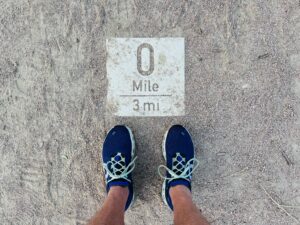
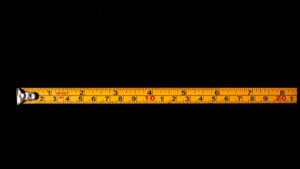
How many feet are in one mile?

5,500

5,000

6,000

5,280

Points won
0
Correct score
0%

More Questions

More Articles

The Chef Who Invented Fortune Cookies in San Francisco

The Chef Who Invented Fortune Cookies in San Francisco

By TrivBits, Staff Writer — Published October 28, 2026
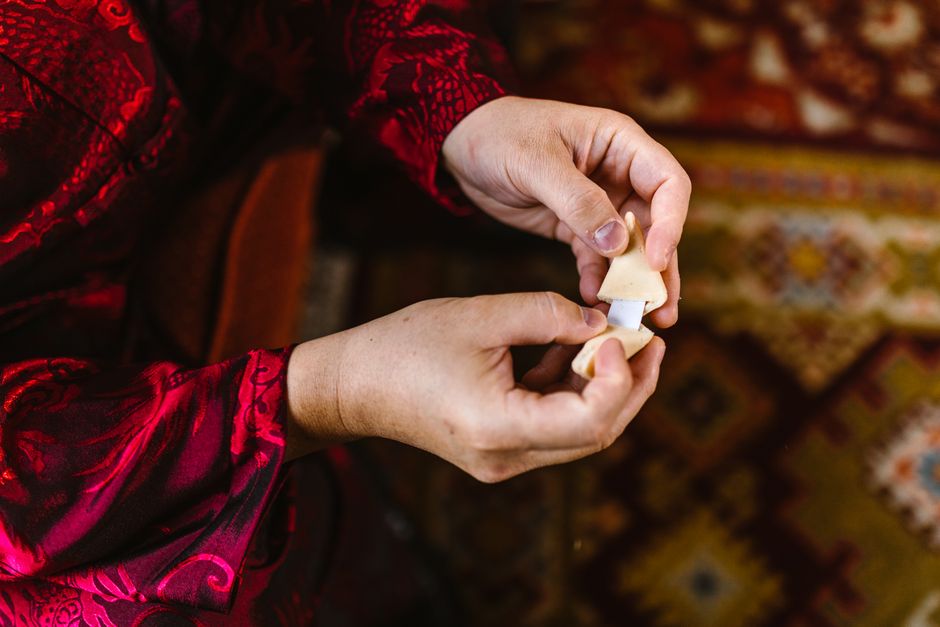
The Chef Who Invented Fortune Cookies in San Francisco — Food & Drink trivia by TrivBits

Table of Contents

Did you know that fortune cookies—those crispy, folded treats with paper prophecies tucked inside—aren't actually from China? The surprising truth is that these iconic cookies were born in California, and the story of which chef invented fortune cookies remains one of the most delightful mysteries in American culinary history. While multiple chefs have claimed the honor, the most compelling evidence points to Japanese immigrants in San Francisco who created these sweet, philosophical treats around the turn of the 20th century.

The fortune cookie has become so synonymous with Chinese-American dining that it shocks most people to learn its origins lie elsewhere. This fascinating trivia reveals how immigrant innovation, cultural fusion, and a bit of historical confusion created one of America's most recognizable food symbols.

Key Takeaways

  • Fortune cookies were most likely invented by Japanese immigrants in California, not in China, during the early 1900s.
  • Makoto Hagiwara, a Japanese gardener at Golden Gate Park's Japanese Tea Garden, is frequently credited with serving the first fortune cookies around 1914.
  • The cookies became associated with Chinese restaurants after World War II, when Japanese-Americans faced internment and Chinese restaurateurs adopted the tradition.
  • Fortune cookies are virtually unknown in China today; tourists bringing them to China are often met with puzzlement.
  • A 1983 mock trial in San Francisco's Court of Historical Review officially ruled in favor of the city's claim to fortune cookie invention.
  • The messages inside originally contained Japanese haiku and biblical verses, not the generic fortunes we know today.

The Chef Invented Fortune Cookies Debate: Japanese Tea Gardens vs. Noodle Factories

The question of who exactly invented fortune cookies has sparked friendly rivalry for over a century. Two main origin stories dominate the historical record, both centered in San Francisco and both involving Japanese immigrants.

Makoto Hagiwara managed the Japanese Tea Garden in Golden Gate Park from the 1890s until 1925. According to his family and historical accounts, he served cookies with thank-you notes inside to visitors at the tea garden around 1914. These early versions were larger and darker than modern fortune cookies, made with sesame and miso rather than vanilla. Hagiwara reportedly created them as a gesture of appreciation after being reinstated as the garden's caretaker following a period of unjust dismissal.

The competing claim comes from the Fugetsu-do confectionery in Los Angeles, where the Kito family insists their founder created similar cookies. A third contender, the Hong Kong Noodle Company in San Francisco's Chinatown, also claimed invention rights, though their story emerged later and with less documentation.

What makes this mystery so interesting isn't just the who—it's the why. These cookies closely resemble Japanese senbei crackers and are nearly identical to tsujiura senbei, a traditional Japanese cracker still made in Kyoto today. The folded shape, the embedded paper fortune, even the grilling technique—all have clear Japanese precedents dating back centuries.

How Fortune Cookies Became "Chinese"

Here's where the story takes an unexpected turn. Until World War II, fortune cookies were predominantly served in Japanese and Chinese restaurants across California. But when Japanese-Americans were forced into internment camps during the war, Chinese restaurant owners stepped in to fill the void. They adopted many Japanese-American restaurant practices, including serving fortune cookies.

After the war, Chinese restaurants experienced explosive growth across America. Fortune cookies came along for the ride. Within a generation, the cookies became so thoroughly associated with Chinese-American cuisine that their Japanese origins were almost completely forgotten. The cultural amnesia was so complete that when researchers brought fortune cookies to China in the 1980s and 1990s, Chinese citizens had no idea what they were.

This cultural migration represents a fascinating example of how food traditions can shift between communities. The fortune cookie became Chinese not through deception, but through the organic evolution of American restaurant culture and the accidents of history.

The 1983 Mock Trial That Settled the Question

In 1983, San Francisco and Los Angeles held a mock trial to settle the fortune cookie origin dispute once and for all. The Court of Historical Review, presided over by a real federal judge, heard arguments from both cities. San Francisco presented evidence supporting Makoto Hagiwara's claim at the Japanese Tea Garden. Los Angeles championed the Fugetsu-do bakery's story.

The judge ruled in favor of San Francisco. Of course, a mock trial doesn't constitute historical proof, but it captured public imagination and cemented San Francisco's reputation as the fortune cookie's birthplace in popular culture. The verdict also highlighted how seriously Californians take their culinary heritage—seriously enough to convene a court, but playfully enough to acknowledge the inherent uncertainty.

Unknown Facts About Fortune Cookie Production

Modern fortune cookies are big business. Roughly three billion fortune cookies are produced annually, with the vast majority consumed in the United States. The largest manufacturer produces approximately 60 million cookies per month.

The manufacturing process involves precise timing. Batter is poured onto hot griddles, baked for about 15 seconds, then quickly folded while still pliable. Workers have only about five seconds to insert the fortune and create the signature fold before the cookie hardens. It's a race against cooling physics.

The fortunes themselves have evolved dramatically. Early versions contained wisdom, proverbs, and even biblical passages. Today's messages range from vague predictions to jokes to "lucky numbers." Some companies now print advertisements inside. One New York writer makes his living composing fortune cookie messages, having written tens of thousands over his career.

Interestingly, fortune cookies have traveled back across the Pacific. They're now available in some parts of Asia—marketed explicitly as an American novelty. The circle of cultural exchange continues.

Myths and Truths About Fortune Cookie Origins

Myth Truth
Fortune cookies are an ancient Chinese tradition They were invented in California in the early 1900s by Japanese immigrants
The cookies originated in China Fortune cookies are virtually unknown in China; they're an American creation
Chinese restaurants always served them Chinese restaurants only adopted them after WWII Japanese internment
The fortunes were always generic predictions Original fortunes included haiku, proverbs, and biblical verses
One person clearly invented them Multiple Japanese bakers likely developed similar cookies independently

Frequently Asked Questions

Are fortune cookies really not from China?

Correct. Fortune cookies were invented in California by Japanese immigrants in the early 1900s. They're based on Japanese tsujiura senbei crackers and were originally served in Japanese tea gardens and restaurants. Modern fortune cookies are almost entirely unknown in China, where they're seen as an American curiosity.

Why did fortune cookies become associated with Chinese restaurants?

During World War II, Japanese-Americans were forced into internment camps, and many Japanese-owned restaurants closed. Chinese restaurant owners adopted many practices from these establishments, including serving fortune cookies. As Chinese-American restaurants expanded nationwide after the war, fortune cookies came with them, and the association stuck.

Who was Makoto Hagiwara and what was his role?

Makoto Hagiwara was the Japanese gardener and manager of the Japanese Tea Garden in San Francisco's Golden Gate Park. He's credited with serving the first fortune cookies at the tea garden around 1914, though the exact date is debated. His family maintained the tradition for years, and historical evidence strongly supports his claim to invention.

Do people in China eat fortune cookies?

No. Fortune cookies are virtually nonexistent in China and are not part of traditional Chinese cuisine. When brought to China, they're typically viewed as a strange American invention. The association with Chinese food is purely an American phenomenon that developed through the mid-20th century restaurant industry.

The fortune cookie reminds us that food history is rarely straightforward. What we assume to be ancient tradition often turns out to be recent innovation, and cultural boundaries are far more porous than we imagine. Next time you crack open that crispy shell, remember you're not eating Chinese history—you're tasting a uniquely American story of Japanese ingenuity, cultural exchange, and the beautiful accidents that create our shared culinary landscape.
Sources

Golf Ball Dimples Total 336: Aerodynamics Explained

Golf Ball Dimples Total 336: Aerodynamics Explained

By TrivBits, Staff Writer — Published September 21, 2026

Golf Ball Dimples Total 336: Aerodynamics Explained — Sports trivia by TrivBits

Table of Contents

Did you know that a smooth golf ball would travel only about half the distance of a dimpled one? The seemingly random pattern of golf ball dimples isn't decorative—it's a triumph of aerodynamic engineering that revolutionized the game. While the number 336 appears frequently in golf ball design, the surprising truth is that dimple counts vary wildly, from as few as 300 to over 500, each configuration promising unique flight characteristics.

These tiny indentations create a fascinating physics puzzle that took decades to understand. What began as accidental discovery became precision science, transforming golf from a gentleman's pastime into a sport where milliseconds of air turbulence determine victory or defeat.

Key Takeaways

  • Golf ball dimples reduce drag by up to 50% compared to smooth balls, dramatically increasing distance and control.
  • The 336-dimple configuration is common but not universal—manufacturers use anywhere from 300 to 500+ dimples depending on performance goals.
  • Dimples work by creating a thin turbulent boundary layer of air that clings to the ball's surface, reducing wake and drag.
  • The discovery of dimple benefits happened accidentally when golfers noticed scuffed balls flew better than new ones.
  • Dimple depth typically ranges from 0.010 inches (0.25 mm) to 0.020 inches (0.50 mm)—tiny variations that create huge performance differences.
  • Modern golf balls are tested in wind tunnels and computer simulations to optimize dimple patterns for specific flight characteristics.

Why Golf Ball Dimples Matter: The Aerodynamics Revolution

Imagine hitting a perfectly smooth golf ball with your driver. It launches beautifully, then falls from the sky like a stone after 130 yards. Frustrating, right? That's exactly what early golfers experienced in the mid-1800s when golf balls were made from smooth leather pouches stuffed with feathers, or later, smooth gutta-percha rubber.

Then something interesting happened. Players noticed their beat-up, nicked, and scarred balls actually flew farther than pristine new ones. The roughened surface somehow gave them an advantage. This observation sparked one of sport's most fascinating engineering evolutions.

The science behind this phenomenon centers on boundary layer physics. When air flows over a smooth sphere, it separates from the surface relatively early, creating a large wake of low-pressure turbulent air behind the ball. This wake acts like a parachute, creating significant drag that slows the ball down.

Dimples change everything. These small depressions create tiny vortices in the air flowing over the ball's surface. This turbulent boundary layer stays attached to the ball's surface longer, reducing the size of the wake behind it. Less wake means less drag. The result? A dimpled golf ball can travel nearly twice as far as a smooth one hit with identical force.

The Magic Number Myth: Why 336 Isn't Universal

You've probably heard that golf balls have exactly 336 dimples. It's one of those "facts" that gets repeated in trivia games and bar conversations. The truth is more nuanced and more interesting.

The 336-dimple pattern became popular because it offered an efficient way to cover the ball's surface with relatively uniform dimple distribution. But manufacturers quickly realized that dimple count alone doesn't tell the whole story. Shape, depth, pattern, and edge angle all matter tremendously.

Modern golf balls showcase remarkable variety:

Dimple Count Range Common Uses Performance Characteristics
300-330 Distance-focused balls Lower spin, longer carry, less control
330-380 All-around performance Balanced flight, moderate spin
380-500+ Tour-level control balls Higher spin, better control, slightly shorter distance

Some manufacturers have experimented with over 1,000 dimples. Others use as few as 252. Each design represents trade-offs between distance, spin, feel, and durability. There's no single "perfect" number—only optimized solutions for different playing styles.

How Dimple Design Influences Flight Patterns

Dimple engineering has become incredibly sophisticated. It's not just about punching holes in a sphere anymore. Modern designers manipulate multiple variables to achieve specific flight characteristics.

Dimple depth matters enormously. Deeper dimples generally create more turbulence, which can increase lift but also increase drag at very high speeds. Shallow dimples reduce drag but provide less lift. Most manufacturers settle on depths between 0.010 and 0.020 inches—about the thickness of two to four sheets of paper.

Dimple shape has evolved too. Early dimples were simple hemispheres. Today's designs include flat-bottomed dimples, hexagonal dimples, and even multi-level dimples with smaller indentations inside larger ones. Each shape affects how air flows across the surface.

The arrangement pattern influences consistency. Symmetrical patterns ensure the ball behaves similarly regardless of how it's oriented at impact. Asymmetrical patterns can create unpredictable results, which is why they're rare in professional-grade balls.

Edge angle—the transition from the ball's surface into the dimple—also plays a crucial role. Sharp edges create more turbulence; gradual slopes create smoother airflow. Manufacturers guard these specifications like state secrets.

Busting Common Golf Ball Dimple Myths

Let's tackle some widespread misconceptions about these little indentations.

Myth: All golf balls must have exactly 336 dimples to be legal. Truth: Golf's governing bodies specify requirements for size, weight, and performance characteristics, but there's no mandated dimple count. Conforming balls range from about 300 to 500+ dimples.

Myth: More dimples always mean better performance. Truth: Dimple effectiveness depends on the entire design system—count, depth, shape, and pattern working together. A 500-dimple ball isn't automatically superior to a 330-dimple ball.

Myth: Dimples only reduce drag. Truth: Dimples also generate lift through the Magnus effect. When a ball spins, the dimples on the upper surface move against the airflow direction while those on the bottom move with it, creating pressure differences that generate upward force.

Myth: The dimple pattern doesn't matter if the count is right. Truth: Pattern distribution dramatically affects performance. Uniform coverage ensures consistent flight regardless of the ball's orientation.

From Accident to Engineering: The History of Dimpled Design

Golf's dimple story is a perfect example of observation leading to innovation. In the 1890s, manufacturers began deliberately adding patterns to golf balls, first with raised bumps, then with indentations. Early attempts were crude—hand-hammered marks or simple molds.

The first patent for a dimpled golf ball appeared in the early 1900s, though the science behind why they worked remained poorly understood for decades. Engineers knew dimples helped, but explaining the fluid dynamics required sophisticated physics that wouldn't be fully developed until the mid-20th century.

Wind tunnel testing revolutionized dimple design in the 1960s and 1970s. For the first time, manufacturers could measure exactly how different patterns affected drag and lift. Computer modeling in the 1990s and 2000s accelerated innovation further, allowing virtual testing of thousands of designs before producing a single physical prototype.

Today's golf balls represent millions of dollars in research and development. Some companies employ aerospace engineers and use computational fluid dynamics software originally developed for aircraft and spacecraft design. The humble golf ball dimple has become a showcase for cutting-edge aerodynamics research.

Frequently Asked Questions

Do all golf balls have the same number of dimples?

No, golf balls vary significantly in dimple count, typically ranging from 300 to over 500 dimples. The number depends on the manufacturer's design goals, with different counts optimized for distance, spin, control, or all-around performance. The 336-dimple configuration is common but far from universal.

Can you play golf with a smooth ball?

You can physically hit a smooth ball, but it would perform terribly. A smooth golf ball travels roughly half the distance of a dimpled ball when struck with the same force because it creates much more drag. Early golfers played with smooth balls before dimples were invented, which is why historical golf courses were much shorter than modern ones.

How much difference do dimples really make?

Dimples make an enormous difference—they can reduce drag by approximately 50% and increase distance by up to 100% compared to a smooth ball. For a typical driver shot, dimples might add 130-150 yards to your drive. They also provide the backspin and lift that allow skilled players to control approach shots and stop the ball on the green.

Why are dimples different depths and shapes?

Manufacturers vary dimple depth and shape to fine-tune aerodynamic properties for specific performance goals. Deeper dimples create more turbulence and lift but can increase drag at high speeds, while shallower dimples reduce drag but provide less lift. Different shapes—hexagonal, circular, or multi-level—affect how smoothly air flows across the surface, allowing designers to optimize for distance, spin, or consistency.

Sources