

By TrivBits, Staff Writer — Published November 4, 2026
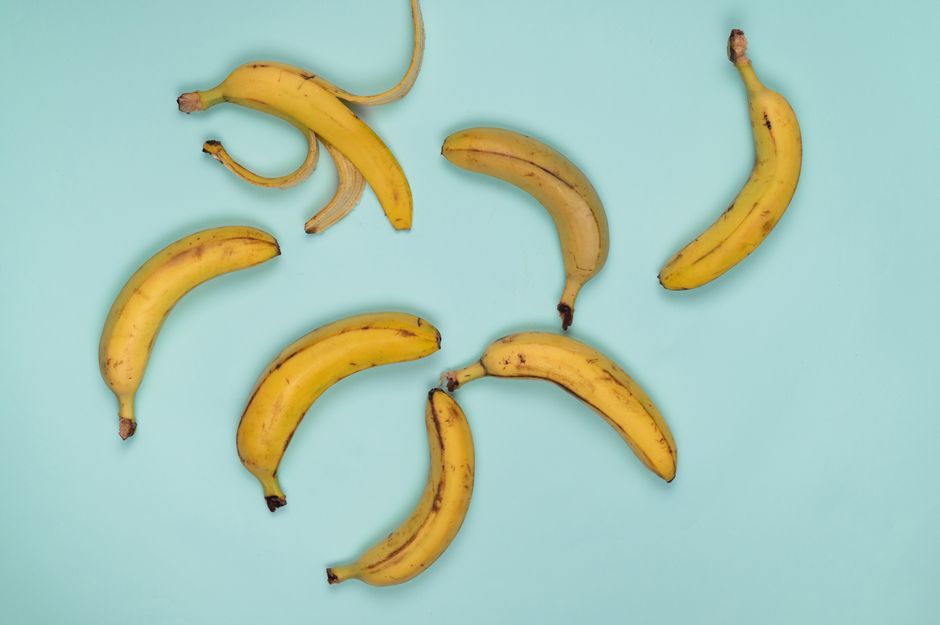
Table of Contents
- Key Takeaways
- The Bizarre Sun-Seeking Behavior That Creates Bananas Curved Shape
- Why Gravity Alone Doesn’t Explain the Curve
- The Commercial Advantage of Curved Bananas
- What Happens When Bananas Don’t Get Enough Sun
- Comparing Banana Growth to Other Fruits
- Frequently Asked Questions
- Sources
Ever notice how bananas curved bizarre shape catches your eye in the produce section? That distinctive arc isn’t random—it’s the result of a fascinating botanical phenomenon. Did you know that bananas literally grow toward the sun, defying gravity in their quest for light? This surprising behavior creates the iconic curve we all recognize, yet few people understand the science behind it.
The truth about banana shape involves a process called negative geotropism, and it’s one of those interesting facts that makes you see your morning fruit in an entirely new way. Let’s explore the myths and truths surrounding this everyday mystery.
Key Takeaways
- Bananas grow upward toward the sun through a process called negative geotropism, creating their characteristic curve
- The fruit starts growing downward due to gravity but gradually turns upward as it develops, seeking light
- This sun-seeking behavior is driven by auxin, a plant hormone that redistributes to the shaded side of the stem
- Wild bananas actually grow straighter than commercial varieties, which are bred for uniform curvature
- The curve makes bananas easier to pack, ship, and display in commercial settings
- Each banana hand can contain dozens of individual fruits, all curving upward in the same direction
The Bizarre Sun-Seeking Behavior That Creates Bananas Curved Shape
Banana plants don’t grow the way most people imagine. The fruit emerges from a large purple flower that points downward, weighted by gravity. At first, the developing bananas hang straight down in tight clusters called hands. But something remarkable happens as they mature.
Each banana begins turning upward, fighting against its own weight. This isn’t a passive process. The fruit actively grows toward available light sources, primarily the sun. Scientists call this negative geotropism—literally “negative earth-turning”—the opposite of how roots behave when they grow downward into soil.
The mechanism is elegant. A plant hormone called auxin accumulates on the lower, shadowed side of each banana. This hormone stimulates cell growth on that side, causing those cells to elongate faster than cells on the sun-facing side. The result? The banana curves upward, like a finger pointing at the sky.
This process takes several weeks. Young bananas might show only a slight bend, but as they mature and continue reaching for sunlight, the curve becomes more pronounced. By harvest time, each banana has formed that familiar arc—roughly 90 degrees or more in many cases.
Why Gravity Alone Doesn’t Explain the Curve
Here’s where common myths fall apart. Many people assume bananas curve simply because they’re heavy and droop under their own weight. Not true. If gravity were the only force at work, bananas would hang straight down like tear drops or grow in random, chaotic directions.
Instead, all the bananas in a single hand curve the same direction—upward. They form neat rows of uniform arcs. That’s coordination, not chaos. It’s the plant actively controlling growth patterns.
Consider this: bananas can weigh several ounces when mature, yet they curve against gravity’s pull. The stem would need tremendous structural support to hold that weight in an upward position passively. But the banana plant doesn’t rely on support alone. It relies on differential growth rates—growing faster on one side than the other—to create and maintain the curve.
Other heavy fruits like watermelons or pumpkins don’t develop similar curves because they rest on the ground and don’t exhibit the same phototropic response. Bananas are unique in their combination of weight, growth pattern, and light-seeking behavior.
The Commercial Advantage of Curved Bananas
Modern banana cultivation has actually enhanced this natural curve. Wild bananas, which still grow in parts of Southeast Asia, tend to be smaller and less dramatically curved than the Cavendish variety dominating grocery stores worldwide. Why? Selective breeding.
Curved bananas pack better. The arc allows them to nestle together in boxes without crushing each other. Straight bananas would require more protective packaging and create wasted space during shipping. That translates to higher costs and more damaged fruit.
The curve also makes bananas easier to display. They hang naturally on racks and in baskets, presenting their best side to shoppers. Try stacking straight bananas in a produce display—they’d roll everywhere. The curve provides natural stability.
There’s even a European Union regulation (which has been widely misunderstood and mocked) that classifies bananas by quality, with curvature as one measurement criterion. The regulation doesn’t ban curved or straight bananas; it simply creates grading standards for commercial trade. Class I bananas can have “defects of shape” while Extra Class bananas must show only “slight defects.” The curve itself is expected and desired.
What Happens When Bananas Don’t Get Enough Sun
Bananas grown in heavily shaded conditions or with inconsistent light exposure can develop irregular curves or even grow in multiple directions. The phototropic response depends on consistent, directional light. Without it, auxin distribution becomes unpredictable.
Some commercial growers actually manipulate light exposure to control curve uniformity. By ensuring banana plants receive consistent sunlight from the same direction throughout development, they produce fruits with nearly identical arcs. This uniformity is valuable for packaging and consumer expectations.
Interestingly, indoor banana plants—yes, some varieties can be grown as houseplants—often produce smaller fruits with less pronounced curves because indoor lighting rarely matches the intensity and consistency of natural sunlight.
Comparing Banana Growth to Other Fruits
| Fruit | Growth Direction | Primary Force | Resulting Shape |
|---|---|---|---|
| Bananas | Upward (negative geotropism) | Phototropism (light-seeking) | Curved arc |
| Apples | Downward | Gravity | Round |
| Grapes | Downward | Gravity | Clustered, spherical |
| Strawberries | Downward/outward | Gravity | Conical |
Frequently Asked Questions
Are all bananas curved the same direction?
Within a single bunch, yes—all bananas curve upward in the same direction because they’re all responding to the same light source. However, bananas from different plants or different sides of the same plant might curve in slightly different directions depending on where the sun is positioned relative to that particular bunch.
Can you grow straight bananas?
You could theoretically grow straighter bananas by rotating the plant constantly or providing uniform light from all directions, but this would be impractical for commercial farming. Wild banana species tend to be straighter than cultivated varieties, but even they show some curvature due to natural phototropism.
Do bananas keep curving after they’re picked?
No, the curve is fixed once bananas are harvested. The curving process requires active growth and living plant cells responding to hormonal signals. After harvest, bananas may ripen and change color, but their shape remains constant. The curve you see at the store is the curve that developed on the plant.
Why don’t plantains curve as much as regular bananas?
Plantains do curve, but often less dramatically than dessert bananas like the Cavendish variety. This is partly due to different growing conditions and partly due to genetic differences between varieties. Plantains are typically starchier and denser, which may influence how pronounced the phototropic response becomes during development.
Next time you peel a banana, take a moment to appreciate that curve. It’s not just a quirk of nature—it’s evidence of a plant’s remarkable ability to sense its environment and grow accordingly. That simple arc represents weeks of cellular coordination, hormonal signaling, and an ancient evolutionary drive toward sunlight. Pretty impressive for a fruit we usually take for granted.