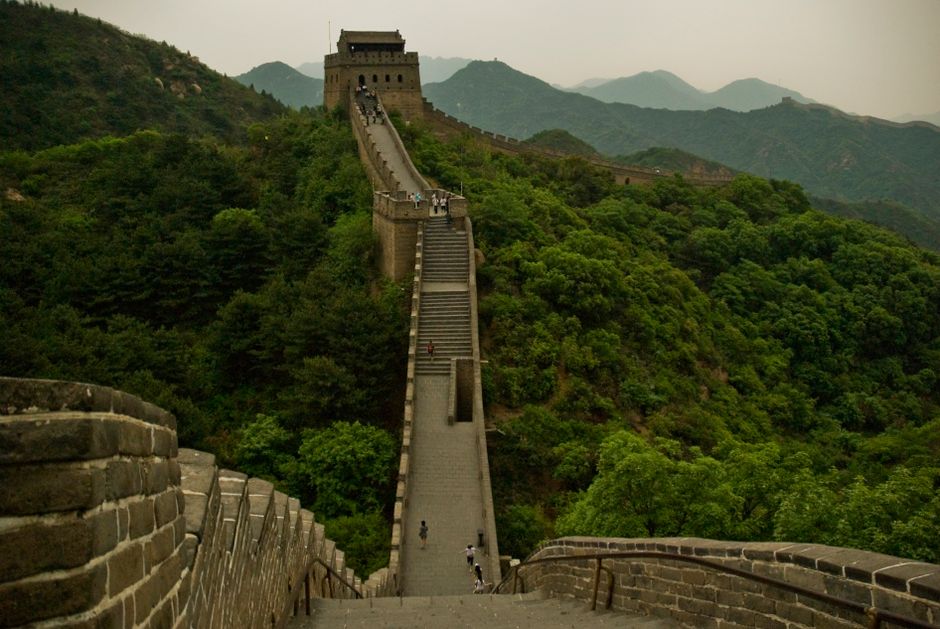
When you picture the Great Wall of China, you probably imagine a single, unbroken stone barrier snaking across mountaintops. The reality of the wall China length measurements reveals something far more complex and fascinating. This ancient marvel isn't one continuous structure but a network of walls, trenches, and natural barriers built across multiple dynasties spanning over two millennia. The numbers associated with its true extent might surprise even history enthusiasts who think they know this iconic monument.
Recent archaeological surveys have dramatically changed our understanding of how long the Great Wall actually is. What generations learned in textbooks barely scratches the surface of this monumental achievement by one of history's greatest civilizations.
Key Takeaways
The official total length of all Great Wall sections combined is approximately 13,171 miles, not the commonly cited 5,500 miles
The wall includes natural defensive barriers like rivers and mountain ridges counted in its total measurement
Multiple dynasties built separate wall systems that rarely connected, creating overlapping networks rather than one continuous structure
Some sections of the ancient fortification have completely disappeared due to erosion, agriculture, and urban development
The Ming Dynasty walls represent only about 5,500 miles of the total historical construction
Measurements include trenches, moats, and natural defensive features, not just stone and brick walls
Understanding the Wall China Length Through Dynasty Construction
The confusion about the Great Wall's true dimensions stems from a fundamental misunderstanding. There isn't just one Great Wall. Different Chinese dynasties built their own defensive systems over roughly 2,300 years, from the 7th century BC through the 17th century AD. The Qin Dynasty connected earlier state walls around 221 BC, but that empire's wall followed a different route than the famous Ming Dynasty walls most tourists visit today.
Each era built according to its own strategic needs. The Han Dynasty extended walls far into the Gobi Desert to protect Silk Road trade routes. The Ming Dynasty, facing threats from northern nomadic tribes, constructed the most substantial brick-and-stone sections between the 14th and 17th centuries. These Ming walls are what most people recognize as "the" Great Wall, but they represent just a fraction of the total historical construction across China's imperial past.
The 2012 Archaeological Survey That Rewrote History Books
For decades, the accepted length hovered around 5,500 miles, based primarily on Ming Dynasty construction. Then China's State Administration of Cultural Heritage conducted a comprehensive archaeological and historical survey that concluded in 2012. Using advanced GPS technology, satellite imagery, and extensive ground surveys, researchers measured every known section built by every dynasty.
The results stunned historians worldwide. The total length came to approximately 21,196 kilometers—roughly 13,171 miles. That's more than twice the previous estimate. This measurement includes walls from the Qin, Han, Ming, and other dynasties, along with natural defensive features that ancient military planners incorporated into their defensive networks. Some sections overlap where later dynasties built near earlier fortifications, but each is counted in the comprehensive total.
1. Natural Features Account for Thousands of Miles
Not every mile of the Great Wall is actually a wall. Ancient Chinese military engineers were remarkably practical, incorporating mountains, rivers, and cliffs into their defensive perimeter. When a sheer cliff face provided natural protection, they saw no need to build alongside it. The official length measurements include these natural barriers because they functioned as integral parts of the defensive system. Rivers served as moats, mountain ridges became observation points, and desert expanses created buffer zones. This strategic use of geography explains why some "sections" of the wall appear to vanish—they never existed as constructed barriers in the first place.
2. The Wall Includes Trenches and Earthworks Often Ignored in Popular Accounts
Stone and brick sections make for dramatic photographs, but much of the historical Great Wall consisted of rammed earth, wooden palisades, and defensive trenches. In the northern steppes where stone was scarce, builders used compacted earth reinforced with reeds and wood. These sections have largely eroded away over the centuries, leaving little visible trace. The 2012 survey counted these archaeological remnants through soil analysis and historical records. Trenches dug to slow cavalry charges and earthen ramparts topped with wooden watchtowers were just as crucial to border defense as the famous stone fortifications, yet they rarely appear in tourist brochures or history documentaries.
3. About 30 Percent of Ming Dynasty Sections Have Disappeared
Even the most substantial stone-and-brick sections face relentless decay. Researchers estimate that roughly 30 percent of the Ming Dynasty walls—the most famous and durable sections—have vanished or deteriorated severely. Centuries of wind, rain, and earthquakes take their toll. Farmers throughout history dismantled sections to obtain building materials or cleared walls to create more arable land. Rapid urbanization in recent decades has claimed other portions, with villages and roads built directly over ancient foundations. What survives today represents only a fraction of what existed at the height of the Ming era, making preservation efforts increasingly urgent for this irreplaceable monument to human ingenuity.
4. Multiple Parallel Walls Created Defensive Depth, Not Just Length
The wall wasn't always a single line. In strategically vital areas, dynasties built multiple parallel walls creating defensive zones dozens of miles deep. These layered fortifications forced invaders to breach several barriers while defenders could fall back to successive positions. The Beijing area features particularly complex overlapping networks where Ming engineers constructed inner and outer wall systems. When measuring total length, surveyors count each parallel wall separately, which significantly increases the total mileage. This military architecture reflected sophisticated defensive thinking—defense in depth rather than relying on a single barrier, no matter how imposing.
5. The Wall's Width Varies From 15 to 30 Feet in Different Sections
Length isn't the only dimension that varies dramatically. The wall's width changes based on terrain, construction period, and strategic importance. At its base, sections range from approximately 15 to 30 feet wide, while the top walking surface typically measures 12 to 15 feet across. This width allowed soldiers to march along the top and permitted horse-drawn supply carts to travel the length during emergencies. Watchtowers interrupt the wall every few hundred yards, creating defensive strong points and communication stations. The massive variation in construction quality and dimensions reflects the reality that different sections were built by different dynasties with different resources, technologies, and threats to counter.
6. Western Sections Extended Into Deserts Far Beyond Tourist Routes
The Great Wall most visitors see near Beijing represents the eastern, heavily fortified sections. But the wall extended far westward into what is now Gansu Province and beyond, protecting Silk Road trade routes through harsh desert terrain. These western sections, built primarily during the Han Dynasty, used whatever materials were locally available—often just rammed earth and gravel. The desert environment has actually preserved some of these ancient earthworks better than the more famous stone sections in humid eastern regions. Visiting these remote portions requires serious expeditions into sparsely populated areas where the wall appears as low earthen mounds stretching across barren landscapes, a stark contrast to the restored tourist sections.
7. No Single Person Has Ever Walked the Entire Historical Length
Despite the wall's fame, walking its entire historical length remains impossible. Many sections have completely eroded, exist only as archaeological traces, or cross terrain too dangerous or politically sensitive for travel. Several adventurers have walked the surviving Ming Dynasty sections—a journey taking roughly 18 months of continuous hiking. But traversing every wall built by every dynasty across 13,000 miles would require crossing private property, military zones, and areas where nothing visible remains above ground. The wall exists as much in historical records and archaeological surveys as it does in physical reality. This fragmented nature makes the Great Wall both a tangible monument you can touch and a historical concept spanning millennia of Chinese civilization.
Comparing Great Wall Measurements Across Dynasties
Dynasty/Period
Construction Era
Approximate Length
Primary Materials
Qin Dynasty
221-206 BC
3,100 miles
Rammed earth, stone
Han Dynasty
206 BC - 220 AD
6,200 miles
Rammed earth, wood
Ming Dynasty
1368-1644 AD
5,500 miles
Brick, stone, rammed earth
All Dynasties Combined
7th century BC - 17th century AD
13,171 miles
Various
Frequently Asked Questions
Can you see the Great Wall from space with the naked eye?
No, this is a persistent myth. Astronauts have confirmed that the Great Wall is not visible from space with the naked eye, as it's too narrow and blends with the natural landscape. Many much larger human-made structures, like cities and highways, are far more visible from orbit.
How long did it take to build the entire Great Wall?
Construction spanned approximately 2,300 years across multiple dynasties, from the 7th century BC through the 17th century AD. Different sections were built, abandoned, rebuilt, and extended throughout Chinese imperial history, making it an ongoing project rather than a single construction effort.
What is the oldest surviving section of the Great Wall?
Some of the oldest surviving sections date to the Warring States period (475-221 BC), though these exist primarily as archaeological remnants rather than standing structures. The best-preserved ancient sections come from the Ming Dynasty (1368-1644 AD).
How many people died building the Great Wall?
Reliable historical records don't exist for total casualties across all dynasties. Estimates vary wildly from hundreds of thousands to over a million, but these numbers are speculative. Construction was undoubtedly dangerous and claimed many lives, though exact figures remain unknown.
The Great Wall's true scale emerges not from any single measurement but from understanding it as a 2,000-year conversation between Chinese civilizations and their northern frontiers. Each dynasty added its voice, building according to the threats it faced and the resources it commanded. What remains today—whether towering brick battlements or barely visible earthen traces—tells the story of human persistence on a scale few monuments can match.
The Roman Empire built aqueducts, roads, and laws that still influence us today. But among their most unusual innovations was a tax on urine. Yes, you read that right. The ancient Romans collected, traded, and taxed human waste in ways that sound absolutely bizarre to modern ears. This wasn't some quirky historical footnote—it was serious business that generated real revenue for the empire and reveals how these ancient civilizations viewed resources we'd never think twice about today.
Emperor Vespasian's urine tax, known as the vectigal urinae, demonstrates just how practical and profit-minded Roman society could be. What started as a way to regulate a booming industry became one of history's strangest fiscal policies, proving that even the most basic bodily functions weren't exempt from imperial taxation.
Key Takeaways
Ancient Rome imposed a tax on urine collection because it was a valuable industrial commodity used in textile processing and leather tanning.
Emperor Vespasian introduced the tax around 70 CE to refill the empire's treasury after civil war.
Public urinals called foricae served as collection points where urine was gathered for commercial sale.
The tax sparked the famous Latin phrase "pecunia non olet" (money doesn't smell), still used today.
Urine's ammonia content made it essential for cleaning and whitening wool togas, Rome's most popular garment.
Professional urine collectors became a recognized trade in the Roman economy.
The Bizarre Ancient Roman Logic Behind Taxing Bodily Waste
Why would anyone tax urine? The answer lies in chemistry and commerce. Human urine contains urea, which breaks down into ammonia—a powerful cleaning agent. Roman fullers (cloth workers) desperately needed ammonia to clean and whiten wool, especially the brilliant white togas that symbolized Roman citizenship. Leather tanners also used urine to soften animal hides before crafting them into sandals, armor, and goods.
This created genuine demand. Fullers would pay good money for fresh urine, and enterprising Romans realized they could profit from what everyone else literally threw away. Public urinals weren't just sanitation facilities; they were collection centers for a valuable resource. The empire, never one to miss a revenue opportunity, decided to tax this thriving trade during the reign of Vespasian, who ruled from 69 to 79 CE.
How the Ancient Urine Economy Actually Worked
The system was surprisingly organized. Large clay pots called dolia were placed on street corners and outside public buildings. Citizens could relieve themselves into these vessels, which were regularly emptied by collectors who sold the contents to fullers and tanners. Some historians believe even private households might have sold their chamber pot contents to supplement income.
Fullers operated large-scale workshops where workers would actually stomp on cloth submerged in urine baths, using their feet to work the ammonia through the fibers. The smell must have been overwhelming, but the results were impressive—brilliant white togas that signaled status and citizenship. This industrial process created jobs, generated trade, and became important enough to the economy that taxing it made fiscal sense.
1. Emperor Vespasian Needed Money for Rebuilding Projects
Vespasian inherited an empire in crisis. The Year of the Four Emperors (69 CE) had drained the treasury through civil war and political chaos. Nero's extravagant spending had already depleted funds, and Vespasian needed revenue fast to rebuild infrastructure, including the Colosseum. The urine tax was one of several creative fiscal measures he implemented. Critics mocked the policy as undignified, but Vespasian reportedly defended it with humor, asking if the coins collected smelled bad. They didn't, of course—thus the birth of his famous saying.
2. "Money Doesn't Smell" Became a Lasting Phrase
When Vespasian's son Titus complained about the disgusting nature of the urine tax, the emperor held up a gold coin to his nose and asked if it stank. Pecunia non olet—money doesn't smell—became one of history's most enduring expressions about the neutral nature of currency regardless of its source. The phrase is still used today in multiple languages to suggest that money's origin doesn't affect its value. Some European public toilets are even called "vespasians" in honor of this historical connection.
3. Public Urinals Were Strategic Infrastructure
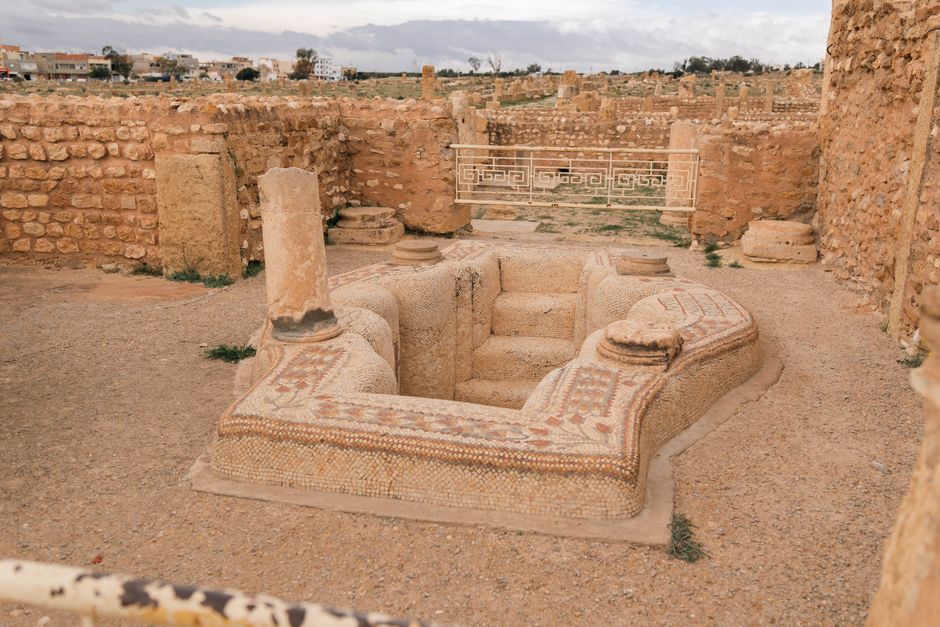
Roman public toilets weren't designed primarily for citizen comfort—they were industrial collection points. These foricae featured long marble benches with keyhole-shaped openings where Romans sat side by side, conducting business and conversation while relieving themselves. Running water beneath washed waste into the sewer system, but urine was often diverted into collection vessels. The strategic placement of these facilities in busy areas maximized collection volume, ensuring steady supply for the fulling industry.
4. Urine Collectors Were a Recognized Profession
The Romans had a term for everything, including urine collectors. These workers made their living gathering, transporting, and selling urine to workshops. While not a prestigious occupation, it was legitimate work in the Roman economy. The tax meant these collectors had to pay a fee for the right to gather and sell their product, turning a free resource into a regulated commodity. This professionalization of waste collection reveals how thoroughly the Romans monetized every aspect of urban life.
5. The Tax Applied to Collectors, Not Contributors
Common citizens didn't pay the tax directly when using public urinals. Instead, the tax fell on the collectors and fullers who profited from urine as a commodity. This made it an indirect consumption tax on the textile industry rather than a fee for using public facilities. The distinction mattered legally and practically—Romans could still use public toilets freely, but those who turned waste into profit had to pay for the privilege. This approach reduced public outcry while still generating revenue.
6. Urine Was Aged Like Wine for Better Results
Fresh urine wasn't ideal for fulling. The Romans discovered that aged, fermented urine produced more ammonia and worked better for cleaning cloth. Collectors would store urine in large containers, letting it decompose for days or weeks before sale. The stronger the ammonia smell, the higher the price fullers would pay. This aging process created a tiered market where premium aged urine commanded better rates than fresh product—a commodity market as sophisticated as those for grain or wine.
7. The Practice Continued for Centuries After Rome
Roman ingenuity didn't die with the empire. European textile workers continued using urine in cloth production well into the Industrial Revolution of the 18th and 19th centuries. British wool processors collected urine from public houses and private homes. French tanners used it until synthetic ammonia became commercially available in the early 20th century. The Roman urine tax itself lasted through various forms across the empire's territories, proving that Vespasian's bizarre fiscal innovation had genuine economic merit that transcended any single era or ruler.
Use of Urine
Industry
Chemical Purpose
Cleaning wool togas
Fulling/Textiles
Ammonia removed oils and whitened fabric
Softening leather
Tanning
Broke down proteins in animal hides
Fixing dyes
Textile dyeing
Helped colors set permanently in cloth
Cleaning teeth
Personal hygiene
Ammonia whitened and cleaned (used by some Romans)
Frequently Asked Questions
Did Romans really brush their teeth with urine?
Some Romans did use urine as a mouthwash and tooth whitener, particularly imported urine from Iberia (modern Spain and Portugal), which was believed to be especially potent. While this sounds revolting today, the ammonia did have genuine whitening and antibacterial properties. However, this practice was never universal and was more common among those seeking cosmetic tooth whitening than as standard daily hygiene.
How much revenue did the urine tax actually generate?
Ancient sources don't provide exact figures for urine tax revenue, making it impossible to know precisely how much it contributed to imperial coffers. We know it was significant enough that Vespasian considered it worth implementing and defending against critics, and that the tax remained in place for generations afterward. The textile industry's size suggests the tax base was substantial, though it was never Rome's primary revenue source.
Were there other unusual taxes in ancient Rome?
Absolutely. Romans taxed sales of slaves, prostitution services, and even ownership of slaves. There were taxes on goods entering city gates, inheritance taxes, and fees for using public markets. The empire's tax system was remarkably comprehensive, covering nearly every economic transaction. The urine tax stands out mainly because modern sensibilities find it particularly strange, but Romans taxed many things we'd consider unusual today.
When did people stop using urine in textile production?
The practice continued in various parts of Europe until the late 19th and early 20th centuries, when the Haber-Bosch process made synthetic ammonia commercially available starting around 1913. This industrial chemistry breakthrough finally provided a cheaper, more pleasant alternative to urine collection. Some traditional textile producers in remote areas continued the old methods slightly longer, but industrial ammonia effectively ended a practice that had lasted over two thousand years.
The Roman urine tax reminds us that past civilizations often found value in things we'd never consider resources today. Vespasian's willingness to tax something as unglamorous as human waste shows the practical, unsentimental approach Romans took toward governance and commerce. Next time you see a public restroom, remember it's descended from facilities that once served a dual purpose—and generated tax revenue for an empire.