7 Surprising Facts About Octopus Intelligence and Behavior
By TrivBits, Staff Writer — Published August 3, 2026
Table of Contents
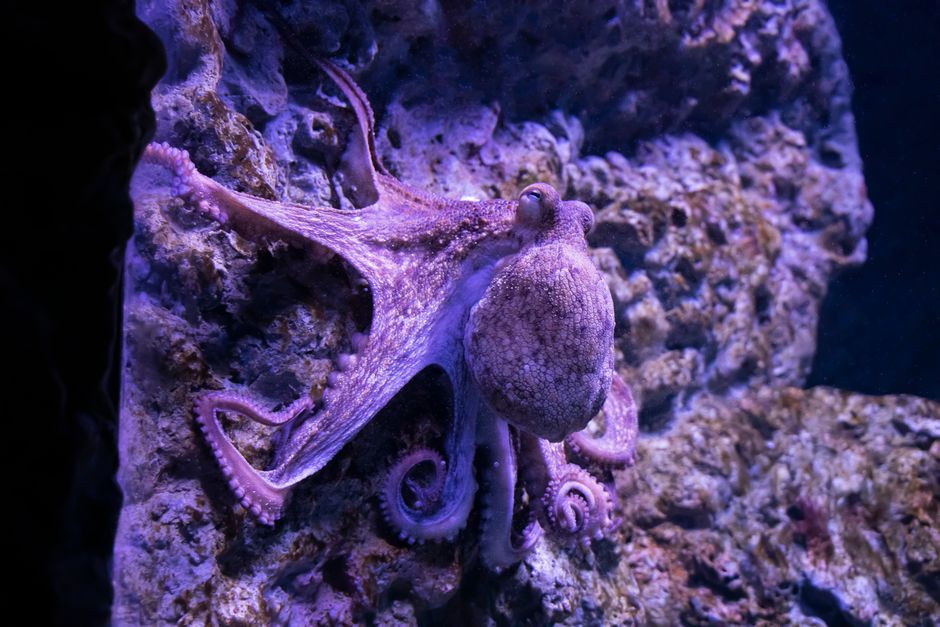
Octopuses are among the ocean's most enigmatic creatures, possessing cognitive abilities that challenge our understanding of intelligence itself. These eight-armed invertebrates demonstrate problem-solving skills, memory, and even playfulness that rival many vertebrates. What makes octopus intelligence behavior so fascinating is that their brains evolved along a completely different path from mammals, birds, and other intelligent animals we typically study.
Recent research continues to reveal just how remarkable these cephalopods truly are. From using tools to recognizing individual humans, octopuses display behaviors that force scientists to reconsider what we thought we knew about animal cognition.
Key Takeaways
- Octopuses have nine brains—one central brain and eight mini-brains in their arms that can act independently
- They can change color and texture in just 200 milliseconds to blend into their surroundings
- Octopuses demonstrate tool use by collecting coconut shells and assembling them into protective shelters
- Two-thirds of an octopus's neurons are located in its arms, allowing for decentralized decision-making
- Some species can recognize and remember individual humans, even after long periods
- Octopuses have been observed engaging in play behavior, suggesting complex emotional lives
Understanding Octopus Intelligence and Behavior Through Brain Structure
The octopus nervous system operates fundamentally differently from our own. While humans centralize processing in one brain, octopuses distribute intelligence throughout their bodies. Each arm contains approximately 40 million neurons—more than some small mammals possess in their entire brains. This decentralized architecture means an octopus arm can taste, touch, and even make basic decisions without consulting the central brain.
This distributed intelligence allows octopuses to multitask in ways humans cannot. One arm might explore a crevice for food while another manipulates a shell and a third watches for predators. The central brain coordinates overall goals, but the arms possess remarkable autonomy. Scientists have documented severed octopus arms continuing to respond to stimuli and even attempting to bring food toward where the mouth would be—a haunting demonstration of their independent processing power.
The Seven Most Surprising Octopus Facts
1. Octopuses Can Edit Their Own Genetic Instructions
Unlike virtually all other animals, octopuses engage in extensive RNA editing—a process that allows them to alter the proteins their genes produce without changing the underlying DNA. While most organisms use RNA editing sparingly, octopuses employ it thousands of times more frequently. This ability may help them adapt their nervous systems to changing ocean temperatures and environmental conditions on the fly, essentially fine-tuning their brain chemistry in real time. The trade-off appears to be slower evolution at the DNA level, suggesting octopuses have chosen adaptability over long-term genetic change.
2. They Demonstrate Sophisticated Tool Use
Octopuses are among the few invertebrates known to use tools. Researchers have observed veined octopuses collecting coconut shell halves from the ocean floor, carrying them awkwardly across the seabed, and then assembling them into protective shelters. This behavior requires planning, foresight, and an understanding that an object might be useful later—cognitive abilities once thought exclusive to vertebrates. Some octopuses also use rocks to barricade their dens or wield them to crack open shellfish, demonstrating an understanding of objects as extensions of their own capabilities.
3. Their Color-Changing Happens at Astonishing Speed
An octopus can transform its appearance in a fraction of a second—roughly 200 milliseconds. This remarkable ability stems from specialized skin cells called chromatophores, which contain pigment sacs controlled by muscles. Below these lie iridophores and leucophores that reflect and scatter light. By expanding or contracting these cells in precise patterns, octopuses create complex displays that can mimic coral, rocks, sand, or even other animals. The speed and precision of this color change requires intense neural coordination, with the brain sending signals to thousands of individual skin cells simultaneously.
4. Octopuses Recognize and Remember Individual Humans
Multiple aquarium workers have reported that octopuses treat different people differently, seemingly recognizing individuals and remembering past interactions. Some octopuses squirt water at staff members they dislike while behaving cooperatively with others. In controlled studies, octopuses have demonstrated the ability to distinguish between people wearing identical uniforms, suggesting they recognize facial features or body language. This individual recognition extends to memory—octopuses can remember specific humans for months, holding grudges or showing preference long after initial encounters.
5. They Engage in Play Behavior
Play was long considered a hallmark of intelligence found primarily in mammals and birds, but octopuses challenge this assumption. Researchers have observed octopuses repeatedly releasing bottles into circular tank currents and then catching them—an activity with no apparent survival benefit. This behavior meets scientific criteria for play: it's repeated, voluntary, and seems to be done for its own sake. Some octopuses have been seen "bouncing" objects off water jets or manipulating items in apparently exploratory ways that suggest curiosity rather than hunger or defense.
6. Each Arm Can Taste What It Touches
Octopus arms are covered in suckers, and each sucker contains chemoreceptors that function as taste organs. This means an octopus literally tastes everything it touches. When an arm explores a crevice, it simultaneously gathers tactile and chemical information about potential prey, predators, or shelter quality. This sensory integration happens at the arm level—the limb can identify food and begin the grasping process before the central brain even receives the information. It's a form of embodied cognition that gives new meaning to the phrase "thinking with your hands."
7. They Have Personalities and Moods
Individual octopuses display consistent behavioral differences that scientists classify as personalities. Some are bold and exploratory, while others are cautious and retiring. These aren't random variations—the same individual will consistently approach novel situations in characteristic ways. Research also suggests octopuses experience something like moods, with their behavior shifting based on recent experiences. An octopus that successfully catches prey becomes more adventurous, while one that experiences a failed hunt grows more cautious. This emotional complexity in an invertebrate forces us to reconsider where consciousness and subjective experience begin in the animal kingdom.
Comparing Octopus Intelligence to Other Marine Animals
| Animal |
Brain Structure |
Tool Use |
Problem Solving |
| Octopus |
Distributed (9 brains) |
Yes (shells, rocks) |
Advanced (mazes, puzzles) |
| Dolphin |
Centralized |
Limited (sponges) |
Advanced (cooperation) |
| Sea Otter |
Centralized |
Yes (rocks for shells) |
Moderate |
| Cuttlefish |
Distributed (similar) |
Rarely observed |
Advanced (camouflage) |
Why Octopus Intelligence Evolved Differently
The evolutionary path that led to octopus intelligence diverged from our own roughly 600 million years ago—long before brains as we know them existed. This makes octopuses an example of convergent evolution, where similar solutions (intelligence, problem-solving) evolved independently in response to different environmental pressures. For octopuses, soft bodies without protective shells created pressure to develop sophisticated camouflage, escape abilities, and clever hunting strategies.
Their short lifespans—most species live only one to two years—may also drive their intelligence. Without the luxury of learning from parents or elders (octopus mothers die after their eggs hatch), each individual must rapidly figure out survival strategies. This pressure may have favored quick learning, bold experimentation, and cognitive flexibility. The result is a creature that lives fast, learns faster, and demonstrates that intelligence can evolve along radically different neural architectures than our own.
Frequently Asked Questions
How intelligent is an octopus compared to a dog?
Direct comparisons are difficult because octopuses and dogs solve different types of problems, but octopuses demonstrate comparable problem-solving abilities, memory, and learning capacity. They excel at spatial reasoning and manipulation tasks but lack the social intelligence that dogs have developed through domestication.
Can octopuses feel emotions?
While we cannot know subjective experience, octopuses display behavioral indicators consistent with emotional states—they show curiosity, apparent frustration, and mood changes based on experience. Some researchers argue their complex behaviors suggest a form of consciousness, though this remains scientifically debated.
Do octopuses recognize themselves in mirrors?
Current research has not conclusively demonstrated mirror self-recognition in octopuses. They react to mirrors but show behaviors more consistent with treating the reflection as another octopus rather than recognizing themselves, unlike dolphins, great apes, and some birds.
Why do octopuses have blue blood?
Octopus blood contains hemocyanin, a copper-based molecule that transports oxygen and turns blue when oxygenated, rather than the iron-based hemoglobin that makes vertebrate blood red. This adaptation works more efficiently in cold, low-oxygen ocean environments where octopuses live.
The more we study these remarkable creatures, the more they challenge our assumptions about what intelligence requires and where consciousness might exist. Octopuses remind us that nature found not one path to complex cognition, but many—and some of the most fascinating minds on Earth may be the ones least like our own.