










1 / 10 Questions
0 Points

Why did the Statue of Liberty turn green?

Paint fading

Copper oxidation

Acid rain damage

Algae growth

Points won
0
Correct score
0%

More Questions

More Articles

Did You Know These Quick Facts About Transportation?

Did You Know These Quick Facts About Transportation?

⏱️ 5 min read

Transportation has shaped human civilization in remarkable ways, connecting people, goods, and ideas across vast distances. From ancient trade routes to modern supersonic travel, the evolution of how we move has transformed societies and economies. The following fascinating facts reveal surprising truths about the transportation systems that keep our world moving.

The Astonishing Scale of Global Shipping

Maritime shipping remains the backbone of international trade, responsible for transporting approximately 90% of the world's goods. The largest container ships can carry over 24,000 twenty-foot equivalent units (TEUs), which is roughly equivalent to 745 million bananas or 156 million pairs of shoes in a single voyage. These massive vessels stretch longer than four football fields and stand as tall as 20-story buildings.

The global shipping fleet travels an estimated 5.4 million nautical miles collectively every day, which equals approximately 220 trips around the Earth's equator daily. Despite this massive operation, shipping remains one of the most fuel-efficient methods of transportation per ton-mile, making it environmentally preferable to many alternatives for long-distance freight.

Revolutionary Speed Records in Rail Transportation

The fastest conventional train in regular service is the Shanghai Maglev, which operates at speeds up to 267 miles per hour (431 kilometers per hour) during its 19-mile journey from Shanghai Pudong International Airport to the city center. This magnetic levitation technology eliminates friction between the train and tracks, allowing for unprecedented speeds and smoother rides.

Japan's Shinkansen, or "bullet train," has maintained an impeccable safety record since its inception in 1964, with zero passenger fatalities due to train accidents. This network has transported over 10 billion passengers in its operational history while maintaining exceptional punctuality, with average delays measured in seconds rather than minutes.

Aviation's Surprising Environmental Footprint

While aviation accounts for approximately 2-3% of global carbon dioxide emissions, this figure doesn't tell the complete story. Air travel's environmental impact extends beyond CO2 to include nitrogen oxides, water vapor, and contrails that form at high altitudes. When these factors are considered, aviation's total contribution to global warming rises to approximately 5% of human-caused climate change.

However, modern aircraft have become significantly more efficient. Today's commercial jets use about 80% less fuel per passenger mile compared to aircraft from the 1960s. The newest generation of aircraft, such as the Boeing 787 Dreamliner and Airbus A350, consume 20-25% less fuel than the planes they replace, demonstrating substantial progress in aviation efficiency.

The Dominance of Road Transportation

The United States maintains the world's largest road network, spanning over 4.3 million miles of paved and unpaved roads. This extensive infrastructure requires constant maintenance, with the American Society of Civil Engineers estimating that billions of dollars in annual investment are needed to maintain adequate conditions.

Globally, there are more than 1.4 billion motor vehicles on roads today, a number that continues to grow annually. However, the average car spends approximately 95% of its lifetime parked, representing a significant inefficiency in resource utilization. This statistic has fueled interest in ride-sharing services and alternative transportation models that maximize vehicle usage.

Public Transit's Hidden Benefits

Public transportation systems provide benefits that extend far beyond simple mobility. Communities with robust public transit options experience increased property values, with homes near transit stations commanding premium prices. Studies indicate that residential properties within half a mile of public transit stations can see value increases of 5-15% compared to similar properties farther away.

Furthermore, every dollar invested in public transportation generates approximately four dollars in economic returns through increased business activity, job creation, and reduced congestion costs. Public transit also prevents an estimated 4.2 billion vehicle trips annually in the United States alone, significantly reducing traffic congestion and environmental impacts.

Bicycle Transportation's Growing Renaissance

Cycling represents one of the most efficient forms of human-powered transportation ever invented. Bicycles convert approximately 90% of pedaling energy into forward motion, making them more efficient than any other form of ground transportation, including walking. This remarkable efficiency explains why bicycles have experienced a global resurgence in urban planning and personal mobility.

Copenhagen, Denmark, serves as a leading example of bicycle-centric transportation, where 62% of residents commute by bike daily. This widespread adoption has resulted in measurable health benefits, reduced air pollution, and decreased traffic congestion. The city saves approximately $0.42 in healthcare costs for every mile cycled, demonstrating the economic advantages of promoting bicycle infrastructure.

The Future of Electric Vehicle Adoption

Electric vehicle sales have accelerated dramatically in recent years, with global sales exceeding 10 million units in 2022. Norway leads the world in electric vehicle adoption, with battery electric vehicles accounting for over 80% of new car sales. This rapid transition has been supported by comprehensive charging infrastructure and government incentives that make electric vehicles economically attractive.

The total cost of ownership for electric vehicles has reached parity with conventional vehicles in many markets, considering fuel savings, maintenance costs, and incentives. Electric motors require significantly less maintenance than internal combustion engines, with fewer moving parts and no need for oil changes, transmission repairs, or exhaust system replacements.

Transportation continues to evolve at a remarkable pace, driven by technological innovation, environmental concerns, and changing societal needs. Understanding these facts provides valuable context for appreciating the complex systems that enable modern mobility and the challenges that lie ahead in creating sustainable transportation solutions for future generations.
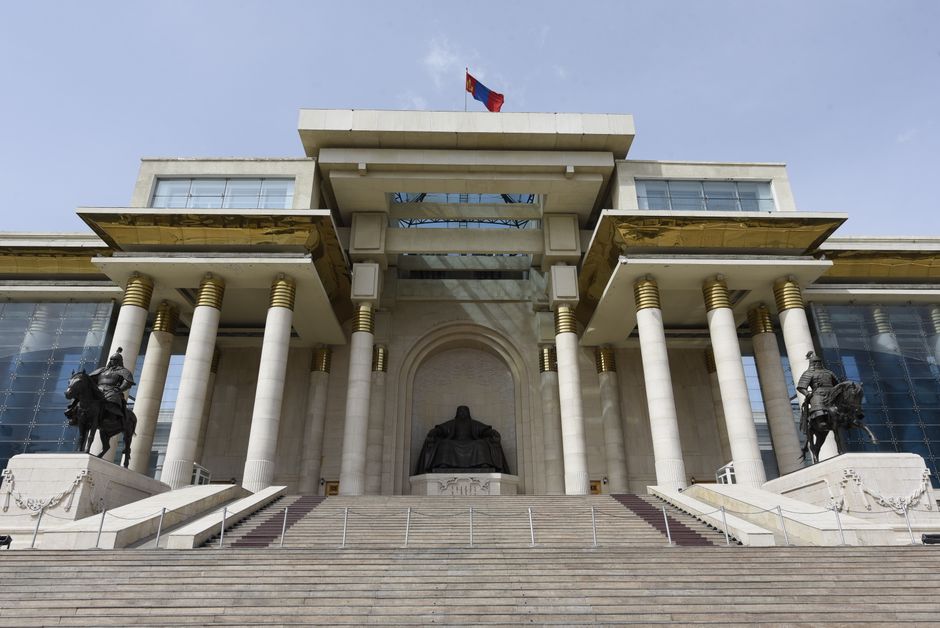
Why Genghis Khan’s Tomb Has Never Been Found

Why Genghis Khan’s Tomb Has Never Been Found

By TrivBits, History Desk — Published October 12, 2026

Why Genghis Khans Tomb Has Never Been Found — History trivia by TrivBits

Table of Contents

When the most powerful conqueror in history died in 1227, something extraordinary happened. His followers buried him in a secret location, then erased every trace of the grave. Nearly eight centuries later, the tomb of Genghis Khan remains one of archaeology's greatest mysteries. The founder of the Mongol Empire, who ruled over more territory than any other individual in the ancient world, vanished into the earth without a marker, monument, or map.

This wasn't an accident. The secrecy surrounding the Genghis Khan tomb was deliberate, systematic, and brutal. According to historical accounts, anyone who witnessed the burial procession was killed. The soldiers who dug the grave were executed. Some sources suggest that horses trampled the burial site until no trace remained, while others describe a river being diverted to flow over the location. The past holds few secrets as carefully guarded as this one.

Key Takeaways

  • Genghis Khan died in 1227, likely in northwestern China, but his burial location was intentionally concealed from history.
  • Mongol tradition demanded secret burials for leaders to prevent grave robbing and desecration by enemies.
  • Witnesses to the funeral procession were reportedly killed to maintain absolute secrecy about the tomb's location.
  • Modern searches have focused on the Khentii Mountains in Mongolia, believed to be Khan's birthplace and preferred resting spot.
  • Sacred status and legal protections have limited archaeological excavation in the most likely burial areas.
  • Advanced technology including satellite imagery and ground-penetrating radar have yet to locate the tomb.

The Strategic Secrecy Behind the Genghis Khan Tomb

Why hide a tomb so thoroughly? For the Mongols, this wasn't paranoia. It was practical.

Throughout the medieval era, grave robbing was rampant. Powerful rulers were buried with treasures—gold, weapons, horses, and precious artifacts meant to accompany them into the afterlife. These riches made royal tombs irresistible targets. Egyptian pharaohs faced this problem. Chinese emperors confronted it. The solution for most ancient civilizations was to build elaborate defenses: hidden chambers, false passages, and armed guards.

The Mongols chose a different path entirely. They eliminated the problem by making the tomb impossible to find. No grand mausoleum announced the location. No pyramid pierced the sky. The empire's founder would rest in unmarked earth, protected by silence rather than stone.

There was also a spiritual dimension. Mongol shamanism emphasized the sanctity of burial grounds. Disturbing a grave, especially that of a great leader, would bring catastrophic spiritual consequences. By keeping the location secret, the Mongols ensured no enemy could desecrate their founder's remains or steal his spiritual power.

What Historical Records Reveal

The historical accounts of Genghis Khan's death and burial are frustratingly vague. He died during a military campaign, possibly from injuries sustained in a fall from his horse, though some sources suggest illness. The exact cause remains debated among historians.

What happened next is shrouded in legend mixed with fragments of truth. The funeral procession traveled from the death site back toward Mongolia. One account describes a contingent of soldiers killing everyone they encountered along the route—thousands of people—to prevent word of the Khan's death from spreading and to eliminate witnesses to the burial location.

After the interment, some traditions say that a thousand horses trampled the ground above the grave until it was indistinguishable from the surrounding landscape. Others tell of trees being planted or a river diverted. One particularly dramatic account claims that the soldiers who performed the burial were then killed by another group, who were themselves subsequently executed, creating concentric circles of silence.

The reliability of these stories is questionable. They come from sources written decades or centuries after the events, often by outsiders to Mongol culture. But the consistency of the secrecy theme across multiple accounts suggests the basic truth: the burial was deliberately concealed with extraordinary measures.

Where Archaeologists Have Searched

If you're going to look for Genghis Khan's tomb, the Khentii Mountains in northeastern Mongolia make the most sense. This rugged, forested region was his birthplace. Mongol tradition favored returning great leaders to their ancestral lands.

The problem? The Khentii Mountains cover roughly 10,000 square miles of wilderness. Finding an unmarked grave in this expanse is like searching for a specific grain of sand on a beach. Modern expeditions have used satellite imagery to identify unusual formations or disturbances in the landscape. Ground-penetrating radar can detect anomalies beneath the surface. Thermal imaging might reveal differences in soil density.

None of these technologies have succeeded. Several expeditions have identified "promising sites" that turned out to be natural formations or unrelated archaeological features from different time periods.

There's another complication: much of the most likely search area is protected. The Burkhan Khaldun mountain, considered particularly sacred, is part of a restricted zone where excavation is forbidden. Even if someone had strong evidence of the tomb's location there, digging would be legally and culturally prohibited.

The Cultural Barriers to Discovery

Imagine finding Genghis Khan's tomb tomorrow. What happens next?

For many Mongolians, this isn't a hypothetical question—it's a concern. Genghis Khan isn't just a historical figure in Mongolia. He's a national symbol, a cultural icon, and a spiritual presence. His image appears on currency, buildings, and monuments. Disturbing his remains would be deeply offensive to many people.

The Mongolian government has been cautious about authorizing extensive archaeological work in the most sacred areas. Some expeditions have had permits revoked. Others face protests from local communities who view the searches as disrespectful.

This creates a paradox: the tomb might be findable with current technology, but cultural respect prevents the kind of intensive search that would be necessary. The same reverence that led to the tomb's concealment in the 13th century continues to protect it in the 21st century.

Comparing Famous Lost Tombs

Historical Figure Death Date Tomb Status Primary Challenge
Genghis Khan 1227 Never found Deliberately concealed location
Alexander the Great 323 BCE Lost Multiple relocations in ancient times
Cleopatra VII 30 BCE Unlocated Possibly destroyed or underwater
Attila the Hun 453 Never found Secret burial similar to Mongol practices

Frequently Asked Questions

Where is Genghis Khan most likely buried?

Most historians and archaeologists believe the tomb is somewhere in the Khentii Mountains of northeastern Mongolia, possibly near Burkhan Khaldun mountain where Mongol tradition holds he was born. However, no definitive evidence has pinpointed a specific location, and the vast, rugged terrain makes searching extremely difficult.

Why don't modern governments fund large-scale searches for the tomb?

The Mongolian government balances archaeological interest with cultural sensitivity. Many Mongolians consider the burial site sacred and believe it should remain undisturbed. Additionally, the most likely locations are in protected areas where extensive excavation is legally restricted out of respect for the cultural and spiritual significance of the land.

What would likely be inside Genghis Khan's tomb if found?

Based on Mongol burial customs of that era, the tomb would likely contain horses (buried to accompany him), weapons, armor, and valuable items the Khan used in life. However, it's unlikely to contain the vast treasures some imagine, as Mongol burials were generally simpler than those of sedentary civilizations like Egypt or China.

Has anyone ever claimed to find the tomb?

Several expeditions have announced discoveries of promising sites, but none have been verified as the actual tomb. In 2004, a Japanese-Mongolian team reported finding a structure in the Khentii region, but subsequent investigation couldn't confirm it was related to Genghis Khan. Most claims have proven to be unrelated archaeological sites or natural formations.

The mystery of Genghis Khan's tomb endures because of a remarkable convergence: ancient determination to keep a secret, vast and difficult terrain, and modern respect for cultural sacred spaces. Perhaps the tomb will surface one day through accident or advancing technology. Or perhaps the greatest conqueror in history will keep his final resting place hidden forever, a fitting end for someone who reshaped the world but left no monument to mark his passing.

Sources