











1 / 10 Questions
0 Points

What iconic toy was banned by the Soviet Union as a symbol of capitalism?

Barbie

Monopoly

Hot Wheels

Rubik's Cube

Points won
0
Correct score
0%

More Questions

More Articles

Did You Know These Tech Myths Are Still Believed?

Did You Know These Tech Myths Are Still Believed?

⏱️ 5 min read

In our increasingly digital world, technology has become an integral part of daily life. Yet despite our constant interaction with devices and software, numerous misconceptions about technology persist. These myths, often rooted in outdated information or misunderstandings, continue to influence how people use and care for their devices. Understanding the truth behind these common beliefs can help users make better decisions and optimize their technology experience.

Charging Your Phone Overnight Destroys the Battery

One of the most pervasive myths suggests that leaving smartphones plugged in overnight causes irreparable battery damage. This belief stems from older battery technology that was indeed susceptible to overcharging. However, modern smartphones use lithium-ion batteries with sophisticated charging management systems that automatically stop charging once the battery reaches 100 percent capacity.

These intelligent charging circuits prevent overcharging by switching to a trickle charge or stopping altogether when the battery is full. While it's true that keeping batteries at maximum capacity for extended periods can slightly accelerate degradation over time, the impact of overnight charging is minimal compared to other factors like heat exposure and complete discharge cycles. Many newer devices even include optimized charging features that learn user patterns and delay the final charge percentage until just before the typical wake-up time.

More Megapixels Always Mean Better Photos

The camera specifications arms race has led many consumers to believe that higher megapixel counts automatically translate to superior image quality. This oversimplification ignores numerous critical factors that determine photograph quality, including sensor size, lens quality, image processing algorithms, and aperture size.

A smartphone with a 108-megapixel camera won't necessarily outperform one with a 12-megapixel sensor if the latter has a larger individual pixel size, better lens optics, and superior computational photography capabilities. Larger individual pixels can capture more light, resulting in better low-light performance and reduced noise. Professional photographers often emphasize that composition, lighting, and technique matter far more than raw megapixel count for creating stunning images.

Incognito Mode Makes You Completely Anonymous

Private or incognito browsing modes create a false sense of security for many users who believe they're browsing completely anonymously. While these modes do prevent the browser from storing local history, cookies, and form data, they don't hide online activity from internet service providers, employers, schools, or the websites being visited.

Incognito mode simply means that once the private window closes, the browser won't retain evidence of the session on that specific device. Your IP address remains visible, tracking technologies can still follow your movements across websites, and any accounts you log into during the session can still track your activity. True online privacy requires additional tools like virtual private networks, privacy-focused browsers, and careful attention to website permissions and tracking settings.

Closing Background Apps Saves Battery Life

Many smartphone users religiously swipe away background apps, believing this practice conserves battery life and improves performance. In reality, both iOS and Android operating systems manage background applications efficiently, freezing them in a suspended state that consumes minimal resources.

When users force-close apps and then reopen them, the device must reload the entire application from scratch, which actually consumes more battery power and processing resources than resuming a suspended app. Modern operating systems are designed to handle memory management automatically, closing apps when resources are needed. The exception to this rule involves apps with legitimate background activity, such as navigation, music streaming, or those with known bugs causing excessive battery drain.

Macs Don't Get Viruses

The notion that Apple computers are immune to malware has persisted for years, giving Mac users a potentially dangerous sense of invulnerability. While macOS does include robust security features and has historically been targeted less frequently than Windows, Macs are certainly not immune to malicious software.

As Apple's market share has grown, so has the incentive for cybercriminals to develop Mac-specific malware. Adware, ransomware, and trojan horses designed for macOS exist and can compromise user data and system security. The built-in protections like Gatekeeper and XProtect provide substantial defense, but they're not foolproof. Mac users should practice the same cybersecurity hygiene as Windows users, including keeping software updated, being cautious with downloads, and considering reputable security software.

You Must Completely Drain Your Battery Before Recharging

This myth originated during the era of nickel-cadmium batteries, which did suffer from a "memory effect" if repeatedly recharged before full discharge. However, modern lithium-ion batteries function entirely differently and actually benefit from partial charging cycles rather than complete drain-and-fill cycles.

Completely draining lithium-ion batteries can actually reduce their lifespan and capacity over time. These batteries prefer to operate in the middle range, typically between 20 and 80 percent capacity. Experts recommend charging devices when convenient and avoiding regular complete discharges. The occasional full cycle might help calibrate the battery percentage indicator, but it's unnecessary for maintaining battery health and can even be counterproductive.

Airport Scanners Erase Data from Devices

Travelers often worry that airport X-ray machines and security scanners will corrupt data on laptops, smartphones, and storage devices. This concern is unfounded, as modern storage technologies are not affected by the X-ray radiation used in airport security equipment.

Solid-state drives, hard disk drives, and flash memory cards use magnetic or electronic storage methods that aren't impacted by the levels of X-ray exposure at security checkpoints. The TSA and security agencies worldwide confirm that travelers can safely place electronic devices through scanners without risk of data loss. The confusion may stem from older concerns about magnetic storage media and metal detectors, but contemporary digital storage is resilient to these security procedures.

Understanding these common technology myths helps users make informed decisions about device care and usage. As technology continues to evolve, staying informed through reliable sources ensures that practices keep pace with current capabilities rather than outdated misconceptions.
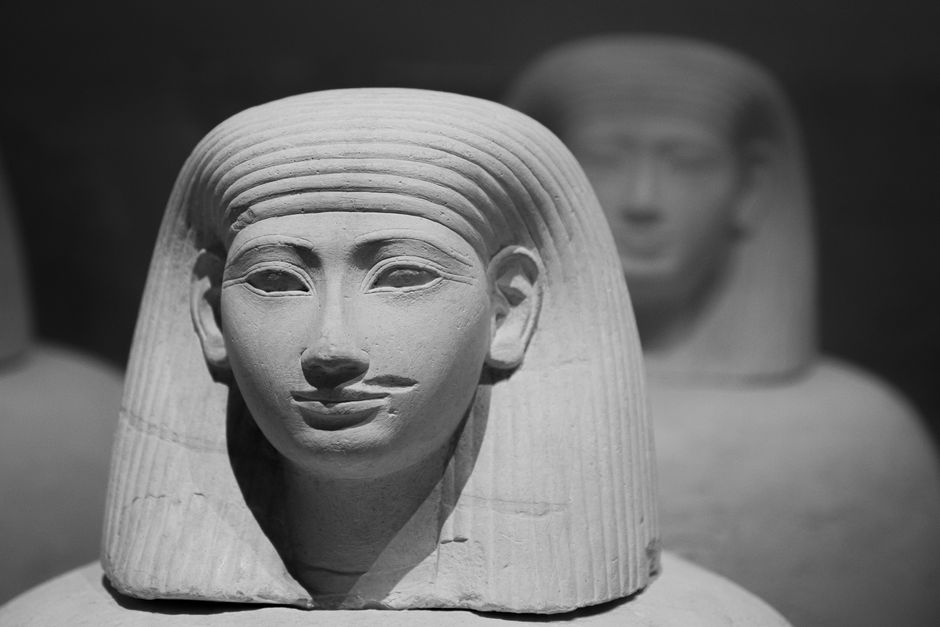
Why Cleopatra Was Greek, Not Egyptian: Hidden Truth

Why Cleopatra Was Greek, Not Egyptian: Hidden Truth

By TrivBits, History Desk — Published August 29, 2026

Why Cleopatra Was Greek, Not Egyptian: Hidden Truth — History trivia by TrivBits

Table of Contents

When most people picture Cleopatra, they imagine an Egyptian queen ruling from the golden palaces of ancient Egypt. The reality? Cleopatra was Greek, not Egyptian. She belonged to the Ptolemaic dynasty, a line of Greek rulers who controlled Egypt for nearly three centuries. This fascinating distinction reveals how the ancient world's greatest civilizations intertwined in ways that challenge our modern assumptions about history and identity.

The woman we know as Cleopatra VII spoke Greek as her first language, worshipped Greek gods alongside Egyptian deities, and descended from one of Alexander the Great's generals. Her story illuminates how empires blend cultures while maintaining distinct ethnic identities across generations.

Key Takeaways

  • Cleopatra belonged to the Ptolemaic dynasty, founded by Ptolemy I, a Macedonian Greek general who served Alexander the Great.
  • The Ptolemaic rulers maintained Greek language, customs, and identity throughout their nearly 300-year reign over Egypt.
  • Cleopatra was likely the first Ptolemaic ruler to actually learn the Egyptian language, though Greek remained her native tongue.
  • The dynasty practiced sibling marriage to keep the bloodline purely Macedonian Greek, a practice that continued for generations.
  • Despite ruling Egypt, the Ptolemies saw themselves as Greek monarchs governing a foreign land, not as Egyptian pharaohs in the traditional sense.
  • Cleopatra's Greek heritage shaped her education, political strategies, and diplomatic relationships with Rome.

The Macedonian Conquest That Changed Egyptian History

The story begins with Alexander the Great's conquest of Egypt in 332 BCE. The young Macedonian king swept through the Persian Empire, liberating Egypt from Persian control. The Egyptians welcomed him, and Egyptian priests crowned him pharaoh. But Alexander didn't stay long. He founded the city of Alexandria and moved on to conquer more territory.

When Alexander died in 323 BCE, his vast empire splintered. His generals fought over the pieces. Ptolemy, one of Alexander's most trusted commanders and childhood friends, claimed Egypt. Smart move. He established a dynasty that would rule for nearly three centuries, outlasting all other successor kingdoms from Alexander's fractured empire.

Ptolemy I and his descendants never abandoned their Greek identity. They built Alexandria into a center of Greek learning and culture. The famous Library of Alexandria became the ancient world's greatest repository of knowledge. Greek remained the language of government, education, and the royal court throughout the era.

How the Ptolemies Stayed Greek for Three Hundred Years

The Ptolemaic dynasty employed a controversial strategy to preserve their Greek lineage: they married within the family. Brothers married sisters. Uncles married nieces. This wasn't an Egyptian custom they adopted—it was a deliberate choice to avoid mixing with the local population.

Egyptian pharaohs had occasionally practiced sibling marriage for religious and political reasons, but the Ptolemies took it to extremes. They wanted to maintain their Macedonian Greek bloodline pure. The practice created a family tree that looks more like a tangled vine, but it achieved their goal of ethnic preservation.

Cleopatra herself was the product of multiple generations of this intermarriage. She was married to both of her younger brothers during her reign, following family tradition. Her father was likely the product of a brother-sister union. The genetic consequences were real, but the cultural identity remained distinctly Greek.

Cleopatra's Revolutionary Bridge Between Two Worlds

Here's what made Cleopatra exceptional among her dynasty: she actually bothered to learn Egyptian. Ancient historians noted this remarkable fact because it was so unusual for a Ptolemaic ruler. Her predecessors had ruled Egypt for nearly three centuries without speaking the native language of their subjects.

She didn't stop at Egyptian. Sources suggest Cleopatra spoke about nine languages, including Ethiopian, Hebrew, Aramaic, and Parthian. This linguistic skill gave her diplomatic advantages her ancestors never possessed. She could negotiate directly with foreign leaders without interpreters.

But make no mistake—Greek remained her primary language and cultural identity. She read Greek philosophy, studied Greek rhetoric, and modeled herself after Greek intellectual traditions. When she seduced Julius Caesar and Mark Antony, she did so as a Greek queen, not an Egyptian one. Her famous barge meetings and elaborate banquets reflected Hellenistic luxury, not traditional Egyptian customs.

The Cultural Duality of Ptolemaic Rule

The Ptolemies played a clever game. To their Greek subjects in Alexandria and other cities, they were Greek monarchs. To native Egyptians, they presented themselves as traditional pharaohs. They built temples in Egyptian style. They appeared in Egyptian religious ceremonies wearing pharaonic regalia. They even took Egyptian throne names.

This dual identity allowed them to maintain control over both populations. The Greek elite ran the government, military, and economy. Native Egyptians provided the agricultural labor and tax base that funded the kingdom's wealth. The system worked remarkably well for centuries.

Aspect Greek Identity Egyptian Presentation
Language Greek (court and administration) Egyptian (temples and ceremonies)
Religion Greek gods (Zeus, Apollo, Dionysus) Egyptian gods (Isis, Osiris, Ra)
Art Hellenistic sculpture and architecture Traditional pharaonic statues and temples
Education Greek philosophy and rhetoric Egyptian priestly traditions

Why This Historical Truth Matters Today

Understanding Cleopatra's Greek identity changes how we interpret her actions and legacy. Her relationship with Rome wasn't an Egyptian queen defending her homeland—it was a Greek monarch navigating the complex politics of Mediterranean power structures. She understood Roman culture because both Romans and Greeks shared Hellenistic civilization.

Her famous suicide wasn't just a dramatic end to Egyptian independence. It marked the final collapse of the last Hellenistic kingdom, the end of an era that began with Alexander. When Octavian conquered Egypt, he didn't just absorb another province. He extinguished the last flicker of Alexander's world-changing conquest.

The past century of archaeology and scholarship has revealed how truly Greek the Ptolemaic court remained. Inscriptions, papyri, and artifacts show a Greek-speaking elite that maintained distinct separation from native Egyptian culture, even while adopting its outward symbols for political purposes.

Frequently Asked Questions

Did Cleopatra have any Egyptian ancestry at all?

While the Ptolemies primarily practiced intermarriage within their Greek dynasty, some historians speculate that minor Egyptian or other non-Greek ancestry might have entered the bloodline through concubines or undocumented unions. However, no solid evidence confirms any Egyptian ancestry for Cleopatra. Her documented lineage traces back to Macedonian Greek origins through the Ptolemaic family tree.

Why is Cleopatra so strongly associated with Egyptian identity?

Cleopatra ruled Egypt as its queen and became the last pharaoh before Roman conquest, creating a natural association with Egyptian identity. Hollywood films, art, and popular culture have reinforced this connection. Her use of Egyptian religious imagery and her role in Egyptian ceremonies also contributed to the perception, even though these were political tools rather than reflections of her ethnic identity.

How did native Egyptians view the Greek Ptolemaic rulers?

Historical records suggest mixed feelings. The Ptolemies brought stability and prosperity, particularly in the dynasty's early centuries. However, they were clearly foreign rulers who favored Greek immigrants and maintained social separation. Some native Egyptians rose to important positions, particularly in the priesthood, but the government remained dominated by Greeks. Periodic revolts occurred, especially in Upper Egypt, revealing underlying tensions.

What happened to Greek culture in Egypt after Cleopatra's death?

Greek culture remained dominant in Egypt for centuries after Roman conquest. Alexandria continued as a major center of Greek learning and philosophy. Greek remained the administrative language. Christianity later spread through Greek-speaking communities. The Greek influence only gradually faded after the Arab conquest in the seventh century CE, roughly 700 years after Cleopatra's death.

The next time you see Cleopatra portrayed in film or art, remember: that's a Greek queen looking back at you. Her story reminds us that ancient civilizations were far more cosmopolitan and interconnected than we often imagine, with identities that defied simple geographic labels and cultural boundaries that were both rigid and surprisingly fluid.

Sources