










1 / 10 Questions
0 Points

What artist painted the Sistine Chapel ceiling in Rome?

Leonardo da Vinci

Michelangelo

Raphael

Donatello

Points won
0
Correct score
0%

More Questions

More Articles

Did You Know These Objects Are Older Than You Think?

Did You Know These Objects Are Older Than You Think?

⏱️ 5 min read

Throughout history, human ingenuity has produced countless inventions that have shaped civilization. While many people assume that modern conveniences are recent developments, the reality often surprises. Numerous everyday objects and technologies have origins stretching back centuries or even millennia, challenging common perceptions about when various innovations first appeared. Understanding the true age of these items provides valuable insight into human creativity and the slow evolution of technology that continues to influence contemporary life.

Ancient Hygiene and Personal Care Items

Personal hygiene products that seem thoroughly modern actually have remarkably ancient roots. The toothbrush, for instance, dates back to approximately 3000 BCE in ancient civilizations. Early Babylonians and Egyptians created tooth-cleaning implements by fraying the end of a twig, essentially creating a primitive brush. The Chinese developed a more recognizable version around 1600 CE, using hog bristles attached to bamboo or bone handles. This design closely resembles modern toothbrushes and remained largely unchanged for centuries.

Soap production has an even longer history, with evidence of soap-like materials dating back to ancient Babylon around 2800 BCE. Archaeological excavations have uncovered clay cylinders containing substances resembling soap, along with inscriptions describing the process of mixing fats with ashes. The ancient Egyptians combined animal and vegetable oils with alkaline salts to create cleansing agents, while the Romans elevated soap-making to an industrial scale.

Vending Machines From Antiquity

The concept of automated retail might seem like a product of the industrial age, but vending machines actually originated in ancient times. The Greek engineer and mathematician Hero of Alexandria invented the first known vending machine around 215 BCE. This remarkable device dispensed holy water in Egyptian temples. When a coin was inserted into a slot, its weight would pull down a lever that opened a valve, allowing a measured amount of water to flow out. The mechanism automatically stopped when the coin fell off the lever, demonstrating sophisticated understanding of basic mechanics and automated systems thousands of years before the modern era.

Surprisingly Old Plumbing Systems

Indoor plumbing systems are not merely Victorian innovations. The Indus Valley Civilization, flourishing around 2500 BCE in present-day Pakistan and northwest India, engineered sophisticated urban drainage and water supply systems. The cities of Mohenjo-daro and Harappa featured elaborate bathrooms, covered drains, and water-flushing toilets connected to municipal sewage systems. These ancient engineers understood hydraulics and sanitation principles that would not reappear in Western civilization until thousands of years later.

The ancient Minoans on Crete developed similarly advanced plumbing systems around 1700 BCE, including terra-cotta pipes for water distribution and stone sewers for waste removal. The Palace of Knossos contained flush toilets with wooden seats and sophisticated water management systems that included both hot and cold running water, demonstrating technological capabilities that rival modern standards.

Central Heating Through the Ages

Central heating systems existed long before modern thermostats and furnaces. The Romans perfected the hypocaust system around the 1st century BCE, creating an ingenious method of heating buildings from below. This system involved raising floors on pillars, creating a space underneath where hot air from a furnace could circulate. The heated air would warm the floors above and travel through spaces in the walls before exiting through flues. Wealthy Roman homes, public baths, and important buildings throughout the empire utilized this effective heating method, providing comfortable indoor temperatures during cold weather.

Ancient Refrigeration Techniques

Preserving food through cooling is not a modern concept invented with electric refrigerators. Ancient Persians constructed yakhchāls—dome-shaped structures designed for ice storage—as early as 400 BCE. These architectural marvels could store ice harvested during winter months or created through cooling water overnight in shallow pools. The thick, heat-resistant walls made from a special mortar called sārōj, combined with underground storage chambers and wind catchers, kept ice frozen even during scorching summers. Some yakhchāls could preserve ice for months, providing ancient communities with refrigeration capabilities long before electricity.

The Surprisingly Old Flushing Toilet

While Thomas Crapper often receives credit for inventing the modern toilet, flushing toilets existed much earlier. Sir John Harington, godson to Queen Elizabeth I, invented a flushing water closet in 1596, complete with a cistern and a valve system. Though his invention was functional and installed in the queen's palace, it failed to gain widespread adoption. The first patent for a flushing toilet was issued to Alexander Cummings in 1775, and improvements continued throughout the following century. However, as mentioned earlier, basic flushing toilet concepts existed in ancient civilizations thousands of years before these Renaissance and Enlightenment-era inventors.

Timekeeping Devices of Antiquity

Mechanical clocks might appear to be medieval inventions, but complex timekeeping devices existed much earlier. Water clocks, or clepsydras, were used in ancient Egypt around 1500 BCE, measuring time through regulated water flow from one container to another. The ancient Greeks and Chinese developed increasingly sophisticated versions, with the Greek inventor Ctesibius creating elaborate water clocks around 250 BCE that included gears, moving figurines, and alarm mechanisms. The Antikythera mechanism, discovered in a shipwreck and dating to approximately 100 BCE, was an extraordinarily complex analog computer used to predict astronomical positions and eclipses, demonstrating mechanical sophistication not seen again until the 14th century.

These examples demonstrate that human innovation has ancient roots, with many fundamental technologies developing far earlier than commonly believed. Recognizing the true age of everyday objects provides perspective on technological progress and reminds us that innovation builds upon foundations laid by ingenious minds across millennia.
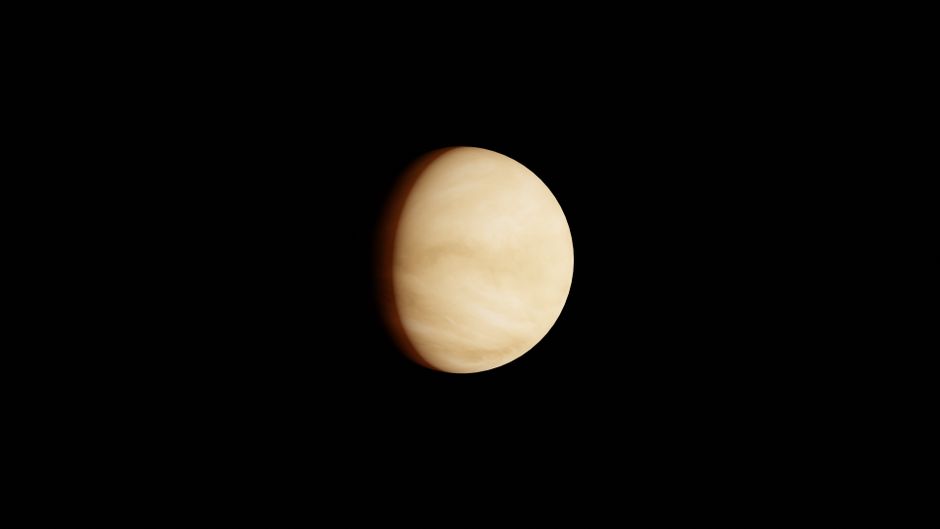
Why Venus Rotates Backwards: The Planetary Mystery

Why Venus Rotates Backwards: The Planetary Mystery

By TrivBits, Staff Writer — Published August 25, 2026

Why Venus Rotates Backwards: The Planetary Mystery — Quick Facts trivia by TrivBits

Table of Contents

Did you know that Venus spins in the opposite direction from most planets in our solar system? While Earth and most of its planetary siblings rotate counterclockwise when viewed from above the North Pole, Venus rotates backwards—clockwise, earning it the distinction of having what scientists call "retrograde rotation." This surprising fact makes Venus one of the most interesting oddballs in our cosmic neighborhood, and the reasons behind this backward spin have puzzled astronomers for decades.

The story of how Venus came to rotate backwards involves violent cosmic collisions, gravitational forces, and perhaps even a completely different planetary past. Understanding this phenomenon reveals fascinating truths about planetary formation and the chaotic early days of our solar system.

Key Takeaways

  • Venus rotates backwards (retrograde rotation) compared to most planets in our solar system, spinning clockwise when viewed from above its north pole.
  • Only Venus and Uranus have retrograde rotation among the major planets, making this an unusual planetary characteristic.
  • The most widely accepted theory suggests one or more massive collisions during the solar system's formation knocked Venus into its backward spin.
  • Venus rotates extremely slowly—one Venusian day lasts longer than one Venusian year.
  • The planet's thick atmosphere may have influenced or maintained its unusual rotation through atmospheric tides over billions of years.
  • This backward rotation means the Sun rises in the west and sets in the east on Venus.

Why Venus Rotates Backwards: The Leading Theories

The question of Venus's backward rotation has generated several scientific theories. The most compelling explanation involves catastrophic impacts during the solar system's turbulent youth, roughly four billion years ago. During this period, planetary bodies frequently collided as they settled into stable orbits.

Scientists believe that one or more massive objects—possibly as large as Earth's moon or even bigger—slammed into Venus with such force that they fundamentally altered its rotation. Think of it like hitting a spinning top at just the right angle to reverse its spin. These weren't gentle bumps. These were world-shattering impacts that could liquefy entire hemispheres and reshape a planet's destiny.

A second theory proposes that gravitational interactions with the Sun, combined with Venus's extraordinarily thick atmosphere, gradually slowed and then reversed the planet's original rotation over billions of years. Venus's atmosphere is roughly ninety times denser than Earth's, creating substantial atmospheric tides. These tides, pulled by the Sun's gravity, could act like brakes on the planet's rotation.

Some researchers suggest Venus may have originally rotated "normally" but slowly decelerated to a standstill before beginning to spin in the opposite direction. This process would have taken an immense amount of time—potentially billions of years—making it one of the slowest transformations in the solar system.

The Slowest Spin in the Solar System

Venus doesn't just rotate backwards—it rotates incredibly slowly. One complete rotation takes approximately 243 Earth days. Here's the truly mind-bending part: Venus completes an orbit around the Sun in about 225 Earth days. This means a single day on Venus is actually longer than a Venusian year.

If you could stand on Venus's scorching surface (you can't—you'd be crushed and incinerated), you'd experience sunrise in the west and sunset in the east. But you'd have to wait months between sunrises. The Sun would creep across the sky at an almost imperceptible pace, taking the equivalent of nearly four Earth months to travel from one horizon to the other.

Comparing Planetary Rotations

Planet Rotation Direction Length of Day Notable Features
Mercury Prograde (normal) 59 Earth days Slow rotation, tidally locked to Sun
Venus Retrograde (backwards) 243 Earth days Day longer than year
Earth Prograde (normal) 24 hours Standard counterclockwise rotation
Mars Prograde (normal) 24.6 hours Very similar to Earth
Uranus Retrograde (backwards) 17 hours Also tilted 98 degrees on its side

Myths and Truths About Venus's Rotation

One common misconception is that Venus's rotation is somehow connected to its position as Earth's "twin." While Venus and Earth share similar sizes and masses, their rotations couldn't be more different. Earth spins once every twenty-four hours; Venus takes eight months by comparison.

Another myth suggests that Venus's backward rotation makes it unique. While rare, Venus isn't completely alone. Uranus also rotates retrograde, though its situation is different—Uranus is tilted so far on its axis that it essentially rolls around the Sun like a ball. Several moons in the solar system also exhibit retrograde rotation, likely captured asteroids that were gravitationally snagged by their parent planets.

Some early theories proposed that Venus's rotation was slowing down and would eventually stop entirely. Current evidence doesn't support this idea. Venus's rotation appears stable, maintained by the complex interplay between its dense atmosphere, the Sun's gravitational pull, and the planet's internal structure.

The Atmospheric Connection

Venus's atmosphere plays a fascinating role in this mystery. The upper atmosphere actually rotates much faster than the planet itself, whipping around Venus in just four Earth days—a phenomenon called "super-rotation." Winds at cloud level reach speeds of roughly 360 kilometers per hour, circling the planet in a fraction of the time it takes the surface to complete one rotation.

This creates a unique situation where the atmosphere and the solid planet are almost decoupled, spinning at dramatically different rates. Scientists continue studying whether these atmospheric dynamics helped cause the backward rotation or are merely a consequence of it. The dense atmosphere may have acted like a viscous brake, slowing Venus's original rotation through friction and thermal tides over geological time.

Frequently Asked Questions

Does Venus rotate backwards compared to all planets?

Venus rotates backwards compared to most planets, but not all. Uranus also has retrograde rotation, though it's tilted dramatically on its side. The vast majority of planets, moons, and other solar system bodies rotate in the same direction they orbit the Sun—counterclockwise when viewed from above the North Pole. Venus is one of only two major planets that break this pattern.

How long is a day on Venus?

A single day on Venus—one complete rotation—lasts approximately 243 Earth days. Remarkably, this is longer than Venus's year, which takes about 225 Earth days. This unusual relationship means that if you could observe from Venus's surface, you'd see the Sun rise in the west, slowly cross the sky over months, and set in the east, with only about two sunrises per Venusian year.

Can we prove what caused Venus to rotate backwards?

We cannot definitively prove what caused Venus's retrograde rotation because the event happened billions of years ago, leaving no direct evidence. Scientists rely on computer simulations, planetary formation models, and observations of Venus's current state to develop theories. The collision hypothesis remains the most widely accepted explanation, but atmospheric braking and gravitational interactions may have also played roles. Future missions studying Venus's interior structure might provide additional clues.

Will Venus ever rotate normally again?

There's no evidence suggesting Venus's rotation will reverse again to match other planets. The planet's rotation appears stable under current conditions. While theoretical scenarios involving massive impacts could alter its spin, such events are extraordinarily unlikely in our solar system's current, relatively calm state. Venus will almost certainly maintain its backward rotation for billions of years to come.

Venus's backward rotation reminds us that planetary evolution is neither simple nor predictable. Each world in our solar system carries scars and quirks from its violent formation, and Venus's leisurely backward spin is one of the most intriguing. Every time you look up at that bright "evening star," you're seeing a planet that literally moves to its own rhythm—one that defies the cosmic norm and keeps astronomers questioning what really happened in those chaotic early days when worlds were still finding their place in space.

Sources