
By TrivBits, Staff Writer — Published October 2, 2026
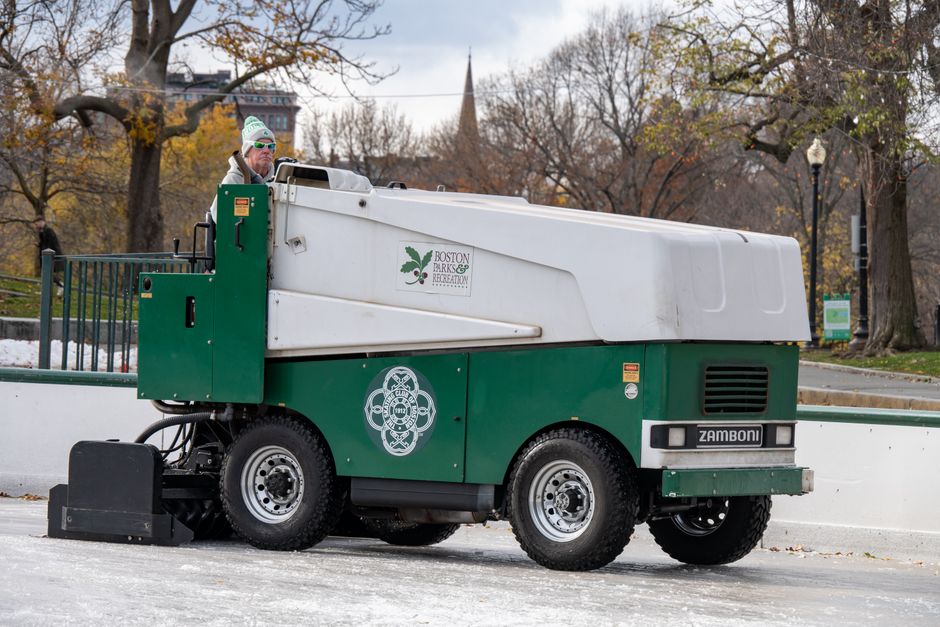
Table of Contents
- Key Takeaways
- The Zamboni Invented Accident: How Desperation Sparked Innovation
- From Junkyard Parts to Game-Changing Machine
- The Celebrity Endorsement That Changed Everything
- Unknown Facts and Surprising Truths About Ice Resurfacing
- How the Machine Actually Works
- The Impact on Hockey and Figure Skating
- Frequently Asked Questions
- Sources
Did you know that the machine synonymous with ice rinks worldwide came about through surprising circumstances rather than deliberate engineering genius? The zamboni invented accident story is one of those fascinating facts that reveals how innovation often emerges from practical necessity. Frank Zamboni didn’t set out to revolutionize ice maintenance. He just wanted to save time at his struggling ice rink in California.
What started as a workaround became an icon. The truth behind this invention combines ingenuity, persistence, and a hefty dose of problem-solving under pressure.
Key Takeaways
- Frank Zamboni created his ice resurfacing machine in 1949 to solve problems at his own ice rink, not as a planned invention.
- Before the Zamboni, resurfacing ice required three to five workers and over an hour of backbreaking manual labor.
- The first machine was cobbled together from surplus war materials, including parts from a Douglas aircraft.
- Olympic figure skater Sonja Henie’s endorsement launched the Zamboni from local solution to international phenomenon.
- The word “Zamboni” is a protected trademark, though it’s often used generically for any ice resurfacer.
- Modern Zambonis can resurface a hockey rink in roughly 10 minutes, transforming what was once an exhausting process.
The Zamboni Invented Accident: How Desperation Sparked Innovation
Frank Zamboni never intended to become a household name. In the 1940s, he and his family operated Iceland Skating Rink in Paramount, California. The Southern California location might seem odd for an ice business, but the real challenge wasn’t the weather—it was the ice itself.
Maintaining smooth ice was brutal work. Workers would scrape the surface with tractors pulling heavy blades. Then they’d squeegee away the shavings and spray water to fill the gouges. Finally, they’d squeegee again and wait for everything to freeze. The entire ordeal consumed up to 90 minutes and left workers exhausted.
Frank watched his employees struggle. He saw customers waiting. And he realized his rink couldn’t compete if half the day disappeared into maintenance. So he started tinkering in his workshop, using whatever materials he could find.
This wasn’t a lightbulb moment. It was trial and error stretched across years.
From Junkyard Parts to Game-Changing Machine
The first prototype emerged in 1942, but it barely worked. Frank kept refining, rebuilding, and reimagining. He scavenged parts from military surplus yards—a common practice in post-war America when materials were scarce but surplus equipment was plentiful.
The breakthrough machine, Model A, finally came together in 1949. It featured a Jeep engine and chassis combined with components from a Douglas aircraft. The design was elegantly simple: a blade shaved the ice, a horizontal auger collected the shavings, an elevator lifted them into a tank, and clean water washed down to fill the cuts. All in one pass.
What made this interesting wasn’t just the mechanics. It was the philosophy. Frank thought like a rink owner, not an engineer. Every feature solved a real problem he’d experienced firsthand.
The Celebrity Endorsement That Changed Everything
For a few years, the Zamboni remained a local curiosity. Then Sonja Henie came to town. The Norwegian figure skater had won three Olympic gold medals and ten World Championships. By the 1950s, she was touring with her own ice show, performing for packed audiences across America.
When Henie saw the Zamboni at work, she immediately grasped its potential. She ordered one for her traveling show. Suddenly, arena managers everywhere wanted to know about this California machine that could resurface ice in minutes instead of hours.
Word spread through the entertainment and sports world. Hockey rinks took notice. Olympic venues placed orders. The accidental invention became indispensable.
Unknown Facts and Surprising Truths About Ice Resurfacing
The Zamboni Company still operates today, family-owned and based in California. They’ve built over 12,000 machines since 1949, shipping them to rinks in more than 90 countries.
But here’s an interesting myth to bust: not every ice resurfacer is a Zamboni. Several competitors manufacture similar machines, including Olympia and Resurfice. Yet “Zamboni” has become generic in everyday speech, much like “Kleenex” or “Band-Aid.” The company vigorously defends its trademark, reminding people that it’s a brand name, not a product category.
Another surprising fact: modern Zambonis come in electric and propane versions. Environmental concerns and indoor air quality have pushed many rinks toward cleaner power sources. Some newer models even recycle the ice shavings, melting them down and reusing the water.
The machines have also become cultural icons. They appear in movies, inspire Halloween costumes, and even star in their own racing events. Some fans consider riding in a Zamboni a bucket-list experience.
How the Machine Actually Works
The process happens in coordinated stages. First, a sharp blade mounted at the front shaves a thin layer off the ice surface—typically less than an inch. This removes ruts, scratches, and accumulated snow.
A horizontal rotating auger immediately behind the blade collects the shavings, preventing them from scattering. These ice chips then travel up a vertical conveyor into a large collection tank. Meanwhile, a cloth or towel system washes the ice with heated water, filling in the grooves left by the blade.
The water temperature matters enormously. Too cold and it freezes before spreading evenly. Too hot and it melts too much of the underlying ice. Experienced operators know exactly how to adjust for different conditions.
The entire machine weighs several tons when fully loaded. Driving one requires skill, spatial awareness, and a surprising amount of finesse. Operators follow specific patterns to ensure complete coverage without creating overlapping lines or thin spots.
The Impact on Hockey and Figure Skating
Before Zambonis, hockey games featured longer intermissions and poorer ice quality. Players dealt with rough surfaces that slowed the puck and increased injury risk. Figure skaters struggled to land jumps on choppy ice.
The Zamboni didn’t just save time. It improved athletic performance. Smooth ice means faster skating, cleaner passes, and more spectacular performances. The machine enabled the modern pace of hockey and the technical difficulty of contemporary figure skating.
Television broadcasting benefited too. Shorter intermissions made games more viewer-friendly. Networks could fit more content into broadcast windows. The humble ice resurfacer indirectly shaped how we consume winter sports.
Frequently Asked Questions
Was the Zamboni really invented by accident?
The invention wasn’t a complete accident, but it emerged from necessity rather than planned innovation. Frank Zamboni needed to solve operational problems at his ice rink, not create a new industry. He stumbled into invention while seeking efficiency, making it partially accidental in its trajectory and ultimate impact.
Why did Frank Zamboni build his own machine instead of buying one?
Nothing like it existed. Manual ice resurfacing was the only option in the 1940s, requiring multiple workers and consuming enormous time. Frank built his machine because no commercial solution was available—he created a market by solving his own problem.
How long does it take a Zamboni to resurface a hockey rink?
A skilled operator can resurface a standard NHL rink in approximately 10 to 15 minutes. The exact time varies based on ice conditions, machine model, and the operator’s experience. This represents a dramatic improvement over the 60 to 90 minutes required for manual resurfacing.
Are all ice resurfacing machines called Zambonis?
No. Zamboni is a trademarked brand name, though it’s often used generically. Competing manufacturers like Olympia and Resurfice produce similar machines with different brand names. The Zamboni Company actively protects its trademark to prevent the name from becoming a generic term legally.