










1 / 10 Questions
0 Points

What material are pearls made from?

Quartz

Calcite

Nacre

Coral

Points won
0
Correct score
0%

More Questions

More Articles

Viking Women Warriors Buried with Weapons: DNA Proof

Viking Women Warriors Buried with Weapons: DNA Proof

By TrivBits, History Desk — Published September 22, 2026
Viking Women Warriors Buried with Weapons: DNA Proof — History trivia by TrivBits

Table of Contents

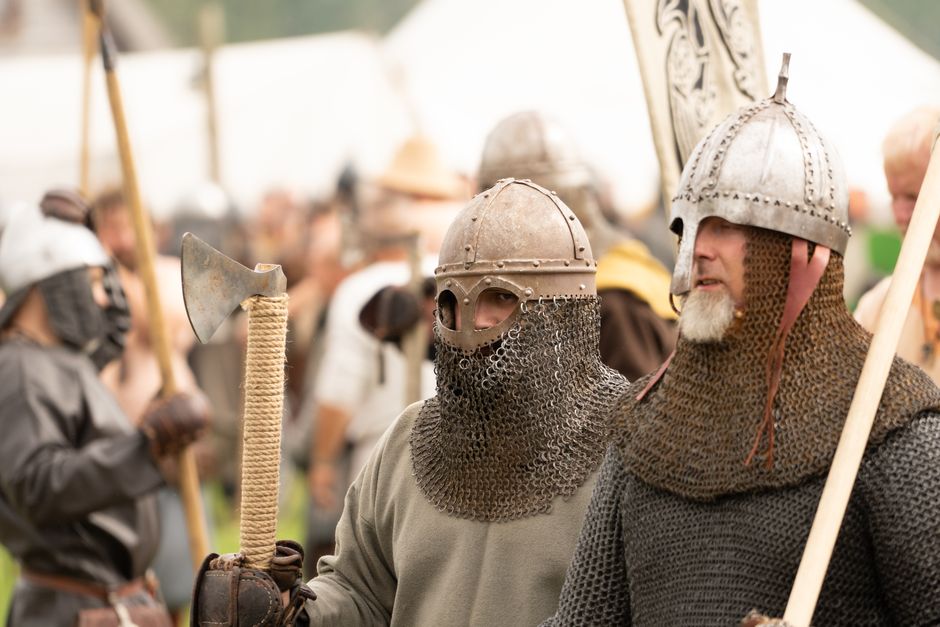
For centuries, archaeologists uncovered Viking graves containing swords, axes, and shields alongside human remains. The assumption? These warrior burials must belong to men. But modern DNA analysis has shattered that comfortable narrative. Viking women warriors weren't just legendary figures from Norse sagas—they were real historical individuals who lived, fought, and earned honored burials in the Viking Age, roughly spanning the 8th to 11th century.

The most famous case comes from a grave discovered in Birka, Sweden, in the 1880s. This burial contained a full complement of military equipment, strategic gaming pieces suggesting tactical knowledge, and skeletal remains initially assumed male. Over a century later, DNA testing revealed the occupant was genetically female, forcing historians to reconsider everything they thought they knew about gender roles in ancient Norse civilization.

Key Takeaways

  • DNA analysis of Viking Age burials has confirmed that some graves containing weapons and military equipment belonged to biological females.
  • The Birka warrior grave, excavated in the 1880s, was conclusively identified as female through osteological and genetic testing in 2017.
  • Historical assumptions about gender and warfare in Viking society were often based on modern biases rather than evidence from the past.
  • Norse sagas and mythology referenced female warriors called shieldmaidens, suggesting cultural acceptance of women in combat roles.
  • These discoveries don't prove all Viking women were warriors, but demonstrate that the era allowed for more flexible gender roles than previously believed.
  • The findings have sparked ongoing debate about interpreting archaeological evidence and questioning assumptions about ancient civilizations.

The Birka Warrior: How DNA Changed Viking History

The grave at Birka, designated Bj 581, represented one of the highest-status Viking warrior burials ever found. The occupant was interred with a sword, an axe, a spear, armor-piercing arrows, a battle knife, and two shields. Two horses accompanied the deceased into the afterlife. Gaming pieces placed in the grave suggested this person held command responsibilities, planning military strategy and leading troops.

When first excavated, archaeologists simply assumed the skeleton was male. Why wouldn't they? The grave contained everything associated with a professional Viking warrior. For over 130 years, this burial was cited as a prime example of elite Viking military culture. Textbooks featured the Birka warrior as evidence of Norse martial prowess.

But in 2017, researchers from Uppsala University and Stockholm University published DNA analysis that changed everything. They extracted genetic material from the skeletal remains and found two X chromosomes—no Y chromosome. The Birka warrior was female. Subsequent osteological examination confirmed the skeleton's female characteristics, which earlier researchers had either missed or dismissed.

The revelation ignited fierce academic debate. Some scholars questioned whether the weapons truly belonged to the burial or had been moved over the centuries. Others suggested the woman might have been buried with her husband's equipment. Yet the archaeological record showed no disturbance, and the careful placement of items indicated deliberate, meaningful arrangement. The grave goods were hers.

What Viking Women Warriors Tell Us About Norse Society

The existence of female warriors doesn't mean Viking society was egalitarian by modern standards. It wasn't. But the Norse world operated differently than the medieval Christian societies that surrounded it. Women in Viking culture could own property, initiate divorce, and inherit wealth. The sagas—epic stories from the medieval era preserving older oral traditions—mentioned shieldmaidens as exceptional but not impossible figures.

Archaeological evidence now supports what mythology hinted at. Several other Viking Age graves containing weapons have been reexamined with modern techniques, revealing some belonged to women. These weren't common burials, suggesting female warriors remained unusual. But they existed, participated in martial culture, and earned respect significant enough to warrant burial with full military honors.

The gaming pieces found in the Birka grave prove particularly intriguing. These weren't toys—they represented strategic planning tools used by military commanders. Their presence suggests this woman didn't just fight; she led. She made tactical decisions. She commanded respect from warriors who followed her into battle.

Challenging Archaeological Assumptions Across Civilizations

The Viking women warriors discovery exposed a broader problem in archaeology: gender assumptions contaminating scientific interpretation. For generations, researchers approached excavations with cultural biases from their own time period. Weapons meant men. Jewelry meant women. These assumptions became self-fulfilling, shaping how evidence was categorized and interpreted.

DNA testing and modern osteological methods now allow researchers to determine biological sex independently of grave goods. This technology has revealed surprises across multiple ancient civilizations. Graves once labeled male based solely on weapons have turned out to be female. Conversely, some burials assumed female because of ornaments actually contained male remains.

The lesson extends beyond Viking history. Archaeologists studying ancient empires, from Rome to the nomadic cultures of the Eurasian steppes, are revisiting old excavations with fresh eyes and new technology. The past was more complex, more varied, and less bound by rigid gender roles than 20th-century scholars imagined.

The Shieldmaiden Legacy in Norse Culture

Norse mythology and sagas preserved stories of female warriors long before DNA could confirm their existence. Figures like Lagertha, described in the chronicles of Saxo Grammaticus, led troops in battle. The Valkyries, while mythological, represented warrior women choosing who lived and died in combat. These weren't just fantasy—they reflected cultural concepts that made sense to Viking Age audiences.

The sagas shouldn't be read as historical documents, but they reveal what Norse society found believable. A culture that couldn't imagine female warriors wouldn't have created so many stories featuring them. The tales suggest that while uncommon, women participating in warfare fell within the Norse understanding of possibility.

This cultural flexibility might connect to practical realities. Viking expeditions often lasted months or years, leaving settlements defended by whoever remained. Women managing farms and communities in men's absence would need to defend against raids. The line between civilian and warrior blurred in ways unfamiliar to more settled, hierarchical civilizations of the same era.

Frequently Asked Questions

Were all Viking women warriors?

No, female warriors remained exceptional rather than typical. Most Viking women filled traditional domestic roles, managing households, raising children, and working in textile production. However, the society's structure allowed for individuals who didn't fit standard gender expectations, and some women clearly pursued martial paths.

How many female warrior graves have been found?

The exact number remains uncertain as many Viking Age graves haven't undergone modern DNA analysis. The Birka burial represents the most thoroughly documented and highest-status example, but researchers have identified several other weapon burials that may belong to women, pending genetic confirmation and reexamination of skeletal remains.

Did Viking women fight in raids and battles?

Evidence suggests some did, though the extent remains debated. The military equipment and command-related items in confirmed female warrior graves indicate these women held genuine martial roles, not ceremonial positions. Whether they participated in overseas raids or primarily defended home territories isn't definitively known from current archaeological evidence.

Why did archaeologists originally think the Birka warrior was male?

Researchers made assumptions based on grave goods rather than skeletal analysis. The presence of weapons, armor, and military equipment led to automatic classification as male without careful osteological examination. This reflected broader cultural biases assuming warfare was exclusively masculine across all historical periods and civilizations.
Sources

The Eruption of Krakatoa Was Heard 3,000 Miles Away

The Eruption of Krakatoa Was Heard 3,000 Miles Away

By TrivBits, History Desk — Published September 6, 2026

The Eruption of Krakatoa Was Heard 3,000 Miles Away — History trivia by TrivBits

Table of Contents

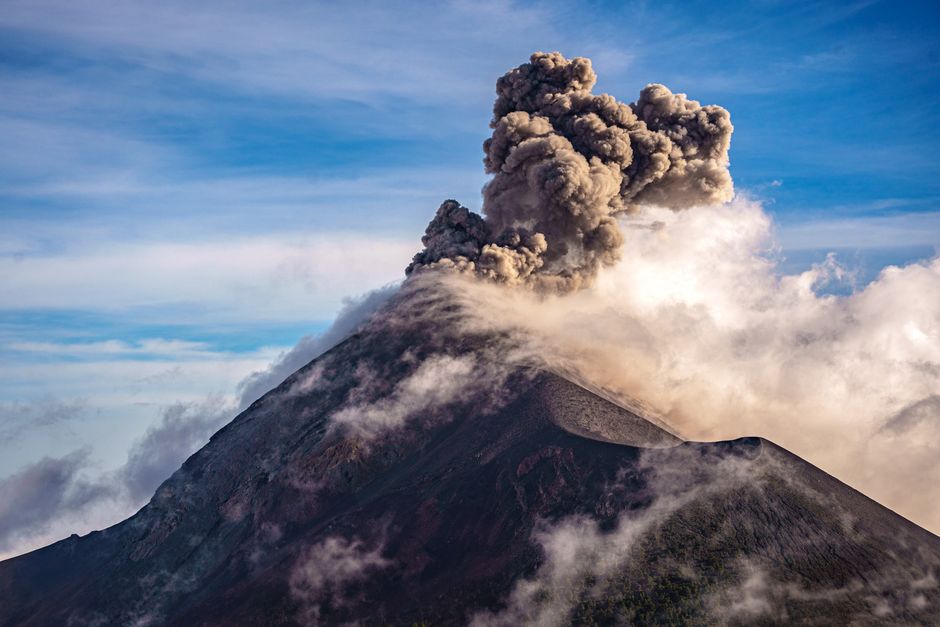
On August 27, 1883, the volcanic island of Krakatoa in Indonesia produced what remains one of the loudest sounds in recorded history. The eruption of Krakatoa was heard across an area covering roughly one-thirteenth of the Earth's surface, with reports of the thunderous blast coming from locations as far as 3,000 miles away. This catastrophic event didn't just mark a pivotal moment in geological history—it became a defining natural disaster of the 19th century, reshaping our understanding of volcanic power and atmospheric phenomena.

The sound itself was so extraordinary that people in Perth, Australia, and the island of Rodrigues near Mauritius in the Indian Ocean reported hearing what they described as distant cannon fire. The eruption's acoustic signature traveled through the atmosphere multiple times around the globe, detected by barographs worldwide for days afterward.

Key Takeaways

  • Krakatoa's 1883 eruption produced the loudest sound in recorded human history, heard approximately 3,000 miles away
  • The explosion was equivalent to roughly 200 megatons of TNT, about 13,000 times more powerful than the Hiroshima atomic bomb
  • The eruption generated tsunamis exceeding 100 feet in height that killed more than 36,000 people in the surrounding region
  • Atmospheric pressure waves from the blast circled the Earth multiple times and were recorded on barographs globally
  • The event ejected approximately 5 cubic miles of rock, ash, and pumice into the atmosphere
  • Global temperatures dropped by more than one degree Fahrenheit due to the volcanic ash blocking sunlight

The Eruption Krakatoa Heard Around the World: Understanding the Acoustic Phenomenon

What makes a sound travel 3,000 miles through the air? The answer lies in the sheer magnitude of the explosion. When Krakatoa erupted, it released energy that created pressure waves powerful enough to rupture the eardrums of sailors 40 miles away. The sound level at the source is estimated to have reached 310 decibels—far beyond anything humans can safely experience.

For context, sounds above 194 decibels are no longer just sound waves in air. They become shock waves. The eruption created a blast that pushed the boundaries of what we consider "sound" in the traditional sense. People in locations like Perth, Australia (about 1,930 miles away) and Rodrigues Island (approximately 3,000 miles distant) heard distinct booming noises, though they had no idea what caused them until news of the disaster spread in the following weeks.

The acoustic phenomenon extended beyond what human ears could detect. Barographs—instruments that measure atmospheric pressure—recorded the pressure wave passing their locations multiple times as it traveled around the Earth. Scientists documented at least seven distinct passages of the wave as it circled the planet over the course of five days following the eruption.

The Geological Forces Behind the Catastrophe

Krakatoa sat along the Sunda Strait between Java and Sumatra, positioned at the volatile intersection of tectonic plates. The volcanic island was part of the Pacific Ring of Fire, a region where roughly 75 percent of the world's active volcanoes reside. In the months leading up to the final eruption, Krakatoa exhibited warning signs—smaller eruptions and earthquakes—that local populations noticed but couldn't fully interpret with the scientific knowledge of that era.

The final eruption sequence involved multiple explosions, but the climactic blast on the morning of August 27 was the one that produced the historic sound. The volcano essentially destroyed itself in the process. Two-thirds of the island collapsed into the emptied magma chamber below, creating a massive underwater caldera and triggering the devastating tsunamis that would claim tens of thousands of lives.

The explosion ejected material at speeds estimated to exceed 1,600 miles per hour, creating pyroclastic flows—superheated mixtures of gas, ash, and rock—that traveled across the sea surface to reach coastal communities on Java and Sumatra. The sheer violence of the geological forces involved left a permanent mark on the region's geography and on scientific understanding of volcanic processes.

Three Ways Krakatoa Changed Our World

1. Revolutionizing Global Scientific Communication and Observation

The Krakatoa eruption occurred during a unique moment in human history—the telegraph had recently connected much of the world, allowing news and scientific data to travel faster than ever before. Scientists could compare observations from different continents in near real-time, something impossible in previous centuries. The Royal Society of London compiled over 2,000 pages of reports, measurements, and eyewitness accounts, creating one of the most comprehensive studies of a natural disaster up to that point in the 19th century. This collaborative effort across nations and institutions set a precedent for international scientific cooperation that continues today. The eruption essentially became a test case for modern scientific methodology, demonstrating how global observation networks could advance human understanding of natural phenomena.

2. Creating Spectacular Atmospheric Effects That Inspired Art and Science

The volcanic ash and aerosols ejected into the stratosphere created optical phenomena that lasted for years. Sunsets around the world turned vivid shades of red, orange, and purple as sunlight scattered through the volcanic particles suspended in the upper atmosphere. These spectacular displays appeared in regions far from Indonesia, puzzling observers in Europe and North America who had no immediate knowledge of the eruption. The famous painting "The Scream" by Edvard Munch, completed a decade later, may have been influenced by the intense sky colors that persisted in the years following Krakatoa. Scientists studied these atmospheric effects intensively, advancing understanding of how particles interact with light and how volcanic eruptions can affect global climate patterns—knowledge that proved essential for understanding atmospheric science in the following century.

3. Demonstrating the Global Impact of Regional Natural Disasters

Before Krakatoa, most natural disasters remained relatively localized in their effects and awareness. This eruption proved that a single geological event could have worldwide consequences. The tsunamis killed more than 36,000 people in the immediate region, but the atmospheric and climatic effects reached every continent. Average global temperatures dropped by about 1.2 degrees Fahrenheit in the year following the eruption, affecting growing seasons and weather patterns worldwide. Coastal communities thousands of miles away experienced unusual tides and waves. The event fundamentally changed how scientists and governments thought about natural hazards, demonstrating that in an interconnected world, a disaster in one region could affect the entire planet. This realization influenced the development of international disaster monitoring and warning systems that emerged in the 20th century.

Measuring the Immeasurable: The Scale of Destruction

Measurement Value Comparison
Explosive Force ~200 megatons TNT 13,000 times Hiroshima bomb
Sound Level at Source ~310 decibels Beyond the threshold of shock waves
Maximum Distance Heard ~3,000 miles Equivalent to New York to Los Angeles
Tsunami Height Up to 120 feet Taller than a 10-story building
Material Ejected ~5 cubic miles Enough to cover Texas 1 foot deep
Death Toll 36,000+ Mostly from tsunamis

The Legacy of Anak Krakatoa

The story didn't end in 1883. In 1927, volcanic activity resumed in the collapsed caldera, and a new island began to emerge from the sea. Named Anak Krakatoa—"Child of Krakatoa"—this volcanic island has grown steadily over the past century, occasionally producing its own eruptions. The child has proven volatile like its parent; in December 2018, a significant eruption and partial collapse of Anak Krakatoa generated another deadly tsunami, killing more than 400 people.

Modern monitoring technology now tracks Anak Krakatoa constantly, using seismographs, satellite imagery, and other tools that didn't exist in the 19th century. Scientists can detect warning signs that would have been invisible to observers in that earlier era, though predicting the exact timing and magnitude of volcanic eruptions remains challenging even with contemporary technology.

Frequently Asked Questions

How loud was the Krakatoa eruption compared to modern sounds?

At approximately 310 decibels at the source, Krakatoa's eruption exceeded anything in normal human experience. For comparison, a jet engine produces about 150 decibels at close range, and sounds above 194 decibels become shock waves rather than traditional sound waves. The eruption was roughly 10,000 times more powerful than the largest nuclear weapon ever tested in terms of acoustic energy.

Why could the eruption be heard so far away but not at certain closer locations?

Sound wave propagation depends on atmospheric conditions, temperature gradients, and wind patterns. Some locations relatively close to Krakatoa reported hearing nothing, while others thousands of miles away heard distinct booms. The sound waves traveled at different altitudes and refracted through the atmosphere in complex patterns, creating "sound shadows" where the noise was inaudible and distant zones where it arrived clearly.

Did the Krakatoa eruption affect global weather?

Yes, significantly. The volcanic ash and sulfur dioxide ejected into the stratosphere created a veil that reduced global temperatures by more than one degree Fahrenheit for several years. This cooling affected agricultural yields worldwide and contributed to unusual weather patterns throughout the 1880s. The eruption provided scientists with valuable data about how volcanic activity influences climate on a planetary scale.

Is another eruption of similar magnitude possible today?

Geologically, yes—the same tectonic forces that created the 1883 eruption remain active. Anak Krakatoa continues to grow and erupt periodically. However, modern monitoring systems would likely provide warning signs before a catastrophic eruption, and emergency response capabilities have improved dramatically since the 19th century. Scientists closely monitor the volcano and surrounding seismic activity to assess ongoing risks.

Sources