
By TrivBits, History Desk — Published September 22, 2026
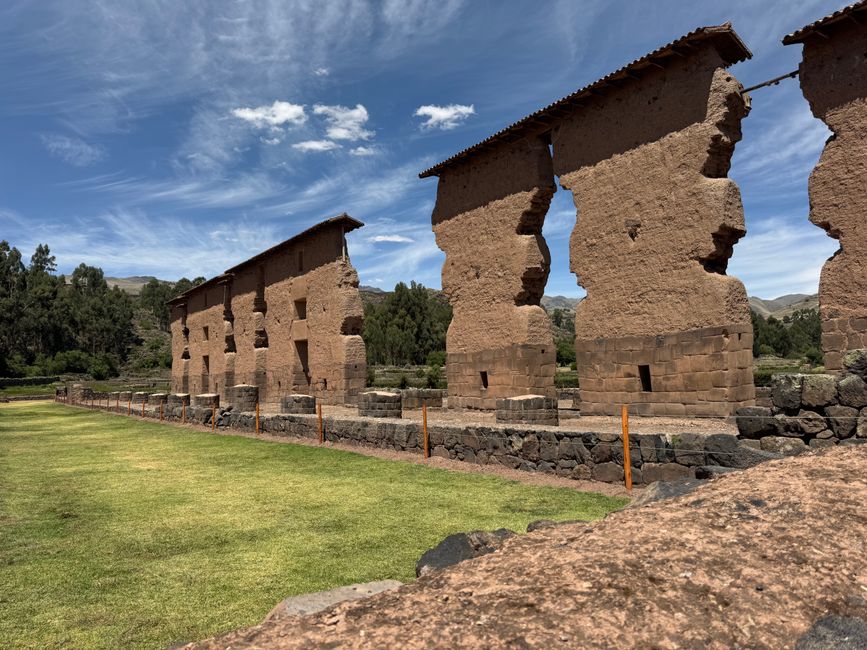
Table of Contents
- Key Takeaways
- Why the Inca Empire Built Without Wheels
- The Seven Engineering Secrets
- Comparing Inca Engineering to Contemporary Civilizations
- Frequently Asked Questions
- The Legacy of Wheelless Innovation
- Sources
The Inca Empire built one of history’s most sophisticated civilizations without ever using the wheel for transportation. Stretching across western South America during the 15th and early 16th century, this ancient empire engineered marvels that still puzzle experts today. Their roads connected thousands of miles of rugged terrain, their structures survived devastating earthquakes, and their agricultural systems fed millions—all accomplished through ingenuity rather than what we consider basic tools.
How did they do it? The answer lies in a combination of brilliant problem-solving, deep understanding of their environment, and techniques that often surpassed what wheels could have achieved in their mountainous landscape. These historical achievements reveal that technological advancement doesn’t follow a single path.
Key Takeaways
- The Inca empire built an extensive road network covering roughly 25,000 miles without wheeled vehicles
- Stone-cutting techniques achieved such precision that mortar wasn’t needed in major structures
- Llamas and human porters proved more effective than wheels in steep Andean terrain
- Rope suspension bridges spanning deep gorges represented advanced engineering knowledge
- Agricultural terracing systems maximized farming potential across extreme elevations
- The quipu recording system managed complex imperial data without written language
Why the Inca Empire Built Without Wheels
The absence of wheels in Inca civilization wasn’t ignorance—it was practicality. Archaeological evidence shows the Inca understood circular mechanics; children’s toys with wheels have been found in some pre-Columbian sites. But in the steep Andes Mountains where the empire flourished, wheels offered little advantage.
Imagine pushing a cart up a 60-degree slope at 12,000 feet elevation. Now imagine leading a sure-footed llama carrying 70 pounds of goods along narrow mountain paths. The choice becomes obvious. The terrain that defined Inca territory made wheels impractical and sometimes dangerous. Their engineering solutions evolved specifically for their environment, demonstrating how past civilizations adapted technology to geography rather than forcing geography to accommodate technology.
The empire also lacked large domesticated animals capable of pulling heavy wheeled carts. Without horses, oxen, or similar beasts of burden, wheeled transport would have required human labor—far less efficient than simply carrying loads or using pack animals on foot.
The Seven Engineering Secrets
1. Precision Stone-Cutting That Defies Explanation
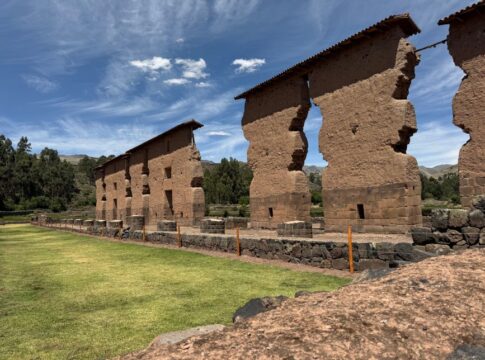
Inca masons shaped massive stones so precisely that a knife blade cannot fit between them. These polygonal blocks, some weighing over 100 tons, interlock like three-dimensional puzzles. The technique involved careful measurement, bronze and stone tools, and probably wooden templates. Workers gradually ground stones against each other, checking fit repeatedly until achieving perfect contact. No mortar meant structures could flex during earthquakes without crumbling—a brilliant adaptation to Peru’s seismic activity. The famous twelve-angled stone in Cusco demonstrates this mastery, fitting seamlessly with surrounding blocks despite its complex geometry.
2. The Qhapaq Ñan: A Road System for the Ages
The royal road network connected the empire from modern-day Colombia to Chile, traversing every imaginable terrain. Two main routes ran north-south—one along the coast, another through the highlands—with countless smaller roads branching between them. Engineers carved staircases into cliff faces, built causeways across marshes, and constructed drainage systems to prevent erosion. Rest stations called tambos appeared at regular intervals, providing shelter and supplies. The genius lay in adapting road design to local conditions rather than forcing a standardized approach. Coastal roads used different construction than mountain paths, each optimized for its environment.
3. Suspension Bridges That Swayed But Never Fell
Inca rope bridges represented remarkable engineering. Woven from grass fibers, these suspension bridges spanned gorges hundreds of feet deep. Communities maintained them annually, replacing worn cables in ceremonies that combined engineering with ritual. The bridges could support llama caravans and human traffic, flexing with wind and weight rather than fighting against natural forces. The Q’eswachaka bridge, still rebuilt yearly using traditional methods, demonstrates this ancient technology. The braided cables, each as thick as a human torso, distribute weight efficiently—a principle modern suspension bridges still employ.
4. Agricultural Terraces That Conquered Mountains
Andenes—agricultural terraces—transformed steep mountainsides into productive farmland. These weren’t simple steps cut into hillsides. Each terrace featured sophisticated engineering: a bottom layer of large stones for drainage, middle layers of progressively smaller rocks, and top layers of fertile soil. The system prevented erosion, managed irrigation, and even created microclimates at different elevations. Some terraces allowed temperature differences of several degrees between levels just meters apart. This let farmers grow diverse crops in close proximity and provided insurance against climate variations. Certain Inca terraces still function after five centuries, testament to their durability.
5. Hydraulic Engineering Without Modern Mathematics
Water management in the Inca era showcased sophisticated understanding of hydraulics. Engineers designed fountains where water flowed uphill through carefully calculated pressure differentials. Aqueducts carried water across valleys using gravity and precise slope calculations. At Machu Picchu, a water system with 16 fountains descends through the city, each fountain slightly lower than the previous one. The source spring, located higher up the mountain, provides consistent flow year-round. Stone channels prevented leakage and erosion. The Inca achieved this without written mathematical formulas, relying instead on practical observation and experimentation passed through generations.
6. The Quipu: Data Storage Through Knots
The quipu system recorded numerical and possibly narrative information using knotted strings. Different knot types, positions, and cord colors represented various data. Administrators tracked census information, tribute payments, and resource distribution across the vast empire. A decimal system governed knot placement—units, tens, hundreds, and thousands each occupied specific positions. Recent research suggests quipus might have encoded more than just numbers, potentially capturing historical accounts or administrative details. This three-dimensional recording method worked perfectly for a civilization without paper or written language, proving that literacy and record-keeping aren’t synonymous.
7. Seismic-Resistant Architecture Before Modern Science
Inca buildings in earthquake-prone regions incorporated brilliant anti-seismic features. Trapezoidal doorways and windows—wider at the base than the top—provided inherent stability. Walls often tilted slightly inward, lowering the center of gravity. The mortarless construction allowed stones to move during tremors and resettle without collapse. Buildings incorporated L-shaped or interlocking corners that prevented walls from separating. Modern engineers studying these structures have adopted some principles for contemporary earthquake-resistant design. When a 1950 earthquake devastated Cusco’s colonial buildings, many Inca foundations remained intact.
Comparing Inca Engineering to Contemporary Civilizations
| Civilization | Era | Transportation Method | Notable Achievement |
|---|---|---|---|
| Inca Empire | 1438-1533 CE | Llamas and human porters | 25,000-mile road network through mountains |
| Roman Empire | 27 BCE-476 CE | Wheeled carts and chariots | 50,000-mile road network across flat terrain |
| Ancient Egypt | 3100-30 BCE | Sledges and river boats | Pyramid construction using ramps |
| Chinese Dynasties | Various periods | Wheelbarrows and carts | Great Wall construction across varied terrain |
Frequently Asked Questions
Did the Inca know about wheels but choose not to use them?
Evidence suggests the Inca understood the wheel concept, as wheeled toys have been found in some pre-Columbian contexts. However, they never developed wheeled transportation because it offered no practical advantage in their mountainous environment. The steep Andean terrain, narrow paths, and lack of large draft animals made wheels inefficient compared to llamas and human porters who could navigate difficult mountain trails.
How did the Inca move massive stones without wheels or metal tools?
The Inca used a combination of techniques including wooden rollers, levers, ramps, and sheer human labor. Stones were likely moved short distances on rollers, then levered into position. For uphill transport, they built temporary ramps and used rope systems with hundreds of workers pulling in coordination. Bronze tools helped shape softer stones, while harder stones were shaped by pounding with other rocks and patient grinding.
Were Inca roads better than Roman roads?
The comparison depends on criteria. Roman roads were superior for wheeled traffic and were more standardized in construction. Inca roads better adapted to extreme terrain, including vertical climbs and suspension bridges that Roman engineering didn’t require. Both represented pinnacles of engineering for their respective environments and purposes. The Inca achievement is arguably more remarkable given the challenging geography they conquered.
How long did it take to build the Inca road network?
The road system developed over several centuries, with the most extensive expansion occurring during the empire’s peak in the 15th century under rulers like Pachacuti and his successors. The Inca incorporated and improved existing roads from earlier Andean cultures, then added thousands of miles of new construction. The entire network represented accumulated work from multiple generations and civilizations, not a single building campaign.
The Legacy of Wheelless Innovation
The Inca empire built a civilization that challenges our assumptions about technological progress. Their engineers solved problems in ways that often exceeded what wheels could have accomplished, reminding us that innovation means finding the right solution for specific conditions, not simply adopting every available technology. Many Inca roads, terraces, and structures still function today—a five-century testament to engineering that worked with nature rather than against it.
Next time you encounter a technology you consider “basic,” consider whether the Inca might have looked at wheels the same way we might view a snowmobile in the desert—theoretically interesting, but practically useless for the terrain at hand.