










1 / 10 Questions
0 Points

Which Cereal Brand Started in a Health Sanitarium?

Cheerios

Wheaties

Rice Krispies

Corn Flakes

Points won
0
Correct score
0%

More Questions

More Articles

Did You Know These Stadiums Have Secret Underground Tunnels?

Did You Know These Stadiums Have Secret Underground Tunnels?

⏱️ 5 min read

Sports stadiums are architectural marvels that captivate millions of fans worldwide, but beneath the roaring crowds and pristine playing surfaces lies a hidden world that few spectators ever see. Underground tunnels crisscross beneath some of the world's most famous sporting venues, serving purposes ranging from player logistics to emergency evacuation routes. These subterranean passages represent crucial infrastructure that keeps modern sports facilities running smoothly while maintaining security and operational efficiency.

The Strategic Importance of Stadium Underground Networks

Underground tunnel systems in stadiums serve multiple critical functions that go far beyond simple convenience. These hidden corridors allow players, officials, and staff to move between different areas of the facility without navigating through public spaces, ensuring both security and privacy. During major events, these tunnels become essential arteries for the smooth operation of complex logistics, enabling catering services, medical teams, and maintenance crews to perform their duties without disrupting the spectator experience.

Security considerations have become increasingly important in recent decades, making these underground networks vital components of stadium safety protocols. Tunnels provide secure evacuation routes during emergencies and allow law enforcement and security personnel to move quickly and discreetly throughout the facility. They also prevent unauthorized access to restricted areas, protecting both athletes and VIP guests from potential security threats.

Historic Stadiums with Legendary Tunnel Systems

Madison Square Garden's Underground Labyrinth

Madison Square Garden in New York City boasts one of the most extensive tunnel networks in sports venue history. The current iteration of "The World's Most Famous Arena" sits above Pennsylvania Station, creating a complex underground infrastructure that connects to the city's subway system. These tunnels have witnessed countless legendary moments, with athletes and performers using them to access the venue while avoiding the bustling streets of Manhattan. The network extends several blocks in multiple directions, connecting to nearby buildings and providing multiple entry and exit points for different purposes.

The Colosseum's Ancient Hypogeum

While not a modern sports stadium, the Roman Colosseum's hypogeum represents perhaps the most historically significant underground tunnel system ever constructed for sporting events. This two-level subterranean network housed gladiators, animals, and stage equipment, featuring an elaborate system of trap doors and elevators that created dramatic entrances during ancient spectacles. The hypogeum serves as the historical blueprint for modern stadium tunnel systems, demonstrating that the concept of hidden underground infrastructure is as old as organized sports entertainment itself.

Modern NFL Stadiums and Their Hidden Passages

Contemporary NFL stadiums incorporate sophisticated tunnel systems designed to handle the complex logistics of professional football. AT&T Stadium in Arlington, Texas, features an elaborate underground network that connects locker rooms, media facilities, and VIP areas. These tunnels allow the Dallas Cowboys and visiting teams to move between different sections of the massive facility while maintaining complete separation from the 100,000-capacity crowd.

MetLife Stadium in East Rutherford, New Jersey, presents unique challenges as the home of both the New York Giants and New York Jets. Its tunnel system includes separate routes for each team, ensuring that both franchises maintain their distinct identities even while sharing the same venue. The underground network also accommodates the stadium's role as a premier concert venue, with dedicated passages for equipment transport and artist access.

International Football Venues with Remarkable Underground Infrastructure

Camp Nou's Extensive Network

FC Barcelona's Camp Nou contains tunnels that extend far beyond the stadium's footprint, connecting to nearby training facilities and even the club museum. These passages allow players to move between different areas of the complex without exposure to weather or public view. The tunnel system also serves the stadium's role as a tourist attraction, with dedicated routes for guided tours that don't interfere with operational areas.

Wembley Stadium's Engineering Marvel

The rebuilt Wembley Stadium in London features a state-of-the-art tunnel system that reflects modern engineering capabilities. These underground corridors include climate-controlled environments, advanced lighting systems, and dedicated spaces for pre-match preparations. The famous Wembley tunnel where teams line up before taking the field represents just a small visible portion of a much larger underground network that spans multiple levels beneath the 90,000-seat venue.

Multi-Purpose Venues and Adaptive Tunnel Design

Stadiums that host multiple sports and entertainment events require particularly flexible tunnel systems. These venues incorporate modular designs that can be reconfigured based on specific event requirements. The O2 Arena in London, for example, features tunnels equipped with movable walls and adjustable lighting that transform based on whether the facility is hosting basketball, hockey, or concerts.

These adaptive systems must accommodate vastly different logistical needs, from transporting ice hockey equipment to moving concert staging equipment weighing several tons. The underground infrastructure includes reinforced flooring, industrial elevators, and oversized corridors that can handle specialized vehicles and equipment.

Emergency Preparedness and Safety Features

Modern stadium tunnels incorporate advanced safety features that comply with stringent building codes and emergency response protocols. These include fire suppression systems, emergency lighting, clear signage, and multiple exit routes. Many stadiums conduct regular evacuation drills that utilize these underground passages, ensuring that staff members understand how to guide people to safety during emergencies.

The tunnel systems also house critical infrastructure including backup generators, water pumps, and communications equipment that keep stadiums operational during power outages or other disruptions. This redundancy ensures that even during challenging circumstances, venues can maintain essential services and safely manage large crowds.

The Future of Stadium Underground Infrastructure

As stadiums continue to evolve, underground tunnel systems are becoming increasingly sophisticated. Future designs incorporate autonomous vehicle routes for equipment transport, enhanced environmental controls, and integrated technology for real-time monitoring and management. These innovations will further improve operational efficiency while maintaining the security and convenience that make underground tunnels indispensable features of modern sports venues.
7 Surprising Facts About Bananas Growing Upside Down

7 Surprising Facts About Bananas Growing Upside Down

7 Surprising Facts About Bananas Growing Upside Down

By TrivBits, Staff Writer — Published August 16, 2026

Table of Contents

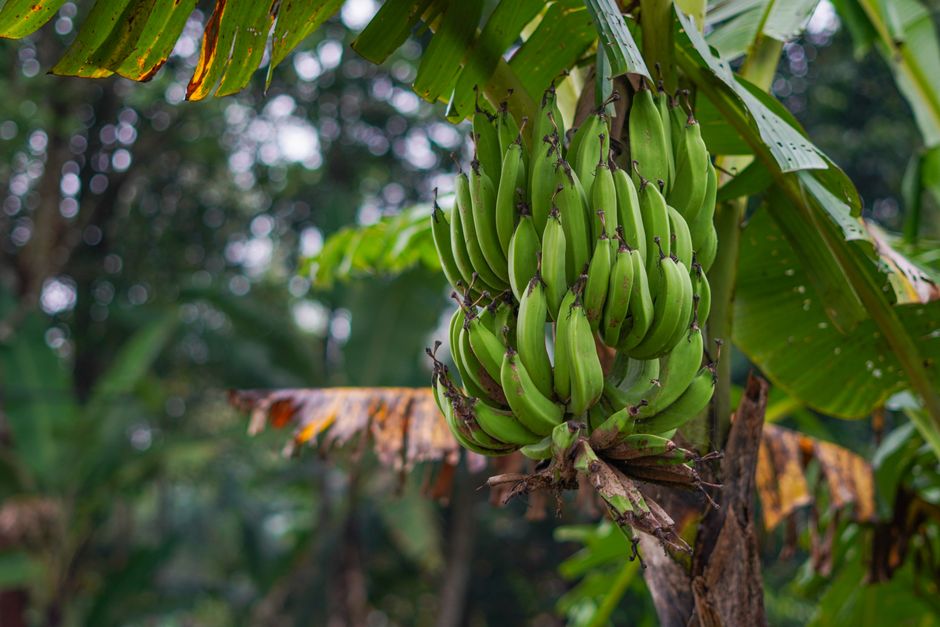
Walk through any supermarket produce section and you'll see bunches of bananas hanging from hooks, pointing downward. Most people assume that's how they grow on the plant. Here's the surprising truth: bananas actually grow upside down from how we typically display them. The fruit starts pointing downward but curves upward toward the sun as it develops, creating one of nature's most fascinating growth patterns. This counterintuitive behavior reveals just how remarkable these everyday fruits really are.The way bananas growing upside down defies our expectations offers a window into the amazing adaptations of tropical plants. What seems like a simple piece of fruit carries surprising botanical secrets that challenge common assumptions about how plants grow.

Key Takeaways

  • Banana plants are technically giant herbs, not trees, making them the world's largest herbaceous flowering plants.
  • Bananas exhibit negative geotropism, growing upward against gravity after initially pointing down.
  • A single banana bunch can contain 50 to 150 individual fruits organized into smaller clusters called hands.
  • The banana "flower" that produces fruit can weigh over 100 pounds in some varieties.
  • Wild bananas contain large, hard seeds, unlike the seedless cultivated varieties we eat today.
  • Banana plants die after fruiting but send up new shoots to continue the cycle.

Understanding Bananas Growing Upside Down: The Science Behind the Curve

When a banana plant flowers, the heavy purple bud emerges from the top of the pseudostem and hangs downward under its own weight. The individual banana fingers initially point toward the ground, following gravity's pull. But something interesting happens next.Each developing banana responds to a phenomenon called negative geotropism—a growth response that causes the fruit to turn upward toward sunlight. Over several days, the bananas curve approximately 90 degrees from their original downward position. This creates the familiar curved shape we associate with bananas. The bottom of the banana as it hangs on the plant becomes the outer curve of the fruit we peel. This upward growth helps maximize sun exposure for the developing fruit, improving photosynthesis and ripening.The transformation happens gradually. You can observe bananas at different stages of this curving process on a single bunch, with newer fruits still pointing down while mature ones have completed their upward journey.

1. Banana Plants Are Actually Giant Herbs, Not Trees

Despite growing up to 30 feet tall and resembling trees, banana plants lack woody tissue entirely. What appears to be a trunk is actually a pseudostem—a tightly packed cylinder of leaf sheaths. This makes the banana plant the world's largest herbaceous flowering plant. The distinction matters because it explains why banana plants are so flexible and can bend without breaking in tropical winds. After producing fruit, the entire pseudostem dies back, but the underground corm sends up new shoots to replace it. This herb classification surprises most people who've only seen the towering plants in photographs or tropical settings.

2. A Banana Bunch Is Called a Hand for a Very Specific Reason

The terminology surrounding banana growth reveals careful botanical observation. A single cluster of bananas growing together is called a hand because the arrangement resembles fingers extending from a palm. Each individual banana is technically called a finger. A complete bunch hanging from the plant contains multiple hands—typically between 10 and 20, depending on the variety. Some commercial varieties produce smaller bunches with just a few hands, while wild varieties can create massive structures. The entire collection of hands forms what's called a stem or bunch, which can weigh anywhere from 50 to 150 pounds when fully developed. This weight is why the flowering stalk bends so dramatically downward before the individual fruits begin their upward curve.

3. The Purple Banana Flower Reveals a Fascinating Reproductive Strategy

The large purple bud that hangs from the banana plant isn't just decorative—it's the plant's flower, and it operates in a clever sequence. The bud contains rows of flowers protected by purple bracts (modified leaves). Female flowers emerge first from the top rows, and these develop into the bananas we eat. Male flowers appear later at the bottom of the bud. In many cultivated varieties, the male flowers never fully develop because the plant has been bred for fruit production without fertilization. The purple flower bud itself is edible in many cuisines across Southeast Asia, where it's treated as a vegetable. This dual-purpose structure demonstrates the efficiency of banana plant reproduction, though most commercial bananas today reproduce through cloning rather than seeds.

4. Commercial Bananas Are Genetic Clones Facing Extinction Risk

Nearly all bananas sold commercially worldwide belong to a single variety called the Cavendish. This creates a precarious situation. Because these plants are genetically identical clones propagated from offshoots rather than seeds, they share the same vulnerabilities. A fungal disease called Tropical Race 4 (TR4) is currently spreading through banana-growing regions, and because every Cavendish plant is identical, none has natural resistance. This exact scenario already happened once before. The Gros Michel banana dominated markets until the 1950s when a different fungal strain wiped it out, forcing the industry to switch to Cavendish. Scientists are now racing to develop disease-resistant varieties before history repeats itself. The lack of genetic diversity in commercial banana cultivation represents one of agriculture's most significant vulnerabilities.

5. Wild Bananas Look Nothing Like Store-Bought Varieties

If you encountered a wild banana in nature, you'd barely recognize it. Wild banana species contain large, hard seeds that make the fruit nearly inedible. The flesh-to-seed ratio is so poor that extracting enough edible material requires significant effort. These seeds can be as large as peppercorns and hard enough to crack teeth. Ancient cultivators slowly selected mutations that produced fewer and smaller seeds over thousands of years. The seedless bananas we enjoy today are the result of careful human selection for a genetic quirk called parthenocarpy—fruit development without fertilization. Those tiny black specks in the center of a commercial banana are the remnants of what once were functional seeds. This human-driven evolution transformed an barely edible wild fruit into one of the world's most popular foods.

6. Banana Plants Produce Fruit Just Once, Then Die

A banana plant follows a dramatic life cycle. It grows for approximately nine months to a year, produces one massive bunch of fruit, and then dies. The entire pseudostem that supported the plant withers and collapses after fruiting. This seems wasteful, but the plant has already prepared for succession. Before dying, the mother plant sends up multiple offshoots called pups or suckers from the underground corm. Farmers select the healthiest pups to become the next generation of fruit-bearing plants. In this way, a banana plantation maintains continuous production even though individual plants are constantly completing their life cycles. The corm itself can survive for many years, producing new pseudostems in an ongoing cycle. This strategy allows banana plants to dedicate all their energy to producing the largest possible fruit yield in a single reproductive event.

7. Bananas Are Naturally Radioactive

Bananas contain relatively high levels of potassium, and a small fraction of naturally occurring potassium is the radioactive isotope potassium-40. This makes bananas measurably radioactive—enough that radiation detectors can pick up the signal. Scientists even use the term "banana equivalent dose" as an informal unit to communicate low levels of radiation exposure to the public. One banana equivalent dose equals about 0.1 microsieverts of radiation. Before you worry, this radiation is completely harmless. Humans are naturally radioactive too, and our bodies are well-equipped to handle the tiny amount of radiation from potassium-40. You'd need to eat millions of bananas in a short period to experience any harmful effects, and you'd face far more serious health problems from overconsumption long before radiation became an issue. This trivia fact highlights how radiation exists naturally in many common foods.

Comparing Banana Varieties

VarietyPrimary UseCharacteristics
CavendishFresh eatingSweet, seedless, yellow when ripe
PlantainCookingStarchy, larger, requires cooking
Red BananaFresh eatingReddish-purple skin, sweeter, creamier
Lady FingerFresh eatingSmaller, sweeter, thinner skin

Frequently Asked Questions

Do bananas really grow upside down?

Bananas initially point downward when they first form but then curve upward toward the sun through negative geotropism. This creates their characteristic curved shape, with the stem end becoming the inner curve and the flower end becoming the outer curve.

Why are there no seeds in bananas?

Commercial bananas are the result of thousands of years of selective breeding for a genetic mutation called parthenocarpy, which allows fruit to develop without fertilization. The tiny black dots in the center are undeveloped seed remnants.

How long does it take for a banana plant to produce fruit?

A banana plant typically requires nine to twelve months from the time a new pup emerges until it produces a harvestable bunch of fruit. After fruiting, that particular pseudostem dies and is replaced by new offshoots.

Can you grow bananas from the bananas you buy at the store?

No, commercial bananas are seedless and cannot be grown from the fruit itself. Banana plants are propagated by separating and replanting the pups (offshoots) that grow from the underground corm of an existing plant.The next time you peel a banana, take a moment to appreciate the botanical journey that created its familiar curve. What seems like simple fruit represents millennia of cultivation, fascinating plant biology, and an ongoing dance between human agriculture and natural adaptation. That upward curve tells a story of plants reaching for the sun, even when gravity pulls them down.