







By TrivBits, Staff Writer — Published August 27, 2026
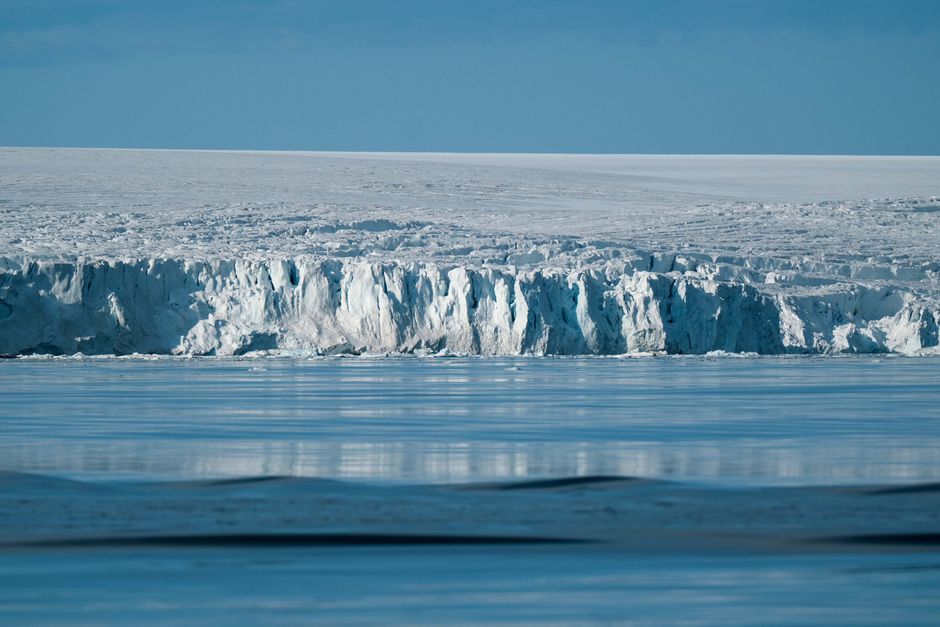
Table of Contents
- Key Takeaways
- The Secret Behind Antarctica: What Actually Defines a Desert
- Why Ice Doesn't Disqualify Antarctica From Desert Status
- The Dry Valleys: Antarctica's Most Extreme Desert Within a Desert
- How Antarctica Compares to Other Major Deserts
- Myths and Truths About Antarctic Precipitation
- Why This Classification Matters for Science
- Frequently Asked Questions
- Sources
When you think of deserts, your mind probably conjures images of scorching sand dunes, cacti, and relentless sunshine. Yet the secret behind Antarctica holding the title of Earth's largest desert has nothing to do with heat. This frozen continent, buried under ice miles thick, qualifies as a desert for a surprising reason that challenges everything most people assume about these extreme landscapes. Did you know that the defining characteristic of a desert isn't temperature, but precipitation?
Antarctica receives less moisture annually than the Sahara, making it the driest place on our planet. This fascinating fact reveals how our everyday understanding of deserts masks a more interesting scientific truth about what makes these environments so extreme.
Key Takeaways
- Antarctica is officially the world's largest desert, covering roughly 5.5 million square miles.
- Deserts are defined by low precipitation (less than 10 inches annually), not by temperature or sand.
- Most of Antarctica receives less than 2 inches of water equivalent precipitation per year.
- The continent's interior is so dry that some areas haven't seen rain in nearly 2 million years.
- Antarctica contains about 90% of Earth's ice despite being classified as a desert.
- The Dry Valleys of Antarctica are considered the driest place on Earth, rivaling conditions on Mars.
The Secret Behind Antarctica: What Actually Defines a Desert
The scientific definition of a desert centers entirely on precipitation. Any region receiving less than 10 inches (roughly 250 millimeters) of precipitation annually qualifies as a desert, regardless of temperature. This measurement includes rain, snow, sleet, and any other form of moisture falling from the sky.
Antarctica fits this criterion perfectly. Most of the continent receives less than 2 inches of water equivalent each year. The interior regions are even more extreme, with some areas getting barely half an inch. Compare this to the Sahara, which receives about 3 inches annually, and you'll see why Antarctica claims the top spot.
Cold air holds far less moisture than warm air. Antarctica's frigid temperatures create atmospheric conditions that simply cannot support significant precipitation. The air above the continent is so cold and dry that it functions like a vast moisture desert, even though the ground below is covered in ice.
Why Ice Doesn't Disqualify Antarctica From Desert Status
Here's where the trivia gets truly interesting. Antarctica holds approximately 26.5 million cubic kilometers of ice—about 90% of all ice on Earth. This seems contradictory to its desert classification, but the ice accumulated over millions of years, not from current precipitation.
Think of it this way: the ice sheet is ancient savings, not active income. The snow that does fall on Antarctica rarely melts. Instead, it compresses into ice over thousands of years, creating layers that tell the story of Earth's climate history. But the rate of new accumulation remains extremely low.
The ice persists because of temperature, not because of abundant snowfall. Nothing melts or evaporates in the extreme cold. This preservation effect creates the illusion of a wet environment when the reality is profoundly arid.
The Dry Valleys: Antarctica's Most Extreme Desert Within a Desert
The McMurdo Dry Valleys represent one of Earth's most Mars-like environments. These valleys, located in the Transantarctic Mountains, are so dry that they contain virtually no ice or snow despite being surrounded by glaciers.
Katabatic winds—gravity-driven gusts that can exceed 200 miles per hour—sweep down from the polar plateau and evaporate any moisture before it can settle. These valleys haven't experienced rainfall for approximately 2 million years. Scientists study this region to understand how life might survive in extreme conditions on other planets.
The landscape looks alien. Rocks sit exactly where they fell, showing no signs of erosion from water. Some researchers believe these valleys are the closest analog to Martian surface conditions anywhere on Earth, making them invaluable for astrobiology research.
How Antarctica Compares to Other Major Deserts
| Desert | Size (Square Miles) | Annual Precipitation | Type |
|---|---|---|---|
| Antarctica | ~5,500,000 | Less than 2 inches | Polar |
| Arctic | ~5,400,000 | Less than 10 inches | Polar |
| Sahara | ~3,500,000 | About 3 inches | Subtropical |
| Arabian | ~900,000 | Less than 4 inches | Subtropical |
| Gobi | ~500,000 | About 7 inches | Cold winter |
Myths and Truths About Antarctic Precipitation
One common myth suggests that Antarctica is the snowiest place on Earth. The truth? It's among the least snowy. The continent's coastal regions do receive more precipitation than the interior—sometimes up to 8 inches annually—but this still qualifies as desert conditions.
Another unknown fact: when snow does fall in Antarctica, it's often so fine and light that it behaves more like dust than the fluffy flakes we're familiar with. The extreme cold creates tiny ice crystals that drift rather than fall in traditional snowfall patterns.
Some people assume the ice sheet grows significantly each year. In reality, Antarctica gains and loses ice through a delicate balance. Snowfall adds mass while glaciers calving into the ocean subtract it. Recent decades have shown increasing loss, but the precipitation rate remains remarkably low regardless.
Why This Classification Matters for Science
Understanding Antarctica as a desert has profound implications for climate science, biology, and planetary exploration. The continent serves as a natural laboratory for studying how ecosystems function under extreme moisture stress combined with extreme cold.
Microorganisms found in Antarctic deserts have evolved remarkable survival strategies. Some bacteria enter dormancy for decades, awaiting the rare moisture event that allows them to briefly metabolize and reproduce. These adaptations inform our search for life on icy moons like Europa or Enceladus.
Climate researchers also use Antarctica's desert status to understand historical climate patterns. Ice cores drilled from the desert interior contain atmospheric samples trapped for hundreds of thousands of years, providing direct evidence of past carbon dioxide levels and temperatures.
Frequently Asked Questions
Is Antarctica really drier than the Sahara Desert?
Yes, Antarctica's interior receives significantly less precipitation than the Sahara. While the Sahara averages about 3 inches of rain annually, most of Antarctica receives less than 2 inches of water equivalent, with some regions getting less than half an inch. The extreme cold prevents the atmosphere from holding much moisture, making Antarctica exceptionally arid.
How can Antarctica be a desert if it's covered in ice?
Deserts are defined by low annual precipitation, not by the presence or absence of ice and snow. Antarctica's ice sheet accumulated over millions of years and persists because nothing melts in the extreme cold. The existing ice doesn't change the fact that very little new precipitation falls each year, which is what qualifies it as a desert.
Does it ever rain in Antarctica?
Rain is extremely rare in Antarctica and occurs only occasionally along the coastal margins during the warmest summer months. The vast interior of the continent has likely never experienced rainfall in recorded history, and some areas haven't seen liquid precipitation for approximately 2 million years. When precipitation does occur, it's almost always in the form of snow or ice crystals.
What is the driest place in Antarctica?
The McMurdo Dry Valleys are considered the driest location in Antarctica and possibly on Earth. These ice-free valleys receive almost no precipitation due to katabatic winds that evaporate moisture before it can settle. Some scientists estimate these valleys haven't experienced rainfall for nearly 2 million years, making them more arid than any hot desert on the planet.
The next time someone mentions deserts, you'll know that Earth's largest isn't filled with sand or scorching heat. Antarctica reminds us that nature's categories often surprise us, challenging our assumptions about how the world works. This frozen desert continues to guard secrets about our planet's past and possibly hints at life's potential on frozen worlds beyond Earth.