











1 / 10 Questions
0 Points

Which Landmark Leans Over 3.9 Degrees And Still Stands?

Big Ben

Leaning Tower of Pisa

Empire State Building

Eiffel Tower

Points won
0
Correct score
0%

More Questions

More Articles

Top 10 Quick Facts About Human Evolution

Top 10 Quick Facts About Human Evolution

⏱️ 6 min read

The story of human evolution spans millions of years and represents one of the most fascinating chapters in Earth's biological history. From our ancient ancestors who first walked upright on African savannas to the globally distributed species we are today, the journey of human evolution reveals remarkable adaptations, survival strategies, and transformations. Understanding these key facts helps us appreciate not only where we came from but also what makes us uniquely human.

Essential Facts About Our Evolutionary Journey

1. Humans and Chimpanzees Share a Common Ancestor

Contrary to popular misconception, humans did not evolve from chimpanzees. Instead, both species share a common ancestor that lived approximately 6 to 7 million years ago. This ancestral species eventually diverged into two separate evolutionary lineages—one leading to modern chimpanzees and bonobos, and another leading to humans and our extinct hominin relatives. Genetic studies reveal that humans and chimpanzees share about 98.8% of their DNA, making them our closest living relatives. This genetic similarity reflects our relatively recent evolutionary split and explains many physiological and behavioral similarities between the two species.

2. Bipedalism Emerged Before Large Brains

One of the most significant developments in human evolution was bipedalism—the ability to walk upright on two legs. Archaeological evidence demonstrates that our ancestors became bipedal approximately 4 to 6 million years ago, long before the dramatic increase in brain size that characterizes later human evolution. Early hominins like Australopithecus afarensis (including the famous fossil "Lucy") walked upright but had brains only slightly larger than modern chimpanzees. Bipedalism freed the hands for tool use and carrying objects, fundamentally changing how our ancestors interacted with their environment and setting the stage for future evolutionary developments.

3. Multiple Human Species Coexisted Throughout History

For most of human evolutionary history, multiple hominin species walked the Earth simultaneously. Homo sapiens, our species, is currently the only surviving member of the genus Homo, but this represents an unusual situation rather than the historical norm. As recently as 50,000 years ago, at least four different human species coexisted: Homo sapiens, Homo neanderthalensis (Neanderthals), Homo floresiensis (the "Hobbit" species from Indonesia), and the Denisovans. These species occasionally interbred, and most modern humans today carry small percentages of Neanderthal and Denisovan DNA in their genomes, evidence of these ancient encounters.

4. Africa Remains the Cradle of Humankind

All available fossil and genetic evidence points to Africa as the birthplace of human evolution. The earliest hominin fossils have been discovered in eastern and southern Africa, and the oldest anatomically modern Homo sapiens fossils, dating to approximately 300,000 years ago, were found in Morocco. Africa's diverse environments, from tropical forests to open savannas, provided the ecological crucible in which key human adaptations evolved. Modern humans only began migrating out of Africa in significant numbers around 70,000 to 100,000 years ago, eventually spreading across the globe and adapting to vastly different environments.

5. Brain Size Tripled Over Three Million Years

One of the most dramatic changes in human evolution involves the remarkable expansion of brain size. Early hominins like Australopithecus had brains averaging about 400-500 cubic centimeters, similar to modern chimpanzees. Over the past three million years, hominin brain size increased dramatically, with modern Homo sapiens averaging about 1,350 cubic centimeters. This tripling in brain volume occurred relatively rapidly in evolutionary terms and required significant metabolic investment—the human brain consumes about 20% of the body's energy despite representing only 2% of body weight. This expansion particularly affected areas responsible for language, abstract thinking, and social cognition.

6. Fire Control Transformed Human Development

The controlled use of fire, beginning approximately 1 to 1.5 million years ago, represented a revolutionary development in human evolution. Fire provided warmth, protection from predators, and most importantly, a means to cook food. Cooking made nutrients more bioavailable and reduced the energy required for digestion, possibly contributing to brain expansion. Fire also extended the day, creating time for social interaction and fostering communication. Archaeological sites show evidence of systematic fire use by Homo erectus, and this technology would become inseparable from human culture and survival strategies across all environments.

7. Tool Use Dates Back Nearly Three Million Years

The archaeological record reveals that stone tool manufacturing began approximately 2.6 to 3.3 million years ago in Africa. These earliest tools, known as Oldowan tools, consisted of simple stone flakes and choppers. Tool technology grew increasingly sophisticated over time, with the development of the more refined Acheulean hand axes around 1.7 million years ago. Tool use wasn't exclusive to Homo species—Australopithecus and Paranthropus species also created and used stone tools. The cognitive abilities required for tool manufacturing, including planning, fine motor control, and understanding of material properties, likely drove selection for increased intelligence and manual dexterity.

8. Language Evolved Relatively Recently

While the exact timing remains debated, most researchers believe that fully modern language capabilities evolved within the past 100,000 to 200,000 years, making it one of the more recent major developments in human evolution. Anatomical changes necessary for complex speech, including modifications to the vocal tract and the position of the larynx, appear in the fossil record of Homo heidelbergensis and early Homo sapiens. The FOXP2 gene, associated with speech and language processing, shows evidence of evolutionary changes in the human lineage. Language enabled unprecedented levels of cooperation, cultural transmission, and abstract thinking, fundamentally transforming human societies.

9. Neanderthals Were Sophisticated and Culturally Complex

Once portrayed as primitive brutes, Neanderthals are now recognized as sophisticated humans with complex behaviors and cultural practices. Evidence shows they created art, buried their dead with grave goods, used medicinal plants, fashioned specialized tools, and cared for injured or elderly group members. They adapted successfully to Ice Age Europe for over 300,000 years before disappearing around 40,000 years ago. Their extinction remains mysterious, with theories ranging from climate change to competition with Homo sapiens, disease, or demographic factors. The legacy of Neanderthals lives on in the DNA of most non-African human populations today.

10. Human Evolution Continues Today

Evolution is an ongoing process, and humans continue to evolve in response to environmental pressures, cultural practices, and changing selection factors. Recent evolutionary changes include the persistence of lactose tolerance into adulthood in populations with long histories of dairy farming, genetic adaptations to high-altitude living among Tibetan populations, and possible selection for smaller brain sizes over the past 20,000 years (potentially related to the development of complex societies that reduced individual cognitive demands). Modern medicine, technology, and globalization have altered selection pressures, but evolution remains an active force shaping human biology and genetics.

Understanding Our Place in Natural History

These ten facts about human evolution reveal a complex, non-linear story of adaptation, survival, and transformation. From the emergence of bipedalism millions of years ago to the ongoing evolutionary changes occurring in modern populations, human evolution demonstrates the power of natural selection and environmental adaptation. Understanding our evolutionary history provides crucial context for comprehending human biology, behavior, and diversity. It reminds us that we are part of nature's continuum, connected to all life on Earth through common ancestry, and that the evolutionary process continues to shape our species even today.
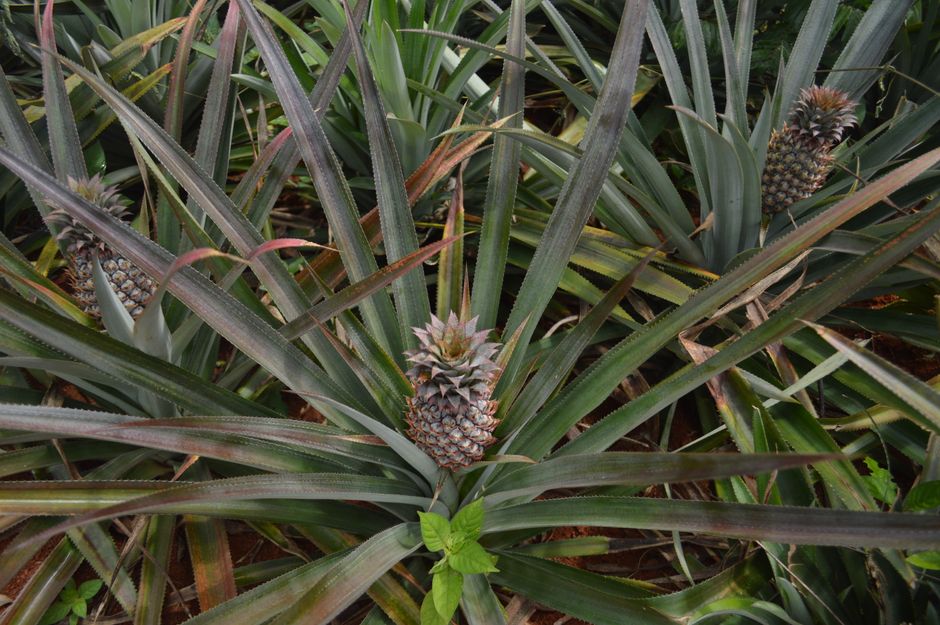
7 Bizarre Facts About Pineapples Taking Two Years to Grow

By TrivBits, Staff Writer — Published August 19, 2026

7 Bizarre Facts About Pineapples Taking Two Years to Grow — Food & Drink trivia by TrivBits

Table of Contents

Did you know that the pineapple sitting in your grocery cart might be older than some toddlers? These spiky tropical fruits have one of the most surprising growth timelines in the produce world. While most fruits ripen in weeks or months, pineapples take an astonishing two years from planting to harvest. But that's just the beginning of the bizarre truths surrounding this iconic fruit.

From their strange botanical classification to their historical status as a luxury symbol, pineapples are packed with interesting trivia that challenges common assumptions. Let's explore the unknown facts and myths about these peculiar plants that make them far more fascinating than their sweet taste alone.

Bizarre Pineapples Taking Two Years: Key Takeaways

  • Pineapples require approximately 18 to 24 months to mature from planting to harvest, making them one of the slowest-growing common fruits.
  • Each pineapple plant produces only one fruit per growing cycle, then must be cultivated for additional harvests.
  • Pineapples are actually a fusion of many individual berries that merge together around a central core.
  • The fruit doesn't ripen further after being picked, unlike bananas or avocados.
  • Wild pineapples originally contained seeds, but modern cultivated varieties are seedless hybrids.
  • Pineapples were so rare in colonial times that wealthy families would rent them for display at parties.

The Two-Year Journey From Crown to Fruit

The lengthy growing period sets pineapples apart from nearly every other commercial fruit crop. Farmers typically plant pineapple crowns or slips in prepared soil, then wait. And wait. For roughly 18 to 24 months, the plant slowly develops its root system, grows long spiky leaves, and eventually produces a single flowering stalk. This stalk transforms into the compound fruit we recognize.

Why so slow? Pineapples are bromeliads, a plant family adapted to conserve resources in their native South American habitats. They evolved in environments where nutrients and water weren't always abundant, developing a patient growth strategy. The plant invests heavily in establishing strong roots and foliage before committing energy to fruit production. This cautious approach means farmers need substantial land and capital to maintain crops that won't generate income for nearly two years.

One Plant, One Fruit: The Pineapple's Singular Focus

After all that waiting, each pineapple plant rewards growers with exactly one fruit. That's it. Once harvested, the original plant won't produce another pineapple from the same central stalk. However, the plant isn't finished. It produces side shoots called "ratoons" or "suckers" that can be left to grow and eventually fruit themselves, though this second-generation harvest takes another 12 to 18 months. Commercial operations must carefully balance between replanting entirely new crowns versus cultivating ratoons, each strategy with different timelines and yields.

7 Bizarre Facts About Pineapples Taking Two Years to Grow

1. Pineapples Are Actually Hundreds of Berries Fused Together

That single pineapple isn't technically a single fruit at all. Each pineapple is a "multiple fruit" or "collective fruit" formed when approximately 100 to 200 individual flowers bloom along the central stalk. Each tiny flower produces a fruitlet, and these fruitlets merge together as they develop, creating the familiar hexagonal pattern on the pineapple's exterior. Every hexagon you see represents one original berry. The core running through the middle is the original flowering stem, now surrounded by fused fruit tissue.

2. Modern Pineapples Are Seedless Mutants

Wild pineapples contained hard, dark seeds scattered throughout the flesh, making them far less pleasant to eat. Over centuries of cultivation, farmers selectively bred varieties that rarely produced seeds, favoring plants that reproduced through vegetative propagation instead. Today's commercial pineapples are essentially sterile clones. You might occasionally spot tiny black specks in the flesh, remnants of undeveloped seeds, but fully formed seeds are extremely rare. This seedlessness is why all pineapples must be grown from crowns, slips, or suckers rather than seeds.

3. They Stop Ripening the Moment They're Picked

Unlike climacteric fruits such as bananas, tomatoes, or peaches, pineapples are non-climacteric. They don't continue ripening after harvest. The fruit you see at the store is as ripe as it will ever get. This creates challenges for commercial growers who must time harvests perfectly. Pick too early, and consumers get sour, unpalatable fruit. Wait too long, and the pineapples spoil before reaching market. The color change from green to golden yellow happens after harvest, but that's just chlorophyll breaking down—the sugar content remains fixed at harvest time.

4. Pineapples Were Once More Valuable Than Gold

In 17th and 18th century Europe, fresh pineapples were extraordinarily rare and expensive. Importing them from tropical colonies required fast ships and careful handling, with many fruits rotting during the voyage. A single pineapple could cost the equivalent of thousands of dollars in today's money. Wealthy aristocrats didn't just eat them—they displayed them at social gatherings as status symbols. Some families couldn't afford to purchase pineapples outright, so a rental market emerged where people could lease a pineapple for an evening party, then return it uneaten.

5. The Plant Can Produce Fruit From Multiple Body Parts

Pineapple propagation offers several options, each originating from different parts of the plant. The familiar crown atop the fruit can be planted. Slips grow from the fruit stalk just below the pineapple. Suckers emerge from leaf axils along the stem. Ratoons sprout from the base near the roots. Each method produces a genetically identical plant, but with different timelines to maturity. Crowns typically take the full two years, while suckers and ratoons fruit somewhat faster because they benefit from an established root system.

6. They Contain an Enzyme That Digests You Back

Pineapples produce bromelain, a protein-digesting enzyme concentrated in the stem and fruit. When you eat fresh pineapple, bromelain begins breaking down proteins in your mouth and tongue, creating that tingly, slightly burning sensation. It's literally starting to digest the tissues in your mouth. This is why your tongue might feel raw after eating large quantities. Cooking destroys bromelain, which is why canned pineapple doesn't cause the same reaction. This enzyme also prevents pineapple from being used in gelatin desserts unless cooked first, since it breaks down the protein structure that makes gelatin set.

7. The Name Comes From Pinecones, Not the Other Way Around

When European explorers first encountered this strange fruit in South America, they thought it resembled a pinecone. The Spanish called it "piña," their word for pinecone. English speakers added "apple" because it was sweet and fruity, creating "pineapple." The fruit has no botanical relationship to pine trees or apples whatsoever. This naming convention stuck in English, though many other languages simply adapted variations of "ananas," derived from the indigenous Tupi word "nanas." The resemblance to a pinecone is purely superficial—both have a similar spiral pattern and scaly appearance, but that's where the similarity ends.

The Agricultural Economics of Patient Farming

Growing pineapples commercially requires substantial investment and patience. Farmers must commit land, labor, and resources for two full years before seeing any return. This extended timeline affects everything from crop rotation strategies to financing. In Hawaii, Costa Rica, the Philippines, and other major pineapple-producing regions, large operations manage thousands of acres in staggered plantings to ensure continuous harvests year-round.

The industry has developed sophisticated techniques to manage this lengthy cycle. Some growers use ethylene gas to trigger synchronized flowering, allowing entire fields to fruit simultaneously for efficient harvesting. Others maximize land use by interplanting pineapples with faster-growing crops during the early months. Despite these optimizations, the fundamental biological reality remains: pineapples take their time, and no amount of agricultural technology can rush them significantly.

Frequently Asked Questions

Can you actually grow a pineapple from the crown at home?

Yes, you can successfully grow a pineapple plant from a store-bought crown, though it requires patience and proper conditions. Twist off the crown, remove the lower leaves, let it dry for a day or two, then plant it in well-draining soil. Keep it warm and provide bright light. In ideal conditions, you might see a fruit in about two years, though home-grown pineapples are often smaller than commercial varieties. The process teaches you exactly why these fruits cost what they do.

Why are pineapples associated with hospitality and welcome?

The hospitality symbolism stems from colonial America, when pineapples were rare and expensive. Serving fresh pineapple to guests demonstrated exceptional generosity and welcome. Sea captains returning from the Caribbean would place a pineapple outside their homes to signal they were receiving visitors. This tradition evolved into the pineapple becoming a decorative motif on gates, doorways, and furnishings, representing warmth and hospitality. The symbol persists today, though few people know its origins in the fruit's scarcity.

Do pineapples really help with digestion?

The bromelain enzyme in pineapples does aid protein digestion and has anti-inflammatory properties. Some people find that eating fresh pineapple helps with digestive comfort, particularly after protein-heavy meals. However, bromelain is largely destroyed by cooking and is most concentrated in the inedible stem. While fresh pineapple may offer modest digestive benefits, it's not a miracle cure. The enzyme is actually extracted commercially for use in meat tenderizers and certain medical applications.

Why do some pineapples have white flesh instead of yellow?

Different pineapple varieties naturally have different flesh colors. The most common commercial variety has golden-yellow flesh, but specialty varieties can range from pale white to deep gold. White-fleshed pineapples tend to be less acidic and milder in flavor, while yellow varieties are typically more robust and tangy. The color difference relates to carotenoid content and variety genetics, not ripeness or quality. Both types follow the same lengthy growing timeline and offer excellent nutrition.

Sources