











1 / 10 Questions
0 Points

What Disney theme park opened first?

Epcot

Disney World

Magic Kingdom

Disneyland

Points won
0
Correct score
0%

More Questions

More Articles

Did You Know These Famous Athletes Were Drafted in Different Sports?

Did You Know These Famous Athletes Were Drafted in Different Sports?

⏱️ 5 min read

The world of professional sports is filled with exceptional athletes who possess the rare combination of talent, dedication, and versatility that makes them stand out. While many athletes excel in a single sport, some have demonstrated such remarkable abilities that they were drafted by professional teams in completely different sports. These multi-sport athletes represent the pinnacle of athletic achievement, showcasing skills that transcend the boundaries of any single game. Their stories offer fascinating insights into the nature of athleticism and the roads not taken in sports history.

Baseball and Football: The Most Common Crossover

The intersection between baseball and football has produced some of the most notable examples of multi-sport draftees. These two sports, while vastly different in nature, both require exceptional hand-eye coordination, speed, and strategic thinking.

Bo Jackson: The Ultimate Two-Sport Star

Perhaps no athlete better exemplifies multi-sport excellence than Bo Jackson. The Auburn running back was drafted by the Kansas City Royals in the fourth round of the 1986 MLB Draft and by the Tampa Bay Buccaneers with the first overall pick in the 1987 NFL Draft. Jackson famously declined the Buccaneers' offer and was later drafted by the Los Angeles Raiders in the seventh round of the 1987 supplemental draft. He became the only athlete to be named an All-Star in both Major League Baseball and the NFL, proving that his exceptional talents weren't confined to a single playing field.

Deion Sanders: Prime Time in Two Leagues

Deion Sanders, known as "Prime Time," was drafted by the Kansas City Royals in the sixth round of the 1985 MLB Draft while still in high school. He later played both professional football and baseball simultaneously, being drafted by the Atlanta Falcons in the 1989 NFL Draft. Sanders is the only athlete to play in both a Super Bowl and a World Series, cementing his legacy as one of the greatest multi-sport athletes in history.

Basketball Players Who Could Have Played Professional Baseball

The hardwood has produced several stars who caught the attention of baseball scouts, demonstrating that the skills required for basketball excellence can translate to the diamond.

Michael Jordan's Baseball Interlude

While Michael Jordan wasn't technically drafted by a baseball team, his attempt to play professional baseball with the Chicago White Sox organization remains one of sports' most intriguing "what-ifs." However, Danny Ainge presents a more clear-cut case of a multi-sport draftee. Ainge was drafted by the Toronto Blue Jays in the 15th round of the 1977 MLB Draft and actually played parts of three seasons in the major leagues before being drafted by the Boston Celtics in the second round of the 1981 NBA Draft, where he would win two championships.

Football Stars with Basketball Credentials

Several NFL legends were talented enough on the basketball court to attract professional attention in that sport as well.

Tony Gonzalez: From the Court to the Gridiron

Hall of Fame tight end Tony Gonzalez was drafted by both the Kansas City Chiefs in the first round of the 1997 NFL Draft and was considered a potential basketball draft pick. While playing at the University of California, Berkeley, Gonzalez excelled in both sports, ultimately choosing football where he became one of the greatest tight ends in NFL history.

Hockey Players with Baseball Prospects

The crossover between hockey and baseball might seem unlikely, but several players have demonstrated elite abilities in both sports.

Tom Glavine: Choosing the Mound Over the Ice

Before becoming a Hall of Fame pitcher and winning two Cy Young Awards, Tom Glavine was drafted by the Los Angeles Kings in the fourth round of the 1984 NHL Entry Draft. He chose baseball instead, and the decision paid off handsomely with a career that included 305 wins and a World Series championship with the Atlanta Braves.

The Science Behind Multi-Sport Athletes

The phenomenon of athletes being drafted in multiple sports raises important questions about the nature of athletic ability. Research suggests that certain fundamental athletic qualities translate across sports, including:

  • Exceptional hand-eye coordination
  • Superior reaction time and processing speed
  • Elite level speed and agility
  • Competitive drive and mental toughness
  • Natural leadership abilities

These athletes often benefited from playing multiple sports during their developmental years, which helped them build diverse skill sets and prevented early burnout from sport-specific training.

Modern Trends and Specialization

While multi-sport athletes were more common in previous generations, modern professional sports have trended toward earlier specialization. The demands of professional training, year-round competition schedules, and the financial stakes involved have made it increasingly difficult for athletes to pursue multiple sports at the highest levels.

However, youth sports organizations and some professional teams are recognizing the value of multi-sport participation in development. Studies have shown that athletes who play multiple sports during their formative years often have longer professional careers and fewer overuse injuries compared to those who specialize early.

The Legacy of Multi-Sport Draftees

The athletes who were drafted in multiple sports represent a special category in sports history. They remind fans and aspiring athletes alike that exceptional talent can manifest in various forms and that the traditional boundaries between sports are more fluid than they might appear. Whether they chose one sport over another or managed to excel in both simultaneously, these athletes expanded our understanding of what's possible in professional sports.

Their stories continue to inspire young athletes to develop diverse skill sets and to pursue excellence wherever their talents may lead them. As sports science and training methods continue to evolve, the question remains whether we'll see more multi-sport draftees in the future or if specialization will continue to dominate the landscape of professional athletics.
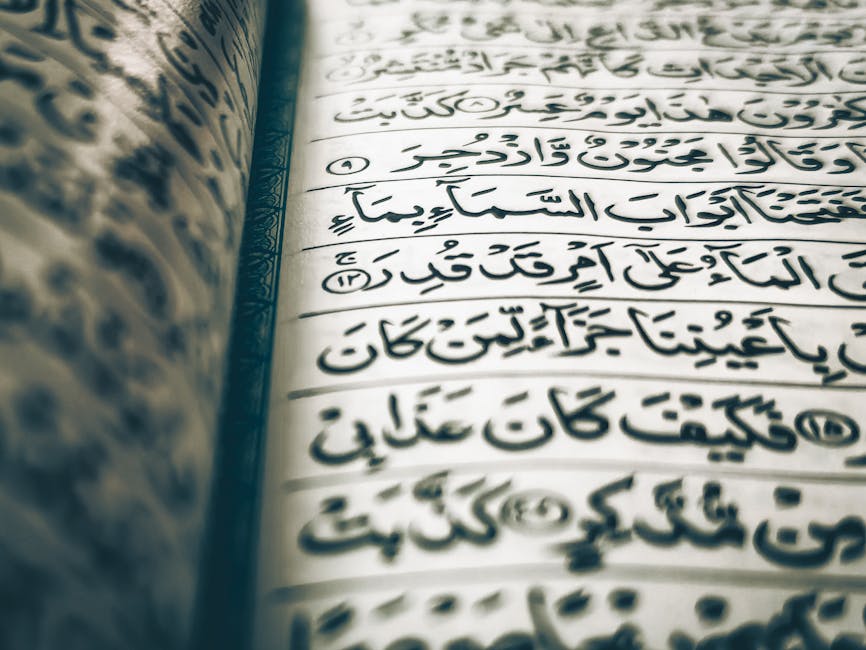
Top 10 Fascinating Facts About Language

Top 10 Fascinating Facts About Language

⏱️ 7 min read

Language is one of humanity's most remarkable achievements, serving as the foundation for communication, culture, and civilization itself. From the approximately 7,000 languages spoken worldwide to the intricate ways our brains process words, the study of language reveals extraordinary insights about human cognition and society. The following collection explores some of the most captivating aspects of how we communicate, revealing surprising truths about the words we speak every day.

Remarkable Discoveries About Human Communication

1. The Basque Language Remains an Unsolved Mystery

Basque, spoken in the Basque Country spanning parts of Spain and France, stands as one of linguistics' greatest puzzles. Unlike virtually every other European language, Basque has no known relatives and cannot be connected to any language family. While Spanish, French, English, and most European languages trace their roots to Proto-Indo-European, Basque appears to have existed in isolation for thousands of years. Linguists believe it may be a pre-Indo-European language that survived the waves of migration that brought Indo-European languages to Europe. This linguistic isolate uses a unique grammatical structure called ergativity and possesses vocabulary completely unlike its neighbors, making it a precious window into Europe's prehistoric linguistic landscape.

2. Mandarin Chinese Has No Alphabet

While most languages use alphabetic or syllabic writing systems, Chinese employs logograms—characters that represent entire words or concepts rather than sounds. A literate Chinese person needs to know approximately 3,000 to 4,000 characters for basic reading, while scholars may recognize upwards of 10,000. This system has remained fundamentally unchanged for thousands of years, allowing modern Chinese readers to understand ancient texts directly. The characters themselves often contain fascinating logic, with many combining simpler elements to create meaning. For instance, the character for "good" combines the symbols for "woman" and "child," while "peace" combines the symbols for "woman" under "roof."

3. Papua New Guinea Hosts the World's Greatest Linguistic Diversity

Despite having a population of less than 9 million people, Papua New Guinea is home to over 840 living languages—approximately 12% of the world's total languages. This extraordinary diversity arose from the country's extreme geographical fragmentation, with mountains, valleys, and islands isolating communities from one another for thousands of years. Some villages separated by just a few miles speak mutually unintelligible languages. This linguistic richness makes Papua New Guinea an invaluable resource for understanding language evolution and diversity, though many of these languages are now endangered as younger generations shift to more widely spoken tongues.

4. The Fastest Spoken Language Delivers Information at the Same Rate as Others

Research has revealed that while some languages are spoken much faster than others in terms of syllables per second, they all convey information at roughly the same rate. Japanese speakers, for example, produce nearly 8 syllables per second compared to English speakers' 6 syllables per second. However, because Japanese syllables carry less information density, the actual rate of information transmission equalizes across languages. This suggests that human cognition processes information at a relatively constant speed, and languages have evolved different strategies—either more syllables with less information each, or fewer syllables packed with more meaning—to match this cognitive bandwidth.

5. Sign Languages Are Complete, Complex Languages

Sign languages are not simply gestural versions of spoken languages but complete linguistic systems with their own grammar, syntax, and regional variations. American Sign Language (ASL) is entirely different from British Sign Language (BSL), despite both countries sharing spoken English. Sign languages possess all the complexity of spoken languages, including idioms, poetry, and wordplay. Linguistic research has shown that sign languages activate the same brain regions as spoken languages and that deaf children acquiring sign language follow the same developmental stages as hearing children learning spoken language, including a "babbling" phase where they produce repetitive hand movements that resemble signs but lack meaning.

6. Whistled Languages Allow Communication Across Miles

In mountainous or forested regions around the world, communities have developed whistled versions of their spoken languages that can carry messages across distances of up to 5 miles. These aren't simple codes but actual whistled adaptations of tonal and rhythmic patterns from the source language. Silbo Gomero, used in the Canary Islands, is perhaps the most famous example and is now taught in schools as part of cultural preservation efforts. Turkish, Greek, and various languages in Mexico and West Africa also have whistled forms. These languages demonstrate remarkable human adaptability and the creative ways communities solve communication challenges posed by their environments.

7. The Pirahã Language Challenges Universal Grammar Theory

The Pirahã people of the Amazon speak a language that has challenged fundamental assumptions about universal properties of human language. Pirahã reportedly lacks number words beyond "few" and "many," has no color terms, possesses no creation myths or historical stories, and may not allow recursive grammar—the ability to embed clauses within clauses. Linguist Daniel Everett's controversial research on Pirahã has sparked intense debate about whether all languages share a common underlying structure, as Noam Chomsky's influential theories suggest, or whether cultural factors can fundamentally shape language in ways previously thought impossible.

8. Most of the World's Languages Have Never Been Written Down

Of the approximately 7,000 languages spoken today, only about half have developed writing systems, and fewer than 500 have substantial written literatures. The invention of writing is extremely rare in human history, having been independently developed only a handful of times. Most languages exist purely in oral form, passed down through generations of speakers. This presents enormous challenges for linguistic documentation and preservation, as many of these unwritten languages are endangered. Linguists are racing against time to record and analyze these languages before they disappear, using modern technology to capture their sounds, grammar, and cultural contexts.

9. Your Native Language Shapes How You See Color

The language you speak actually influences how your brain categorizes and perceives colors. The Himba people of Namibia, whose language has different color categories than English, can easily distinguish between shades of green that English speakers struggle to differentiate. Conversely, they have difficulty distinguishing colors that English speakers find obviously different. Russian speakers, whose language has distinct words for light blue and dark blue rather than treating them as shades of one color, can more quickly identify different blues. This phenomenon, called linguistic relativity, demonstrates that language doesn't just describe reality—it subtly shapes our perception and cognition.

10. A New Language Dies Every Two Weeks

Linguistic diversity is disappearing at an alarming rate, with researchers estimating that one language becomes extinct approximately every 14 days. By the end of this century, linguists predict that half of the world's current languages will have vanished. When a language dies, humanity loses not just words but unique ways of understanding the world, accumulated ecological knowledge, oral histories, and cultural perspectives that can never be fully recovered. Languages typically die when younger generations shift to more dominant languages for economic opportunity, often within just two or three generations. This represents one of the greatest losses of human cultural heritage in history, spurring urgent documentation and revitalization efforts worldwide.

Understanding Our Linguistic Heritage

These ten facts barely scratch the surface of language's fascinating complexity. From isolated linguistic mysteries to the ways our mother tongue shapes our thinking, from incredible diversity to tragic loss, language remains central to the human experience. Every language represents thousands of years of human creativity, adaptation, and cultural evolution. As we continue to uncover the secrets of how language works, we gain deeper insights into what makes us uniquely human. Whether through the whistled conversations echoing across mountain valleys or the intricate characters of Chinese script, language continues to reveal the extraordinary capabilities of the human mind and the rich tapestry of human culture across our planet.