
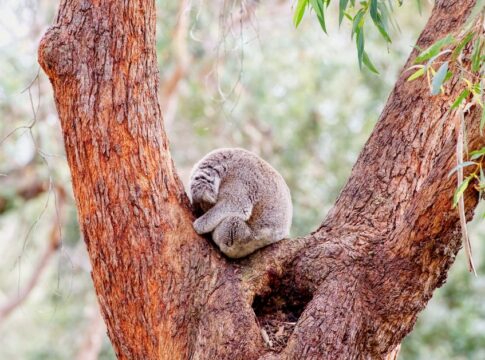
Why Koalas Sleep 22 Hours Daily: The Surprising Truth
By Trivia Daily, Staff Writer — Published August 16, 2026
Table of Contents
- Key Takeaways
- The Biology Behind Koalas Sleep Hours
- Comparing Sleep Champions of the Animal Kingdom
- Frequently Asked Questions
Few animals on Earth spend more time asleep than the koala. While most of us struggle to get eight hours of rest, these marsupials snooze for an astonishing 22 hours each day. The reason behind why koalas sleep so many hours isn’t laziness—it’s a fascinating survival strategy rooted in their unique diet and metabolism. This surprising fact reveals how evolution shapes behavior in unexpected ways.
The eucalyptus leaves that koalas eat are so low in nutrition and difficult to digest that sleeping becomes essential for survival. Every waking moment must be carefully budgeted, making the koala one of nature’s most energy-efficient creatures. Let’s explore the amazing truths behind this curious behavior.
Key Takeaways
- Koalas sleep up to 22 hours daily primarily because their eucalyptus diet provides minimal energy and requires extensive digestion time.
- Eucalyptus leaves are toxic to most animals, but koalas have specialized liver enzymes to break down the poisonous compounds.
- A koala’s brain is unusually small for its body size, occupying only 60% of the cranial cavity—an energy-saving adaptation.
- Koalas don’t actually “sleep” the entire time; much of their rest involves sitting motionless while digesting.
- This extreme rest pattern is a successful evolutionary strategy that has allowed koalas to thrive for millions of years.
The Biology Behind Koalas Sleep Hours
1. Eucalyptus Leaves Provide Almost No Energy
Eucalyptus leaves contain very little protein and virtually no fat—the primary fuel sources most mammals rely on. These leaves are mostly fiber and water, offering minimal calories per bite. A koala must consume about 200 to 500 grams of leaves daily just to meet basic metabolic needs, yet the energy yield remains remarkably low compared to the diets of other herbivores.
2. Digestion Takes Extraordinary Time and Effort
The koala’s digestive system works overtime to extract every possible nutrient from eucalyptus. The cecum, a specialized organ in their digestive tract, can measure up to 2 meters long—one of the longest relative to body size of any mammal. Billions of microorganisms living in the cecum slowly ferment the fibrous leaves, a process that can take up to five days to complete.
3. Toxic Compounds Require Detoxification
Eucalyptus leaves contain phenolic compounds and terpenes that are poisonous to most animals. Koalas possess unique liver enzymes that neutralize these toxins, but the detoxification process itself demands significant metabolic energy. This constant chemical processing drains resources that other animals might use for activity or growth.
4. Their Metabolic Rate Is Exceptionally Slow
Koalas have one of the lowest metabolic rates among mammals, running at roughly half the speed expected for an animal their size. This energy-conservation strategy means they burn fewer calories at rest, allowing them to survive on their nutritionally poor diet. The trade-off is minimal activity and maximum rest.
5. Brain Size Reflects Energy Conservation
The koala brain is unusually small and doesn’t fill the entire skull cavity. This reduction in brain tissue—one of the body’s most energy-demanding organs—saves considerable metabolic resources. While this limits cognitive complexity, it perfectly suits an animal whose survival depends on energy efficiency rather than problem-solving.
6. Sleep Positions Minimize Energy Loss
Koalas typically sleep wedged in tree forks, which provides stability without requiring muscle tension. This posture prevents falls while allowing complete muscular relaxation. They also curl into balls during cooler weather, reducing surface area exposed to the air and minimizing heat loss.
7. They’re Not Actually Sleeping the Whole Time
Much of what appears to be sleep is actually quiet resting while digestion proceeds. Koalas enter true deep sleep for only a portion of their rest period. The remainder involves a drowsy, semi-conscious state where they remain alert to potential threats while their gut does the hard work of breaking down leaves.
8. Nighttime Brings Brief Activity Windows
Koalas are primarily nocturnal, becoming most active during the cooler evening hours. They use this time to feed, move between trees, and engage in social behaviors. The darkness also provides cover from predators and reduces water loss through respiration in Australia’s often hot climate.
9. Temperature Regulation Influences Rest Patterns
During extreme heat, koalas may extend their rest periods even further. They drape themselves along branches with limbs dangling to maximize air circulation around their bodies. This behavior, combined with reduced activity, helps prevent dangerous overheating without expending energy on active cooling mechanisms.
10. Water Intake Comes Mostly From Leaves
The word “koala” likely derives from an Aboriginal term meaning “no drink,” reflecting their minimal water consumption. Eucalyptus leaves contain about 50% water content, providing most of the moisture koalas need. This adaptation eliminates the energy cost of traveling to water sources, though koalas will drink during droughts or illness.
11. Different Eucalyptus Species Offer Varying Nutrition
Australia has over 600 eucalyptus species, but koalas eat leaves from only about 30 of them. They show distinct preferences for species with higher protein content and lower toxin levels. Koalas in different regions specialize in local eucalyptus varieties, developing tolerance for specific chemical compounds through gradual exposure.
12. Mother’s Milk Transfers Critical Gut Bacteria
Baby koalas, called joeys, cannot digest eucalyptus when first emerging from the pouch. Between six and eight months of age, mothers produce a special fecal substance called “pap” that joeys consume to inoculate their digestive systems with the necessary microorganisms. Without these bacteria, eucalyptus digestion would be impossible.
13. Social Structure Requires Minimal Energy
Koalas are largely solitary, which reduces competition for food and eliminates the energy demands of complex social interactions. Males establish territories that overlap with several females’ ranges, but direct contact between individuals remains limited. This social system perfectly complements their low-energy lifestyle.
14. Vocalizations Happen Despite Low Activity
Male koalas produce surprisingly loud bellowing calls during breeding season, audible up to a kilometer away. These deep, resonant sounds advertise territory and attract mates without requiring physical movement. The calls are produced by specialized vocal anatomy that amplifies sound with minimal energy expenditure.
15. Climate Change Threatens Their Sleep Strategy
Rising temperatures and changing rainfall patterns affect eucalyptus leaf quality and water content. As leaves become less nutritious and more toxic during drought stress, koalas must eat more to meet their needs—a challenge when they’re already operating at their metabolic limit. Some populations now face nutritional stress previously unknown.
16. Habitat Loss Disrupts Energy Budgets
When koalas must travel on the ground between fragmented forest patches, they expend energy their diet cannot easily replace. Road crossings and encounters with dogs represent not just immediate dangers but metabolic costs that their 22-hour sleep schedule barely covers. Conservation efforts increasingly focus on maintaining connected tree corridors.
17. Fossil Evidence Shows Ancient Adaptations
Koala ancestors date back millions of years, with fossil records showing similar dietary specializations in related species. This long evolutionary history demonstrates that the low-energy eucalyptus strategy has proven successful across dramatic climate changes and continental shifts, though current rapid environmental changes present unprecedented challenges.
18. Other Animals Use Similar Strategies
Sloths employ comparable energy-conservation tactics, sleeping 15-20 hours daily while subsisting on nutrient-poor leaves. Giant pandas, despite being carnivores anatomically, eat bamboo almost exclusively and rest extensively between meals. These parallel evolutions show how low-quality diets consistently drive extended rest periods across different mammal lineages.
19. Captive Koalas Sleep Similar Hours
Even when provided with abundant, high-quality eucalyptus in zoos, koalas maintain their extensive sleep schedules. This consistency suggests the behavior is deeply hardwired rather than purely responsive to food scarcity. Their bodies have adapted to function optimally with minimal waking hours regardless of resource availability.
20. Disease Affects Already-Stressed Populations
Chlamydia infections, widespread in wild koala populations, further stress their delicate energy balance. Sick animals may sleep even longer as their immune systems fight infection, creating a dangerous spiral where reduced feeding time leads to worsening malnutrition. Wildlife hospitals now treat thousands of koalas annually for these compounding health issues.
21. Their Grip Strength Supports Constant Perching
Koalas possess remarkably strong limbs and specialized paw pads with ridged surfaces that provide secure grip on smooth bark. This allows them to sleep safely in trees without falling, even during deep sleep phases. Their hands have two opposable digits, creating a pincer-like grasp that locks onto branches with minimal muscular effort.
22. Conservation Status Reflects Vulnerability
Various koala populations are listed as vulnerable or endangered, with some estimates suggesting numbers have declined by up to 30% in recent decades. Their extreme dietary specialization and low-energy lifestyle, while successful for millions of years, now make them particularly susceptible to rapid habitat changes. Protecting koalas means preserving the eucalyptus forests they depend on absolutely.
Comparing Sleep Champions of the Animal Kingdom
| Animal | Daily Sleep Hours | Primary Reason |
|---|---|---|
| Koala | 18-22 | Low-nutrition eucalyptus diet |
| Sloth | 15-20 | Slow metabolism, leaf diet |
| Giant Armadillo | 18-19 | Energy conservation |
| Brown Bat | 19-20 | Nocturnal hunting, metabolism |
| Human | 7-9 | Brain maintenance, memory |
Frequently Asked Questions
Do koalas ever sleep less than 22 hours?
Yes, koalas typically sleep between 18 and 22 hours depending on factors like temperature, food quality, and breeding season. During cooler months or when eucalyptus is particularly nutritious, they may be slightly more active.
Can koalas survive on any other food besides eucalyptus?
Koalas are obligate eucalyptus eaters and cannot survive on alternative diets. Their entire digestive system, from specialized gut bacteria to liver detoxification enzymes, evolved specifically to process eucalyptus leaves and nothing else.
Are baby koalas born with the ability to digest eucalyptus?
No, joeys must acquire the necessary gut bacteria from their mothers through consuming a special substance called pap around six to eight months of age. Before this, they survive solely on mother’s milk.
How do koalas get enough protein from eucalyptus leaves?
Koalas carefully select younger eucalyptus leaves, which contain higher protein levels than mature leaves. Their extremely long digestive process also extracts maximum nutrients through microbial fermentation in their specialized cecum.
The next time you feel guilty about sleeping in, remember the koala. Their marathon rest sessions aren’t indulgence—they’re a masterclass in evolutionary efficiency. In a world that often celebrates constant activity, koalas remind us that sometimes doing less is the smartest strategy of all.