
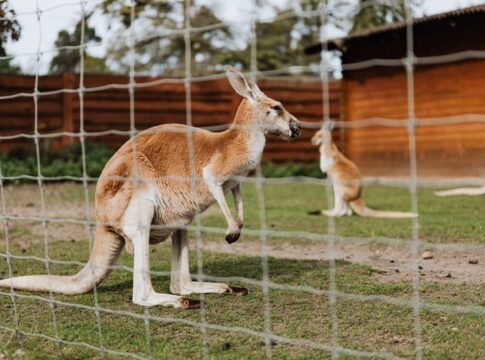
7 Surprising Facts About Kangaroo Hopping Efficiency
By Trivia Daily, Staff Writer — Published August 11, 2026
Table of Contents
- Key Takeaways
- Understanding Kangaroo Hopping Efficiency
- Comparing Kangaroo Efficiency Across Species
- The Evolution of Hopping Efficiency
- Frequently Asked Questions
Kangaroos are nature’s biomechanical marvels, and their hopping isn’t just adorable—it’s one of the most energy-efficient forms of locomotion in the animal kingdom. While most animals burn more energy as they speed up, kangaroos actually become more efficient the faster they hop. This counterintuitive phenomenon has fascinated scientists for decades and reveals surprising truths about evolution, physics, and athletic performance that you probably never knew existed.
From elastic tendons that act like biological springs to respiratory systems synchronized with every bounce, kangaroo hopping efficiency demonstrates how evolution can craft solutions that outperform human engineering. Let’s discover what makes these marsupials such amazing athletes.
Key Takeaways
- Kangaroos become more energy-efficient as they hop faster, unlike nearly all other animals that expend more energy with increased speed.
- Their leg tendons store and release elastic energy like springs, recycling up to 70% of the energy from each hop.
- At high speeds, kangaroos use less oxygen per distance traveled than most quadrupeds of similar size.
- Kangaroos cannot walk backwards and must hop or crawl, making their forward locomotion highly specialized.
- The largest species can cover 25 feet in a single bound and sustain speeds over 35 miles per hour.
- Their hopping motion is synchronized with breathing, making each hop also serve as a respiratory pump.
Understanding Kangaroo Hopping Efficiency
When scientists first studied kangaroo locomotion in detail, they expected to find patterns similar to other mammals. Instead, they discovered something remarkable. Most animals—whether running, swimming, or flying—follow a predictable rule: go faster, burn more fuel. Kangaroos break this rule spectacularly.
At slow speeds, hopping is actually quite costly for kangaroos. They’re awkward and inefficient when moving slowly, which is why they often use a pentapedal gait—essentially crawling on all fours plus their tail—for low-speed movement. But once they hit their stride and begin hopping at moderate to high speeds, the energy cost per distance traveled drops dramatically. This makes kangaroos among the most efficient travelers in the animal kingdom over long distances.
1. Elastic Tendons Act Like Biological Springs
The secret behind kangaroo hopping efficiency lies largely in their remarkable leg tendons, particularly the massive Achilles tendon. These tendons stretch and store elastic energy during landing, then release it explosively during takeoff—functioning exactly like mechanical springs. Research has shown that kangaroo tendons can recycle approximately 70% of the energy from each landing into the next hop. This means the muscles do far less work than they would if they had to power each jump from scratch. The longer and faster a kangaroo hops, the more efficiently these biological springs operate, reducing the metabolic cost of movement. It’s similar to bouncing on a trampoline: once you get the rhythm going, maintaining the bounce requires minimal effort.
2. Oxygen Consumption Decreases at Higher Hopping Speeds
Here’s where kangaroo physiology gets truly mind-blowing. When researchers measured oxygen consumption in hopping kangaroos at various speeds, they found something that defies normal mammalian physiology. As hopping speed increased from moderate to fast, the amount of oxygen consumed per unit of distance actually decreased or remained stable, rather than increasing as it does in running animals. A galloping horse or running human shows a steady climb in oxygen consumption with speed. A hopping kangaroo can nearly double its speed while using roughly the same amount of oxygen per kilometer traveled. This extraordinary efficiency means kangaroos can sustain high-speed travel for extended periods without exhausting themselves, a crucial adaptation for animals that may need to cover vast distances across the Australian outback in search of food and water.
3. Hopping Synchronizes With Breathing in a Unique Way
Kangaroos have evolved an ingenious respiratory-locomotion coupling that further enhances their efficiency. During each hop, the abdominal organs shift forward and backward inside the body cavity. This visceral movement acts like a piston, compressing and expanding the lungs in rhythm with each bounce. The result is that hopping itself helps pump air in and out of the lungs, reducing the muscular work required for breathing. At high hopping speeds, each hop corresponds to one breath cycle. This synchronized system means that the faster a kangaroo hops, the more its locomotion assists its respiration, creating a positive feedback loop of efficiency. It’s as if the kangaroo’s entire body becomes a single integrated machine where every movement serves multiple purposes simultaneously.
4. Tail Functions as a Fifth Leg and Energy-Saving Counterbalance
The muscular tail of a kangaroo isn’t just for balance—it’s an active participant in locomotion and efficiency. When moving slowly, kangaroos use their tail as a genuine fifth leg, bearing weight and providing propulsion in what scientists call pentapedal locomotion. During high-speed hopping, the tail serves as a dynamic counterbalance, swinging in opposition to the body’s motion to maintain stability without requiring extra muscular effort from the legs. The tail also stores fat reserves and contains powerful muscles that support the kangaroo’s weight when it sits upright. This multi-functional appendage contributes to overall locomotor efficiency by reducing the stabilization work that leg muscles would otherwise need to perform, allowing those muscles to focus entirely on forward propulsion.
5. Larger Kangaroos Are More Efficient Than Smaller Ones
Body size matters tremendously in kangaroo hopping efficiency, and bigger is definitely better. Large red kangaroos, which can weigh up to 200 pounds, are significantly more efficient hoppers than smaller wallaby species. This size advantage relates to tendon mechanics and scaling laws. Larger animals have proportionally longer and thicker tendons, which can store more elastic energy per hop. The spring-like tendons of a big kangaroo can handle greater forces and return more energy, making each hop more economical. Small wallabies, while still efficient compared to other small mammals, cannot achieve the same energy-recycling performance as their larger cousins. This size-efficiency relationship has interesting implications for understanding why the largest kangaroo species evolved in Australia’s vast, resource-sparse interior, where efficient long-distance travel is essential for survival.
6. Hopping Beats Running at Speeds Above 15 Miles Per Hour
Comparative biomechanics reveals that kangaroo hopping becomes more efficient than quadrupedal running at moderate to high speeds. Below about 15 miles per hour, a similarly sized quadruped running on four legs uses less energy than a hopping kangaroo. But above that threshold, the kangaroo’s spring-loaded system begins to shine. At speeds of 20 to 25 miles per hour, kangaroos use substantially less energy per distance than running mammals of comparable size. This crossover point explains why kangaroos evolved their unique locomotion: in the open Australian landscape, where animals often need to travel long distances at sustained moderate-to-high speeds, hopping provides a decisive advantage. It’s a specialized solution optimized for specific environmental conditions, demonstrating how evolution tailors locomotion strategies to ecological niches.
7. Kangaroos Cannot Hop Backwards
The remarkable forward efficiency of kangaroo hopping comes with an interesting trade-off: kangaroos cannot hop backwards. Their leg structure, tendon arrangement, and hip anatomy are so specialized for forward propulsion that reverse motion is biomechanically impossible while hopping. Kangaroos can shuffle backwards awkwardly using their pentapedal gait, but they cannot reverse-hop. This limitation is so distinctive that the kangaroo appears on the Australian coat of arms partly because it symbolizes a nation that moves only forward, never back. The inability to reverse isn’t a design flaw—it’s the natural consequence of extreme specialization. By committing entirely to forward motion, kangaroos achieved efficiency levels that would be impossible in a more versatile but less optimized locomotion system.
Comparing Kangaroo Efficiency Across Species
| Species | Maximum Speed (mph) | Typical Hop Length (feet) | Relative Efficiency |
|---|---|---|---|
| Red Kangaroo | 35+ | 25 | Highest |
| Eastern Grey Kangaroo | 30-35 | 20 | Very High |
| Wallaby (medium species) | 20-25 | 6-10 | Moderate |
| Rat Kangaroo | 15 | 3-5 | Lower |
The Evolution of Hopping Efficiency
Kangaroo hopping likely evolved as Australia became increasingly arid over millions of years. As forests gave way to grasslands and deserts, animals that could travel efficiently across long distances between scattered resources gained a survival advantage. The ancestors of modern kangaroos gradually shifted from quadrupedal movement to bipedal hopping, refining the tendon-spring system over countless generations.
This evolutionary pathway required numerous coordinated changes: leg bones lengthened, tendons thickened and became more elastic, foot structure changed to absorb impact, and the respiratory system synchronized with locomotion. Each modification alone might have provided only a small benefit, but together they created a locomotion system unlike any other in the mammalian world. Australia’s isolation allowed this unique evolutionary experiment to proceed without competition from the large placental mammals that dominated other continents.
Frequently Asked Questions
How fast can a kangaroo hop continuously?
Red kangaroos can sustain hopping speeds of 20-25 miles per hour for extended periods, potentially covering over a mile without significant fatigue. Their unique energy-recycling tendons make this sustained performance possible where other animals would quickly tire.
Do baby kangaroos learn to hop or is it instinctive?
Hopping is largely instinctive, but young kangaroos (joeys) refine their technique through practice. They begin attempting small hops around 6-8 months old, gradually developing the coordination and strength needed for efficient adult hopping over several more months.
Why don’t kangaroos get tired from hopping all day?
Kangaroos’ elastic tendons recycle up to 70% of landing energy into the next hop, meaning their muscles perform far less work than appears. This spring-loading system, combined with breathing synchronized to hopping rhythm, dramatically reduces the metabolic cost of sustained travel.
Could humans design machines based on kangaroo hopping?
Engineers have indeed studied kangaroo biomechanics for robotics applications. Several hopping robots use spring-loaded legs inspired by kangaroo tendons, though replicating the full efficiency of biological systems remains challenging with current materials and technology.
The next time you see a kangaroo bounding across the landscape, remember you’re watching one of evolution’s most elegant solutions to the challenge of efficient travel—a living demonstration that sometimes the most surprising answer is also the most effective.