








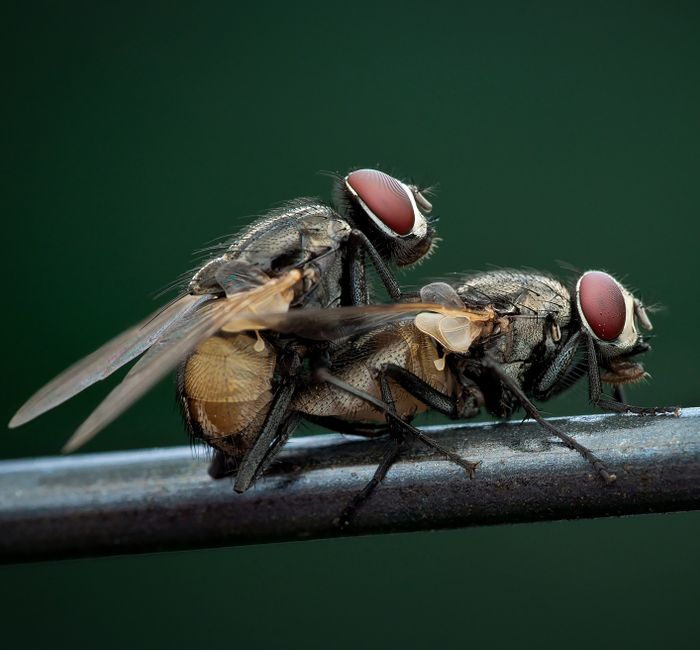
7 Surprising Facts About Houseflies You Never Knew
By Trivia Daily, Staff Writer — Published August 4, 2026
Table of Contents
- Key Takeaways
- Understanding the Houseflies You Never Knew Were So Complex
- The Seven Most Interesting Facts About Houseflies
- Comparing Houseflies to Related Insects
- Why Houseflies Matter More Than You Think
- Frequently Asked Questions
Houseflies are among the most common insects on Earth, buzzing through our homes and picnics with seemingly endless energy. Yet despite their ubiquity, most people know surprisingly little about these six-legged visitors. These tiny creatures possess abilities that would make superheroes envious—from tasting with their feet to processing visual information faster than any human could dream. The facts about houseflies you never knew reveal a world of biological marvels hiding in plain sight, transforming these "pests" into fascinating subjects worthy of genuine curiosity.
What makes houseflies so remarkable isn't just their persistence, but the incredible adaptations that have made them one of the planet's most successful species. Ready to discover some truly amazing trivia about these everyday insects?
Key Takeaways
- Houseflies taste with their feet, which are 10 million times more sensitive to sugar than the human tongue.
- These insects see the world in slow motion, processing visual information about four times faster than humans.
- A single female housefly can lay up to 500 eggs in her brief lifetime of just two to four weeks.
- Houseflies can only consume liquids—they must dissolve solid food with their saliva before eating.
- These insects have been to space multiple times as part of scientific experiments studying the effects of zero gravity.
- Houseflies can walk upside down on ceilings thanks to sticky pads and tiny claws on their feet.
Understanding the Houseflies You Never Knew Were So Complex
The common housefly, scientifically known as Musca domestica, has lived alongside humans for thousands of years. These insects evolved in the Middle East and have since spread to virtually every corner of the globe where humans reside. Their success stems from remarkable biological adaptations that allow them to thrive in diverse environments. Unlike many insects that specialize in specific habitats or food sources, houseflies are generalists—opportunistic feeders that can exploit almost any organic material. This flexibility, combined with rapid reproduction and efficient dispersal mechanisms, has made them one of Earth's most widespread insects.
Understanding these creatures requires looking beyond the annoyance factor. Each housefly represents millions of years of evolutionary refinement, packed into a body weighing less than one-tenth of a gram.
The Seven Most Interesting Facts About Houseflies
1. Houseflies Taste the World With Their Feet
Imagine being able to taste everything you walk on. Houseflies possess chemoreceptors on their feet that are approximately 10 million times more sensitive to sugar than the human tongue. When a fly lands on your sandwich, it's immediately tasting what it's standing on. This extraordinary sensitivity allows flies to quickly assess whether a surface contains potential food. If the answer is yes, the fly extends its proboscis and begins feeding. This foot-tasting ability explains why flies seem to walk around so much when they land—they're literally sampling different areas to find the most nutritious spots. The receptors work so efficiently that a housefly can detect sugar concentrations that would be completely imperceptible to human taste buds.
2. They Experience Time in Slow Motion Compared to Humans
Ever wonder why houseflies are so maddeningly difficult to swat? These insects process visual information about four times faster than humans do. While we see the world at roughly 60 images per second, houseflies process around 250 images per second. This means that when you swing a flyswatter, the fly perceives your movement in what amounts to slow motion, giving it plenty of time to escape. This rapid visual processing is crucial for an insect that spends much of its time in flight, navigating complex three-dimensional environments at high speeds. The fly's compound eyes, each containing thousands of individual lenses, feed this constant stream of visual data to a brain optimized for split-second decisions. It's a reminder that different species literally experience the passage of time differently based on their sensory capabilities.
3. Female Houseflies Are Incredibly Prolific Egg Layers
The reproductive capacity of houseflies is genuinely staggering. A single female can lay up to 500 eggs during her lifetime, typically deposited in batches of 75 to 150 eggs at a time. She prefers to lay these eggs in moist, decaying organic matter—manure, garbage, or rotting food—which will provide nourishment for the emerging larvae. Under ideal conditions, eggs hatch within 24 hours, and the resulting larvae (maggots) grow rapidly, feeding voraciously on the surrounding material. The entire life cycle from egg to adult can complete in as little as one week in warm conditions. This explosive reproductive potential means that a small fly problem can quickly become a major infestation if conditions remain favorable. It also explains why housefly populations can boom seemingly overnight during warm summer months.
4. Houseflies Can Only Eat Liquids
Despite landing on all manner of solid foods, houseflies cannot actually consume anything solid. Their mouthparts are designed exclusively for sucking up liquids. When a fly encounters solid food it wants to eat, it must first dissolve the material using saliva and digestive enzymes. The fly regurgitates these fluids onto the food, waits for the enzymes to break down the solid matter into a liquid slurry, and then sucks up the resulting soup through its proboscis. This process is one reason why flies are such effective disease vectors—they're constantly transferring material from one surface to another through this regurgitation-feeding cycle. The sponge-like structure at the end of their proboscis is perfect for soaking up liquids but utterly useless for biting or chewing, which is why houseflies, unlike mosquitoes or horseflies, cannot bite.
5. These Insects Have Traveled to Space Multiple Times
Houseflies have served as astronauts on numerous occasions, participating in space missions to help scientists understand how living organisms respond to microgravity. Fruit flies are more commonly used in space research, but houseflies have also made the journey. These experiments have revealed fascinating insights into how zero gravity affects development, reproduction, and behavior. In space, flies initially struggle with orientation and flight control, tumbling awkwardly in the absence of gravity's directional cues. However, they adapt relatively quickly, developing new flight patterns that work in microgravity. Studying insects in space helps researchers understand fundamental biological processes and can inform everything from human space medicine to our understanding of sensory systems and balance. The fact that such a common insect has contributed to space science adds an unexpected dimension to their story.
6. They Walk Upside Down Using Dual Grip Technology
The ability of houseflies to walk casually across ceilings has puzzled and impressed humans for centuries. The secret lies in their feet, which employ a two-part gripping system. Each foot is equipped with tiny claws that can grip onto rough surfaces, along with sticky pads called pulvilli that secrete a thin layer of adhesive fluid. On rough surfaces like painted ceilings, the claws do most of the work. On smooth surfaces like glass, the sticky pads take over. The adhesive is strong enough to support the fly's weight but designed to release easily, allowing rapid movement. This dual system gives flies remarkable versatility, enabling them to land on and walk across almost any surface regardless of angle or texture. Scientists have studied this mechanism extensively, hoping to develop new adhesives and climbing technologies inspired by fly feet.
7. Houseflies Spread Diseases But Also Aid Forensic Science
While houseflies are notorious for spreading pathogens—they can carry over 100 different disease-causing organisms on their bodies and in their digestive systems—they also play a valuable role in forensic science. The predictable life cycle of flies and their larvae makes them excellent forensic tools. Forensic entomologists can determine time of death by examining the developmental stage of fly larvae found on human remains. Because flies are often among the first organisms to discover a body and because their development progresses at predictable rates based on temperature, they provide a biological clock that can be remarkably accurate. Different fly species colonize remains at different stages of decomposition, adding further precision to estimates. This application transforms these disease vectors into invaluable assistants in criminal investigations, demonstrating that even creatures we consider pests can serve important purposes in unexpected contexts.
Comparing Houseflies to Related Insects
| Characteristic | Housefly | Fruit Fly | Horsefly |
|---|---|---|---|
| Size | 6-7 mm | 3-4 mm | 10-25 mm |
| Lifespan | 2-4 weeks | 40-50 days | 30-60 days |
| Can Bite | No | No | Yes (females) |
| Primary Food Source | Decaying organic matter | Fermenting fruit | Blood (females), nectar (males) |
| Flight Speed | ~8 km/h | ~6 km/h | ~40 km/h |
Why Houseflies Matter More Than You Think
Beyond their role as annoyances and disease vectors, houseflies occupy an important ecological niche. They serve as decomposers, breaking down organic waste and returning nutrients to the soil. Their larvae consume vast quantities of decaying matter that would otherwise accumulate. Flies also serve as food for countless predators, from spiders and birds to fish and frogs. In ecosystems worldwide, flies represent a critical link in food chains, converting waste into protein that sustains higher-level consumers. Their abundance makes them a reliable food source, supporting biodiversity in ways we rarely acknowledge.
Research on houseflies has also contributed to scientific understanding in numerous fields. Their simple nervous systems make them excellent models for studying neurobiology and sensory processing. The mechanics of fly flight have inspired innovations in robotics and aeronautics. Even their disease-spreading capabilities have taught us valuable lessons about pathogen transmission and public health.
Frequently Asked Questions
How long do houseflies actually live?
Adult houseflies typically live between two to four weeks, though this varies considerably based on environmental conditions. In cool temperatures, they may survive up to three months, while in ideal warm conditions with abundant food, they rarely exceed one month. The larval and pupal stages add another week to ten days to the total life cycle.
Why do houseflies rub their hands together?
When flies appear to rub their hands (actually their legs) together, they're grooming themselves. Flies need to keep their sensory equipment clean to function properly—those taste receptors on their feet and the sensors on their antennae require regular maintenance. By rubbing their legs together and over their bodies, flies remove debris and contaminants that could interfere with their ability to taste, smell, and navigate.
Can houseflies really lay eggs in human food?
While houseflies prefer to lay eggs in moist, decaying organic matter like manure or garbage, they can deposit eggs on food if it's sufficiently moist and left exposed. However, this is relatively uncommon with fresh food. The greater concern is contamination from the fly's feet and the regurgitation that occurs during feeding, which can transfer bacteria and other pathogens to food surfaces.
Do houseflies sleep?
Yes, houseflies experience rest periods that share characteristics with sleep. They become inactive during nighttime hours and enter a state of reduced responsiveness. Research has shown that sleep-deprived flies exhibit impaired performance and will compensate by sleeping longer when given the opportunity, suggesting that rest serves a restorative function similar to sleep in other animals.
The next time a housefly lands nearby, consider the extraordinary biology at work. Those annoying buzzing visitors carry with them millions of years of evolution, sensory systems that outperform our own in specific ways, and capabilities that continue to inspire scientific research. Sometimes the most remarkable discoveries hide in the most familiar places, waiting for curious minds to look closer.