









Why Roman Concrete Lasts Longer Than Modern Concrete
By Trivia Daily, History Desk — Published August 3, 2026
Table of Contents
- Key Takeaways
- The Chemistry Behind Roman Concrete's Longevity
- How Modern Concrete Differs from Ancient Formulations
- Historical Evidence of Roman Concrete's Durability
- Why the Roman Formula Was Lost and Rediscovered
- Comparing Roman and Modern Concrete
- Modern Applications of Ancient Wisdom
- Frequently Asked Questions
The Pantheon in Rome has stood for nearly two thousand years, its massive concrete dome still intact. Meanwhile, modern highway overpasses often need repairs within decades. This isn't just good luck—Roman concrete lasts because of a remarkable chemical process that ancient engineers stumbled upon, one that modern science is only now beginning to fully understand. The secret lies in seawater, volcanic ash, and a self-healing reaction that occurs over centuries.
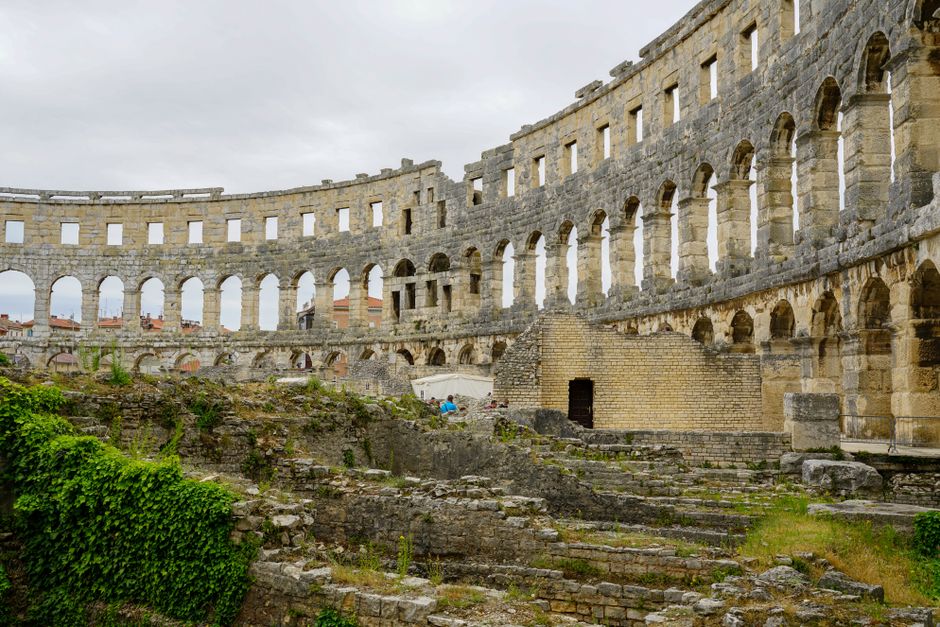
The Roman Empire built structures that have endured through wars, earthquakes, and millennia of weathering. Their concrete harbors and buildings demonstrate an engineering achievement that challenges our assumptions about technological progress. While we think of the past as primitive compared to our era, Roman builders created a material that in some ways outperforms what we use today.
Key Takeaways
- Roman concrete contains volcanic ash called pozzolana, which reacts with seawater to create exceptionally durable minerals over time.
- Ancient Roman structures like the Pantheon and harbor breakwaters have survived nearly 2,000 years with minimal deterioration.
- Modern concrete typically uses Portland cement, which can crack and weaken when exposed to seawater, unlike Roman formulations.
- Roman concrete actually strengthens over centuries through a self-healing process involving rare minerals like aluminum tobermorite.
- The recipe for Roman concrete was lost for over a thousand years after the fall of the Roman Empire in the fifth century.
- Contemporary researchers are studying Roman concrete to develop more sustainable, longer-lasting building materials for the future.
The Chemistry Behind Roman Concrete's Longevity
Roman concrete relied on a mixture fundamentally different from what construction crews use today. Ancient builders combined lime (calcium oxide from heated limestone) with volcanic ash and seawater. The volcanic ash, known as pozzolana after the town of Pozzuoli near Mount Vesuvius, contained silica and alumina that reacted chemically with the lime.
When seawater entered the mix, something extraordinary happened. The saltwater triggered a chemical reaction between the lime and volcanic ash, producing a binding paste that hardened into rock-like material. But unlike modern concrete, which achieves maximum strength within weeks and then slowly degrades, Roman concrete continued to evolve chemically for centuries.
Modern analysis has revealed that Roman concrete exposed to seawater develops rare minerals, particularly aluminum tobermorite, within its structure. These crystals grow within cracks and pores, effectively healing damage and reinforcing weak points. The longer the concrete sits in seawater, the stronger it becomes—a complete reversal of what happens to contemporary concrete in marine environments.
How Modern Concrete Differs from Ancient Formulations
Portland cement, the binding agent in modern concrete, was developed in the early nineteenth century and revolutionized construction. It sets quickly, allowing rapid building schedules, and can be precisely engineered for specific strength requirements. However, it has a significant weakness: it deteriorates in seawater.
The chemistry of Portland cement creates a different calcium-based binder than Roman concrete. When exposed to saltwater, modern concrete experiences a process called salt crystallization, where salts penetrate the material, form crystals, and create internal pressure that causes cracking. Steel reinforcement bars, commonly used in modern construction, corrode when saltwater seeps through cracks, further weakening the structure.
Roman concrete contained no steel reinforcement. The Romans built massive unreinforced structures that relied entirely on the concrete's compressive strength and the self-healing properties of its unique chemistry. This meant their maritime structures—harbor walls, breakwaters, and piers—could withstand constant seawater exposure for centuries without the corrosion problems that plague modern marine construction.
Historical Evidence of Roman Concrete's Durability
The proof of Roman concrete's superiority sits in plain sight across the Mediterranean. The Pantheon's dome, completed around 126 CE, remains the world's largest unreinforced concrete dome. No cracks mar its surface, and it requires no structural support beyond its original design. The building has functioned continuously for nearly nineteen centuries.
Even more impressive are Roman harbor installations. Ancient concrete piers and breakwaters in the Mediterranean have survived two thousand years of wave action, storms, and seawater immersion. Some of these structures still serve their original purpose. In contrast, modern concrete seawalls and harbor structures often require repair or replacement within fifty years.
Archaeological studies of Roman concrete from various sites show consistent patterns. Samples from underwater structures reveal the growth of beneficial minerals throughout the material. The concrete hasn't just survived—it has literally grown stronger over the centuries, a phenomenon that fascinated researchers when they first documented it in the early twenty-first century.
Why the Roman Formula Was Lost and Rediscovered
When the Roman Empire collapsed in the fifth century, much of its engineering knowledge disappeared with it. The political fragmentation of Europe meant large-scale building projects became rare. The specific knowledge of mixing volcanic ash with lime and seawater faded from practice, replaced by simpler construction methods suitable for smaller structures.
Medieval builders used lime mortar but lacked the understanding of volcanic ash's special properties. The precise ratios and techniques that made Roman concrete so durable became historical curiosities rather than practical knowledge. It wasn't until modern materials science developed the tools to analyze ancient samples at the molecular level that researchers could decode what made Roman concrete special.
In recent decades, universities and research institutions have studied Roman concrete samples using electron microscopy, X-ray diffraction, and other analytical techniques. These investigations revealed the presence of rare minerals and the ongoing chemical reactions within ancient structures. Scientists recognized that the Romans had accidentally created a self-healing material through their choice of ingredients and mixing methods.
Comparing Roman and Modern Concrete
| Characteristic | Roman Concrete | Modern Concrete |
|---|---|---|
| Primary Binder | Lime and volcanic ash | Portland cement |
| Setting Time | Slow (weeks to months) | Fast (hours to days) |
| Seawater Resistance | Strengthens over time | Degrades and cracks |
| Lifespan in Marine Environments | 2,000+ years documented | Typically 50–100 years |
| Carbon Footprint | Lower (lime requires less heat than Portland cement) | Higher (cement production releases significant CO2) |
| Self-Healing Properties | Yes, through mineral crystal growth | Limited or none |
Modern Applications of Ancient Wisdom
Understanding why Roman concrete lasts has practical implications today. The production of Portland cement accounts for roughly eight percent of global carbon dioxide emissions, making it a significant contributor to climate change. Roman concrete required lower temperatures to produce lime compared to modern cement manufacturing, offering a potentially more sustainable alternative.
Researchers are developing new concrete formulations inspired by Roman techniques. Some experimental mixes incorporate volcanic ash or similar pozzolanic materials combined with seawater or brine. Early results suggest these bio-inspired concretes could dramatically extend the lifespan of marine structures while reducing environmental impact.
The challenge lies in adapting ancient methods to contemporary construction needs. Modern buildings require concrete that sets quickly and achieves high early strength. Roman concrete's slow curing process doesn't fit well with tight construction schedules. However, for specific applications—seawalls, bridge piers, offshore platforms—the long-term benefits of Roman-style concrete might outweigh the inconvenience of slower setting times.
Frequently Asked Questions
What made Roman concrete waterproof?
Roman concrete wasn't completely waterproof, but its combination of lime and volcanic ash created a dense, cohesive material that resisted water penetration better than many ancient alternatives. In seawater, it actually improved over time as beneficial minerals filled microscopic gaps.
Can we still make Roman concrete today?
Yes, researchers have successfully recreated Roman concrete using volcanic ash, lime, and seawater. The challenge is scaling production for modern construction needs and convincing the building industry to adopt methods that require longer curing times than conventional concrete.
How long does modern concrete last compared to Roman concrete?
Modern concrete structures typically last 50 to 100 years before requiring major repairs, though some well-maintained buildings endure longer. Roman concrete structures have demonstrated lifespans exceeding 2,000 years, particularly in marine environments where modern concrete struggles.
Did the Romans know why their concrete was so strong?
No, the Romans developed their concrete formula through trial and error rather than scientific understanding of chemistry. They recognized that certain volcanic ashes produced superior results, but they had no knowledge of the molecular processes that made their concrete self-healing and exceptionally durable.
The next time you see a crumbling modern parking garage, think of the Pantheon's perfect dome or those ancient harbor walls still standing in Mediterranean ports. Sometimes the distant past holds solutions to problems we're only beginning to recognize today—and sometimes our ancestors' "primitive" technology was more sophisticated than we ever imagined.