
By TrivBits, History Desk — Published November 28, 2026
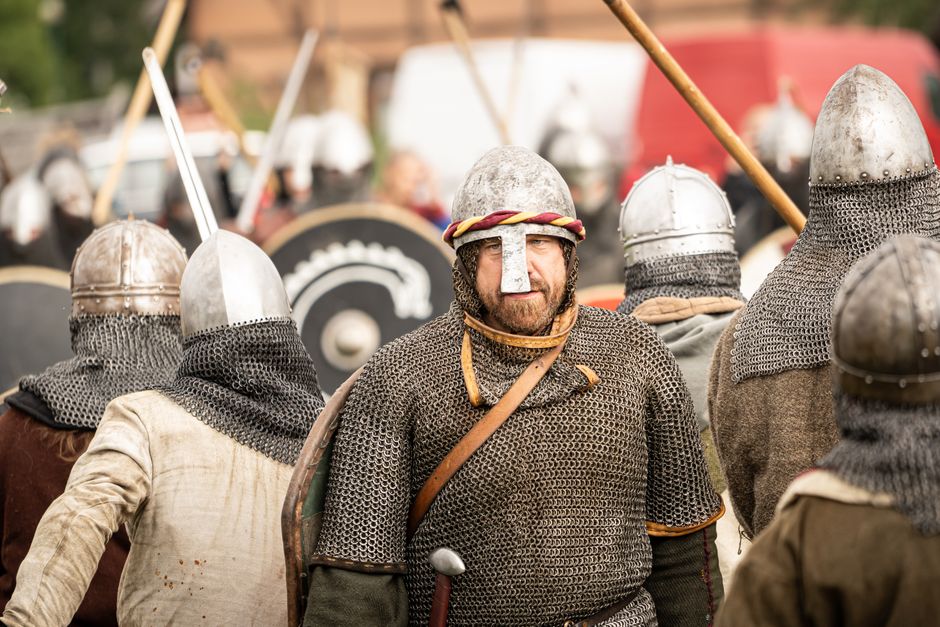
Table of Contents
- Key Takeaways
- Viking Discoveries Rewrote What We Knew About Medieval Exploration
- How Archaeological Evidence Changed Viking Stereotypes
- The Impact of Modern Technology on Viking Research
- Comparing Viking Settlements Across Europe
- Frequently Asked Questions
- The Continuing Search for Viking History
- Sources
For centuries, Vikings were dismissed as bloodthirsty raiders who terrorized coastal villages and left little behind but destruction. That simplified narrative crumbled as archaeologists unearthed evidence revealing a far more complex civilization. These viking discoveries rewrote our understanding of medieval Europe, proving the Norse were sophisticated traders, explorers, and settlers whose influence shaped the continent’s past in ways historians never imagined.
From ancient trading networks spanning continents to advanced shipbuilding techniques that enabled transatlantic voyages, each discovery has forced scholars to reconsider the Viking era. The historical record now shows an empire of innovation, not just invasion—a people who connected distant civilizations and left an indelible mark on European culture.
Key Takeaways
- Archaeological evidence proves Vikings reached North America roughly five centuries before Columbus, establishing the first European settlement in the New World.
- Excavations reveal extensive Viking trading networks that stretched from Baghdad to Newfoundland, connecting distant ancient civilizations.
- Advanced Norse shipbuilding technology allowed for ocean voyages that were previously thought impossible during that era.
- DNA analysis shows Vikings were far more ethnically diverse than traditional historical accounts suggested, with evidence of migration and intermarriage across cultures.
- Recent discoveries demonstrate Viking women held significant social power, including roles as warriors, traders, and landowners.
- Sophisticated navigation tools and astronomical knowledge enabled Vikings to cross open oceans without modern instruments.
Viking Discoveries Rewrote What We Knew About Medieval Exploration
The discovery of L’Anse aux Meadows in Newfoundland during the 1960s shattered centuries of accepted historical narrative. Here was physical proof that Vikings established a settlement in North America around the year 1000 CE, predating Columbus by approximately 500 years. The site contained Norse-style buildings, iron nails, and artifacts that matched Scandinavian construction techniques from that century. This wasn’t just a brief landing—it was evidence of sustained habitation.
What makes this discovery remarkable isn’t merely the geographical achievement. It demonstrates that Viking ships were capable of repeated transatlantic crossings, that Norse navigators possessed the knowledge to find their way across open ocean, and that European contact with the Americas began far earlier than previously documented. The site proved that the Viking sagas describing Vinland weren’t mere legends but historical accounts of actual exploration.
1. L’Anse aux Meadows: The First European Settlement in the Americas
This archaeological site on the northern tip of Newfoundland stands as the only confirmed Viking settlement in North America. Excavations revealed eight timber-framed buildings covered with sod, identical to structures found in Norse Greenland and Iceland. The settlement included a forge for working iron—a technology unknown to Indigenous peoples of the region at that time. Radiocarbon dating and artifact analysis confirmed the site was occupied around 1000 CE. The discovery fundamentally changed our understanding of pre-Columbian contact between Europe and the Americas, proving that Viking explorers successfully crossed the Atlantic and established a foothold in the New World during the medieval era.
2. The Oseberg Ship: A Window Into Viking Craftsmanship
Discovered in a burial mound in Norway in 1904, the Oseberg ship revealed the extraordinary sophistication of Viking shipbuilding. This remarkably preserved vessel, dating to approximately 834 CE, showcased elegant lines, intricate carvings, and construction techniques that allowed for both ocean voyages and river navigation. The ship’s shallow draft and flexible hull design enabled Vikings to beach their vessels on any shoreline and travel far inland via waterways. The burial also contained textiles, household items, and wooden artifacts that provided unprecedented insight into daily Viking life. This discovery demonstrated that Norse shipwrights possessed engineering knowledge that wouldn’t be matched in Europe for centuries, explaining how Vikings could dominate maritime trade and exploration across vast distances.
3. The Spillings Hoard: Evidence of Global Trade Networks
Unearthed on the Swedish island of Gotland, the Spillings Hoard represents the world’s largest Viking silver treasure, weighing approximately 67 kilograms. Discovered in 1999, the hoard contained thousands of coins from the Islamic world, Byzantine Empire, and various European kingdoms. The presence of Arabic dirhams alongside Western European currency proved Vikings maintained extensive trade connections spanning from Baghdad to Britain. This wasn’t random plunder—the organized nature of the hoard and the diversity of its origins demonstrate Vikings participated in sophisticated international commerce. The discovery revealed that Vikings served as crucial intermediaries in early medieval global trade, connecting civilizations that had little direct contact with one another.
4. The Birka Warrior Grave: Challenging Gender Assumptions
For over a century, archaeologists assumed a high-status warrior grave discovered at Birka, Sweden, belonged to a male. The burial contained a full set of weapons, strategic gaming pieces, and two horses—all markers of a military commander. DNA analysis published in 2017 revealed the remains were female. This discovery forced historians to reconsider assumptions about gender roles in Viking society. The grave goods suggest this woman held a position of military authority, possibly as a tactician or commander. While debate continues about the interpretation, the finding demonstrates that Viking social structures were more complex than traditional narratives suggested, and that women could occupy positions of power within the military hierarchy.
5. The Salme Ships: Mass Graves Revealing Viking Raiding Practices
Two Viking ship burials discovered on the Estonian island of Saaremaa between 2008 and 2010 contained the remains of roughly 40 warriors who died violently around 750 CE. The burials included high-status weapons, gaming pieces, and the ships themselves—all suggesting these were elite fighters. Isotope analysis revealed the men came from central Sweden, providing concrete evidence of Viking raiding expeditions into the Baltic region during the early Viking Age. The discovery pushed back the timeline of organized Viking overseas activity by several decades, showing that coordinated Norse expeditions began earlier than historical records indicated. The elaborate burial also demonstrated that Vikings honored fallen warriors with complex funeral rites, even far from home.
6. The Ribe Excavations: Europe’s Oldest Trading Town
Archaeological work in Ribe, Denmark, revealed what may be Northern Europe’s first true marketplace, dating to approximately 700 CE. Excavations uncovered evidence of specialized craftspeople producing goods for trade rather than local consumption—a hallmark of urban economic activity. The site contained raw materials and finished products from across Europe and beyond, including glass beads from the Mediterranean and amber from the Baltic. This discovery demonstrated that Vikings established commercial centers before the traditional start of the Viking Age, showing they were sophisticated traders before they became famous as raiders. Ribe’s existence proves that Viking economic networks developed gradually through peaceful commerce, fundamentally changing our understanding of how Norse civilization evolved.
7. The Sunstone Navigation Crystal: Advanced Seafaring Technology
References in Viking sagas to mysterious “sunstones” used for navigation puzzled historians for generations. In 2013, a calcite crystal discovered aboard a 16th-century shipwreck near the Channel Islands reignited interest in this possibility. Laboratory experiments demonstrated that certain crystals can detect polarized light patterns, allowing navigators to determine the sun’s position even through clouds or fog. While no confirmed Viking-era sunstone has been definitively identified, the experimental evidence suggests such navigation aids were feasible with medieval technology. This potential discovery would explain how Vikings successfully navigated across open ocean without magnetic compasses, using optical properties of minerals combined with astronomical knowledge to maintain course during extended voyages.
How Archaeological Evidence Changed Viking Stereotypes
The popular image of Vikings as illiterate barbarians collapsed under archaeological scrutiny. Excavations across Scandinavia revealed urban centers with organized street layouts, sophisticated drainage systems, and evidence of literacy far more widespread than previously believed. Runestones weren’t just monuments—they were proof that written communication played a significant role in Viking society.
Trade weights, scales, and standardized measurements found at Viking sites demonstrate economic sophistication. These weren’t improvised raiders but organized merchants who understood complex accounting. The discovery of workshops producing specialized goods for export shows economic planning and division of labor comparable to other medieval civilizations.
The Impact of Modern Technology on Viking Research
DNA analysis has revolutionized our understanding of Viking demographics and migration patterns. Studies of ancient Norse remains reveal unexpected genetic diversity, with evidence of individuals from the British Isles, Southern Europe, and even Central Asia present in Viking communities. This genetic evidence confirms historical accounts of Vikings taking spouses from conquered or traded regions, creating a far more multicultural society than traditional narratives suggested.
Ground-penetrating radar and LiDAR technology have identified previously unknown Viking settlements without disturbing the soil. These tools revealed that Viking presence in various regions was far more extensive than surface archaeology indicated. Entire settlements, burial grounds, and fortifications have been mapped, multiplying the known sites by orders of magnitude and suggesting Viking influence was deeper and more widespread than historians realized.
Comparing Viking Settlements Across Europe
| Location | Approximate Period | Primary Function | Historical Significance |
|---|---|---|---|
| L’Anse aux Meadows, Newfoundland | 1000 CE | Exploration base | First European settlement in Americas |
| Jorvik (York), England | 866-954 CE | Trading city and capital | Major Viking political center in Britain |
| Dublin, Ireland | 841 CE onward | Trading port | Became major European commercial hub |
| Hedeby, Denmark/Germany | 8th-11th century | International marketplace | Connected Baltic and North Sea trade routes |
Frequently Asked Questions
Did Vikings really wear horned helmets?
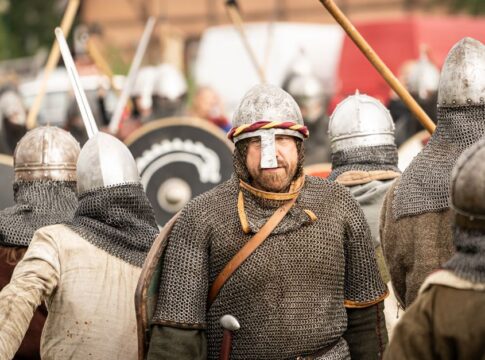
No, this is a myth popularized by 19th-century romanticized artwork and opera costumes. Archaeological evidence shows Viking helmets were simple, practical designs made of iron or leather, without horns. The horned helmet image likely originated from much earlier Bronze Age ceremonial objects that had no connection to Viking warriors. Every authentic Viking helmet discovered has been horn-free, designed for actual combat rather than theatrical appearance.
How far did Viking trade networks actually extend?
Viking trade routes stretched from Newfoundland in the west to Central Asia in the east, covering an astonishing geographic range. Archaeological evidence includes Arabic silver coins found in Scandinavia, Scandinavian artifacts discovered in Constantinople, and Norse goods unearthed in Russia. Vikings traveled down Russian rivers to reach the Black and Caspian Seas, establishing direct contact with Islamic merchants and Byzantine traders. This network connected Northern Europe with the Mediterranean, Middle East, and even indirectly with the Silk Road.
Were all Vikings from Scandinavia?
While Viking culture originated in Scandinavia, recent DNA evidence shows Viking communities included people from diverse ethnic backgrounds. Many individuals buried in Viking graves show genetic ancestry from the British Isles, Eastern Europe, and other regions. The term “Viking” described a profession or activity—seafaring, trading, and raiding—rather than a strict ethnic identity. Viking society absorbed people from conquered and traded regions, creating multicultural communities that were ethnically diverse by medieval standards.
What caused the Viking Age to end?
The Viking Age gradually ended due to multiple converging factors during the 11th century. Scandinavian kingdoms became Christianized and integrated into mainstream European political structures, reducing the cultural distinctiveness that defined Viking society. Improved defenses in target regions made raiding less profitable, while established trade routes reduced the need for aggressive expansion. The Norman conquest of England in 1066 is often cited as a symbolic endpoint, as descendants of Vikings had become established European nobility operating within conventional feudal systems rather than conducting independent raids.
The Continuing Search for Viking History
New discoveries continue emerging with surprising regularity. Advanced archaeological techniques identify sites that remained hidden for centuries, while climate change exposes artifacts previously locked in glacial ice. Each finding adds nuance to our understanding of Viking civilization, revealing layers of complexity that previous generations of historians never suspected.
The Vikings weren’t the one-dimensional raiders of popular imagination but rather a multifaceted civilization that left an enduring legacy across Europe and beyond. Their achievements in navigation, trade, and exploration demonstrate human ingenuity that transcended the limitations of their era—and there’s undoubtedly more still buried beneath European soil, waiting to rewrite history once again.