
By TrivBits, History Desk — Published October 28, 2026
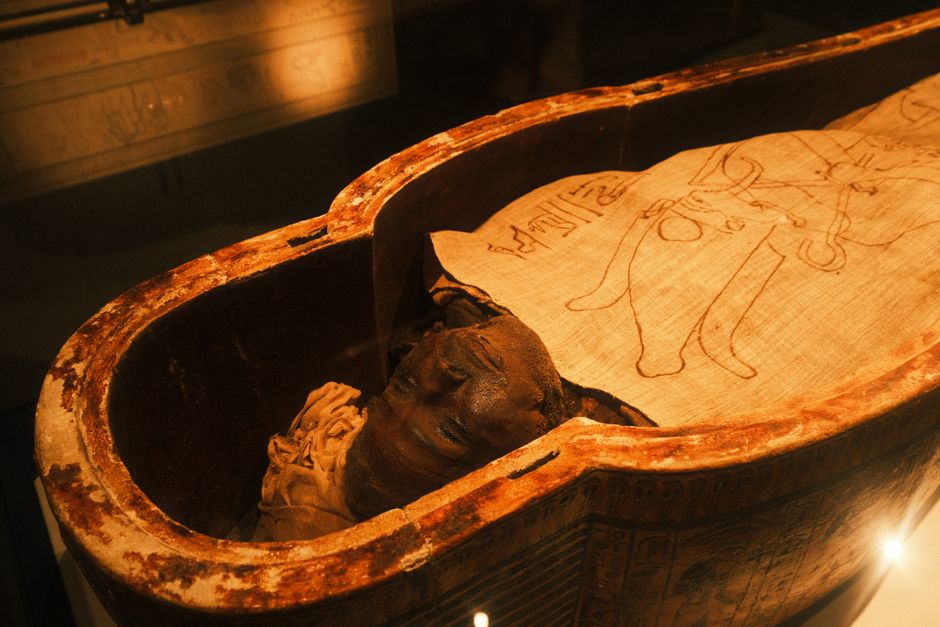
Table of Contents
- Key Takeaways
- The Strange Egyptian Mummy Curse Predates Famous Discoveries
- King Tut’s Tomb Had No Curse Inscription
- Lord Carnarvon’s Death Sparked the Modern Curse Legend
- Ancient Egyptians Did Write Tomb Warnings
- Media Sensationalism Created a Self-Fulfilling Prophecy
- Scientific Explanations Exist for “Curse” Symptoms
- Colonial Attitudes Shaped Curse Narratives
- The Curse Concept Boosted Tourism and Entertainment
- Statistical Analysis Debunks the Curse Theory
- Curse Beliefs Reflect Universal Human Psychology
- Modern Archaeology Has Moved Beyond Curse Narratives
- Frequently Asked Questions
- Sources
The idea of a strange Egyptian mummy curse has captivated imaginations for more than a century. From Hollywood films to sensational newspaper headlines, the notion that disturbing ancient tombs brings deadly consequences has become deeply embedded in popular culture. But where did these supernatural beliefs actually come from? The history behind mummy curses reveals a fascinating blend of colonial-era anxieties, media sensationalism, and genuine ancient Egyptian protective practices that evolved into something far more dramatic than the original civilizations ever intended.
The curse mythology we know today is largely a modern invention, born in an era when European powers were excavating Egypt’s past with little regard for cultural sensitivity. Yet elements of truth lurk within the legends—ancient Egyptians did inscribe warnings on tombs, and some historical events surrounding excavations seemed eerily coincidental. Understanding the real origins of these curse stories takes us on a journey through archaeology, journalism, and the human tendency to find patterns in tragedy.
Key Takeaways
- Mummy curse legends are primarily a 20th-century creation, not ancient Egyptian beliefs
- Victorian-era fiction writers established many curse tropes decades before famous archaeological discoveries
- The King Tut curse became the most famous example despite lacking any actual curse inscription
- Ancient Egyptians did write protective warnings, but these were religious, not supernatural threats
- Media sensationalism transformed coincidental deaths into evidence of curses
- Scientific explanations exist for some “curse” symptoms, including toxic mold exposure
The Strange Egyptian Mummy Curse Predates Famous Discoveries
Popular culture often credits the 1922 discovery of King Tutankhamun’s tomb as the birthplace of mummy curse legends. That’s backwards. Fiction writers were spinning tales of vengeful mummies decades earlier. The curse narrative was already well-established in the public imagination by the time Howard Carter opened that famous tomb. Victorian and Edwardian authors like Louisa May Alcott and Arthur Conan Doyle published stories featuring mummies that brought misfortune to those who disturbed them. These stories reflected anxieties about imperialism and the consequences of plundering other civilizations’ sacred spaces.
The literary tradition created expectations. When real archaeological events occurred, people already had a framework for interpreting deaths or misfortunes as curse-related. The fiction essentially wrote the script that journalists and the public would later use to understand actual events.
King Tut’s Tomb Had No Curse Inscription
Here’s an ironic twist: the most famous mummy curse in history never existed. Despite countless retellings claiming otherwise, King Tutankhamun’s tomb contained no curse inscription whatsoever. Archaeologists found no warnings carved into walls, no protective spells threatening intruders with death. The entire “Curse of the Pharaohs” narrative surrounding Tut’s tomb was fabricated by journalists and perpetuated by public fascination.
Howard Carter, the archaeologist who discovered the tomb, repeatedly denied any curse existed. He spent a decade cataloging the tomb’s contents and lived until 1939—seventeen years after opening the burial chamber. If curses were real, surely the man who actually entered first would have been the primary target. The absence of both an actual curse and harm to the lead archaeologist didn’t stop the legend from growing.
Lord Carnarvon’s Death Sparked the Modern Curse Legend
The mummy curse explosion truly began when Lord Carnarvon, the financial backer of Tut’s excavation, died in April 1923—just months after the tomb’s opening. He succumbed to blood poisoning from an infected mosquito bite, developing pneumonia as a complication. Tragic? Absolutely. Supernatural? Not remotely. But the timing was too perfect for newspapers to resist.
Reports claimed the lights went out in Cairo at the moment of his death. Some said his dog howled and died simultaneously back in England. These embellishments were never verified but spread rapidly. Carnarvon was 57 and in poor health before the expedition. His death, while sad, was medically explainable. Yet it became the cornerstone “proof” that disturbing pharaohs brought divine retribution.
Ancient Egyptians Did Write Tomb Warnings
Not all curse claims are fabrications. Ancient Egyptians genuinely inscribed protective texts on some tombs, particularly during the Old Kingdom era. These weren’t supernatural threats but religious declarations meant to deter tomb robbers. One famous example warns that disturbing the tomb would result in judgment by the gods or being seized by a crocodile.
These warnings served practical purposes in their historical context. Tomb robbery was rampant in ancient Egypt, even in antiquity. Priests and families wanted to protect burial goods and the deceased’s journey to the afterlife. The inscriptions were psychological deterrents rooted in religious belief systems of that civilization, not magical curses designed to kill across millennia. The distinction matters—they reflected the values of the past, not predictions about the future.
Media Sensationalism Created a Self-Fulfilling Prophecy
Once newspapers latched onto the curse narrative, every death remotely connected to Egyptian excavations became evidence. A radiologist who X-rayed Tut’s mummy died years later? Curse. An archaeologist’s assistant passed away? Curse. Never mind that dozens of people involved in the excavation lived long lives.
Journalists cherry-picked data to support the story. They ignored the many expedition members who suffered no unusual misfortunes while highlighting any death or illness as supernatural. This confirmation bias created a feedback loop where public expectation demanded curse stories, and newspapers obliged. The century that followed saw this pattern repeat with various archaeological discoveries.
Scientific Explanations Exist for “Curse” Symptoms
Some people who entered ancient tombs did experience genuine health problems. Science offers explanations. Sealed tombs can harbor dangerous pathogens, including toxic molds like Aspergillus, which thrive in dark, enclosed spaces. Bat droppings in tombs can carry histoplasmosis. These biological hazards can cause respiratory problems, infections, and in severe cases, death—especially given early 20th-century medical limitations.
Additionally, some tombs contained organic materials that decomposed over millennia, creating harmful gases. Poor ventilation meant early excavators inhaled concentrated amounts. These weren’t curses but occupational hazards of archaeology before modern safety protocols. The symptoms seemed mysterious at the time but have rational explanations rooted in microbiology and chemistry.
Colonial Attitudes Shaped Curse Narratives
The mummy curse phenomenon cannot be separated from its colonial context. European powers were systematically removing artifacts from Egypt, often with minimal regard for local perspectives or cultural heritage. The curse narrative served contradictory purposes—it added exotic danger to justify the “brave” work of Western archaeologists while simultaneously expressing subconscious guilt about cultural plundering.
The idea that ancient civilizations could reach across time to punish modern intruders gave agency to a culture that colonialism otherwise treated as passive. Paradoxically, it acknowledged Egyptian power while framing it as primitive and supernatural rather than sophisticated and historical. This tension reveals much about early 20th-century empire dynamics and how Western societies processed their relationship with the ancient world.
The Curse Concept Boosted Tourism and Entertainment
Egypt’s government and tourism industry eventually recognized that curse legends, despite being historically dubious, attracted visitors. The mystique surrounding mummies made them blockbuster museum attractions worldwide. Films, novels, and later video games perpetuated curse mythology, which in turn drove public interest in Egyptian history and archaeology.
This created an unusual situation where scholars debunked curses while institutions benefited from curse-related publicity. Museums hosting mummy exhibitions often played up mysterious elements in marketing. The entertainment value of curses arguably did more to popularize ancient Egyptian civilization than dry academic accuracy ever could, though at the cost of perpetuating misconceptions.
Statistical Analysis Debunks the Curse Theory
Researchers have actually studied the mortality rates of people involved in Egyptian excavations. A 2002 study published in the British Medical Journal examined the survival rates of individuals present when Tut’s tomb was opened. The findings were clear: exposure to the tomb had no statistically significant effect on longevity. Those who entered the tomb lived just as long as those who didn’t.
Of the 58 people present at various stages of the tomb’s opening and excavation, the average survival time was over 20 years afterward. Many lived into their 70s and 80s. The data directly contradicts curse claims. When subjected to rigorous analysis rather than anecdotal cherry-picking, the curse evaporates. Numbers don’t lie, but compelling stories often obscure them.
Curse Beliefs Reflect Universal Human Psychology
Why do curse legends persist despite evidence against them? Human psychology offers answers. We’re pattern-seeking creatures who struggle with randomness. When someone dies after entering a tomb, connecting those events creates a satisfying narrative that gives meaning to tragedy. Coincidence feels unsatisfying; curses provide explanation.
Additionally, we remember dramatic stories better than statistics. The tale of Lord Carnarvon’s dramatic death sticks in memory far more effectively than the fact that dozens of others involved lived unremarkable, curse-free lives. Our cognitive biases favor memorable narratives over accurate but boring data. Mummy curses tap into fears about mortality, respect for the dead, and consequences for transgression—themes that resonate across cultures and eras.
Modern Archaeology Has Moved Beyond Curse Narratives
Contemporary Egyptology takes a dramatically different approach. Modern archaeologists work collaboratively with Egyptian scholars and institutions, emphasizing cultural respect and heritage preservation. The sensationalist curse framing has given way to serious study of ancient Egyptian religious practices, daily life, and historical achievements.
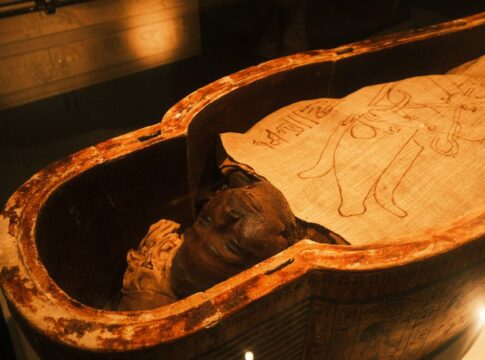
Today’s excavations follow strict protocols for both artifact preservation and excavator safety. The “curse” concept is recognized as a historical curiosity—a window into early 20th-century attitudes rather than ancient Egyptian reality. Museums increasingly contextualize mummies as people from a sophisticated civilization rather than exotic objects of supernatural dread. This shift represents progress in how modern society engages with the past, moving from exploitation and sensationalism toward genuine understanding and respect.
Frequently Asked Questions
Were any ancient Egyptian tombs actually cursed?
No tombs were cursed in the supernatural sense. Some tombs did contain protective inscriptions warning against disturbance, but these were religious deterrents rooted in ancient Egyptian belief systems, not magical spells designed to harm future intruders. The inscriptions reflected the spiritual worldview of that civilization and served to discourage tomb robbery, which was common even in ancient times.
How many people actually died from the King Tut curse?
Statistical studies show no unusual mortality pattern among people involved with King Tutankhamun’s tomb. While Lord Carnarvon died months after the discovery, the lead archaeologist Howard Carter lived 17 more years, and most expedition members enjoyed normal lifespans. Journalists selectively reported deaths while ignoring the many people who experienced no ill effects whatsoever.
Can mold in tombs really make people sick?
Yes, sealed ancient tombs can harbor dangerous biological agents including toxic molds, bacteria, and fungal spores. Modern archaeologists take precautions against these genuine health hazards. Early excavators lacked this knowledge and protection, so some may have experienced real illness from pathogen exposure—but this is microbiology, not supernatural curses.
Why do people still believe in mummy curses?
Curse beliefs persist because dramatic stories are memorable and psychologically satisfying. Humans naturally seek patterns and explanations for tragedy. A curse narrative provides meaning where randomness feels uncomfortable. Additionally, over a century of films, books, and media have reinforced curse mythology in popular culture, making it culturally embedded regardless of historical accuracy.