






By TrivBits, Staff Writer — Published October 19, 2026
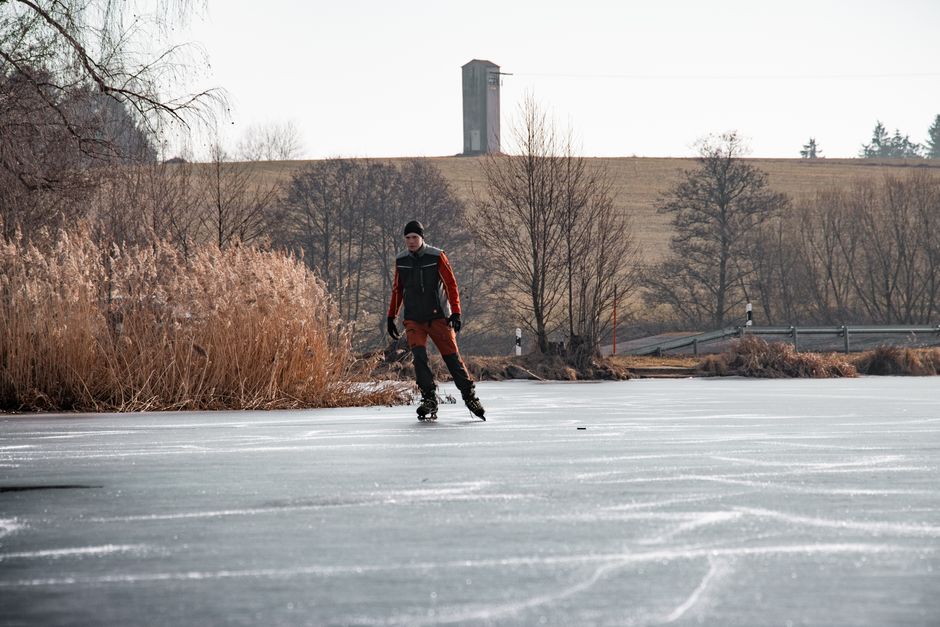
Table of Contents
- Key Takeaways
- The Myth That Causes Slippery Skating Confusion
- What Really Makes Ice Slippery
- Temperature's Hidden Role in Ice Sports
- Why Walking on Ice Feels Different Than Skating
- Unknown Facts About Ice Surface Science
- Frequently Asked Questions
- Sources
Ever wonder why you can glide effortlessly across a frozen pond, yet walking on ice feels like a comedic disaster waiting to happen? The surprising truth about what causes slippery skating conditions has puzzled scientists for over a century. Did you know that the very phenomenon allowing figure skaters to perform graceful spins involves physics far more complex than most people imagine? The facts might challenge everything you thought you knew about frozen water.
Ice seems simple enough—just frozen water. But its slipperiness is anything but straightforward. The myths surrounding this everyday mystery have been taught in classrooms for generations, yet recent scientific discoveries reveal interesting truths that overturn old assumptions.
Key Takeaways
- Ice slipperiness results primarily from friction-generated heat creating a thin water layer, not from pressure melting as commonly believed
- A quasi-liquid layer exists on ice surfaces even below freezing, contributing to reduced friction
- The pressure-melting theory, taught for decades, has been largely debunked by modern physics research
- Temperature significantly affects ice slipperiness, with ice around -7°C being most slippery for skating
- Different activities on ice (skating, curling, walking) involve distinct physical mechanisms
- Surface roughness and contamination play crucial roles in how slippery ice actually feels
The Myth That Causes Slippery Skating Confusion
For generations, textbooks confidently explained ice's slipperiness through pressure melting. The story went like this: when you step on ice, your weight concentrates on a small area, increasing pressure. This pressure lowers water's freezing point, melting the ice beneath your feet and creating a lubricating water layer. Skaters glide on this pressure-melted film. Simple, elegant, wrong.
The math never quite worked. A skater's blade—even a thin one—doesn't generate enough pressure to significantly lower ice's melting point. You'd need vastly more pressure than a human can produce. Scientists began questioning this explanation in the late 20th century, but the myth persisted in popular understanding.
The pressure-melting theory fails spectacularly at very cold temperatures. If pressure alone caused slipperiness, ice should remain equally slippery at -30°C as at -5°C. It doesn't. Anyone who has skated in frigid conditions knows that extremely cold ice feels sluggish and slow.
What Really Makes Ice Slippery
Modern research points to friction as the primary culprit. When a skate blade moves across ice, friction generates heat. This heat melts a microscopically thin layer of ice—we're talking nanometers thick—creating the water film that reduces friction. It's a self-perpetuating process: movement creates heat, heat creates water, water enables smoother movement.
But there's more to the story. Ice surfaces possess something called a quasi-liquid layer, even when completely still and well below freezing. Water molecules at the ice surface can't form the same rigid crystalline bonds as those buried deeper in the solid structure. These surface molecules remain more mobile, creating a disordered layer that behaves somewhat like liquid water.
This quasi-liquid layer exists down to surprisingly cold temperatures, though it becomes thinner as temperatures drop. At around -30°C, the layer becomes so thin that ice loses much of its slipperiness. This explains why Olympic speed skating competitions carefully control ice temperature, typically maintaining it between -5°C and -9°C for optimal performance.
Temperature's Hidden Role in Ice Sports
Different ice sports prefer different temperatures, revealing fascinating truths about friction and performance. Speed skaters want hard, fast ice around -7°C. Figure skaters prefer slightly warmer ice, around -5°C, which offers better edge grip for jumps and spins. Hockey players typically skate on ice maintained near -5°C, balancing speed with puck control.
Curling presents an interesting exception. Curlers prefer ice around -5°C, but the sport relies on tiny water droplets frozen onto the surface—called pebble—to reduce contact area between stone and ice. The stone literally rides on top of these bumps, minimizing friction in a completely different way than skating.
| Sport | Optimal Ice Temperature | Reason |
|---|---|---|
| Speed Skating | -7°C to -9°C | Hardest, fastest ice with minimal drag |
| Figure Skating | -4°C to -6°C | Better edge grip for technical elements |
| Ice Hockey | -5°C to -6°C | Balance of speed and puck control |
| Curling | -4°C to -5°C | Optimal pebble consistency |
Why Walking on Ice Feels Different Than Skating
Walking on ice terrifies most people, yet skaters glide confidently. The difference isn't just skill—it's physics. Shoe soles contact ice over a relatively large, flat area and move slowly. This generates minimal frictional heat, leaving walkers dependent almost entirely on that quasi-liquid layer for slipperiness. And it's plenty slippery.
Skate blades concentrate force on a narrow edge and move quickly across the ice. Rapid movement generates substantial frictional heat, creating a more pronounced water layer. The blade's design also matters: its hollow grind creates two edges that can bite into ice, offering control that flat shoe soles can't match.
Interestingly, ice becomes more dangerous for walking at temperatures just below freezing. The quasi-liquid layer reaches maximum thickness near 0°C, making sidewalks treacherously slick. At -20°C, that same sidewalk becomes noticeably less slippery, though still requiring caution.
Unknown Facts About Ice Surface Science
Did you know that perfectly smooth ice is actually less slippery than slightly rough ice? Microscopic irregularities help generate frictional heat more efficiently, creating better lubrication. This is why ice rinks resurface regularly—not to make ice smoother, but to optimize surface texture.
Contamination affects slipperiness dramatically. Clean ice behaves very differently than ice containing dissolved salts, dirt, or organic matter. This is why outdoor pond ice often feels different than rink ice, even at the same temperature. Impurities disrupt both the crystalline structure and the quasi-liquid layer formation.
The color of ice provides clues about its structure and slipperiness. Clear ice indicates uniform crystal formation with minimal air bubbles—typically harder and faster. Cloudy ice contains trapped air and imperfections that can actually reduce slipperiness by disrupting the surface layer.
Frequently Asked Questions
Does ice get less slippery as it gets colder?
Yes, ice becomes noticeably less slippery at very cold temperatures. The quasi-liquid layer becomes thinner as temperatures drop, and friction generates less melt water when ice is extremely cold. Ice around -7°C is typically most slippery for skating, while ice colder than -20°C offers significantly more traction.
Why can't the pressure from skates melt ice?
The pressure required to significantly lower water's freezing point is far greater than what a skater can generate. Even a thin blade distributes weight over enough area that pressure effects remain minimal. Calculations show that pressure melting would require forces many times greater than human body weight concentrated on typical blade edges.
Is all ice equally slippery?
No, ice slipperiness varies dramatically based on temperature, surface condition, contamination, and crystal structure. Smooth, clean ice near -7°C is far more slippery than rough, dirty ice at -25°C. Even the type of water used to create ice affects its properties—distilled water creates different ice than tap water.
Why do some materials slide on ice better than others?
Materials that generate optimal frictional heat while maintaining smooth contact slide best. Metal blades work excellently because they conduct heat efficiently and can be polished very smooth. Rubber and plastic generate different friction characteristics, often creating too much drag or insufficient heat for ideal water layer formation.
Next time you watch figure skaters spin or hockey players race across the rink, you'll know they're riding on nanometer-thin water films created by friction, not pressure. The truth behind ice's slipperiness reminds us that even the most familiar phenomena hide surprising complexity. Who knew that something as simple as frozen water could keep physicists debating for over a century?