











1 / 10 Questions
0 Points

Which Shakespeare Play Has Three Witches Brewing A Cauldron?

Romeo and Juliet

Othello

Hamlet

Macbeth

Points won
0
Correct score
0%

More Questions

More Articles

Top 10 Shocking Transfer Facts in Football

Top 10 Shocking Transfer Facts in Football

⏱️ 6 min read

The football transfer market has evolved into a multi-billion dollar industry that continues to break records and defy expectations. Behind the glamorous announcements and official unveilings lie some truly astonishing facts that reveal the complex, fascinating, and sometimes bizarre nature of how players move between clubs. From astronomical fees to peculiar contract clauses, the transfer system has produced moments that have left fans, pundits, and even those within the game utterly shocked.

Extraordinary Transfer Market Revelations

1. Neymar's World-Record €222 Million Move Changed Everything

When Paris Saint-Germain activated Neymar's release clause at Barcelona in 2017, paying €222 million, it didn't just break the transfer record—it shattered it by over €100 million. The previous record had been Paul Pogba's €105 million move to Manchester United just a year earlier. This single transfer fundamentally altered the football economy, inflating prices across the market and establishing a new era where €100 million transfers became relatively commonplace. The deal required PSG to physically deliver the payment to La Liga headquarters in Spain, and the transfer triggered investigations into Financial Fair Play regulations that continue to reverberate through the sport.

2. Stefan Schwarz's Contract Forbade Space Travel

When Swedish midfielder Stefan Schwarz signed for Sunderland in 1999, his contract included one of the most unusual clauses in football history: he was expressly forbidden from traveling to space. This wasn't paranoia from the club—Schwarz had shown genuine interest in becoming one of the first space tourists through a company offering commercial space flights. Sunderland, having paid £3.75 million for the player, weren't willing to risk their investment on extraterrestrial adventures. This bizarre clause highlights how clubs sometimes need to protect themselves from the unpredictable interests of their players.

3. Transfer Spending Exceeds GDP of Multiple Countries

The combined transfer spending in Europe's top five leagues regularly exceeds the Gross Domestic Product of several small nations. In the summer of 2023, Premier League clubs alone spent over £2.8 billion on transfers, surpassing the GDP of countries like Liberia, Bhutan, and the Central African Republic. This staggering financial disparity demonstrates the immense wealth concentrated in elite football and raises questions about the sport's economic priorities. The amount spent on a single transfer window by one league could fund healthcare, education, and infrastructure for millions of people in developing nations.

4. Ali Dia's Imposter Transfer Fooled a Premier League Club

Perhaps the most audacious transfer con in football history occurred in 1996 when Ali Dia convinced Southampton manager Graeme Souness that he was a Senegalese international and cousin of George Weah. The elaborate hoax involved someone impersonating Weah on the phone to recommend Dia. Southampton signed him and he even appeared as a substitute in a Premier League match against Leeds United, where his complete lack of ability was immediately apparent. He was substituted after just 53 minutes and released two weeks later, having never played professional football before. This incident remains the benchmark for transfer due diligence failures.

5. Carlos Tevez's Third-Party Ownership Scandal

When Carlos Tevez and Javier Mascherano joined West Ham United in 2006, it emerged that they were partially owned by third-party companies, violating Premier League regulations. The subsequent investigation revealed a complex web of ownership arrangements that were common in South American football but illegal in England. West Ham were fined £5.5 million, and the controversy contributed to Sheffield United's relegation, leading to a £20 million compensation settlement. This scandal exposed the murky world of third-party ownership and accelerated FIFA's eventual ban on the practice in 2015.

6. Transfer Deadline Day Generates Billions in Economic Activity

The final day of the transfer window has evolved from an administrative deadline into a cultural phenomenon that generates massive economic activity beyond just transfer fees. Broadcasting rights for deadline day coverage, advertising revenue, merchandise sales tied to new signings, and betting market activity combine to create billions in economic impact. In England alone, transfer deadline day viewing figures can exceed 5 million people, with dedicated television coverage running for up to 13 hours. The event has spawned its own entertainment industry, complete with reporters stationed outside training grounds and frantic last-minute negotiations broadcast live to captivated audiences.

7. Youngest Ever Transfer Fee Was Paid for a Nine-Year-Old

While most attention focuses on big-money moves for established stars, clubs increasingly invest in youth talent at shockingly early ages. Queens Park Rangers paid Belgian club Gent a six-figure compensation package for Darren Yapi when he was just nine years old in 2019. Such transactions, while regulated and officially termed "compensation" rather than transfers, demonstrate how clubs are identifying and securing talent at prepubescent ages. This trend has raised ethical concerns about the pressure placed on children and their families, and whether such early commitments serve the players' best interests.

8. Ronaldo's Transfer Generated 120,000 Shirt Sales in 24 Hours

When Cristiano Ronaldo returned to Manchester United in 2021, the club's online store crashed within minutes of the announcement. The club sold approximately 120,000 Ronaldo shirts in the first 24 hours alone, and retail analysts estimated the commercial value of the signing exceeded the £12.85 million transfer fee many times over. Within weeks, shirt sales had reportedly surpassed £100 million in revenue. This phenomenon illustrates how transfer decisions at elite clubs are as much about commercial strategy as sporting ambition, with marquee signings paying for themselves through merchandise, sponsorships, and global brand enhancement.

9. Transfer Windows Haven't Always Existed in Football

Modern fans might assume transfer windows have always been part of football, but they were only introduced in 2002. Before then, clubs in many countries could buy and sell players at virtually any point during the season, creating constant squad instability. FIFA implemented the regulated transfer window system to protect contractual stability and the sporting integrity of competitions. The change was controversial initially, with many predicting it would reduce transfer activity, but instead it created the deadline-driven frenzy that characterizes modern transfer periods and has actually increased overall spending.

10. Biggest Transfer Profit From a Single Player Exceeded €100 Million

Chelsea hold the record for the largest profit from a single player transfer, selling Eden Hazard to Real Madrid in 2019 for approximately €115 million after signing him for around €35 million in 2012. This €80+ million profit demonstrates how smart recruitment and player development can generate extraordinary returns. Several clubs have built entire business models around identifying talent, developing players, and selling them at significant profit. Ajax, Benfica, and Borussia Dortmund have perfected this approach, essentially operating as football's talent developers while competing successfully in European competition.

The Future of Football Transfers

These shocking transfer facts reveal that the football transfer market is far more than simple player transactions. It encompasses complex financial instruments, ethical dilemmas, cultural phenomena, and economic impact that extends well beyond the pitch. As clubs continue to push boundaries in pursuit of success, and as the financial stakes grow ever higher, the transfer market will undoubtedly produce more surprising, controversial, and record-breaking moments. Understanding these facts provides crucial context for appreciating how modern football operates as both a sport and a global business. The transfer market remains one of football's most fascinating aspects, where sporting ambition, financial calculation, and human drama intersect in ways that continue to shock and captivate audiences worldwide.
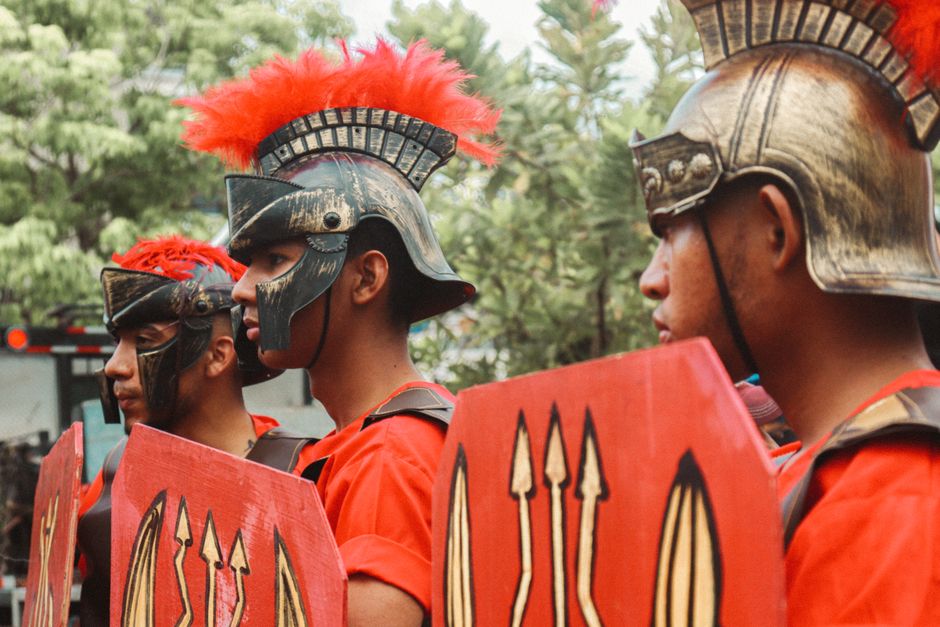
7 Bizarre Facts About Gladiator Fights in Ancient Rome

7 Bizarre Facts About Gladiator Fights in Ancient Rome

7 Bizarre Facts About Gladiator Fights in Ancient Rome

By Trivia Daily, History Desk — Published August 7, 2026

Table of Contents

The roar of 50,000 spectators. The clash of steel. The smell of blood and sand. Gladiator fights in ancient Rome weren't just brutal spectacles—they were deeply strange cultural phenomena that defy modern understanding. While Hollywood has given us a sanitized version of these contests, the reality of bizarre gladiator fights was far more complex, theatrical, and occasionally absurd than most people realize. These warriors of the Roman Empire fought under rules and circumstances that would seem utterly alien to modern sports fans.

From the first century BCE through the fifth century CE, gladiatorial combat evolved from funeral rites into massive entertainment productions that revealed the peculiar values of Roman civilization. The arena became a stage where the past collided with spectacle, where condemned criminals fought wild beasts, and where fame could be won by the enslaved. What made these contests truly bizarre wasn't just the violence—it was everything surrounding it.

Key Takeaways

  • Gladiators were often treated like modern celebrity athletes, with fans collecting figurines and women swooning over their favorite fighters despite their low social status.
  • Many gladiators were vegetarians who consumed a special diet of barley and beans to build a protective layer of fat over their muscles.
  • Female gladiators, known as gladiatrices, actually existed and fought in the arena until they were banned in 200 CE.
  • Successful gladiators could earn their freedom and significant wealth, with some becoming trainers or even opening their own gladiator schools.
  • The famous "thumbs down" gesture for death likely never existed; historical evidence suggests Romans used different hand signals entirely.
  • Gladiator blood and sweat were sold as aphrodisiacs and medical remedies, fetching high prices from Roman citizens.

The Strange Reality of Bizarre Gladiator Fights in Ancient Rome

When we think of ancient Rome's gladiatorial games, we imagine savage death matches where every fight ended in slaughter. The historical reality was surprisingly different. Most gladiatorial bouts were carefully choreographed contests between trained professionals, more akin to boxing matches than execution spectacles. Gladiators represented significant financial investments—a well-trained fighter cost roughly the equivalent of several years' wages for an average worker. Owners didn't throw away such assets lightly.

The mortality rate in the arena varied considerably across different eras of the empire. During the Republic and early Imperial period, perhaps one in ten fights ended in death. These weren't random slaughters but regulated sporting events with referees, rules, and medical staff standing by. Fights were stopped when one combatant was clearly beaten. The defeated fighter could appeal for mercy, and the decision often rested with the sponsor of the games or the crowd. Death was possible, certainly, but it wasn't the guaranteed outcome Hollywood suggests.

1. Gladiators Were Ancient Rome's Celebrity Athletes

Despite being slaves or criminals in most cases, successful gladiators achieved a celebrity status that seems paradoxical to modern minds. Romans collected small figurines of famous fighters, children played with gladiator toys, and graffiti found in Pompeii describes certain gladiators as "the delight of the girls." Women of all social classes, including aristocrats, reportedly had affairs with gladiators. This created a bizarre social dynamic where the most despised members of society—slaves and condemned criminals—simultaneously became objects of adulation and desire. The gladiator Celadus was famously described in Pompeian graffiti as "the sigh of the girls," demonstrating how these warriors transcended their lowly legal status to become icons of masculinity and strength in Roman culture.

2. The Gladiator Diet Was Surprisingly Vegetarian

Analysis of gladiator bones from a cemetery in Ephesus revealed something unexpected: these fighters subsisted primarily on a vegetarian diet heavy in barley and beans. Ancient sources referred to gladiators as "hordearii"—literally "barley men." This wasn't about ethics or health in the modern sense. The high-carbohydrate, low-protein diet served a specific purpose: it built a layer of subcutaneous fat over the gladiators' muscles. This fatty tissue provided a protective cushion that could absorb cuts without damaging vital organs or causing excessive blood loss. Superficial wounds bled impressively, thrilling the crowd, but the fighters could survive to fight another day. The diet also kept gladiators strong and heavy, ideal for the intense but relatively short bursts of combat in the arena.

3. Female Gladiators Fought in Roman Arenas

The existence of gladiatrices—female gladiators—was long dismissed as exaggeration or myth until archaeological evidence confirmed their reality. A relief from Halicarnassus shows two female fighters named Amazon and Achillia. Historical records mention women fighting in the arena during the first and second centuries CE, sometimes against other women and occasionally against dwarfs in novelty matches that Romans found particularly entertaining. These women came from various backgrounds: some were slaves, others were free women seeking fame or fortune. The spectacle of women fighting proved controversial even in ancient Rome. Emperor Septimius Severus banned female gladiatorial combat in 200 CE, though whether this was due to moral concerns or simply changing tastes remains debated by historians.

4. Gladiator Bodily Fluids Were Prized Commodities

In one of the most bizarre aspects of gladiator culture, Romans believed that gladiator blood, sweat, and even body fat possessed powerful medicinal and aphrodisiac properties. Vendors at the arena collected gladiator sweat—scraped from their bodies with a special tool called a strigil—and sold it to eager customers. Blood from wounded or killed gladiators was consumed as a treatment for epilepsy, a practice that continued into the medieval era in some European regions. Women purchased gladiator sweat to use in cosmetics and love potions. This macabre commerce reveals how Romans viewed gladiators as beings of exceptional vitality and strength, whose very essence could be bottled and transferred to others. The practice also underscores the strange intersection of violence, medicine, and superstition in Roman civilization.

5. The "Thumbs Down" Gesture Is Probably a Myth

The iconic image of an emperor giving a thumbs-down signal to order a gladiator's death is almost certainly historically inaccurate. This misconception stems largely from Jean-Léon Gérôme's 1872 painting "Pollice Verso," which popularized the gesture. Ancient sources are frustratingly vague about the actual hand signals used in the arena. The Latin phrase "pollice verso" means "with turned thumb," but scholars debate whether this meant thumb up, thumb down, or thumb pointed horizontally. Some historians believe a closed fist with thumb hidden indicated mercy, while a thumb pointed outward signaled death—mimicking the thrust of a sword. The reality is that we don't know for certain what gestures Romans used, though we can be fairly confident it wasn't the simple thumbs-up-for-life, thumbs-down-for-death dichotomy embedded in popular culture.

6. Successful Gladiators Could Become Wealthy Free Men

While most gladiators were slaves or condemned criminals, the profession offered a path to freedom and wealth that few other occupations provided to the lowest classes. Gladiators who survived multiple fights earned prize money, and their owners sometimes granted them the rudis—a wooden sword symbolizing freedom. Some freed gladiators became wealthy enough to own property, open gladiator schools, or work as trainers. A few even became bodyguards to wealthy Romans or joined the Praetorian Guard. The epitaph of one gladiator named Flamma records that he fought 34 times, won 21 victories, and was offered freedom four times but refused it—choosing to remain a gladiator. This suggests that for some men, the arena offered status, purpose, and income they couldn't find elsewhere in Roman society, however dangerous the profession.

7. Naval Battles Were Staged in Flooded Arenas

Perhaps the most extravagant and bizarre gladiatorial spectacles were the naumachiae—full-scale naval battles staged for public entertainment. Emperors flooded natural basins or constructed special arenas, then launched actual warships crewed by condemned criminals and prisoners of war who fought to the death in reenactments of famous historical sea battles. Julius Caesar staged the first recorded naumachia in 46 BCE, digging an enormous basin near the Tiber River and filling it with water for a battle involving thousands of participants. Emperor Claudius later staged a naumachia on the Fucine Lake involving 19,000 combatants representing the navies of Rhodes and Sicily. The Colosseum itself could be flooded for smaller naval spectacles during its early years, before the construction of underground chambers. The engineering required for these aquatic bloodbaths—the waterproofing, the drainage, the logistics of moving warships—demonstrates the extraordinary lengths to which Romans went to create ever more elaborate and bizarre entertainments.

The Social Function of Arena Spectacles

Gladiatorial games served purposes far beyond simple entertainment in Roman civilization. They were political tools that allowed emperors and wealthy sponsors to demonstrate their generosity and power. The phrase "bread and circuses" captured how Roman leaders used free grain and spectacular games to maintain public support and distract from political issues. The arena also reinforced social hierarchies—seating was strictly segregated by class, with the emperor in the best seats, senators below him, then equestrians, citizens, and finally women and slaves in the highest, worst sections.

The games also served as a form of public execution and military propaganda. Criminals condemned to death might be executed in elaborate staged hunts or forced to fight as poorly-armed gladiators. Prisoners of war from conquered territories were paraded and slaughtered, reminding Romans of their empire's military might. During the inauguration of the Colosseum in 80 CE, the games lasted 100 days and included the deaths of thousands of animals and hundreds of gladiators and condemned criminals. Such spectacles communicated Roman power to both citizens and visitors from across the empire.

The Decline and End of Gladiatorial Combat

Gladiatorial games began to decline in the fourth and fifth centuries as Christianity spread throughout the Roman Empire. Christian leaders condemned the games as pagan and immoral, though they continued for decades after Christianity became the state religion. The last known gladiatorial fight occurred in 404 CE, when a monk named Telemachus allegedly jumped into the arena to stop a fight and was killed by the outraged crowd. Emperor Honorius then banned gladiatorial combat, though animal hunts continued for another century.

Economic factors also contributed to the games' demise. The empire's resources were increasingly strained by barbarian invasions and internal instability. The expensive infrastructure required for gladiatorial spectacles—the arenas, the training schools, the gladiators themselves—became luxuries a declining empire could no longer afford. By the mid-fifth century, the western Roman Empire was collapsing, and with it went the elaborate entertainment culture that had defined Roman civilization for over 700 years.

Frequently Asked Questions

How often did gladiators actually die in combat?

Historical evidence suggests that mortality rates varied but were lower than commonly believed. During the Republic and early Empire, approximately one in ten fights ended in death. Gladiators were expensive to train and maintain, so owners had financial incentives to keep them alive. Death rates increased during later periods and in certain types of matches, particularly those involving condemned criminals.

Were all gladiators slaves or prisoners?

No, though most gladiators were slaves, prisoners of war, or condemned criminals, some were free volunteers called auctorati. These free men signed contracts to fight in the arena, attracted by prize money, debt relief, or the thrill of combat. Some aristocrats even fought as gladiators, though this was considered scandalous and was eventually banned by various emperors.

What happened to gladiators who won their freedom?

Freed gladiators, called rudiarii after the wooden sword (rudis) they received upon manumission, had various options. Some became trainers or opened gladiator schools. Others worked as bodyguards, joined military units, or retired on their winnings. A few continued fighting voluntarily for the prize money and fame, even after earning their freedom.

How accurate are modern movies about gladiators?

Most gladiator films take significant liberties with historical accuracy. The combat was generally more regulated and less chaotic than depicted. The "thumbs down" gesture is likely fictional, gladiators had specialized fighting styles and equipment not shown in films, and the social dynamics were more complex than simple good-versus-evil narratives. However, movies do capture the spectacle and brutality that characterized the arena.

The arena was where Rome revealed both its greatest achievements and its darkest impulses—a place where engineering marvels hosted state-sanctioned violence, where slaves became celebrities, and where the line between sport and slaughter blurred beyond recognition. The next time you watch a boxing match or football game, consider how future civilizations might view our own entertainment spectacles with equal fascination and bewilderment.