









1 / 10 Questions
0 Points

What type of pasta's name means 'little worms' in Italian?

Fettuccine

Vermicelli

Linguine

Capellini

Points won
0
Correct score
0%

More Questions

More Articles

Did You Know These Popular Snacks Have Unexpected Origins?

Did You Know These Popular Snacks Have Unexpected Origins?

⏱️ 5 min read

The snacks we casually grab from vending machines, grocery store shelves, and convenience stores often have fascinating backstories that few people know about. Many of these beloved treats weren't invented in test kitchens or through careful planning, but rather emerged from happy accidents, wartime necessity, or completely unrelated endeavors. Understanding the origins of these popular snacks reveals surprising connections between history, innovation, and pure chance.

Potato Chips: Born From a Chef's Revenge

One of America's most popular snacks has its roots in 1853 at Moon's Lake House in Saratoga Springs, New York. Chef George Crum faced a challenging customer who repeatedly sent back his French fries, complaining they were too thick and soggy. Frustrated, Crum decided to teach the patron a lesson by slicing potatoes paper-thin, frying them until crispy, and dousing them with salt.

The unexpected result? The customer loved them. What began as an act of culinary defiance became known as "Saratoga Chips" and eventually evolved into the multi-billion dollar potato chip industry we know today. The snack that Crum created out of spite would go on to become one of the most consumed snacks worldwide.

Corn Flakes: A Seventh-Day Adventist Health Food Gone Wrong

The Kellogg brothers, John Harvey and Will Keith, were running a sanitarium in Battle Creek, Michigan, in the late 1800s with a mission to promote healthy, bland diets according to Seventh-Day Adventist beliefs. They were specifically trying to create a digestible bread substitute for their patients when they accidentally left cooked wheat sitting out too long.

Rather than waste the stale wheat, they decided to process it through rollers, expecting to get long sheets of dough. Instead, they got flakes. After toasting these flakes, they discovered they had created something entirely new. Eventually, they switched from wheat to corn, and corn flakes were born. What started as a health food meant to curb "sinful" desires became a breakfast staple enjoyed by millions, often loaded with the sugar the Kelloggs originally opposed.

Nachos: A Quick Fix From a Maitre D'

In 1943, a group of U.S. military wives crossed the border from Eagle Pass, Texas, to Piedras Negras, Mexico, looking for a bite to eat. They arrived at the Victory Club restaurant after closing time, and the maitre d', Ignacio "Nacho" Anaya, found himself with hungry guests but no chef on duty.

Anaya improvised with what was available in the kitchen: tortillas, cheese, and jalapeños. He quickly fried the tortillas, added cheese, heated them, and topped them with sliced jalapeños. When asked what the dish was called, he simply said "Nacho's Especiales," naming them after himself. This makeshift creation spread throughout Texas and eventually became a staple of Tex-Mex cuisine and sports venues everywhere.

Popsicles: An 11-Year-Old's Frozen Mistake

In 1905, eleven-year-old Frank Epperson left a mixture of powdered soda, water, and a stirring stick on his San Francisco porch overnight. The temperature dropped, and by morning, he discovered his drink had frozen around the stick. He called his creation the "Epsicle," combining his name with "icicle."

Epperson didn't capitalize on his discovery until 18 years later when he prepared his frozen treats for a fireman's ball. The treats were a hit, and he began selling them at a nearby amusement park. His children called them "Pop's sicles," which eventually became "Popsicles." What started as a child's forgotten drink became one of the most recognizable frozen treats in the world.

Chocolate Chip Cookies: A Baker's Improvisation

Ruth Wakefield, owner of the Toll House Inn in Massachusetts, was preparing chocolate cookies for her guests in 1938 when she realized she was out of baker's chocolate. In a creative moment, she decided to chop up a semi-sweet chocolate bar from Nestlé, expecting the pieces to melt and distribute evenly throughout the dough.

Instead, the chocolate pieces held their shape, creating something entirely different from what she intended. The Toll House Chocolate Crunch Cookie was born, though it would later be renamed the chocolate chip cookie. Nestlé eventually bought the rights to her recipe and began producing chocolate chips specifically designed for this purpose, printing her recipe on every package.

Slurpee: From Soda Fountain Malfunction to Cultural Icon

Omar Knedlik, owner of a Dairy Queen franchise in Kansas, had a broken soda fountain in the late 1950s that forced him to store bottles in the freezer. Customers loved the semi-frozen sodas that resulted from this improvisation. Recognizing opportunity, Knedlik created a machine that could produce these slushy drinks consistently.

After developing his machine, he licensed the concept to 7-Eleven, which branded the product as the Slurpee in 1966. The name came from the slurping sound people made while drinking it through a straw. What began as a equipment failure transformed into one of the most successful convenience store products ever created.

The Common Thread of Snack Innovation

These origin stories share remarkable similarities. Many popular snacks emerged from accidents, improvisations, or solutions to immediate problems rather than calculated business strategies. They remind us that innovation often comes from unexpected places and that some of the best ideas arise when things don't go according to plan. The next time you reach for your favorite snack, remember that you might be enjoying the result of someone's mistake, moment of frustration, or creative improvisation that changed food history forever.
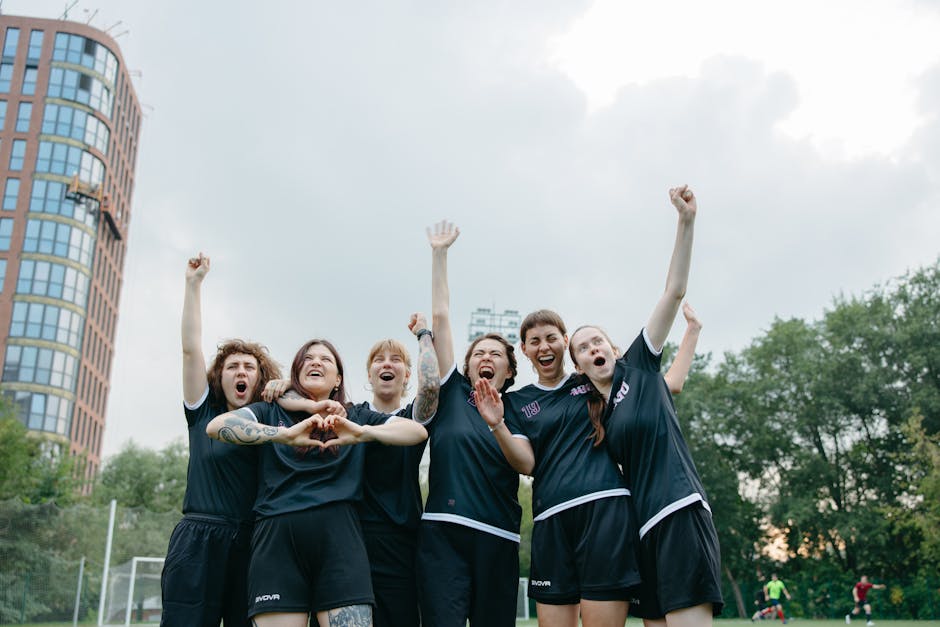
Did You Know These Facts About Women in Sports?

Did You Know These Facts About Women in Sports?

⏱️ 5 min read

Women's participation in sports has evolved dramatically over the past century, transforming from a realm of limited opportunities to one of remarkable achievements and growing recognition. Despite significant progress, many fascinating facts about women in sports remain unknown to the general public. Understanding these milestones, challenges, and triumphs provides crucial context for appreciating the current landscape of women's athletics and the ongoing journey toward equality.

The Ancient Origins of Women Athletes

Contrary to popular belief, women's involvement in competitive sports dates back thousands of years. In ancient Sparta, young women participated in athletic training, including running, wrestling, and javelin throwing, as part of their education. The Heraean Games, held in ancient Greece around 600 BCE, were specifically dedicated to female athletes who competed in footraces to honor the goddess Hera. These competitions predated the modern women's sports movement by millennia, demonstrating that athletic prowess among women is far from a contemporary phenomenon.

However, women were explicitly banned from participating in and even watching the ancient Olympic Games in Athens. This exclusion set a precedent that would influence sports culture for centuries, creating barriers that women athletes would spend generations working to dismantle.

Breaking Barriers in the Modern Olympic Movement

When the modern Olympic Games were revived in 1896, women were excluded from participation. Pierre de Coubertin, the founder of the International Olympic Committee, believed women's sports were "impractical, uninteresting, and improper." Despite this opposition, women began competing in the Olympics just four years later at the 1900 Paris Games, though only in tennis and golf, and comprising less than 2% of total athletes.

The journey toward Olympic inclusion was gradual and hard-fought. Women's athletics events weren't added until 1928, and basketball didn't become an Olympic sport for women until 1976. Boxing, the last remaining men-only Olympic sport, finally welcomed women competitors in 2012 at the London Games. The 2020 Tokyo Olympics marked a historic milestone as the first gender-balanced games, with women comprising approximately 49% of participants.

Title IX: A Game-Changing Legislation

Perhaps no single piece of legislation has had a more profound impact on women's sports in the United States than Title IX. Enacted in 1972, this federal civil rights law prohibits sex-based discrimination in any educational program or activity receiving federal financial assistance, including athletic programs. Before Title IX, only one in 27 girls participated in high school sports. Today, that ratio has improved to two in five.

The effects of Title IX extend beyond participation numbers. College athletic scholarships for women have increased dramatically, creating pathways to higher education that previously didn't exist. The law has also influenced professional opportunities, as the expanded pool of female athletes has supported the development of women's professional leagues across multiple sports.

The Continuing Impact

Despite Title IX's success, compliance remains an ongoing challenge. Many institutions still struggle to provide equal resources, facilities, and opportunities to women's sports programs. According to recent data, women receive only 43% of athletic participation opportunities at NCAA schools and just 36% of athletic operating budgets.

Wage Gap and Prize Money Disparities

Financial inequality remains one of the most pressing issues in women's sports. The wage gap between male and female professional athletes is staggering across most sports. In soccer, the prize money for the men's FIFA World Cup has historically dwarfed that of the women's tournament, though recent years have seen improvements. The 2019 Women's World Cup offered $30 million in prize money compared to $400 million for the 2018 Men's World Cup.

Tennis stands as a notable exception to this trend. Thanks to advocacy by champions like Billie Jean King, all four Grand Slam tournaments now offer equal prize money to men and women. The U.S. Open became the first Grand Slam to implement equal pay in 1973, while Wimbledon was the last to follow suit in 2007. This achievement demonstrates that pay equity is possible when organizations commit to valuing athletes equally.

Media Coverage and Representation

Women's sports receive significantly less media coverage than men's sports, affecting everything from sponsorship opportunities to public awareness. Research indicates that women's sports receive only about 5-10% of total sports media coverage, despite women comprising roughly 40% of sports participants globally. This disparity creates a cyclical problem: less coverage leads to lower visibility, which results in fewer sponsorships and reduced revenue streams.

Social media has emerged as a powerful tool for women athletes to control their narratives and build direct relationships with fans. Many female athletes have leveraged platforms like Instagram and Twitter to showcase their personalities, achievements, and advocacy work, partially circumventing traditional media gatekeepers.

Record-Breaking Achievements Often Overlooked

Women athletes have set numerous remarkable records that often receive insufficient recognition. Kathrine Switzer became the first woman to officially run the Boston Marathon in 1967, despite an official attempting to physically remove her from the race. Diana Nyad swam from Cuba to Florida at age 64, completing the 110-mile journey without a shark cage. Serena Williams has won 23 Grand Slam singles titles, the most by any player in the Open Era.

In team sports, the U.S. Women's National Soccer Team has won four FIFA Women's World Cup championships, while the men's team has never won. The University of Connecticut women's basketball team achieved a 111-game winning streak from 2014 to 2017, demonstrating sustained excellence rarely seen in any sport.

The Path Forward

The future of women's sports shows promise, with growing investment, increased media coverage, and rising attendance at women's sporting events. Professional leagues are expanding, and young girls now have more role models than ever before. However, achieving true equality requires continued advocacy, equitable resource allocation, and cultural shifts in how society values women's athletic achievements. Understanding these facts about women in sports is essential for anyone committed to supporting athletic excellence regardless of gender.