










1 / 10 Questions
0 Points

What mineral makes up the white cliffs of Dover?

Limestone

Chalk

Marble

Quartz

Points won
0
Correct score
0%

More Questions

More Articles

Did You Know These Famous Quotes Are Misattributed?

Did You Know These Famous Quotes Are Misattributed?

⏱️ 5 min read

Throughout history, certain quotes have become so deeply embedded in our collective consciousness that we rarely question their origins. However, many of the most famous sayings attributed to historical figures, philosophers, and leaders were never actually spoken or written by them. These misattributions often spread through word of mouth, mistaken references, and the natural evolution of language over time. Understanding the true origins of these quotes not only corrects the historical record but also reveals fascinating insights into how information spreads and transforms across generations.

The Myth of Marie Antoinette's Callousness

Perhaps one of the most infamous misquoted lines in history is "Let them eat cake," allegedly spoken by Marie Antoinette in response to hearing that French peasants had no bread. This quote has been used for centuries to illustrate the disconnect between the French aristocracy and the suffering masses during the pre-Revolutionary period. However, there is no historical evidence that Marie Antoinette ever uttered these words.

The phrase actually appears in Jean-Jacques Rousseau's "Confessions," written when Marie Antoinette was only 11 years old and still living in Austria. Rousseau attributed the quote to "a great princess," but never identified her specifically. The attribution to Marie Antoinette appears to have been a later addition, possibly as propaganda against the unpopular queen. This misattribution has persisted despite being thoroughly debunked by historians, demonstrating how powerful narratives can override factual accuracy.

Einstein's Thoughts on Insanity and Repetition

The quote "Insanity is doing the same thing over and over again and expecting different results" is frequently attributed to Albert Einstein. This saying appears everywhere from addiction recovery programs to business seminars, lending scientific credibility to discussions about change and persistence. Unfortunately, there is no evidence that Einstein ever said or wrote this phrase.

The earliest known attribution to Einstein appears to come from the 1980s, decades after his death. Some researchers have traced similar sentiments to Rita Mae Brown's 1983 novel "Sudden Death," though even that connection remains uncertain. The misattribution to Einstein likely stems from the desire to give the quote more authority and intellectual weight, a common phenomenon when memorable phrases seek legitimate sources.

The Voltaire Quote That Wasn't

"I disapprove of what you say, but I will defend to the death your right to say it" has become synonymous with freedom of speech and is almost universally attributed to the French Enlightenment writer Voltaire. While this sentiment aligns with Voltaire's philosophical positions on freedom of expression, he never actually wrote or spoke these exact words.

The quote was actually written by Evelyn Beatrice Hall in her 1906 biography of Voltaire titled "The Friends of Voltaire." Hall used the phrase to illustrate Voltaire's beliefs, writing it as a summary of his attitude rather than as a direct quotation. Over time, the distinction between Hall's interpretation and Voltaire's actual words became blurred, and the quote was increasingly attributed directly to the philosopher himself.

Churchill's Supposed Wit About Democracy

Winston Churchill is credited with saying "Democracy is the worst form of government, except for all the others." While Churchill was indeed known for his sharp wit and memorable phrases, this particular quote requires important context. Churchill did say something similar in a House of Commons speech in 1947, but he was actually paraphrasing an unknown predecessor.

Churchill's actual words were: "No one pretends that democracy is perfect or all-wise. Indeed it has been said that democracy is the worst form of Government except for all those other forms that have been tried from time to time." By prefacing his statement with "it has been said," Churchill was explicitly acknowledging that he was repeating someone else's observation. The original source remains unknown, yet Churchill continues to receive sole credit for this insight into democratic governance.

Gandhi's Philosophy on Nonviolent Change

"Be the change you wish to see in the world" is one of the most popular quotes attributed to Mahatma Gandhi, appearing on posters, social media posts, and motivational materials worldwide. While the sentiment reflects Gandhi's philosophy of personal responsibility and peaceful transformation, he never actually said these words in this form.

The closest verified Gandhi quote is: "If we could change ourselves, the tendencies in the world would also change. As a man changes his own nature, so does the attitude of the world change towards him." This longer, more complex statement was paraphrased and simplified over time, eventually becoming the snappy, memorable version we know today. The transformation demonstrates how quotes are often edited for maximum impact, sometimes at the expense of accuracy.

Why Misattributions Persist and Spread

Several factors contribute to the persistence of misattributed quotes. First, attaching a famous name to a quote gives it instant credibility and memorability. People are more likely to remember and share a quote if it comes from a recognized authority figure. Second, in the age before easy fact-checking, misattributions could spread unchecked through books, speeches, and later, digital media.

Additionally, many misattributions fulfill a psychological need to have complex ideas endorsed by trusted figures. When we attribute wise sayings to Einstein, Churchill, or Gandhi, we're seeking validation for beliefs we already hold. The internet age has both helped and hindered this problem—while fact-checking is easier than ever, viral misinformation spreads faster than corrections can catch up.

The Importance of Historical Accuracy

Understanding the true origins of famous quotes matters for several reasons:

  • It preserves historical accuracy and gives credit to the actual authors of memorable phrases
  • It reveals how information transforms over time and across cultures
  • It encourages critical thinking about sources and the verification of information
  • It prevents the perpetuation of potentially misleading historical narratives
  • It honors the nuance and context often lost in paraphrasing

The next time you encounter a memorable quote attributed to a famous historical figure, take a moment to verify its authenticity. The true story behind these misattributions is often just as interesting as the quotes themselves, offering valuable lessons about how we consume, share, and remember information across generations.
Rosetta Stone Unlocked Egyptian: 7 Decoding Secrets

Rosetta Stone Unlocked Egyptian: 7 Decoding Secrets

By TrivBits, History Desk — Published September 27, 2026

Rosetta Stone Unlocked Egyptian: 7 Decoding Secrets — History trivia by TrivBits

Table of Contents

For nearly two millennia, the hieroglyphs of ancient Egypt remained an enigma. Scholars across civilizations gazed upon temple walls and papyrus scrolls, unable to decipher the elegant symbols that once recorded the history of one of humanity's greatest empires. Then, in 1799, a French soldier discovered a granodiorite slab near the town of Rosetta that would change everything. The Rosetta Stone unlocked the secrets of Egyptian writing, bridging the gap between the ancient past and the modern era.

This remarkable artifact didn't reveal its secrets overnight. Decoding the stone required brilliant minds, international rivalry, and breakthroughs that transformed our understanding of historical linguistics. The story of how this single inscribed slab opened the door to an entire lost civilization remains one of archaeology's most thrilling detective stories.

Key Takeaways

  • The Rosetta Stone features the same decree written in three scripts: hieroglyphic, Demotic, and ancient Greek
  • French scholar Jean-François Champollion finally cracked the hieroglyphic code in 1822, more than two decades after the stone's discovery
  • The stone's trilingual inscription provided the crucial comparison needed to understand Egyptian writing systems
  • Cartouches containing royal names proved essential to unlocking the phonetic values of hieroglyphs
  • The decipherment opened access to three thousand years of Egyptian historical records and literature
  • Competition between French and British scholars accelerated the race to decode the ancient script

How the Rosetta Stone Unlocked Ancient Egyptian Writing

The Rosetta Stone's power lay in its trilingual nature. Ancient priests inscribed the same decree in three different writing systems, each serving a distinct purpose in Egyptian society. Hieroglyphic script adorned temples and monuments, representing the formal, sacred writing of the past. Demotic script handled everyday administrative and literary needs during the later periods of Egyptian civilization. Ancient Greek served the ruling Ptolemaic dynasty, descendants of one of Alexander the Great's generals who had adopted Egyptian customs while maintaining Hellenistic culture.

Because scholars of the early nineteenth century could read ancient Greek fluently, they possessed a key. The Greek text revealed that the stone recorded a decree from 196 BCE honoring King Ptolemy V. Armed with this translation, linguists could compare the Greek words with their Egyptian equivalents, searching for patterns and correspondences. This comparative approach would prove revolutionary, though the actual decipherment took decades of painstaking work.

1. Three Scripts Preserved the Same Message

The stone's inscription contains approximately 1,400 hieroglyphic signs, 486 Demotic signs, and 54 lines of Greek text. Though damaged over the centuries, enough of each section survived to enable comparison. The priests who created this decree in ancient times could hardly have imagined they were crafting a key for future generations. They simply followed the convention of their era, ensuring the royal proclamation reached all segments of Egyptian society regardless of which script they read. This bureaucratic thoroughness became an accidental gift to history, preserving the same content in multiple formats when any single script alone would have remained impenetrable.

2. Cartouches Held Royal Names That Cracked the Code

Hieroglyphic writing enclosed royal names within oval frames called cartouches. These distinctive borders made pharaonic names stand out visually on monuments and documents. When examining the Rosetta Stone, scholars noticed these cartouches and hypothesized they contained the name Ptolemy, which appeared in the Greek text. This insight proved transformative. By matching the hieroglyphs inside the cartouche with the Greek spelling of Ptolemy, researchers could assign phonetic values to specific symbols. The cartouche became a kind of ancient nametag that helped unlock the entire phonetic system of hieroglyphic writing.

3. Champollion Recognized Hieroglyphs Were Both Phonetic and Symbolic

Jean-François Champollion's genius lay in understanding that hieroglyphs operated on multiple levels simultaneously. Earlier scholars assumed Egyptian writing was purely symbolic, with each image representing a complete concept or word. Champollion demonstrated that hieroglyphs combined phonetic signs (representing sounds), logograms (representing words), and determinatives (clarifying meaning). Some signs spelled out sounds like letters in an alphabet, while others conveyed entire words or helped readers distinguish between homophones. This hybrid system was far more sophisticated than anyone had imagined, and recognizing its complexity was essential to decoding it properly.

4. The Obelisk of Philae Provided Crucial Confirmation

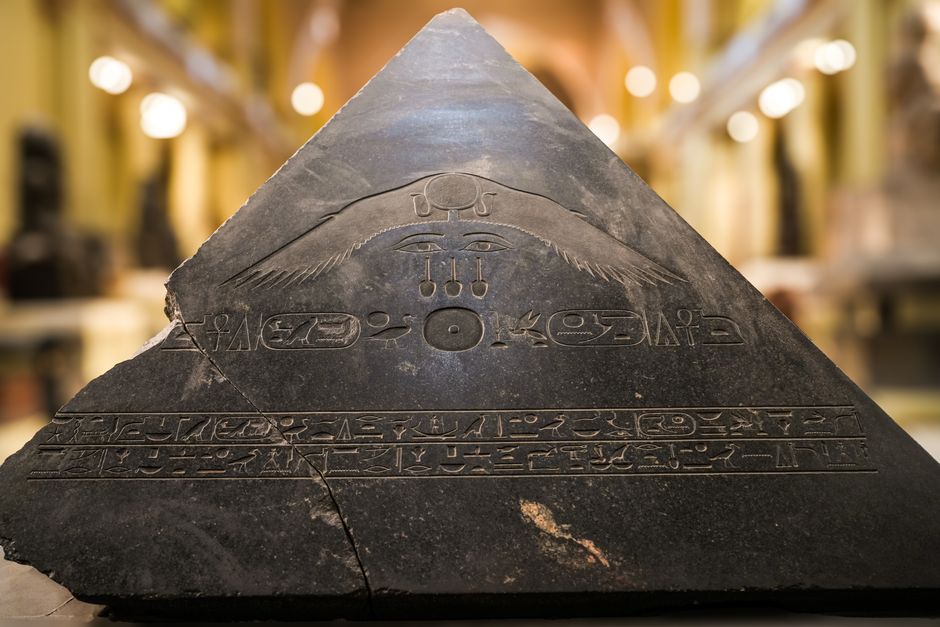
Champollion didn't work with the Rosetta Stone alone. Another bilingual inscription on an obelisk from Philae featured both hieroglyphs and Greek text, including the names Ptolemy and Cleopatra. By comparing these two royal names across different inscriptions, Champollion could test his hypotheses about phonetic values. When the same hieroglyphic signs appeared in corresponding positions in both names, his theories gained confirmation. This cross-referencing between multiple ancient texts demonstrated the scientific rigor underlying his decipherment, transforming educated guesses into verified facts about how the ancient writing system functioned.

5. Competition Accelerated the Decipherment Race

The Rosetta Stone became a prize of war when British forces defeated the French in Egypt in 1801. The stone traveled to London, where it remains in the British Museum today. However, scholars from multiple nations obtained copies and plaster casts, turning decipherment into an international competition. French linguist Champollion competed with English polymath Thomas Young, who had made significant preliminary discoveries about Demotic script and phonetic elements in hieroglyphs. This scholarly rivalry, while sometimes contentious, pushed both men to work faster and think more creatively, ultimately benefiting the field as each researcher built upon and challenged the other's findings.

6. Demotic Script Served as an Intermediate Step

The middle section of the Rosetta Stone, written in Demotic script, initially seemed less useful than the hieroglyphic and Greek portions. Yet Demotic proved valuable as a bridge between the other two writing systems. Demotic had evolved from hieratic script, which itself derived from hieroglyphs, creating a family relationship among Egyptian writing systems. By understanding connections between Demotic and hieroglyphic signs, scholars gained insights into how the ancient script had evolved over centuries. This historical perspective helped explain why certain hieroglyphs had particular values and how Egyptian writing had adapted to changing needs across different eras of their civilization.

7. The Breakthrough Opened Three Millennia of Records

Once Champollion published his decipherment in 1822, Egyptology exploded as a scholarly discipline. Suddenly, texts that had been mute for nearly two thousand years began speaking again. Temple inscriptions revealed the military campaigns and building projects of pharaohs. Medical papyri shared ancient remedies and anatomical knowledge. Literary works preserved stories, poems, and wisdom literature from one of humanity's earliest civilizations. The Rosetta Stone unlocked not just a writing system but an entire world of thought, belief, and daily life from the ancient past. Every subsequent discovery of Egyptian texts added new chapters to our understanding of this remarkable empire that flourished along the Nile for over three thousand years.

The Stone's Journey Through History

The Rosetta Stone's modern story began during Napoleon's Egyptian campaign when Lieutenant Pierre-François Bouchard discovered it while overseeing fortification construction near the town of Rashid, known to Europeans as Rosetta. French scholars immediately recognized its potential importance and made copies before British victory in the region transferred possession. The stone arrived in London in 1802 and has remained a centerpiece of the British Museum's Egyptian collection ever since, though Egypt has periodically requested its return.

Throughout the nineteenth century, the stone became an icon of decipherment and cross-cultural understanding. Its image appeared in scholarly publications worldwide, and plaster casts allowed researchers everywhere to study it. The artifact transcended its original purpose as a routine priestly decree, becoming instead a symbol of human curiosity and the power of linguistic analysis to recover lost knowledge.

Impact on Understanding Ancient Civilizations

Before Decipherment After Decipherment
Egyptian history known only through Greek and Roman sources Direct access to Egyptian historical records and royal inscriptions
Hieroglyphs viewed as purely mystical symbols Understanding of sophisticated writing system combining phonetic and symbolic elements
Limited knowledge of Egyptian daily life and culture Access to literature, legal documents, medical texts, and personal letters
Chronology of pharaohs uncertain and incomplete Detailed king lists and regnal dates spanning three millennia

Frequently Asked Questions

What does the Rosetta Stone actually say?

The Rosetta Stone records a decree from 196 BCE issued by Egyptian priests honoring the thirteen-year-old pharaoh Ptolemy V. The text describes tax exemptions for priests, gifts to temples, and honors bestowed upon the king. While the content itself is relatively mundane administrative material, the trilingual format made it invaluable for decipherment purposes.

Why couldn't scholars read hieroglyphs before the Rosetta Stone?

Knowledge of how to read hieroglyphs died out in the fourth and fifth centuries CE as Egypt adopted Christianity and later Islam, abandoning ancient writing systems. Without native speakers or a continuous reading tradition, the phonetic values and grammatical rules of hieroglyphic script were completely lost. Scholars lacked any key to connect the symbols with sounds or meanings until bilingual texts like the Rosetta Stone provided comparison points.

How long did it take to decode the Rosetta Stone?

From the stone's discovery in 1799 to Champollion's breakthrough in 1822, the decipherment process took approximately 23 years. However, understanding continued to deepen throughout the nineteenth century as scholars refined their knowledge of Egyptian grammar, vocabulary, and the nuances of the writing system. The initial breakthrough opened the door, but mastering the language required decades more work by multiple researchers.

Are there other Rosetta Stones from ancient Egypt?

While the Rosetta Stone is the most famous bilingual inscription, other similar texts exist. The Decree of Canopus and the Philae obelisk both feature Greek and Egyptian scripts, and these artifacts helped confirm Champollion's decipherment. However, none achieved the iconic status of the original Rosetta Stone, partly due to timing and partly because the Rosetta Stone's particular state of preservation made it especially useful for comparative study.

Sources