











1 / 10 Questions
0 Points

What Metal Are Olympic Gold Medals Actually Made From?

Gold

Platinum

Silver

Bronze

Points won
0
Correct score
0%

More Questions

More Articles

Did You Know These Ingredients Were Once Worth Their Weight in Gold?

Did You Know These Ingredients Were Once Worth Their Weight in Gold?

⏱️ 5 min read

Throughout history, certain culinary ingredients have commanded astronomical prices, sparking wars, funding empires, and reshaping global trade routes. What now sits casually in kitchen cabinets was once reserved exclusively for royalty and the ultra-wealthy. These precious commodities were so valuable that they literally rivaled gold in worth, transforming the economic and political landscape of entire civilizations. Understanding the historical significance of these ingredients provides fascinating insight into how deeply food has influenced human civilization.

Saffron: The Red Gold of Ancient Civilizations

Saffron remains the world's most expensive spice by weight, with prices often exceeding $5,000 per pound. This crimson spice, derived from the delicate stigmas of Crocus sativus flowers, requires approximately 75,000 blossoms to produce just one pound of saffron. Each flower contains only three stigmas, which must be hand-harvested during a brief two-week period each autumn.

Ancient civilizations prized saffron not only for its distinctive flavor and golden color but also for its medicinal properties. Cleopatra allegedly bathed in saffron-infused water, while ancient Persians wove it into their royal carpets. The spice was so valuable in medieval Europe that traders who adulterated saffron faced execution, and saffron theft carried severe legal penalties comparable to grand larceny.

Black Pepper: The Spice That Launched a Thousand Ships

Before the Age of Exploration, black pepper was literally worth its weight in gold. This humble seasoning, now found on virtually every dining table, once served as currency in medieval Europe. Peppercorns were accepted as payment for rent, taxes, and dowries, with the term "peppercorn rent" still used today to describe nominal payments.

The astronomical value of pepper directly motivated European explorers to seek new trade routes to Asia. The desire to break the Venetian and Ottoman monopoly on the pepper trade drove Vasco da Gama to sail around Africa and Christopher Columbus to venture westward. A single pound of pepper in 15th-century Europe could cost the equivalent of several weeks' wages for a common laborer, making it accessible only to the aristocracy and merchant classes.

Salt: The White Gold That Built Empires

Salt's historical importance cannot be overstated. This mineral was so crucial for food preservation and human health that it became the foundation of economic systems and the catalyst for major infrastructure projects. Roman soldiers received part of their wages in salt, giving rise to the word "salary" from the Latin "salarium."

Ancient salt routes crisscrossed continents, and cities built near salt deposits or along these trade routes flourished. The Mali Empire's wealth derived partly from controlling trans-Saharan salt trade, where salt was traded ounce-for-ounce with gold. Wars were fought over salt mines, and governments imposed salt taxes that sometimes sparked revolutions, including Gandhi's famous Salt March protesting British colonial salt monopolies.

Cinnamon: The Spice of Deception and Wealth

For centuries, Arab traders maintained a lucrative monopoly on cinnamon by concealing its true origins and spreading fantastic tales about its procurement. They claimed the spice came from giant bird nests or dangerous valleys filled with venomous snakes, justifying the exorbitant prices they charged Mediterranean buyers.

In ancient Rome, Emperor Nero reportedly burned a year's supply of cinnamon at his wife's funeral to demonstrate his wealth and grief. The spice was valued at fifteen times the price of silver by weight. Control of cinnamon trade routes motivated Portuguese, Dutch, and British colonial expansion into Sri Lanka and Southeast Asia, fundamentally altering the region's political landscape for centuries.

Vanilla: The Liquid Gold of the Aztecs

Vanilla, now the world's second most expensive spice after saffron, was once exclusive to the Aztec Empire. The emperor Montezuma served chocolate drinks flavored with vanilla to Hernán Cortés, introducing Europeans to this intoxicating flavor. For three centuries, Mexico maintained a complete monopoly on vanilla production because the Melipona bee, the only insect capable of pollinating vanilla orchids, existed nowhere else.

This monopoly ended only when a twelve-year-old enslaved boy named Edmond Albius discovered the hand-pollination technique in 1841, enabling cultivation in Madagascar and other tropical regions. During its peak value in the 19th century, vanilla commanded prices comparable to silver and was frequently adulterated by unscrupulous merchants seeking to maximize profits.

Nutmeg and Mace: Worth Killing For

In the 17th century, nutmeg was among the world's most valuable commodities, worth more per pound than gold. These spices grew exclusively on the Banda Islands in Indonesia, making them the focus of intense colonial competition. The Dutch East India Company committed genocide against the native Bandanese population to secure their nutmeg monopoly, reducing the population from 15,000 to fewer than 1,000.

The strategic importance of nutmeg was so significant that in 1667, the Dutch traded Manhattan to the British in exchange for Run, a tiny nutmeg-producing island. Nutmeg smuggling carried the death penalty, yet enterprising traders eventually broke the monopoly by transplanting trees to other tropical regions.

The Modern Legacy

Today's globalized food system has made these once-precious ingredients affordable and accessible to ordinary consumers worldwide. However, understanding their extraordinary historical value illuminates how profoundly spices and flavorings have shaped human civilization, driving exploration, colonization, and cultural exchange. The kitchen spices we casually sprinkle into our meals represent centuries of adventure, conflict, and human ingenuity that fundamentally transformed our world.
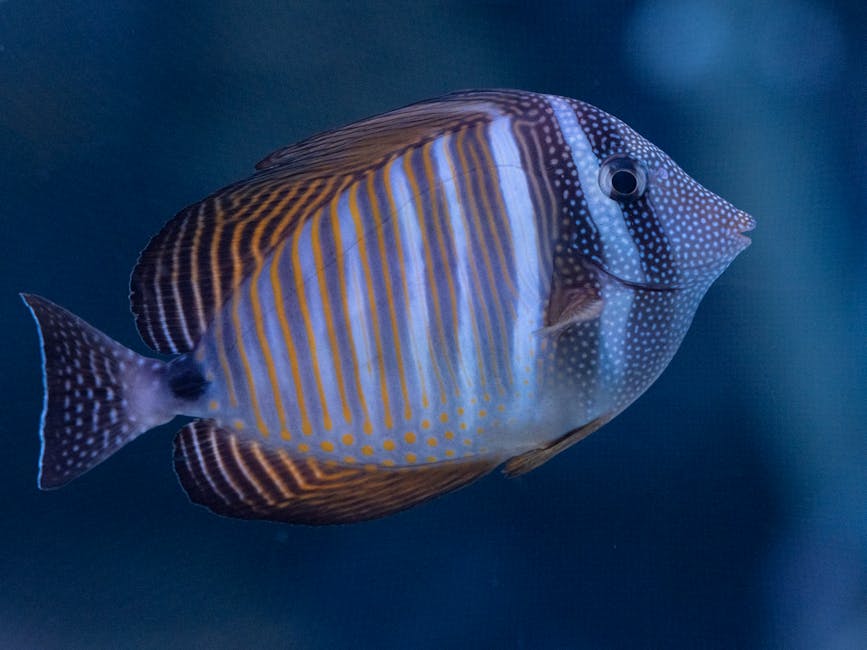
Did You Know These Quick Facts About Deep Sea Life?

Did You Know These Quick Facts About Deep Sea Life?

⏱️ 5 min read

The deep sea remains one of Earth's most mysterious and least explored frontiers. Despite covering more than 60% of our planet's surface, the ocean depths below 200 meters hold secrets that continue to astound scientists and marine biologists. The creatures inhabiting these dark, cold, and high-pressure environments have evolved remarkable adaptations that seem almost alien compared to surface-dwelling organisms.

The Crushing Pressure of the Abyss

Life in the deep sea exists under extraordinarily challenging conditions. At depths of 1,000 meters, the water pressure reaches approximately 100 times the atmospheric pressure at sea level. By the time organisms reach the deepest parts of the ocean—the hadal zone at depths exceeding 6,000 meters—they must withstand pressure exceeding 1,000 atmospheres. To survive these conditions, deep-sea creatures have developed bodies with minimal air spaces, flexible bones, and specialized proteins that maintain their cellular structure under extreme compression.

Interestingly, the deepest known fish species, the Mariana snailfish, was discovered at depths of approximately 8,000 meters in the Mariana Trench. These creatures have gelatinous bodies and specialized biochemistry that allows them to function where the pressure would instantly crush most surface organisms.

Bioluminescence: Nature's Light Show

In the perpetual darkness of the deep ocean, approximately 90% of deep-sea creatures have evolved the ability to produce their own light through bioluminescence. This remarkable adaptation serves multiple purposes in an environment where sunlight never penetrates. Organisms use bioluminescence for hunting prey, attracting mates, camouflaging themselves through counter-illumination, and deterring predators.

The anglerfish exemplifies this adaptation with its distinctive bioluminescent lure, which dangles in front of its mouth to attract unsuspecting prey. Meanwhile, the cookiecutter shark uses photophores on its underside to match downwelling light, making it nearly invisible to predators looking up from below while maintaining a dark collar that mimics a small fish to lure larger prey.

Extreme Adaptations for Survival

Deep-sea organisms have developed extraordinary physical features that allow them to thrive in their harsh environment. These adaptations often appear bizarre by surface standards but are perfectly suited to life in the abyss.

Gigantism and Dwarfism

The phenomenon of deep-sea gigantism has puzzled scientists for decades. Many deep-sea invertebrates grow significantly larger than their shallow-water relatives. Giant isopods can reach lengths of 50 centimeters, while Japanese spider crabs have leg spans extending up to 3.8 meters. Conversely, some species exhibit dwarfism, possibly as an adaptation to limited food resources.

Transparent and Gelatinous Bodies

Many deep-sea creatures possess transparent or translucent bodies, which help them avoid detection in their dark environment. Species like the barreleye fish have see-through heads that allow their tubular eyes to rotate within their skulls, maximizing their ability to detect prey and predators in the dim light.

Remarkable Feeding Strategies

Food scarcity represents one of the greatest challenges in deep-sea ecosystems. With no photosynthesis possible, the deep ocean relies primarily on marine snow—a constant rain of organic material falling from surface waters. Deep-sea creatures have evolved creative solutions to this nutritional challenge:

  • Distensible jaws and stomachs that allow fish to consume prey larger than themselves
  • Extremely slow metabolisms that reduce energy requirements
  • Opportunistic feeding behaviors that enable creatures to consume whatever food becomes available
  • Specialized sensory organs that detect the faintest chemical traces of potential meals

The gulper eel, for instance, possesses an enormous mouth and expandable stomach that can accommodate prey much larger than its own body size, allowing it to take advantage of rare feeding opportunities.

Surprising Biodiversity in the Depths

Scientists estimate that between 700,000 and one million species inhabit the deep sea, with the vast majority remaining undiscovered and undescribed. Recent deep-sea expeditions consistently reveal new species, demonstrating that our understanding of marine biodiversity remains incomplete. The deep ocean contains entire ecosystems built around hydrothermal vents and cold seeps, where chemosynthetic bacteria form the base of the food chain rather than photosynthetic organisms.

These vent communities host unique species found nowhere else on Earth, including giant tube worms that can grow up to 2.4 meters long and have no digestive system, instead relying on symbiotic bacteria to convert chemicals from vent fluids into energy.

Slow Growth and Extreme Longevity

The cold temperatures and limited food availability in the deep sea have led many species to adopt slow growth rates and extended lifespans. The Greenland shark, which inhabits deep Arctic waters, holds the record as the longest-living vertebrate, with some individuals estimated to be over 400 years old. Deep-sea corals can live for thousands of years, with some black coral colonies dating back more than 4,000 years.

Threats to Deep-Sea Ecosystems

Despite their remote location, deep-sea environments face increasing threats from human activities. Deep-sea fishing, particularly bottom trawling, destroys ancient coral reefs and disrupts ecosystems that may take centuries to recover. Climate change affects deep-ocean temperatures and chemistry, while pollution, including microplastics and chemical contaminants, reaches even the deepest trenches. Mining operations targeting rare earth minerals and other resources threaten to devastate habitats we barely understand, potentially causing species extinctions before creatures are even discovered and described by science.

Understanding and protecting deep-sea life remains crucial not only for preserving biodiversity but also for maintaining the health of global ocean systems that regulate our planet's climate and support all marine life.