











1 / 10 Questions
0 Points

What beverage did John Pemberton invent in 1886?

Vernors Ginger Ale

Coca-Cola

Moxie

Hires Root Beer

Points won
0
Correct score
0%

More Questions

More Articles

Did You Know These Sports Were Once Banned by the Church?

Did You Know These Sports Were Once Banned by the Church?

⏱️ 5 min read

Throughout history, religious institutions have wielded significant influence over daily life, including recreational activities. The medieval and Renaissance-era Church particularly sought to control various aspects of society, viewing certain sports and games as threats to morality, public order, or spiritual devotion. Many popular athletic pursuits we enjoy today were once condemned, prohibited, or heavily restricted by ecclesiastical authorities. Understanding these historical bans reveals fascinating insights into how sports, religion, and social control have intersected across centuries.

Football: The "Devil's Game" That Disrupted Medieval Society

Medieval football bore little resemblance to modern soccer or American football. These chaotic matches involved entire villages, had virtually no rules, and often resulted in property damage, injuries, and even deaths. The Church repeatedly condemned these contests, viewing them as occasions for violence, gambling, and excessive drinking.

In England, Church leaders joined secular authorities in banning football numerous times between the 14th and 17th centuries. King Edward II's 1314 ban came partly at the Church's urging, citing disturbances to the peace. The sport was seen as a distraction from archery practice, which had military importance, but also from religious observance and prayer.

Clergy preached against football from pulpits, warning that participants risked their immortal souls. The game's association with pagan festivals and its tendency to draw crowds away from church services made it particularly objectionable. Despite repeated prohibitions, football persisted underground, demonstrating the population's resistance to both religious and secular control over their leisure activities.

Dancing and Theatrical Sports: Moral Corruption in Motion

While not always categorized strictly as sport, various forms of dance competitions, acrobatic displays, and theatrical athletic performances faced severe Church opposition. These activities combined physical prowess with entertainment but were condemned for encouraging lustful thoughts and immoral behavior.

Morris dancing, a traditional English folk dance often performed competitively, was banned by Puritan religious authorities in the 16th and 17th centuries. The Church associated these dances with pagan rituals and disapproved of the mixing of sexes in public performances. Similarly, tumbling exhibitions and acrobatic competitions were prohibited near churches or during holy days.

The Council of Trent (1545-1563) specifically addressed theatrical and dance performances, forbidding clergy from participating and discouraging the faithful from attending. Religious authorities argued these spectacles promoted vanity, diverted attention from spiritual matters, and created opportunities for sinful encounters.

Tennis and Ball Games: Aristocratic Pursuits Under Scrutiny

Real tennis, the precursor to modern lawn tennis, faced Church opposition despite its popularity among nobility. Played indoors in specialized courts, the game became associated with gambling, which the Church vehemently opposed. Ecclesiastical authorities issued numerous edicts against tennis during the 15th and 16th centuries.

The Church's concern extended beyond gambling. Tennis matches often occurred on Sundays and holy days, competing directly with religious services. Some clergy members themselves became notorious tennis enthusiasts, scandalizing religious reformers who viewed such pastimes as incompatible with spiritual duties.

In France, religious authorities repeatedly attempted to suppress tennis among both clergy and laity. The Sorbonne, Paris's theological center, condemned the sport in the 1400s. Similar ball games, including early versions of handball and racquet sports, faced comparable restrictions throughout Catholic Europe.

Blood Sports: Moral Opposition to Animal Cruelty

Bearbaiting, cockfighting, and bull-running represented some of the most controversial sports in Church history. While initially tolerated, these blood sports eventually faced increasing ecclesiastical opposition, though not always for reasons modern observers might expect.

The Church's objection to these spectacles focused less on animal welfare and more on the human behaviors they encouraged. These events attracted gambling, drunkenness, and rowdy crowds that church leaders considered spiritually dangerous. Puritan reformers in England particularly targeted blood sports, successfully banning many during the Commonwealth period (1649-1660).

However, opposition wasn't universal. Some Church authorities tolerated blood sports as acceptable entertainment, and certain religious festivals actually featured such contests. This inconsistency reflected broader theological debates about recreation, entertainment, and the proper use of God's creatures.

Bowling and Dice Games: Gambling's Gateway Sports

Bowling alleys and similar establishments faced repeated Church bans throughout medieval and early modern Europe. The sport itself wasn't necessarily problematic, but its strong association with gambling made it suspect in ecclesiastical eyes.

Church councils issued prohibitions against clergy participating in bowling, dice games, and similar activities. The concern was twofold: these games distracted from religious duties and often led to financial ruin through gambling addiction. Bowling alleys became synonymous with vice, functioning as gathering places for questionable characters and illegal activities.

Similar restrictions applied to skittles, quoits, and other target-based games. Religious authorities worried these seemingly innocent pastimes opened doors to more serious moral transgressions. Some dioceses imposed excommunication threats on persistent violators, demonstrating the seriousness with which the Church viewed these prohibitions.

The Legacy of Religious Sports Bans

The Church's historical opposition to various sports reflects broader tensions between institutional authority and popular culture. These bans were rarely absolute or uniformly enforced, often varying by region, denomination, and historical period. Many prohibitions addressed legitimate concerns about public disorder, violence, and gambling addiction, even if expressed in religious terms.

Today's separation of church and state in many countries has largely ended religious sports bans, though some denominations maintain restrictions on Sunday activities or certain competitions. Understanding this history helps us appreciate how sports evolved not just athletically but socially, often in defiance of powerful institutions that sought to control human recreation and leisure.

The persistence of these sports despite prohibition demonstrates humanity's enduring need for physical competition and communal entertainment, a need that ultimately proved stronger than institutional disapproval.
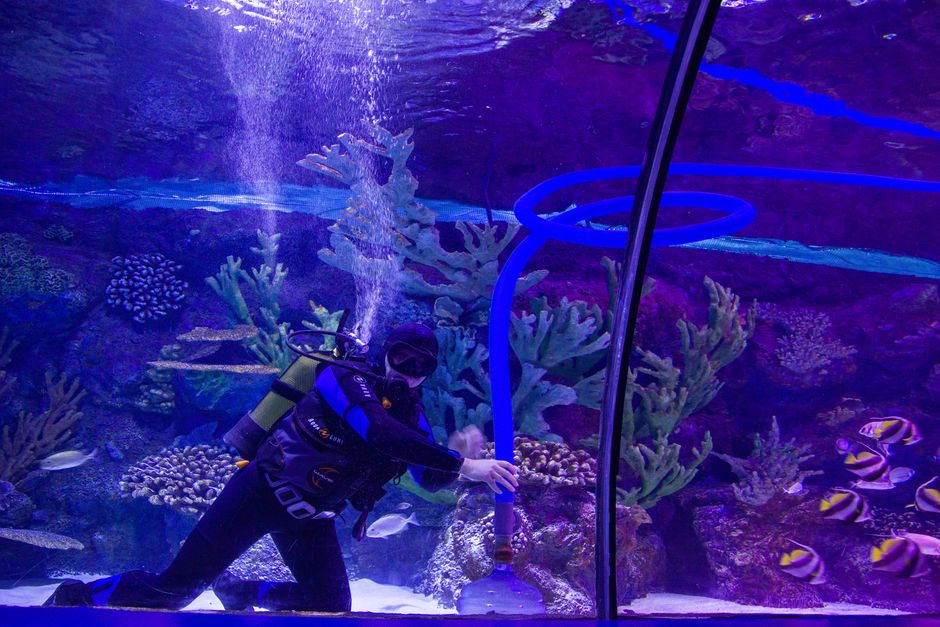
9 Bizarre Facts About Underwater Hockey World Champions

9 Bizarre Facts About Underwater Hockey World Champions

By TrivBits, Staff Writer — Published August 20, 2026

9 Bizarre Facts About Underwater Hockey World Champions — Sports trivia by TrivBits

Table of Contents

Ever watched a sport played entirely at the bottom of a swimming pool? Underwater hockey—also called Octopush—is one of the world's most unusual competitive sports, and its champions are a breed apart. Did you know that some of the most decorated players can hold their breath for minutes while battling for a tiny puck along pool tiles? This surprising sport combines the stamina of free diving, the strategy of chess, and the teamwork of traditional hockey, creating a bizarre underwater hockey experience unlike anything else in athletics.

The world champions of this niche sport possess skills and quirks that most people would never imagine. From unusual training methods to unexpected physical advantages, these athletes defy what we think we know about competitive sports. Here are nine interesting facts and trivia about the champions who dominate this submerged battlefield.

Key Takeaways

  • Underwater hockey world champions often come from countries with strong swimming cultures rather than traditional hockey nations
  • Top players develop extraordinary lung capacity and can execute complex plays in a single breath
  • The sport requires specialized equipment including weighted sticks, protective gloves, and snorkeling gear
  • Champions train in both pool and open water environments to build unique athletic abilities
  • Women and men compete on equal footing due to the sport's emphasis on technique over raw strength
  • The sport's small community means many champions know each other personally despite international competition

The Origins of Bizarre Underwater Hockey Excellence

Underwater hockey was invented in 1954 by British divers looking to stay fit during winter months. What started as a training exercise evolved into a legitimate competitive sport with world championships beginning in 1980. The first tournaments attracted curious athletes from diving and swimming backgrounds rather than traditional hockey players. This unusual origin story explains why many champions possess skills that seem completely disconnected from surface sports.

The sport spread to Australia, New Zealand, and South Africa before gaining traction in North America and Europe. Today, roughly 20 countries compete seriously at the international level. The World Aquachallenge Association oversees global competition, though the sport remains relatively unknown compared to mainstream athletics. This obscurity creates an interesting dynamic where world champions might work ordinary day jobs and train in community pools alongside casual swimmers.

1. Champions Often Have Backgrounds in Free Diving, Not Hockey

Most underwater hockey world champions never played ice or field hockey before discovering the sport. Instead, they typically come from free diving, spearfishing, or competitive swimming backgrounds. The ability to remain calm while holding your breath underwater matters far more than stick-handling skills learned on ice. Top players can stay submerged for 60 to 90 seconds during intense gameplay, executing passes and defensive maneuvers while managing oxygen deprivation. This creates a completely different athletic profile than surface sports demand.

2. Australia and New Zealand Dominate Despite Small Populations

Australia and New Zealand have won the majority of world championship titles since the tournament's inception, a surprising truth given their relatively small populations. Their dominance stems from strong beach and pool cultures where underwater activities are normalized from childhood. British teams also perform well, honoring the sport's birthplace. Meanwhile, countries with massive ice hockey traditions like Canada and Russia rarely crack the top rankings. Geography and aquatic culture trump traditional hockey heritage in this bizarre sport.

3. The Gender Gap Nearly Disappears Underwater

Unlike most sports, underwater hockey sees remarkably balanced competition between men and women. While separate divisions exist at world championships, the performance gap is much smaller than in surface sports. Underwater, buoyancy neutralizes many strength advantages, and technique becomes paramount. Women champions often outmaneuver male competitors through superior breath control and tactical positioning. Some clubs even practice with mixed-gender teams, something virtually unheard of in contact sports.

4. Champions Train by Watching Puck Shadows, Not the Puck Itself

Elite players develop an unusual visual skill: tracking the puck's shadow on the pool floor rather than the puck itself. The small, heavy puck moves quickly along the bottom, and direct line of sight can be obscured by other players. Champions learn to read the shadow's movement, anticipating plays before opponents react. This counterintuitive technique takes years to master and separates world-class players from recreational enthusiasts. It's like learning to read a game through reflections in a mirror.

5. Top Teams Communicate With Underwater Clicking Sounds

Since verbal communication is impossible underwater, championship teams develop complex systems of non-verbal signals. Some elite squads use clicking sounds made by tapping their sticks on the pool floor or tiles. These acoustic signals travel efficiently through water and can convey simple tactical information. Hand signals and body positioning also play crucial roles. The best teams function almost telepathically, having trained together so extensively they anticipate teammates' movements without explicit communication.

6. Many Champions Are Over 40 Years Old

Unlike sports that peak in the early twenties, underwater hockey champions often compete at elite levels well into their forties and even fifties. The sport rewards experience, tactical intelligence, and efficient movement over explosive athleticism. Older players develop superior breath management and positional awareness that compensates for any decline in raw speed. Several world championship teams have featured players in their late forties, an age when most athletes have long since retired from competitive sports.

7. The Sport Has Produced Exactly Zero Professional Athletes

Despite world championships and international competition, not a single underwater hockey player earns a living from the sport. Every world champion maintains a separate career—they're teachers, engineers, lifeguards, and office workers who train during evenings and weekends. This amateur status creates a pure sporting environment focused entirely on competition rather than commercial success. Champions pay their own way to tournaments, and prize money is virtually nonexistent. The motivation is genuine love of the game.

8. Champions Must Master Three-Dimensional Spatial Awareness

Surface sports occur on flat planes, but underwater hockey demands thinking in three dimensions. Players constantly adjust their depth, sometimes surfacing for air mid-play or diving deep to gain positional advantage. World champions develop extraordinary spatial awareness, tracking multiple players at different depths while managing their own buoyancy. This cognitive demand is similar to what fighter pilots experience. The mental processing required explains why the sport attracts engineers, programmers, and others with strong spatial reasoning skills.

9. World Championship Venues Include Both Indoor Pools and Open Water

While most competitions occur in standard swimming pools, some world championship events have experimented with open water venues including lakes and controlled ocean environments. These variations test champions' adaptability to changing conditions like currents, temperature fluctuations, and reduced visibility. Teams that train exclusively in pristine indoor pools sometimes struggle when faced with natural water challenges. The most versatile champions prepare for any environment, making them true all-around underwater athletes.

The Physical Toll of Championship-Level Play

Underwater hockey places unique demands on the human body. Champions develop enlarged lung capacity and increased red blood cell counts similar to high-altitude athletes. The constant pressure changes during dives can affect sinuses and ears, requiring players to master equalization techniques. Shoulder injuries from the repetitive pushing-off motion are common, as are cuts and bruises from contact with pool walls, other players, and the hard puck itself.

The sport also demands exceptional cardiovascular fitness. Players sprint along the pool bottom, surface explosively for air, then immediately dive back down—sometimes dozens of times per match. Heart rates regularly exceed 180 beats per minute during competitive play. Champions train both aerobically and anaerobically, building the mixed-energy systems needed for this stop-start intensity.

Training Methods That Sound Like Science Fiction

Elite underwater hockey training incorporates techniques borrowed from military dive teams and competitive free divers. Hypoxic training—deliberately restricting oxygen during workouts—helps players extend their breath-hold capacity. Some champions practice meditation and visualization to reduce oxygen consumption through mental calmness. Pool running with weights, underwater sprints, and breath-hold exercises form the foundation of serious training programs.

Cross-training in related disciplines is common. Many champions also compete in underwater rugby, fin swimming, or spearfishing competitions. This variety prevents burnout while building complementary skills. The small size of the sport's community means training partners are precious, and elite players often travel internationally just to practice with worthy opponents.

CountryApproximate World Championship MedalsNotable Strength
AustraliaMultiple golds in both divisionsAll-around depth and skill
New ZealandConsistent podium finishesTactical sophistication
Great BritainStrong performances in men's divisionTechnical fundamentals
South AfricaEmerging power with recent medalsPhysical conditioning

Frequently Asked Questions

How long can underwater hockey champions hold their breath?

Elite underwater hockey players can typically hold their breath for 90 seconds to two minutes during static conditions, though during intense gameplay, breath-holds usually last 30 to 60 seconds before players surface for air. Champions develop efficiency in oxygen use rather than simply extending maximum breath-hold times, allowing them to make multiple quick dives rather than single long submersions.

Do you need to be a strong swimmer to compete at the world championship level?

Yes, championship-level underwater hockey requires excellent swimming ability, though not necessarily competitive swimming speed. Players need efficient underwater propulsion, comfort in deep water, and the ability to change direction quickly while submerged. Most world champions have swimming backgrounds or extensive water confidence developed through diving, surfing, or other aquatic activities.

Is underwater hockey dangerous for champions at the elite level?

While generally safe with proper training, underwater hockey does carry risks including shallow water blackout from breath-holding, collisions with other players or pool structures, and equipment-related injuries. Championship-level play increases these risks due to higher intensity and competitive pressure. Serious injuries are relatively rare, but players must respect the dangers of breath-hold sports and maintain vigilant safety practices.

Can you make money as an underwater hockey world champion?

No, underwater hockey remains entirely amateur with no professional leagues or significant prize money. World champions receive medals and recognition but no financial compensation. Players fund their own equipment, travel, and training costs. This amateur status has preserved the sport's community-focused culture but also limits its growth and visibility compared to commercialized sports.

The Future of This Submerged Sport

Underwater hockey remains one of sport's best-kept secrets. Its champions are extraordinary athletes who've mastered a discipline most people don't know exists. They train obsessively for a sport that offers no fame or fortune, driven purely by the challenge and camaraderie. Next time you're at a public pool and see people with snorkels pushing a puck along the bottom, you might be watching future world champions perfecting their craft in the most unlikely of sporting arenas.

Sources