









1 / 10 Questions
0 Points

What animal did the US Army bring to Texas in 1856?

Camels

Llamas

Water buffalo

Reindeer

Points won
0
Correct score
0%

More Questions

More Articles

Did You Know These Quick Facts About Famous People?

Did You Know These Quick Facts About Famous People?

⏱️ 5 min read

Throughout history, famous individuals have captivated public imagination not only through their achievements but also through the fascinating details of their personal lives. While most people know the major accomplishments of celebrities, historical figures, and cultural icons, countless surprising facts remain hidden from common knowledge. These lesser-known details often reveal the humanity, quirks, and unexpected talents of people who have shaped our world.

Scientific Minds With Surprising Hobbies

Albert Einstein, widely regarded as one of the greatest physicists of all time, had a passionate relationship with music that many overlook. He began playing violin at age six and continued throughout his life, often stating that if he hadn't become a physicist, he would have been a musician. Einstein claimed that his scientific breakthroughs often came while playing his violin, which he affectionately named "Lina." This connection between music and mathematics demonstrates how creative pursuits can enhance logical thinking.

Marie Curie, the pioneering scientist who discovered radium and polonium, remains the only person to win Nobel Prizes in two different scientific fields: Physics in 1903 and Chemistry in 1911. What many don't realize is that she was also the first woman to become a professor at the University of Paris. Despite her groundbreaking achievements, Curie faced significant gender discrimination throughout her career and was initially denied membership in the French Academy of Sciences simply because she was a woman.

Literary Legends and Their Unusual Habits

Charles Dickens had an peculiar habit that influenced his writing process. He always slept facing north and believed that this alignment with the Earth's magnetic field enhanced his creativity. The famous author would carry a compass to ensure his bed was properly positioned, even when traveling. Additionally, Dickens was known for walking up to 20 miles through London streets at night, observing the city's inhabitants and gathering inspiration for his vivid characters.

Agatha Christie, the best-selling novelist of all time, developed many of her intricate murder mystery plots while taking baths. She would eat apples in the bathtub and let her mind wander through various scenarios of crime and detection. Christie's works have sold over two billion copies worldwide, making her one of the most translated authors in history, with her books available in more than 100 languages.

Presidential Peculiarities

Theodore Roosevelt, the 26th President of the United States, was an voracious reader who could finish an entire book before breakfast and often read two or three books daily. His personal library contained tens of thousands of volumes, and he maintained this reading habit even during his busiest days in the White House. Roosevelt was also known for his "strenuous life" philosophy, regularly engaging in boxing, judo, and horseback riding well into his presidency.

Abraham Lincoln held a patent, making him the only U.S. president to do so. In 1849, he received Patent Number 6469 for a device designed to lift boats over shoals using inflatable bellows. Though the invention was never manufactured, it demonstrates Lincoln's innovative thinking beyond his political acumen. He also kept important documents tucked inside his iconic stovepipe hat, using it as a portable filing system.

Artistic Talents Beyond the Canvas

Leonardo da Vinci wrote all his personal notes in mirror writing, from right to left. While some historians believe this was to keep his ideas secret, others suggest he did this naturally as a left-handed person to avoid smudging the ink. Beyond his artistic masterpieces, da Vinci was an accomplished musician and reportedly had a beautiful singing voice. He could play the lyre skillfully and often improvised songs at social gatherings.

Pablo Picasso's full name contained 23 words, honoring various saints and relatives: Pablo Diego José Francisco de Paula Juan Nepomuceno María de los Remedios Cipriano de la Santísima Trinidad Martyr Patricio Clito Ruíz y Picasso. The prolific artist created approximately 50,000 artworks during his lifetime, including paintings, drawings, sculptures, and ceramics. His first word was reportedly "piz," short for lápiz, the Spanish word for pencil.

Musical Prodigies and Their Hidden Talents

Wolfgang Amadeus Mozart had an extraordinary ability called perfect pitch and could identify any musical note without a reference tone. However, he also possessed a mischievous personality and enjoyed billiards, dancing, and keeping unusual pets. Mozart owned a pet starling that could sing part of his Piano Concerto in G Major, and when the bird died, he held an elaborate funeral procession and wrote a commemorative poem.

Ludwig van Beethoven continued composing masterpieces even after becoming completely deaf. He would cut the legs off his piano and place it on the floor, then lie down while playing so he could feel the vibrations through the floorboards. This tactile approach to music allowed him to create some of his greatest works, including his Ninth Symphony, which he composed while entirely unable to hear.

Modern Icons With Unexpected Backgrounds

Before becoming a global music sensation, Madonna worked at Dunkin' Donuts in Times Square, though she was fired after one week for squirting jelly filling on customers. She arrived in New York City with only $35 in her pocket, determined to make it in the entertainment industry. Her perseverance and business acumen eventually made her one of the wealthiest self-made women in entertainment history.

These fascinating details about famous individuals remind us that greatness often comes with quirks, challenges, and unexpected dimensions. Understanding these human elements makes historical figures more relatable and their achievements even more remarkable, proving that extraordinary people often have extraordinary stories beyond their public accomplishments.
The Secret Behind Antarctica Being the World’s Largest Desert

The Secret Behind Antarctica Being the World’s Largest Desert

By TrivBits, Staff Writer — Published August 27, 2026

The Secret Behind Antarctica Being the Worlds Largest Desert — General trivia by TrivBits

Table of Contents

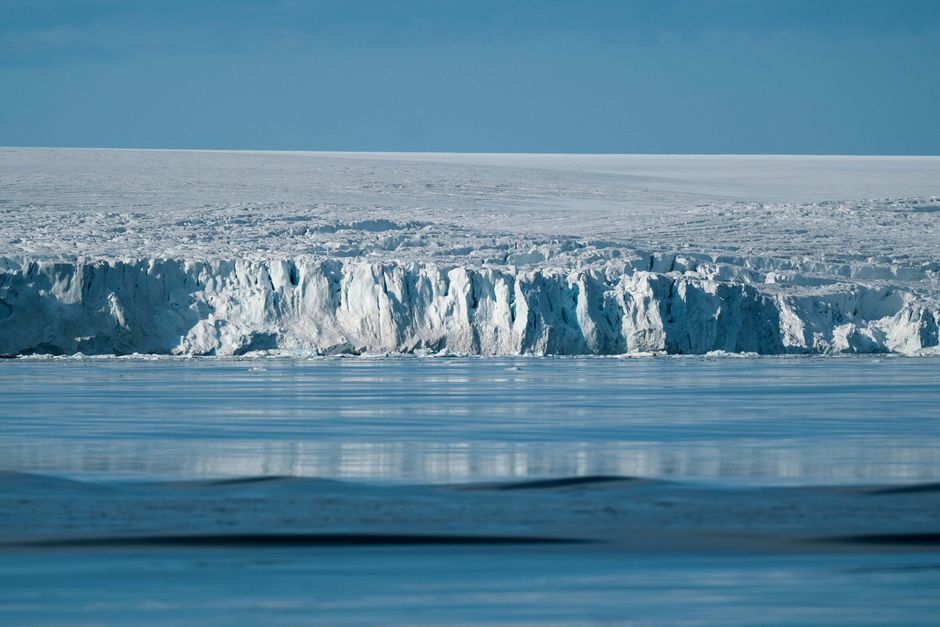
When you think of deserts, your mind probably conjures images of scorching sand dunes, cacti, and relentless sunshine. Yet the secret behind Antarctica holding the title of Earth's largest desert has nothing to do with heat. This frozen continent, buried under ice miles thick, qualifies as a desert for a surprising reason that challenges everything most people assume about these extreme landscapes. Did you know that the defining characteristic of a desert isn't temperature, but precipitation?

Antarctica receives less moisture annually than the Sahara, making it the driest place on our planet. This fascinating fact reveals how our everyday understanding of deserts masks a more interesting scientific truth about what makes these environments so extreme.

Key Takeaways

  • Antarctica is officially the world's largest desert, covering roughly 5.5 million square miles.
  • Deserts are defined by low precipitation (less than 10 inches annually), not by temperature or sand.
  • Most of Antarctica receives less than 2 inches of water equivalent precipitation per year.
  • The continent's interior is so dry that some areas haven't seen rain in nearly 2 million years.
  • Antarctica contains about 90% of Earth's ice despite being classified as a desert.
  • The Dry Valleys of Antarctica are considered the driest place on Earth, rivaling conditions on Mars.

The Secret Behind Antarctica: What Actually Defines a Desert

The scientific definition of a desert centers entirely on precipitation. Any region receiving less than 10 inches (roughly 250 millimeters) of precipitation annually qualifies as a desert, regardless of temperature. This measurement includes rain, snow, sleet, and any other form of moisture falling from the sky.

Antarctica fits this criterion perfectly. Most of the continent receives less than 2 inches of water equivalent each year. The interior regions are even more extreme, with some areas getting barely half an inch. Compare this to the Sahara, which receives about 3 inches annually, and you'll see why Antarctica claims the top spot.

Cold air holds far less moisture than warm air. Antarctica's frigid temperatures create atmospheric conditions that simply cannot support significant precipitation. The air above the continent is so cold and dry that it functions like a vast moisture desert, even though the ground below is covered in ice.

Why Ice Doesn't Disqualify Antarctica From Desert Status

Here's where the trivia gets truly interesting. Antarctica holds approximately 26.5 million cubic kilometers of ice—about 90% of all ice on Earth. This seems contradictory to its desert classification, but the ice accumulated over millions of years, not from current precipitation.

Think of it this way: the ice sheet is ancient savings, not active income. The snow that does fall on Antarctica rarely melts. Instead, it compresses into ice over thousands of years, creating layers that tell the story of Earth's climate history. But the rate of new accumulation remains extremely low.

The ice persists because of temperature, not because of abundant snowfall. Nothing melts or evaporates in the extreme cold. This preservation effect creates the illusion of a wet environment when the reality is profoundly arid.

The Dry Valleys: Antarctica's Most Extreme Desert Within a Desert

The McMurdo Dry Valleys represent one of Earth's most Mars-like environments. These valleys, located in the Transantarctic Mountains, are so dry that they contain virtually no ice or snow despite being surrounded by glaciers.

Katabatic winds—gravity-driven gusts that can exceed 200 miles per hour—sweep down from the polar plateau and evaporate any moisture before it can settle. These valleys haven't experienced rainfall for approximately 2 million years. Scientists study this region to understand how life might survive in extreme conditions on other planets.

The landscape looks alien. Rocks sit exactly where they fell, showing no signs of erosion from water. Some researchers believe these valleys are the closest analog to Martian surface conditions anywhere on Earth, making them invaluable for astrobiology research.

How Antarctica Compares to Other Major Deserts

Desert Size (Square Miles) Annual Precipitation Type
Antarctica ~5,500,000 Less than 2 inches Polar
Arctic ~5,400,000 Less than 10 inches Polar
Sahara ~3,500,000 About 3 inches Subtropical
Arabian ~900,000 Less than 4 inches Subtropical
Gobi ~500,000 About 7 inches Cold winter

Myths and Truths About Antarctic Precipitation

One common myth suggests that Antarctica is the snowiest place on Earth. The truth? It's among the least snowy. The continent's coastal regions do receive more precipitation than the interior—sometimes up to 8 inches annually—but this still qualifies as desert conditions.

Another unknown fact: when snow does fall in Antarctica, it's often so fine and light that it behaves more like dust than the fluffy flakes we're familiar with. The extreme cold creates tiny ice crystals that drift rather than fall in traditional snowfall patterns.

Some people assume the ice sheet grows significantly each year. In reality, Antarctica gains and loses ice through a delicate balance. Snowfall adds mass while glaciers calving into the ocean subtract it. Recent decades have shown increasing loss, but the precipitation rate remains remarkably low regardless.

Why This Classification Matters for Science

Understanding Antarctica as a desert has profound implications for climate science, biology, and planetary exploration. The continent serves as a natural laboratory for studying how ecosystems function under extreme moisture stress combined with extreme cold.

Microorganisms found in Antarctic deserts have evolved remarkable survival strategies. Some bacteria enter dormancy for decades, awaiting the rare moisture event that allows them to briefly metabolize and reproduce. These adaptations inform our search for life on icy moons like Europa or Enceladus.

Climate researchers also use Antarctica's desert status to understand historical climate patterns. Ice cores drilled from the desert interior contain atmospheric samples trapped for hundreds of thousands of years, providing direct evidence of past carbon dioxide levels and temperatures.

Frequently Asked Questions

Is Antarctica really drier than the Sahara Desert?

Yes, Antarctica's interior receives significantly less precipitation than the Sahara. While the Sahara averages about 3 inches of rain annually, most of Antarctica receives less than 2 inches of water equivalent, with some regions getting less than half an inch. The extreme cold prevents the atmosphere from holding much moisture, making Antarctica exceptionally arid.

How can Antarctica be a desert if it's covered in ice?

Deserts are defined by low annual precipitation, not by the presence or absence of ice and snow. Antarctica's ice sheet accumulated over millions of years and persists because nothing melts in the extreme cold. The existing ice doesn't change the fact that very little new precipitation falls each year, which is what qualifies it as a desert.

Does it ever rain in Antarctica?

Rain is extremely rare in Antarctica and occurs only occasionally along the coastal margins during the warmest summer months. The vast interior of the continent has likely never experienced rainfall in recorded history, and some areas haven't seen liquid precipitation for approximately 2 million years. When precipitation does occur, it's almost always in the form of snow or ice crystals.

What is the driest place in Antarctica?

The McMurdo Dry Valleys are considered the driest location in Antarctica and possibly on Earth. These ice-free valleys receive almost no precipitation due to katabatic winds that evaporate moisture before it can settle. Some scientists estimate these valleys haven't experienced rainfall for nearly 2 million years, making them more arid than any hot desert on the planet.

The next time someone mentions deserts, you'll know that Earth's largest isn't filled with sand or scorching heat. Antarctica reminds us that nature's categories often surprise us, challenging our assumptions about how the world works. This frozen desert continues to guard secrets about our planet's past and possibly hints at life's potential on frozen worlds beyond Earth.

Sources