
⏱️ 5 min read
The world of aged beverages extends far beyond the typical decades-old whiskeys and wines found in most collections. Throughout history, certain libations have been intentionally aged for centuries, developing complex flavors and characteristics that simply cannot be replicated through modern techniques. These extraordinary drinks represent the pinnacle of patience, craftsmanship, and the fascinating intersection of chemistry and time.
The Science Behind Ultra-Long Aging
When beverages age for centuries rather than years, they undergo transformations that go beyond standard oxidation and maturation processes. The molecular structures within these liquids continue evolving through slow chemical reactions, interaction with their containers, and environmental influences. Compounds break down and recombine in ways that create entirely new flavor profiles, aromatic compounds, and textural qualities that younger versions cannot achieve.
The container material plays a crucial role in century-long aging. Wood, clay, and glass each interact differently with the liquid contents over extended periods. Temperature fluctuations across decades cause expansion and contraction, allowing microscopic amounts of air exchange that contribute to the aging process. Even the location where these beverages rest—whether in underground cellars, mountain caves, or specially designed aging facilities—impacts their final characteristics.
Madeira Wine: The Indestructible Vintage
Madeira wine stands as one of the few beverages that not only survives centuries of aging but actually improves with such extended maturation. Originating from the Portuguese island of Madeira, this fortified wine gained its reputation for longevity somewhat accidentally. During the Age of Exploration, wine barrels stored in ship holds would cross the equator multiple times, experiencing extreme heat and constant motion. Rather than spoiling, the wine developed remarkable stability and complex flavors.
Today, bottles of Madeira from the 1700s and 1800s remain not just drinkable but highly prized by collectors and connoisseurs. The winemaking process involves heating the wine and fortifying it with grape spirits, creating a beverage that can withstand oxidation for hundreds of years. Some of the oldest drinkable Madeira wines date back to 1715, making them over three centuries old. These ancient bottles command astronomical prices at auction, with some fetching hundreds of thousands of dollars.
Balsamic Vinegar: The Century-Old Condiment
Traditional balsamic vinegar from Modena, Italy, represents another beverage—or condiment, depending on perspective—that requires extraordinary aging periods. Authentic Aceto Balsamico Tradizionale must age for a minimum of 12 years, but the most prestigious versions undergo aging for 25, 50, or even 100 years or more.
The production process involves transferring the reducing grape must through a series of progressively smaller barrels made from different woods, including oak, chestnut, cherry, and juniper. Each wood type imparts distinct characteristics to the vinegar. Some families maintain balsamic batteries that have been continuously producing vinegar for over 200 years, with the oldest barrels containing liquid that has been aging since the early 1800s.
The concentration and complexity achieved through century-long aging transforms the vinegar into a thick, syrupy elixir with incredible depth. These ancient balsamics are never sold commercially but rather passed down through generations or given as precious gifts for significant life events.
Chinese Baijiu: The Ancient Spirit
Baijiu, China’s national spirit, includes varieties that have been aged for exceptional periods. While most baijiu is consumed relatively young, premium versions undergo aging that can extend beyond a century. Archaeological discoveries have uncovered sealed ceramic vessels containing baijiu that remained preserved for over 2,000 years.
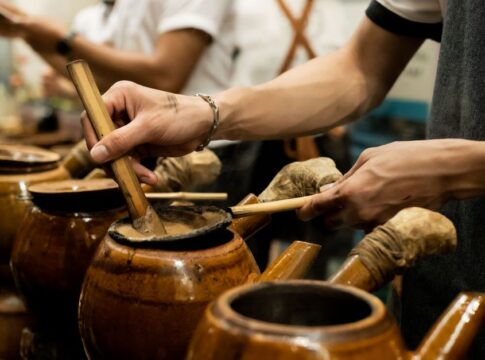
The aging process for ultra-premium baijiu occurs in underground cellars where temperature and humidity remain constant. Clay vessels allow the spirit to breathe while protecting it from excessive oxidation. The most sought-after bottles come from reserves that were laid down generations ago, with some distilleries maintaining stocks that date back to the Qing Dynasty.
Cognac: The Family Legacy in Liquid Form
While most cognac is blended and sold within decades of production, some cognac houses maintain reserves of eaux-de-vie that extend back centuries. The oldest cognacs in existence date from the 1700s, though these are extremely rare and typically not available for purchase. These ancient spirits reside in demijohns stored in special sections of cognac house cellars called “paradis.”
The challenge with cognac aging extends beyond mere time. As the spirit ages in oak barrels, it loses volume through evaporation—the “angel’s share.” After several decades, the cognac must be transferred to glass demijohns to prevent it from becoming over-oaked and losing too much volume. Some houses possess cognacs from 1805, making them over two centuries old.
The Economics and Preservation of Ancient Beverages
The market for century-old beverages operates on principles of extreme scarcity and historical significance. These drinks represent more than just aged products; they are liquid time capsules that connect the present to distant eras. Auction houses regularly feature these rare bottles, with prices reflecting their irreplaceable nature.
Preservation presents unique challenges. Modern technology allows for better analysis and monitoring of these ancient liquids, but the principles remain fundamentally unchanged: stable temperature, appropriate humidity, darkness, and minimal disturbance. Institutions and private collectors invest significant resources in maintaining optimal storage conditions.
The Future of Century-Aged Beverages
As production methods evolve and climate change affects traditional aging environments, questions arise about the future of ultra-long aging. Some producers experiment with new techniques to accelerate aging, though purists argue that nothing can replace the natural passage of time. The beverages being laid down today may not reach their full potential until the 22nd or 23rd century, representing an act of faith in future generations and the enduring value of patience in an increasingly fast-paced world.