










1 / 10 Questions
0 Points

Which president became VP and president without election?

Harry Truman

Gerald Ford

Lyndon Johnson

Andrew Johnson

Points won
0
Correct score
0%

More Questions

More Articles

Why Lobsters Don’t Age: The Immortality Secret Revealed

Why Lobsters Don’t Age: The Immortality Secret Revealed

By TrivBits, Staff Writer — Published August 30, 2026
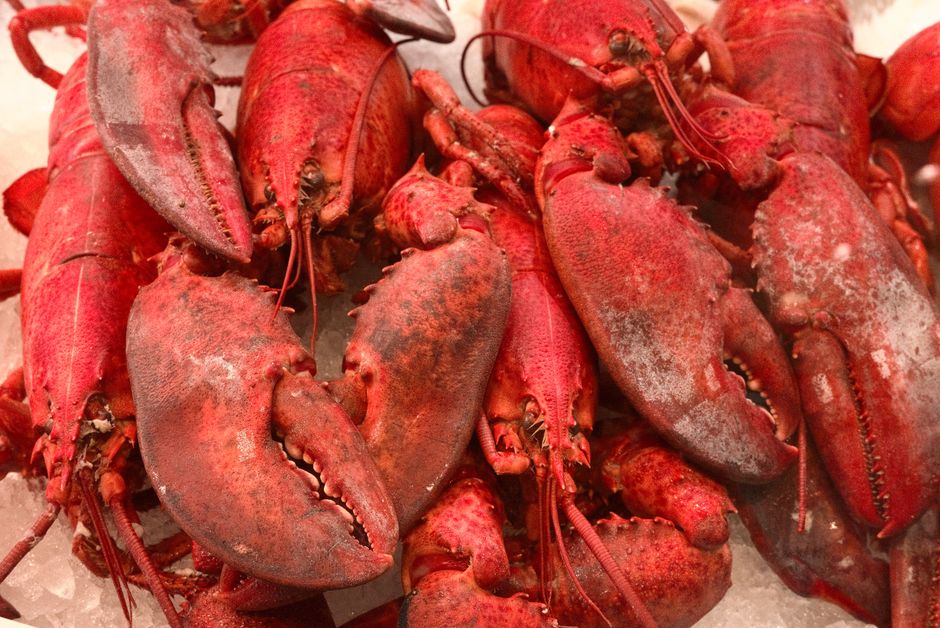
Why Lobsters Dont Age: The Immortality Secret Revealed — General trivia by TrivBits

Table of Contents

Lobsters have a reputation for something extraordinary: they don't seem to age like other animals. While humans develop wrinkles, weaken with time, and eventually die of old age, lobsters keep growing, keep reproducing, and show few signs of slowing down. Did you know that this surprising phenomenon has led scientists to wonder if lobsters hold the key to biological immortality? The truth behind the lobsters immortality secret is both fascinating and more complex than the myths suggest.

These armored creatures of the ocean floor challenge our understanding of aging. But are they truly immortal? The answer reveals interesting facts about cellular biology, evolutionary adaptations, and the limits of life itself.

Key Takeaways

  • Lobsters produce high levels of an enzyme called telomerase, which repairs DNA and may prevent cellular aging
  • They exhibit "negligible senescence," meaning they don't show typical signs of aging like reduced fertility or weakened function
  • Despite their resistance to aging, lobsters are not truly immortal and can die from disease, predators, or molting complications
  • Lobsters continue growing throughout their lives, requiring them to shed their shells in increasingly dangerous molting processes
  • The largest lobsters ever caught suggest some individuals can live for many decades, possibly over 100 years
  • Understanding the lobsters immortality secret could provide insights into human aging and longevity research

The Lobsters Immortality Secret: Telomerase and Cellular Repair

At the heart of lobster longevity lies a microscopic marvel. Every time our cells divide, the protective caps on our chromosomes—called telomeres—get shorter. Think of them like the plastic tips on shoelaces. Eventually, they wear down so much that cells can no longer divide properly. This is a fundamental mechanism of aging.

Lobsters sidestep this problem with an enzyme called telomerase. This molecular machine rebuilds telomeres, essentially resetting the cellular clock after each division. While humans produce telomerase primarily in reproductive cells and stem cells, lobsters maintain high levels of this enzyme throughout their bodies and throughout their lives. Their cells can keep dividing without the degradation that causes aging in most animals.

This isn't a magic bullet for eternal life. But it does mean lobsters avoid many age-related declines. They don't lose muscle mass. Their organs don't deteriorate. Older lobsters remain just as fertile as younger ones, and some scientists have found that larger, older lobsters may actually produce more offspring than their younger counterparts.

What Negligible Senescence Really Means

Scientists use the term "negligible senescence" to describe organisms that don't follow normal aging patterns. It's a mouthful, but the concept is straightforward: these creatures don't get measurably weaker or less fertile as they age.

Most animals, humans included, experience senescence. Fertility drops. Strength wanes. Disease resistance crumbles. The risk of death increases exponentially with each passing year. But lobsters? Their mortality risk doesn't increase with age. A 50-year-old lobster is about as likely to die in any given year as a 5-year-old lobster—assuming neither encounters a hungry predator or a lobster trap.

This doesn't mean lobsters can't die. They absolutely can and do. The difference is that time itself doesn't appear to be killing them from the inside out the way it does with mammals, birds, and most other animals we're familiar with.

The Molting Problem: Why Lobsters Aren't Truly Immortal

Here's where the immortality myth breaks down. Lobsters grow continuously throughout their lives, and because they wear hard exoskeletons, they must periodically shed their shells in a process called molting. Young lobsters molt frequently—sometimes dozens of times in their first few years. As they age, molting becomes less frequent but increasingly perilous.

Molting requires enormous energy. The lobster must absorb minerals from its old shell, break free, and rapidly harden a new, larger shell before predators attack its vulnerable soft body. Older, larger lobsters face a mathematical problem: the energy required for molting increases faster than their ability to generate that energy. Eventually, many lobsters reach a size where molting becomes effectively impossible.

When a lobster can't successfully molt, it faces a death sentence. It might die from exhaustion during the attempt, get trapped in its old shell, or succumb to shell disease because it can't shed infected tissue. This biological limit means that even with perfect cellular repair, lobsters can't grow forever.

How Long Can Lobsters Actually Live?

Determining a lobster's age isn't easy. Unlike trees, they don't have rings. Scientists estimate age based on size, though this method is imprecise because growth rates vary with temperature, food availability, and individual genetics.

Weight Estimated Age Notes
1 pound 5-7 years Typical market size
5 pounds 25-30 years Considered large
20+ pounds 50-100+ years Extremely rare specimens

The largest lobsters on record have weighed over 40 pounds, suggesting ages that could exceed a century. But these are exceptions. Most lobsters never reach old age because they're caught, eaten by predators, or succumb to disease long before biological limits come into play.

In protected environments without predators or fishing pressure, lobsters might routinely live for many decades. But in the wild ocean, few get that chance.

What Lobster Longevity Teaches Us About Aging

The fascinating biology of lobsters offers more than just trivia for dinner conversations. Researchers studying negligible senescence hope to understand why some organisms resist aging while others don't. What makes telomerase activity sustainable in lobsters but potentially dangerous in humans, where uncontrolled telomerase activation can contribute to cancer?

Lobsters also challenge our assumptions about the inevitability of aging. For most of human history, we've accepted that growing old meant growing weak. But lobsters prove that cellular aging isn't universal. Different evolutionary paths have produced different solutions to the problem of mortality.

Understanding these mechanisms won't make humans immortal. But it might help us understand age-related diseases, improve cellular repair processes, or extend healthy lifespan. The unknown details of how lobsters maintain cellular health for decades could unlock new approaches to human medicine.

Frequently Asked Questions

Are lobsters biologically immortal?

No, lobsters are not truly immortal. While they show negligible senescence and maintain cellular health through telomerase production, they still die from disease, predation, injury, and complications from molting. Their resistance to typical aging processes doesn't make them invulnerable to death—it just means age itself doesn't weaken them the way it does most animals.

Why don't lobsters get cancer if they have high telomerase levels?

This remains an active area of research. Lobsters do develop diseases, but they appear to have robust mechanisms that prevent the uncontrolled cell division characteristic of cancer despite high telomerase activity. Their cellular regulation systems may differ significantly from mammals, though scientists haven't fully mapped these protective mechanisms yet.

What's the oldest a lobster has ever lived?

We don't know for certain because accurately aging lobsters is difficult. Based on size estimates, some captured lobsters may have been over 100 years old, but these are educated guesses rather than confirmed measurements. Without reliable aging methods, the true maximum lifespan remains unknown, though it's likely measured in many decades.

Could humans use lobster biology to extend our lifespan?

Possibly, but it's complicated. While lobster telomerase activity is intriguing, simply activating telomerase in human cells could increase cancer risk. Any medical applications would need to carefully balance cellular repair with cancer prevention. Lobster biology provides insights and research directions, but translating these into human treatments requires solving significant challenges.

The next time you see a lobster, remember you're looking at one of nature's most remarkable experiments in longevity. These creatures have evolved a strategy that defies our expectations about aging, proving that getting older doesn't always mean getting weaker. Whether they're truly close to immortality or just exceptionally good at cellular maintenance, lobsters remind us that biology still holds surprising secrets waiting to be understood.

Sources

Soccer Ball Pentagons Total 12: Geometry Explained

Soccer Ball Pentagons Total 12: Geometry Explained

By TrivBits, Staff Writer — Published September 25, 2026

Soccer Ball Pentagons Total 12: Geometry Explained — Sports trivia by TrivBits

Table of Contents

Ever wondered why a classic soccer ball looks the way it does? The iconic black-and-white pattern isn't just for show. At the heart of this design lies a fascinating geometric truth: every traditional soccer ball pentagons total exactly 12, no matter the size or brand. This surprising mathematical constant governs the construction of what's known as a truncated icosahedron, the shape that revolutionized soccer ball design in the 1960s and became synonymous with the beautiful game.

Did you know that this geometric structure isn't unique to sports equipment? The same pattern appears in nature, architecture, and even molecular chemistry. Let's explore the interesting facts and truths behind soccer ball geometry.

Key Takeaways

  • Traditional soccer balls are shaped as truncated icosahedrons with exactly 12 pentagons and 20 hexagons
  • The 12-pentagon rule is a mathematical constant that cannot change while maintaining the spherical shape
  • This geometric design became iconic after the 1970 FIFA World Cup introduced the Adidas Telstar
  • The same pattern appears in nature, from viruses to geodesic domes
  • Modern soccer balls often use different designs, but the classic pattern remains culturally significant
  • Euler's formula for polyhedra explains why the number must always be 12

Why Soccer Ball Pentagons Always Number Twelve

The geometry of a classic soccer ball isn't arbitrary. It's governed by strict mathematical rules that dictate exactly how many faces of each shape can fit together to create a near-perfect sphere. A truncated icosahedron—the technical name for this shape—must have precisely 12 pentagonal faces and 20 hexagonal faces to work. You can't add or subtract even one pentagon without breaking the structure entirely.

This limitation comes from Euler's formula for polyhedra, which states that for any convex polyhedron, the number of vertices minus edges plus faces always equals two (V - E + F = 2). When you apply this formula to a truncated icosahedron, the math locks you into the 12-pentagon configuration. Each pentagon is surrounded by five hexagons, and each hexagon touches three pentagons and three other hexagons. Change those numbers, and you no longer have a ball-shaped object.

The Twelve Pentagons: A Numbered Journey Through Soccer Ball Geometry

1. The Truncated Icosahedron Has 32 Total Faces

A traditional soccer ball contains 32 panels in total: 12 black pentagons and 20 white hexagons. This specific combination creates a shape that's remarkably close to a perfect sphere when inflated. The arrangement distributes pressure evenly across the surface, making the ball both durable and predictable in flight. Before this design, soccer balls were made from leather panels stitched in less symmetrical patterns, leading to unpredictable bounces and flight paths that frustrated players.

2. Each Pentagon Touches Exactly Five Hexagons

Look closely at any pentagon on a soccer ball. You'll notice it never touches another pentagon directly. Instead, each five-sided panel is completely surrounded by hexagons. This alternating pattern is crucial to maintaining the ball's structural integrity. If two pentagons shared an edge, the curvature would become irregular, creating weak points and affecting how the ball moves through air.

3. The Pattern Contains 90 Edges Total

When you count every edge where panels meet on a truncated icosahedron, you get exactly 90. Each pentagon contributes five edges, and each hexagon contributes six, but since edges are shared between adjacent panels, the total comes to 90. These edges represent the stitching or bonding points on a real soccer ball, and their distribution affects everything from water absorption to aerodynamics.

4. There Are Precisely 60 Vertices Where Panels Meet

At every point where three panels come together, you create a vertex. On a soccer ball, this always means two hexagons and one pentagon meeting at a single point. The ball has exactly 60 of these vertices, and each one represents a stress point where the structure must be reinforced. Professional soccer balls use advanced stitching or thermal bonding at these junctions to prevent splitting during hard kicks.

5. The 1970 World Cup Made This Design Iconic

The Adidas Telstar, introduced for the 1970 FIFA World Cup in Mexico, popularized the black-and-white pentagon-hexagon pattern. The high-contrast design wasn't just stylish—it was practical. The tournament was the first to be broadcast widely on black-and-white television, and the contrasting panels made the ball easier for viewers to track on screen. Before the Telstar, soccer balls were typically brown leather with inconsistent panel arrangements.

6. Buckminsterfullerene Molecules Share the Same Structure

In 1985, scientists discovered a carbon molecule with exactly the same geometric structure as a soccer ball: 60 carbon atoms arranged in 12 pentagons and 20 hexagons. They named it buckminsterfullerene (or "buckyball") after architect Buckminster Fuller, who popularized geodesic domes with similar patterns. This discovery earned its researchers the 1996 Nobel Prize in Chemistry and proved that nature independently "chose" the same efficient structure that soccer ball designers had adopted.

7. Geodesic Domes Use the Same Geometric Principles

Buckminster Fuller's geodesic domes apply truncated icosahedron geometry to architecture. These structures distribute stress evenly across their surface, allowing them to cover large spaces with minimal materials. The Spaceship Earth sphere at Disney's EPCOT and many planetarium domes use variations of this pattern. The same mathematical efficiency that makes a soccer ball round and strong makes these buildings remarkably stable.

8. Modern Match Balls Often Abandon the Classic Pattern

While the 32-panel design remains iconic, most professional soccer balls today use different constructions. The 2006 World Cup featured a 14-panel ball, and the 2018 version had just six panels. Manufacturers discovered that fewer, larger panels with thermally bonded seams create more predictable flight characteristics and better water resistance. However, these modern designs sacrifice the mathematical elegance of the truncated icosahedron for performance advantages.

9. You Cannot Create a Sphere Using Only Hexagons

Here's an interesting truth: you cannot make a closed, ball-like shape using hexagons alone. Hexagons tile flat surfaces perfectly—that's why honeycomb is flat—but they cannot curve into a sphere without introducing pentagons. The pentagons create the necessary curvature by bringing six points closer together than the hexagonal grid allows. This is why every spherical structure in nature or engineering must include some non-hexagonal elements.

10. The Pattern Appears in Virus Structures

Many viruses, including certain types that cause common colds, use the truncated icosahedron structure for their protein shells. The icosahedral symmetry allows viruses to create large protective containers from many copies of a small number of protein types. This efficient self-assembly process requires minimal genetic information while providing maximum protection for the virus's genetic material. Nature discovered this geometric solution millions of years before humans started stitching soccer balls.

11. Hand-Stitching a Soccer Ball Requires Specific Skill

Traditional soccer balls are stitched inside-out, then turned right-side-out through a small hole before inflation. Skilled workers must align all 32 panels perfectly so the pentagons and hexagons meet at correct angles. A single misaligned panel can make the entire ball lopsided. In countries where hand-stitching is still common, workers can take several hours to complete a single high-quality ball, though experienced craftspeople work much faster.

12. The Geometry Affects Ball Flight Physics

The arrangement of pentagons and hexagons influences how air flows over a spinning soccer ball. The seams create tiny turbulence patterns that affect the Magnus effect—the force that makes a spinning ball curve. Players who understand where the pentagons sit can theoretically strike them differently to create specific spin patterns, though in practice, the game moves too fast for such precision. Modern balls with fewer panels create more uniform surfaces, reducing this variability but also eliminating some of the unpredictable "magic" that made classic balls interesting.

Frequently Asked Questions

Why are soccer ball pentagons always black in the classic design?

The black pentagons and white hexagons of the classic Adidas Telstar design were chosen for visibility on black-and-white television during the 1970 World Cup. The high contrast made the ball easier to track on screen. This color scheme became so iconic that it's still associated with soccer balls today, even though modern balls use many different color patterns and designs.

Can you make a soccer ball with a different number of pentagons?

No, not if you want to maintain the truncated icosahedron shape. The mathematical properties of this geometric solid require exactly 12 pentagons and 20 hexagons. You could create a spherical ball with a completely different geometric structure—and modern soccer balls do exactly that—but it wouldn't be a truncated icosahedron anymore.

Do all sports balls use the same geometric pattern?

No, different sports balls use different constructions based on their specific requirements. Basketballs typically have eight panels with curved seams. Volleyballs often use 18 panels. Tennis balls have a distinctive curved seam pattern. The truncated icosahedron became popular for soccer because it created a particularly round, symmetrical shape using flat panels, which was important for the leather-stitching technology of the 1960s and 1970s.

How does the pentagon-hexagon pattern compare to other ways of making spheres?

The truncated icosahedron is one of several "Archimedean solids"—semi-regular polyhedra that approximate spheres. Other options include the icosahedron (20 triangular faces) or the dodecahedron (12 pentagonal faces). The truncated icosahedron became the soccer ball standard because its combination of pentagons and hexagons created larger, flatter panels that were easier to stitch from leather while still producing an excellent spherical shape when inflated.

The next time you see a classic soccer ball, take a moment to appreciate the elegant mathematics hiding in plain sight. Those 12 pentagons represent a geometric constant that bridges sports equipment, molecular chemistry, architecture, and virology—proof that the same mathematical truths govern everything from the smallest molecules to the structures we build and the games we play.

Sources