
By TrivBits, Staff Writer — Published October 2, 2026
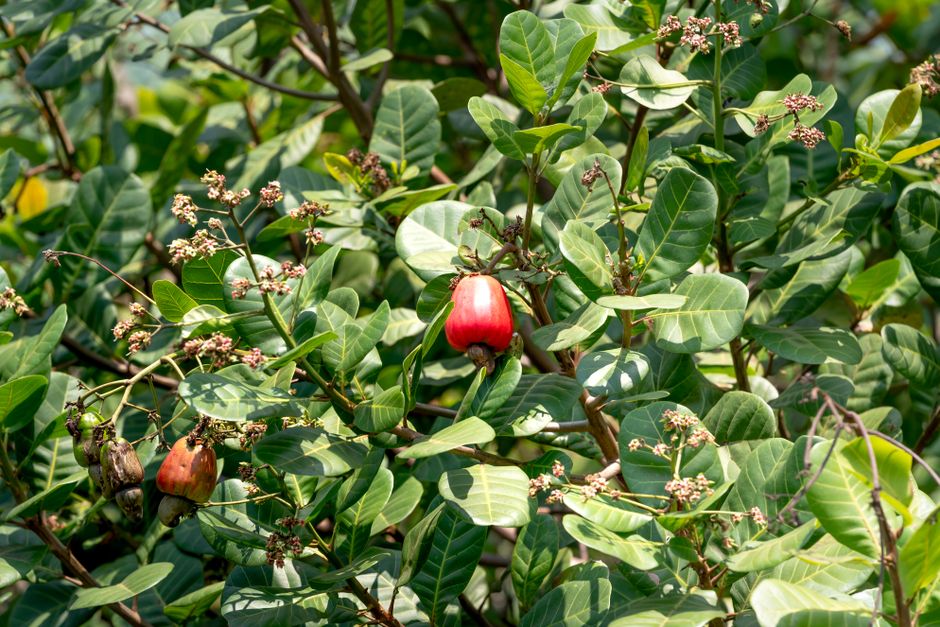
Table of Contents
- Key Takeaways
- How Cashews Grow Outside the Fruit Will Surprise You
- The Botanical Truth About What Actually Is a Nut
- Eleven Nut Myths That Need Busting
- Why These Myths Persist
- Frequently Asked Questions
- Sources
Did you know that cashews grow outside the fruit in a surprising configuration that defies what most people expect from nature? If you’ve ever eaten a handful of mixed nuts, you’ve probably never stopped to consider where each one actually comes from. The truth is, many of the “facts” we think we know about nuts are completely wrong. From botanical definitions to growing habits, the world of nuts is filled with fascinating misconceptions that deserve a closer look.
These interesting tidbits aren’t just trivia for trivia’s sake. Understanding the truths behind these myths reveals the incredible diversity of plant evolution and challenges our assumptions about the food we eat every day. Let’s crack open these unknown facts and see what’s really inside.
Key Takeaways
- Cashews grow attached to the outside bottom of a fleshy, apple-like fruit called a cashew apple
- Peanuts are legumes that develop underground, not true nuts at all
- Most culinary “nuts” aren’t botanical nuts—almonds, walnuts, and pecans are actually seeds
- Raw cashews sold in stores aren’t truly raw due to necessary heat processing for safety
- Brazil nuts are one of the few commercially harvested foods that come almost exclusively from wild trees
- Coconuts can float across oceans for months and still germinate on distant shores
How Cashews Grow Outside the Fruit Will Surprise You
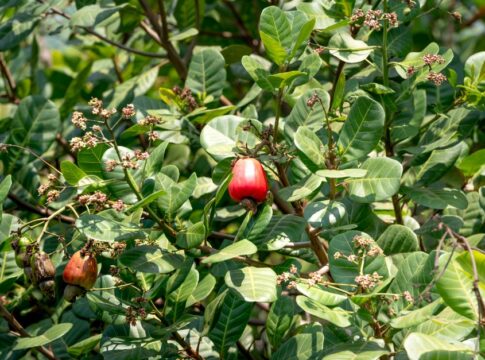
The cashew’s growth pattern is genuinely bizarre. The actual nut hangs from the bottom of a kidney-shaped shell, which itself dangles beneath a swollen, pear-shaped structure called the cashew apple. This “apple” isn’t the fruit in botanical terms—it’s a swollen stem called a pseudofruit. The real fruit is the kidney-shaped shell containing the cashew seed we eat. In countries where cashews grow, people consume the cashew apple fresh or make it into juice, but it’s too delicate to export, which is why most people have never seen one.
What makes this even more interesting is that the shell surrounding the cashew contains urushiol, the same toxic oil found in poison ivy. Workers must carefully roast or steam the shells to neutralize this oil before cracking them open. This is why you’ll never find truly raw cashews in stores, despite what the label might say.
The Botanical Truth About What Actually Is a Nut
Here’s where things get complicated. Botanically speaking, a true nut is a hard-shelled fruit that doesn’t split open at maturity and contains a single seed. By this strict definition, acorns, chestnuts, and hazelnuts qualify as true nuts. But almonds? They’re seeds from a drupe, like peaches. Walnuts and pecans? Also drupes. Pistachios? Same category. Brazil nuts? Seeds from a capsule.
This disconnect between culinary and botanical terminology causes endless confusion. When we talk about “tree nuts” in cooking or for allergy purposes, we’re using an entirely different classification system than botanists use. Neither definition is wrong—they’re just answering different questions. The culinary definition focuses on how we use these foods, while the botanical one describes the plant’s reproductive structure.
Eleven Nut Myths That Need Busting
1. Peanuts Are Nuts That Grow on Trees
Peanuts are legumes, relatives of beans and lentils, and they develop entirely underground. After the plant flowers above ground, the flower stalk bends down and pushes the developing pod into the soil, where the peanuts mature in darkness. This underground development is called geocarpy, and it’s extremely rare in the plant kingdom. Farmers must actually dig up the entire plant to harvest the peanuts clinging to the roots.
2. Almonds Are Nuts
Almonds are seeds from inside a leathery fruit hull, making them more closely related to peaches than to true nuts. If you’ve ever seen an almond tree, you’d notice the fruit looks remarkably like a flattened, fuzzy peach. When the hull dries and splits open, the almond “nut” inside is actually the pit. This is why almonds are classified as drupes, the same category that includes cherries, plums, and apricots.
3. All Nuts Are High in Protein
While nuts are generally nutritious, their protein content varies dramatically. Chestnuts contain only about 2 grams of protein per 100 grams, while peanuts pack roughly 26 grams. Chestnuts are actually much higher in carbohydrates than other nuts, which is why they have a starchy, potato-like texture when cooked. This variation reflects different evolutionary strategies—some seeds prioritize energy storage, others prioritize protein.
4. Coconuts Are Nuts
The coconut is actually a drupe, and what we call the “nut” is technically the seed. The hairy brown shell we’re familiar with is the inner layer of the fruit; the outer layers are removed before shipping. In botanical terms, a coconut has three layers: an outer skin (exocarp), a fibrous husk (mesocarp), and the hard woody shell (endocarp) surrounding the seed. This structure makes it a textbook drupe, like a gigantic, ocean-faring peach.
5. Cashews Can Be Eaten Straight from the Tree
Never bite into a cashew straight from the tree unless you enjoy chemical burns. The shell contains anacardic acid and urushiol, which cause severe skin irritation and allergic reactions. Processing cashews is actually dangerous work, and laborers in cashew factories often suffer from exposure to these caustic oils. Every cashew must be carefully heated to neutralize these compounds before the shell can be safely cracked.
6. Walnuts and Pecans Are the Same Type of Nut
While both are drupes from related trees, walnuts and pecans come from different genera and have distinct characteristics. Walnuts have a more bitter, earthy flavor and a convoluted, brain-like appearance. Pecans are sweeter, smoother, and more elongated. Their trees also differ significantly in appearance and growing requirements, with pecans preferring warmer climates and walnuts tolerating cooler temperatures.
7. Brazil Nuts Come from Plantations
Nearly all commercial Brazil nuts come from wild trees in the Amazon rainforest, not from farms or plantations. These massive trees can live for 500 years and reach heights of 160 feet. Attempts to cultivate them in plantations largely fail because the trees depend on a specific species of orchid bee for pollination, and these bees thrive only in undisturbed rainforest. This makes Brazil nuts one of the few major commercial crops still harvested almost entirely from the wild.
8. Pine Nuts Are Nuts
Pine nuts are seeds harvested from the cones of certain pine species. They’re not enclosed in a hard shell that stays closed at maturity, so they fail the botanical definition of nuts. Instead, they develop between the scales of pine cones and are released when the cone opens. Harvesting them is incredibly labor-intensive, which explains their high price—workers must gather cones, heat them to open the scales, and then extract the tiny seeds by hand.
9. Macadamia Nuts Are Easy to Crack
Macadamia nuts have the hardest shell of any nut, requiring roughly 300 pounds of pressure per square inch to crack. Standard nutcrackers are useless against them. Commercial processors use specialized machines that apply tremendous force, and even then, the kernels often shatter. This difficulty, combined with the tree’s long maturation period (seven to ten years before producing nuts), contributes to macadamias being among the most expensive nuts in the world.
10. Pistachios That Are Naturally Open Are Bad
The opposite is true—a naturally split shell is a sign of a mature, ripe pistachio. As the nut matures, the kernel grows and expands, eventually forcing the shell to crack open with an audible pop. Closed pistachios are typically immature or empty. In fact, processors sort out closed shells because they’re less desirable. The satisfying crack you see is actually the pistachio’s way of announcing it’s ready to eat.
11. Acorns Are Inedible
Acorns are perfectly edible once you remove their tannins through leaching. Indigenous peoples across the Northern Hemisphere relied on acorns as a staple food for thousands of years. The process involves shelling the acorns, grinding them, and then repeatedly rinsing the meal with water to flush out the bitter tannins. Once processed, acorn flour can be used for bread, porridge, or thickening soups. The flavor is nutty and slightly sweet, though the process is admittedly time-consuming.
Why These Myths Persist
These misconceptions survive because botanical classification doesn’t align with how we experience food. We categorize nuts by texture, taste, and culinary use rather than by their reproductive biology. A cashew and an almond seem similar in the kitchen, so we group them together mentally, even though they come from completely different plant structures.
Language plays a role too. Once something gets called a “nut” in everyday speech, that name sticks regardless of botanical accuracy. The word becomes shorthand for “hard, edible seed-like thing from a tree or plant,” which is useful for communication even if it drives botanists to distraction. Common names evolve to serve practical purposes, not scientific precision.
Frequently Asked Questions
Why are cashews more expensive than other nuts?
Cashews require extensive hand labor and careful processing to remove the toxic shell oils safely. Each nut must be individually roasted, cracked, and inspected, and workers need protective equipment to avoid exposure to caustic compounds. Additionally, the cashew apple doesn’t ship well, so growing regions are limited to areas where processing facilities exist nearby.
Can you really get poisoned by eating too many Brazil nuts?
Yes, Brazil nuts are extraordinarily high in selenium, and eating too many can lead to selenium toxicity. Just a few nuts provide your entire daily selenium requirement. Consuming several handfuls regularly could cause symptoms including hair loss, nail brittleness, nausea, and in severe cases, neurological problems. Moderation is essential—a small serving provides benefits, but more isn’t better.
Why do some people have peanut allergies but can eat tree nuts?
Peanuts are legumes with different proteins than tree nuts, so the allergic reactions involve different immune responses. Someone allergic to peanuts may tolerate almonds, walnuts, or cashews perfectly fine because their immune system reacts to specific peanut proteins. However, some people are allergic to both, and cross-contamination during processing is a real concern, so anyone with nut allergies should exercise caution.
What’s the white stuff inside a walnut?
That’s the edible kernel, which is the seed’s cotyledon—essentially the embryonic leaf that would feed a sprouting walnut tree. The convoluted folds maximize surface area for nutrient storage. The thin, papery skin covering it contains tannins that give it a slightly bitter taste. Some people remove this skin for a milder flavor, though it’s perfectly safe and nutritious to eat.