











1 / 10 Questions
0 Points

Which Body Part Can Grow Back From Just 25% Of Itself?

Heart

Liver

Kidney

Lung

Points won
0
Correct score
0%

More Questions

More Articles

Did You Know These Desserts Didn’t Originate Where You Think?

Did You Know These Desserts Didn’t Originate Where You Think?

⏱️ 5 min read

The world of desserts is filled with delicious surprises, but perhaps none are as surprising as discovering that many beloved sweets didn't originate where most people believe. From iconic pastries to celebrated confections, the true birthplaces of these treats often challenge our assumptions and reveal fascinating stories of culinary migration, adaptation, and cultural exchange. Understanding the authentic origins of these desserts not only enriches our appreciation for them but also highlights the interconnected nature of global cuisine.

The French Croissant Actually Has Austrian Roots

Perhaps one of the most iconic symbols of French baking, the croissant is synonymous with Parisian cafés and French breakfast culture. However, this flaky, buttery pastry actually traces its origins to Austria. The predecessor of the croissant, known as the kipferl, was a crescent-shaped pastry enjoyed in Vienna as early as the 13th century. The kipferl featured a denser texture than the modern croissant but shared the distinctive curved shape.

The pastry made its way to France in the 18th century, most likely when Austrian princess Marie Antoinette married the future King Louis XVI. French bakers then refined the recipe, introducing the lamination technique that creates the characteristic layers and airy texture we associate with croissants today. The French transformation was so successful that the croissant became completely identified with French cuisine, while its Austrian heritage faded from popular memory.

Fortune Cookies: An American Creation, Not Chinese

The fortune cookie has become an ubiquitous ending to Chinese restaurant meals across the United States, leading most Americans to assume this crispy, prophecy-bearing treat originated in China. The reality is quite different: fortune cookies were likely invented in California in the early 20th century.

The exact origin story remains debated, with both San Francisco and Los Angeles claiming credit for the creation. The most credible accounts suggest Japanese immigrants first created these cookies, inspired by traditional Japanese crackers called tsujiura senbei. Makoto Hagiwara, a Japanese landscape designer at Golden Gate Park's Japanese Tea Garden, is often credited with serving the first fortune cookies to visitors around 1914.

During World War II, when Japanese Americans were sent to internment camps, Chinese restaurant owners adopted the fortune cookie. It became so associated with Chinese-American cuisine that when they were introduced in China in the 1990s, they were marketed as "genuine American fortune cookies."

German Chocolate Cake Has No German Connection

Despite its name suggesting European origins, German chocolate cake is thoroughly American. The dessert was named after Samuel German, an American chocolatier who developed a type of dark baking chocolate for the Baker's Chocolate Company in 1852. This product became known as "Baker's German's Sweet Chocolate."

The cake recipe itself first appeared in a Dallas newspaper in 1957, submitted by a homemaker named Mrs. George Clay. The recipe used Baker's German's Sweet Chocolate, and its popularity skyrocketed when the chocolate company began distributing the recipe nationally. Over time, the possessive form was dropped, and people began assuming the cake had German origins. The coconut-pecan frosting that characterizes this cake is entirely an American innovation with no ties to traditional German baking.

Flan's Journey From Ancient Rome to Latin America

While flan is strongly associated with Spanish and Latin American cuisine, this creamy caramel custard dessert has much older origins. The ancient Romans created early versions of custard desserts, and the word "flan" itself comes from the Latin word "flado," meaning flat cake. The Romans had an abundance of eggs due to their chicken domestication practices, leading them to experiment with egg-based dishes both savory and sweet.

During the Middle Ages, both sweet and savory flans became popular throughout Europe. Spanish conquistadors later brought flan recipes to the Americas during colonization, where it was adapted with local ingredients and techniques. Today, each Latin American country has developed its own variations, from Mexican cajeta flan to Cuban flan de queso, making it difficult for many to imagine this dessert originated anywhere but Latin America.

The Surprising Russian Origins of Charlotte Russe

Charlotte Russe, despite its French-sounding name and association with elegant European desserts, was actually created by French chef Marie-Antoine Carême while working in Russia for Tsar Alexander I. Carême, often called the "King of Chefs and the Chef of Kings," invented this dessert in the early 19th century as a variation of the British Charlotte dessert.

The original Charlotte was a molded dessert with bread lining the outside. Carême replaced the bread with ladyfinger cookies and added a Bavarian cream filling, creating an elegant dessert worthy of the Russian imperial court. He named it "Charlotte à la Russe" in honor of his Russian host country. The dessert later gained popularity in France and throughout Europe, with many assuming it was a traditional French creation.

Why These Misconceptions Matter

Understanding the true origins of these desserts provides valuable lessons about cultural exchange and culinary evolution. Food rarely develops in isolation; instead, recipes travel with immigrants, traders, and conquerors, adapting to new environments and available ingredients. The stories behind these desserts remind us that cuisine is constantly evolving and that attributing dishes to single cultures oversimplifies the complex history of human migration and cultural interaction.

These culinary misconceptions also highlight how successful adaptation can eclipse original creation. When a culture embraces and perfects an imported dish, it can become so integrated into that culture's identity that the foreign origins are forgotten entirely. This process isn't about cultural appropriation but rather cultural adoption and transformation, demonstrating how food serves as a universal language that transcends borders and brings diverse traditions together.
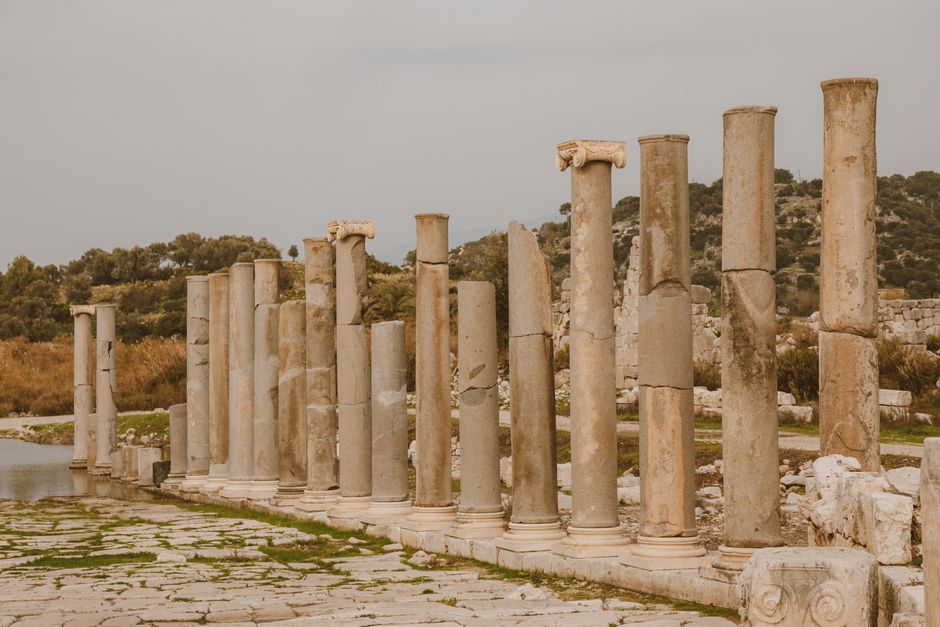
Did You Know These Ancient Societies Had Equal Rights?

Did You Know These Ancient Societies Had Equal Rights?

⏱️ 5 min read

Modern society often prides itself on the progressive advancement of equal rights, yet many would be surprised to learn that numerous ancient civilizations practiced forms of gender and social equality that rivaled or even surpassed contemporary standards. While the historical narrative frequently emphasizes patriarchal structures, archaeological evidence and historical records reveal fascinating examples of ancient societies that challenged traditional hierarchies and embraced remarkably egalitarian principles.

The Minoan Civilization: A Mediterranean Model of Gender Equality

Flourishing on the island of Crete from approximately 2700 to 1450 BCE, the Minoan civilization presents compelling evidence of gender parity in the ancient world. Archaeological excavations have uncovered frescoes, pottery, and religious artifacts that depict women in prominent positions of power and influence. Unlike their contemporaries in mainland Greece, Minoan women participated actively in public life, religious ceremonies, and possibly governance.

The prominence of female deities in Minoan religion, particularly the "Snake Goddess" figures, suggests that women held significant spiritual authority. Frescoes from the palace at Knossos show women engaging in athletics, including the dangerous sport of bull-leaping, alongside men. Women wore elaborate clothing that allowed freedom of movement, and artistic representations show them in positions of authority, presiding over religious rituals and social gatherings.

Economic records indicate that Minoan women owned property, conducted business transactions, and inherited wealth independently. The absence of defensive fortifications in Minoan cities has led some scholars to theorize that this peaceful society may have distributed power more equitably across genders, reducing the emphasis on male warrior culture that dominated other ancient civilizations.

Ancient Sparta: Challenging Greek Norms

While ancient Athens is often celebrated as the birthplace of democracy, it was Sparta that granted women unprecedented freedoms and rights in the classical Greek world. Spartan women received formal education, owned approximately forty percent of Spartan land, and exercised considerable autonomy in their daily lives.

The Spartan system required men to live in military barracks until age thirty, leaving women to manage households, estates, and business affairs independently. This practical arrangement evolved into a cultural expectation that women should be strong, educated, and capable. Spartan girls participated in athletic training, including running, wrestling, and javelin throwing, which was revolutionary for ancient Greece.

Spartan women could inherit property, divorce their husbands, and remarry without social stigma. They spoke freely in public forums and were known throughout Greece for their wit and boldness. Ancient sources, though often written by outsiders who viewed Spartan customs with suspicion, consistently note the unusual freedom and influence of Spartan women in political and social matters.

The Etruscan Society: Women of Status and Influence

The Etruscans, who inhabited ancient Italy before Roman dominance, maintained a society that shocked their Greek and Roman neighbors with its treatment of women. Dating from approximately 800 to 300 BCE, Etruscan civilization afforded women rights and social status that were exceptional for the ancient Mediterranean world.

Etruscan women attended public banquets alongside men, reclining at dinner parties in a manner that scandalized Roman observers. They maintained their birth names after marriage, suggesting an identity independent from their husbands. Tomb inscriptions frequently traced lineage through the mother's family line, indicating a degree of matrilineal inheritance unusual for the period.

Archaeological evidence shows that wealthy Etruscan women received elaborate burials with grave goods indicating high status. They participated in athletic competitions, owned property, and some evidence suggests they may have held political offices. The relative equality in Etruscan society stood in stark contrast to the increasingly patriarchal Roman culture that eventually absorbed their civilization.

The Iroquois Confederacy: Matriarchal Governance in Practice

Long before European contact, the Haudenosaunee, or Iroquois Confederacy, established a sophisticated political system in which women wielded substantial political power. This confederation of Native American nations in northeastern North America developed a governance structure that balanced male and female authority in ways that European colonizers found incomprehensible.

Clan Mothers, senior women in each clan, held the authority to nominate and depose male chiefs, controlled agricultural resources, and made decisions regarding warfare. The Iroquois practiced matrilineal descent, with property and clan membership passing through the female line. Women owned the longhouses, agricultural fields, and the harvest, giving them economic independence and leverage.

In the political sphere, while men served as sachems or chiefs in council, women controlled their selection and could remove them from office for failing to represent their people's interests. Women's councils addressed issues separately before decisions were brought to the male chiefs, ensuring female perspectives shaped governance. This system of checks and balances created a genuinely participatory democracy that distributed power across gender lines.

Ancient Egypt: Legal Rights Across Millennia

Throughout much of ancient Egyptian history, spanning over three thousand years, women enjoyed legal rights that would not be matched in Western civilization until the twentieth century. Egyptian women could own property, initiate divorce, enter into contracts, serve as witnesses in legal proceedings, and inherit wealth equally with men.

Women engaged in business, working as merchants, scribes, and physicians. Queens such as Hatshepsut and Cleopatra ruled as pharaohs, though their reigns were exceptional rather than typical. More commonly, women managed estates, controlled resources, and made independent economic decisions. Marriage contracts protected women's property rights, and divorce settlements ensured they retained their assets.

The legal system treated Egyptian women as individuals rather than as property or extensions of male relatives. This fundamental equality under law, while not translating to identical social roles, provided Egyptian women with security and autonomy remarkable for the ancient world.

Lessons from Ancient Equality

These ancient societies demonstrate that patriarchal dominance was not inevitable or universal in human history. Various cultures developed systems that recognized women's contributions, distributed power more equitably, and created social structures based on cooperation rather than strict hierarchy. Understanding these historical examples challenges assumptions about the march of progress and reminds us that equality has ancient roots worth studying and, perhaps, emulating.