1 / 10 Questions
0 Points

What Cereal Box Has Featured A Rooster For Decades?

Wheaties

Corn Flakes

Rice Krispies

Cheerios

Points won
0
Correct score
0%

More Questions

More Articles

The Truth About Fingerprints: Why No Two Are Identical

The Truth About Fingerprints: Why No Two Are Identical

The Truth About Fingerprints: Why No Two Are Identical

By TrivBits, Staff Writer — Published August 14, 2026

Table of Contents

Press your thumb onto an ink pad, then onto paper, and you've created something that has never existed before and will never exist again. Your fingerprint is entirely unique—not just among the eight billion people alive today, but among every human who has ever lived or ever will live. This surprising fact has made fingerprints the gold standard for identification for more than a century, but the truth about why fingerprints are identical to no one else's involves a fascinating mix of genetics, development, and pure chance.The ridges and whorls on your fingertips began forming before you were born, influenced by factors so complex and variable that replication is essentially impossible. Even identical twins, who share the same DNA, have different fingerprints. Scientists estimate the probability of two people sharing the same fingerprint pattern at less than one in 64 billion—a number that exceeds Earth's current population.

Key Takeaways

  • Fingerprints form in the womb between 10 and 24 weeks of development, influenced by both genetics and random environmental factors in the amniotic fluid.
  • Even identical twins have different fingerprints because the patterns are shaped by conditions like blood pressure, position in the womb, and exact contact with the amniotic sac.
  • Every person has one of three basic fingerprint patterns—loops, whorls, or arches—but the specific arrangement of ridges within those patterns is unique.
  • Your fingerprints never change throughout your life, though injuries can temporarily alter them until the skin regenerates.
  • Koalas and some primates also have fingerprints remarkably similar to humans, despite evolving them independently.
  • The FBI maintains a database of more than 100 million fingerprint records, yet has never found two that match.

The Truth About How Fingerprints Form and Why They're Identical to No One Else's

Fingerprints don't simply appear on your skin like a stamp. They develop through a remarkable process called primary ridge formation. Around the tenth week of pregnancy, a fetus begins developing raised patterns on the fingertips, palms, and soles of the feet. These ridges form as the basal layer of skin grows faster than the layers above and below it, causing it to buckle and fold.The patterns that emerge depend on multiple variables. Genetics play a role—your basic fingerprint type (loop, whorl, or arch) tends to run in families. But the specific details are shaped by conditions in the womb that are impossible to replicate. The exact position of the fetus, the density of amniotic fluid, blood pressure in the tiny capillaries of developing fingers, and the rate of finger growth all influence the final pattern. Think of it like snowflakes: the general hexagonal structure is determined by physics, but the precise branching pattern depends on the exact atmospheric conditions each crystal encounters as it falls.This is why identical twins provide such compelling evidence for fingerprint uniqueness. They share 100% of their DNA and develop in the same womb at the same time. Yet their fingerprints are consistently different. The random environmental factors during development—which finger touched the amniotic sac at what moment, which hand was closer to the umbilical cord—create distinct patterns that genetics alone cannot override.

The Three Basic Patterns Everyone Has

Despite infinite variation in details, all fingerprints fall into three categories. Loops, which account for about 60-70% of all fingerprints, have ridges that enter from one side, curve around, and exit from the same side. Whorls, found in roughly 25-35% of people, form circular or spiral patterns. Arches, the rarest at about 5%, have ridges that enter from one side and exit the other in a wave-like pattern.Within these broad categories lie the minutiae—the specific points where ridges end, split, or form islands. A typical fingerprint contains between 75 and 175 of these minutiae points. Forensic experts generally require 8 to 12 matching minutiae to declare two fingerprints identical, though standards vary by country. The mathematical probability of even a dozen points matching by chance is astronomically small.

Why Your Fingerprints Never Change

Once formed, fingerprints are permanent. The deeper layers of your skin contain the blueprint for your ridge patterns, so even if you burn or cut your fingertips, the prints grow back in the same arrangement as the skin heals. This permanence has made fingerprints invaluable for identification.Some criminals have attempted to alter their fingerprints through surgery, acid, or deliberate scarring. These efforts typically fail or create distinctive scar patterns that are themselves identifying. In rare cases, certain medical conditions or chemotherapy can temporarily smooth fingerprint ridges, but the underlying pattern remains encoded in the skin's structure.Age does affect fingerprint visibility. Elderly individuals often have less pronounced ridges due to skin elasticity loss, and manual laborers may wear down their fingerprints through repeated friction. But the pattern itself—the arrangement of ridges and minutiae—stays constant from birth to death.

Interesting Facts About Fingerprint Science

The use of fingerprints for identification dates back further than most people realize. Ancient Babylonians pressed fingerprints into clay tablets for business transactions. Chinese officials used thumbprints on documents during the Tang Dynasty. But scientific fingerprint analysis didn't emerge until the late 1800s, when researchers began systematically cataloging patterns and developing classification systems.Modern fingerprint databases rely on Automated Fingerprint Identification Systems that can search millions of prints in seconds. These systems don't look for exact matches—they identify prints with similar patterns, then human examiners verify the matches. Despite processing billions of comparisons, these systems have never found two fingerprints that match completely.One surprising discovery is that other animals evolved fingerprints independently. Koalas have fingerprints nearly indistinguishable from human ones, even under a microscope. This represents convergent evolution—both species developed the same solution to the same problem. Fingerprints improve grip and enhance the sense of touch, allowing better manipulation of objects and detection of textures.

Common Myths About Fingerprints Debunked

You might be surprised to learn how many misconceptions surround fingerprints. Criminals cannot simply wear gloves indefinitely—modern forensic techniques can detect prints through thin latex gloves and can even lift partial prints from fabric gloves. The myth that fingerprints can be stolen from photos of peace signs or high-resolution images has been exaggerated; while theoretically possible with perfect conditions, it's impractical for most scenarios.Another myth suggests that pineapple juice or other substances can erase fingerprints. While certain chemicals can temporarily obscure prints, they cannot permanently alter the underlying ridge structure. The idea that you can avoid leaving fingerprints by coating your fingers in substances like hairspray or glue is similarly flawed—these substances often enhance print visibility rather than eliminating it.

Comparing Fingerprint Patterns

Pattern TypePercentage of PopulationKey Characteristics
Loops60-70%Ridges enter and exit from the same side, forming a curve
Whorls25-35%Circular or spiral patterns with ridges forming complete circuits
Arches5%Ridges enter one side and exit the other in a wave pattern

Frequently Asked Questions

Can you be born without fingerprints?

Yes, though it's extremely rare. A condition called adermatoglyphia, sometimes called "immigration delay disease," causes people to be born without fingerprints. Only a few families worldwide are known to have this genetic condition.

Do fingerprints grow back after being burned?

Fingerprints typically regenerate after burns unless the injury damages the deeper dermal layer where the pattern originates. Superficial burns heal with the original pattern intact, while severe burns may leave permanent scarring.

Why do fingers wrinkle in water but fingerprints stay the same?

Water causes the outer layer of skin to absorb moisture and expand, creating temporary wrinkles. The underlying ridge pattern remains unchanged, though the wrinkles can actually enhance grip on wet objects—possibly an evolutionary adaptation.

Are fingerprints really unique among billions of people?

Yes, the mathematical probability combined with empirical evidence from over a century of fingerprint collection supports this. No two identical fingerprints have ever been documented, even with databases containing hundreds of millions of prints.Your fingerprints are a permanent record of a moment in time—the exact conditions present when your fingers first formed in the womb. They're a reminder that even in a world of eight billion people, each person carries something that has never existed before and will never exist again. The next time you press your thumb to unlock your phone, consider the billions of years of evolution and the precise cascade of developmental events that created that unique pattern resting on your fingertip.
Did You Know These Quick Survival Facts?

Did You Know These Quick Survival Facts?

⏱️ 5 min read

Survival situations can arise unexpectedly, whether during outdoor adventures, natural disasters, or emergency scenarios. Understanding essential survival facts can mean the difference between life and death when time is critical. These quick survival tips are based on proven techniques used by wilderness experts, military personnel, and emergency responders worldwide.

The Rule of Threes: Understanding Survival Priorities

One of the most fundamental concepts in survival is the Rule of Threes, which helps prioritize needs in emergency situations. A person can typically survive three minutes without air, three hours without shelter in harsh conditions, three days without water, and three weeks without food. This hierarchy is crucial for making quick decisions when resources and time are limited.

Understanding this rule helps survivors focus their energy on the most pressing needs first. In extreme weather conditions, finding or creating shelter becomes the immediate priority after securing breathable air. Many people mistakenly focus on finding food first, but hypothermia or heatstroke can be fatal within hours, while the body can function for extended periods without food.

Water Purification Methods You Can Use Anywhere

Finding water is only half the battle; making it safe to drink is equally important. Contaminated water can cause severe illness, further compromising survival chances. Boiling water for at least one minute at sea level, or three minutes at higher altitudes, kills most pathogens and is the most reliable purification method.

If boiling isn't possible, there are alternative methods. Clear plastic bottles filled with water and exposed to direct sunlight for six hours can kill many harmful organisms through UV radiation. This method, called solar water disinfection, works best when the water is relatively clear. Additionally, water can be filtered through layers of cloth, sand, and charcoal to remove larger particles before further purification.

Fire Starting Without Matches or Lighters

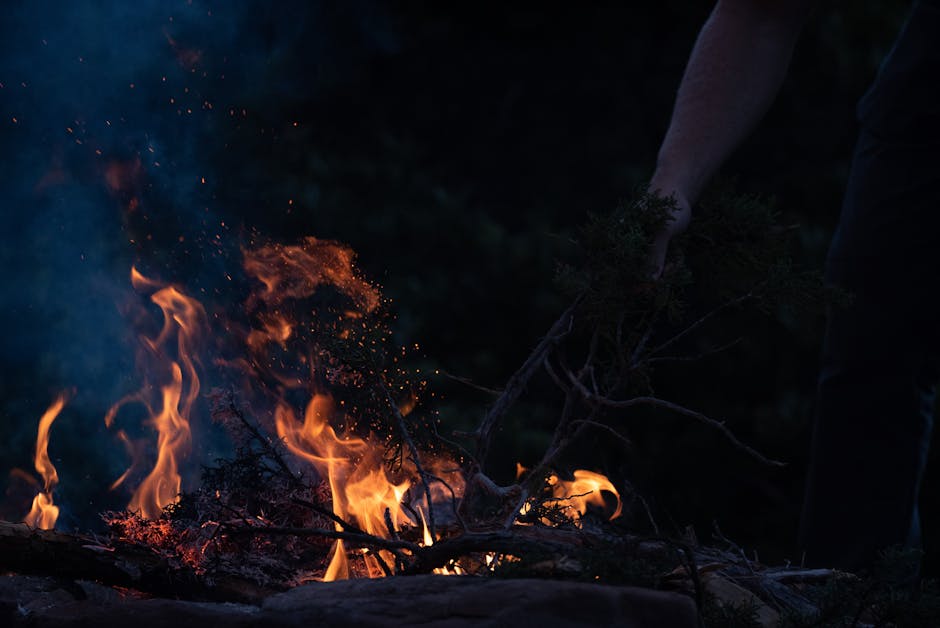
Fire provides warmth, light, a way to purify water, cook food, and signal for help. Knowing multiple fire-starting methods is essential survival knowledge. The bow drill method, though requiring practice, creates an ember through friction using only natural materials like wood and cord.

Another effective technique involves using a battery and steel wool. Touching steel wool to both terminals of a battery creates sparks that ignite the wool instantly. Even a small nine-volt battery can work. For those carrying glasses or a clear water bottle, concentrating sunlight onto tinder can start a fire on sunny days. The key is having dry tinder prepared, such as dried grass, bark shavings, or pocket lint.

Shelter Construction Essentials

A proper shelter protects against wind, rain, snow, and extreme temperatures. The lean-to is one of the quickest emergency shelters to construct. By propping a long branch against a tree or between two supports and laying smaller branches across it, then covering with leaves, bark, or other debris, a person can create effective protection within an hour.

The debris hut offers better insulation for cold weather. This shelter resembles a small tent made entirely from natural materials. A frame of branches is packed thickly with leaves, pine needles, and other forest debris. The insulation should be at least two feet thick to trap body heat effectively. The entrance should be small to minimize heat loss.

Navigation Without a Compass

Getting lost is a common survival scenario. The sun rises in the east and sets in the west, providing basic directional guidance. At noon in the Northern Hemisphere, the sun is due south, while in the Southern Hemisphere, it's due north. The shadow stick method uses a stick placed upright in the ground. Marking where the shadow tip falls, waiting fifteen minutes, then marking again creates a west-to-east line.

At night, the North Star (Polaris) indicates true north in the Northern Hemisphere. It's located by following the pointer stars of the Big Dipper constellation. In the Southern Hemisphere, the Southern Cross constellation helps identify south. These natural navigation methods have guided travelers for thousands of years.

Signaling for Rescue

Once basic survival needs are met, signaling for rescue becomes the priority. Three of anything signals distress universally: three fires, three whistle blasts, three gunshots, or three flashes of light. This pattern is recognized internationally as a call for help.

A signal fire should produce maximum smoke during daylight. Adding green leaves or grass to a fire creates thick white smoke visible for miles. At night, a bright flame is more visible. Mirrors or any reflective surface can signal aircraft or distant rescuers. A small mirror can be seen up to ten miles away on sunny days. Even a phone screen or CD can work as an improvised signal mirror.

Essential Knots Every Survivor Should Know

Rope and cordage are invaluable in survival situations, but only if you know how to use them effectively. The bowline creates a loop that won't slip or bind, perfect for rescue operations or securing shelters. The clove hitch quickly secures rope to a tree or post. The taut-line hitch creates an adjustable loop, ideal for tent guy-lines or clotheslines.

Knowing how to create improvised rope from natural materials extends these capabilities. Long grasses, tree bark strips, and plant fibers can be twisted together to create strong cordage. Paracord, if available, can be unraveled to provide multiple thinner strands for various applications.

Recognizing Hypothermia and Heatstroke

Understanding the signs of temperature-related emergencies can save lives. Hypothermia symptoms include uncontrollable shivering, confusion, slurred speech, and drowsiness. The body should be warmed gradually, starting with the core. Wet clothing must be removed immediately, as water conducts heat away from the body twenty-five times faster than air.

Heatstroke presents with hot, dry skin, rapid pulse, confusion, and loss of consciousness. Moving to shade, cooling the body with water, and fanning are critical responses. Small sips of water help, but large amounts can cause nausea. Prevention through proper hydration and avoiding exertion during peak heat hours is the best strategy in hot environments.