










1 / 10 Questions
0 Points

What Fruit Originally Filled Every Twinkie?

Vanilla

Lemon

Banana

Strawberry

Points won
0
Correct score
0%

More Questions

More Articles

Did You Know How Many Sports Were Invented by Accident?

Did You Know How Many Sports Were Invented by Accident?

⏱️ 5 min read

Throughout history, some of the world's most beloved sports emerged not from careful planning or deliberate design, but from happy accidents, improvisation, and unexpected moments of creativity. These unintentional inventions have shaped the athletic landscape and continue to captivate millions of fans worldwide. The stories behind these accidental sports reveal fascinating insights into human ingenuity and the unpredictable nature of innovation.

Basketball: Born from Winter Boredom and a Peach Basket

In December 1891, physical education instructor James Naismith faced a significant challenge at the International YMCA Training School in Springfield, Massachusetts. Students were growing restless during the harsh New England winter, confined indoors with limited activities. Tasked with creating an engaging indoor game that could be played during winter months, Naismith had just 14 days to develop something new.

The original concept was remarkably simple compared to today's fast-paced game. Naismith nailed two peach baskets to the lower rail of the gymnasium balcony, which happened to be 10 feet high—a measurement that remains standard today. The first game used a soccer ball, and players had to retrieve the ball from the basket after each successful shot. This accidental height measurement became one of basketball's most defining characteristics, never changed despite the sport's evolution into a global phenomenon.

What makes basketball's invention truly accidental is that Naismith never intended to create a sport that would dominate American culture and become an Olympic staple. He simply needed a solution to keep students active during winter. The sport's immediate success surprised even its creator, spreading rapidly across YMCAs nationwide within months of its invention.

Volleyball: An Unexpected Alternative to Basketball

Just four years after basketball's invention, another accidental sport emerged from similar circumstances. William G. Morgan, a YMCA physical education director in Holyoke, Massachusetts, sought to create a less physically demanding activity for older members who found basketball too strenuous. In 1895, Morgan improvised by raising a tennis net to a height of 6 feet 6 inches and using a basketball bladder as the ball.

The original game, initially called "Mintonette," bore little resemblance to modern volleyball. Morgan never anticipated that his casual experiment would evolve into one of the world's most popular sports, with an estimated 800 million players worldwide. The accidental nature of volleyball's creation is evident in its borrowed elements from multiple sports, including basketball, baseball, tennis, and handball, combined without any grand design or long-term vision.

Frisbee: From Pie Tins to Professional Sport

The origins of Frisbee trace back to the Frisbie Pie Company in Bridgeport, Connecticut, during the 1870s. College students at nearby Yale University discovered that the empty pie tins could be tossed and caught, creating an impromptu game. Students would yell "Frisbie!" to warn others of incoming tins, establishing the foundation for what would become Ultimate Frisbee and disc golf.

The accidental sport gained commercial momentum in the 1950s when Walter Frederick Morrison developed a plastic version of the flying disc. The Wham-O toy company later acquired the rights and trademarked the name "Frisbee." Today, Ultimate Frisbee has become a recognized sport with professional leagues, international competitions, and consideration for Olympic inclusion—all stemming from college students playing with discarded pie tins.

Rugby: A Rule-Breaking Moment That Changed Sports Forever

According to popular legend, rugby's invention represents perhaps the most dramatic accidental sports creation. In 1823, during a football match at Rugby School in England, student William Webb Ellis allegedly picked up the ball and ran with it, violating the established rules. Whether this story is historically accurate remains debated, but it symbolizes rugby's unexpected divergence from traditional football.

The accidental nature of rugby's creation lies not in a single moment but in the gradual acceptance of rule variations that eventually distinguished it from association football (soccer). What began as rule-breaking evolved into a distinct sport with its own governance, spreading throughout the British Empire and eventually becoming a global phenomenon with World Cup competitions drawing massive audiences.

Common Threads in Accidental Sports Innovation

Examining these accidental inventions reveals several common factors that contributed to their success:

  • Necessity drove innovation—most accidental sports emerged from practical needs, whether for indoor winter activities or less strenuous alternatives to existing games
  • Available resources shaped the games—peach baskets, pie tins, and existing equipment from other sports became foundational elements
  • Educational institutions served as incubators—YMCAs and schools provided environments where experimentation could occur and spread rapidly
  • Simple rules allowed for evolution—the initial simplicity of these sports enabled them to adapt and develop as they gained popularity

The Impact of Accidental Sports on Modern Athletics

These accidentally invented sports have profoundly influenced modern athletic culture and the sports industry. Basketball alone generates billions of dollars annually through professional leagues, merchandise, and media rights. Volleyball has become a staple of Olympic competition and beach culture worldwide. Ultimate Frisbee has evolved into a competitive sport with organized leagues and international representation. Rugby has maintained its position as a major international sport with devoted followings across continents.

The accidental nature of these sports' origins challenges the notion that innovation requires extensive planning and deliberate design. Instead, these success stories demonstrate how creativity, improvisation, and responding to immediate needs can produce lasting cultural phenomena. They remind us that sometimes the best ideas emerge not from boardrooms and strategic planning sessions, but from moments of spontaneous problem-solving and playful experimentation.

Understanding the accidental origins of popular sports provides valuable perspective on innovation and cultural development. These sports continue to evolve, far beyond anything their creators could have imagined, proving that accidents and unintended consequences can sometimes produce the most enduring and meaningful results.
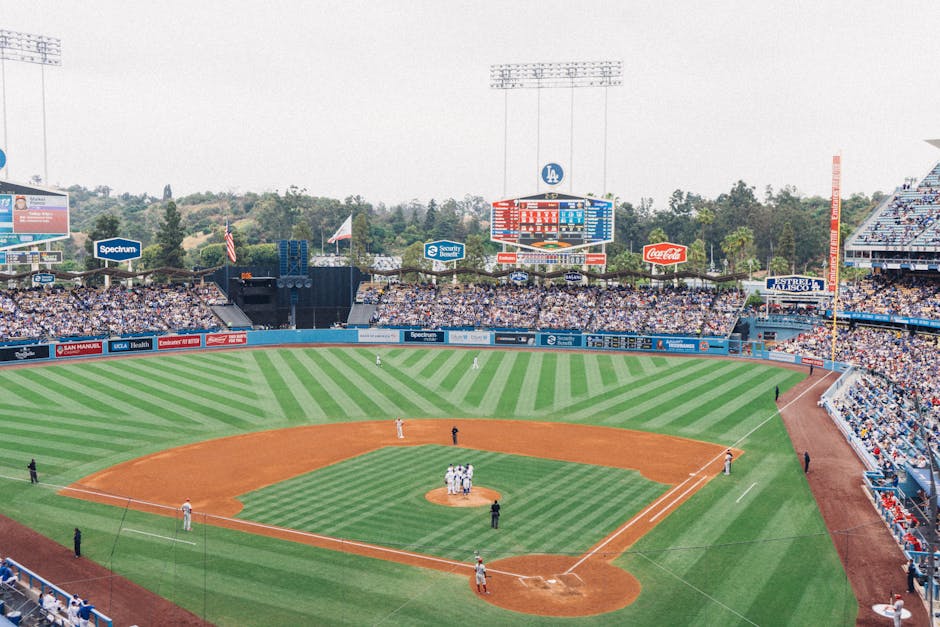
Top 10 Fun Facts About Sports Stadiums

Top 10 Fun Facts About Sports Stadiums

⏱️ 6 min read

Sports stadiums are more than just venues for athletic competition—they're architectural marvels, historical landmarks, and cultural icons that have witnessed some of humanity's most memorable moments. From their innovative designs to their quirky characteristics, these colossal structures hold fascinating secrets that even the most dedicated sports fans might not know. Let's explore some of the most intriguing facts about these remarkable buildings that host millions of spectators every year.

Remarkable Facts That Make Sports Stadiums Extraordinary

1. The Ancient Origins of Stadium Design

The word "stadium" originates from ancient Greece, specifically from a unit of measurement called a "stadion," which was approximately 600 feet. The first stadium, built in Olympia around 776 BCE, was designed to accommodate footraces of exactly this length. Modern stadiums still honor this heritage, with many incorporating classical architectural elements and maintaining the oval or horseshoe shape that allowed ancient spectators to view competitions from multiple angles. The Panathenaic Stadium in Athens, rebuilt for the first modern Olympics in 1896, remains the only stadium in the world built entirely of marble.

2. Moving Fields and Retractable Surfaces

Several modern stadiums feature removable or retractable playing surfaces that can be rolled in and out on massive trays. The University of Phoenix Stadium in Arizona houses a 19-million-pound natural grass field that slides outside the stadium on 546 steel wheels, allowing the turf to receive natural sunlight. This engineering feat takes approximately 75 minutes to complete and ensures the playing surface remains in pristine condition. Similar technology exists in stadiums across the globe, representing millions of dollars in mechanical innovation.

3. The Loudest Crowd Noise Ever Recorded

Arrowhead Stadium in Kansas City, home to the NFL's Chiefs, holds the Guinness World Record for the loudest crowd roar at an outdoor stadium, reaching 142.2 decibels in 2014. To put this in perspective, this noise level is louder than a jet engine at takeoff and can cause immediate hearing damage. The stadium's design, with its steep seating bowl and overhanging roof structure, naturally amplifies crowd noise and reflects it back onto the field, creating a genuine home-field advantage that opposing teams genuinely fear.

4. Stadiums That Generate Their Own Power

Environmental consciousness has entered the world of sports venues, with several stadiums now generating their own renewable energy. The Amsterdam Arena in the Netherlands features 4,200 solar panels that provide power to the stadium and surrounding neighborhood. Meanwhile, the Kaohsiung Stadium in Taiwan is topped with 8,844 solar panels forming the roof structure, making it the world's first stadium powered entirely by solar energy. These innovations represent a growing trend toward sustainability in sports architecture.

5. The Billion-Dollar Price Tags

Modern stadium construction costs have skyrocketed to unprecedented levels. SoFi Stadium in Los Angeles, which opened in 2020 as home to both the Rams and Chargers, cost approximately $5.5 billion to build, making it the most expensive sports venue ever constructed. This indoor-outdoor stadium features a translucent roof covering 3.1 million square feet and a 70,000-square-foot video board that hangs from the roof. The astronomical costs reflect not just construction expenses but also the integration of cutting-edge technology, luxury amenities, and architectural innovation.

6. Stadiums Built in Impossible Locations

Some stadiums have been constructed in locations that defy engineering logic. The Estadio Hernando Siles in La Paz, Bolivia, sits at 11,932 feet above sea level, making it the highest professional stadium in the world. The thin air at this altitude significantly affects gameplay, giving the home team a substantial advantage as visiting athletes struggle with reduced oxygen levels. Meanwhile, Singapore's Float at Marina Bay features the world's largest floating platform, where the stadium field literally sits on water in the city's harbor.

7. Hidden Underground Features and Facilities

Beneath the visible structures lie extensive underground networks that few fans ever see. Many stadiums feature subterranean locker rooms, training facilities, maintenance tunnels, and even underground parking for players. The Melbourne Cricket Ground in Australia has tunnels and rooms underground that date back to the 1850s, creating a historical labyrinth beneath the modern facility. Some stadiums also feature elaborate bunker systems, holdovers from Cold War-era construction when such venues were designated as potential emergency shelters.

8. Natural Grass at Impossible Heights

Maintaining natural grass in domed or retractable-roof stadiums presents unique challenges. The Principality Stadium in Cardiff, Wales, was the first stadium with a retractable roof to use real grass, requiring a sophisticated drainage and irrigation system that cost millions to implement. The grass sits on a specialized growing medium just four inches deep, supported by an intricate network of pipes that provide heating, drainage, and precise moisture control. Groundskeepers monitor soil conditions constantly using advanced sensors and computer systems.

9. Stadiums That Transform Into Lakes

Some stadiums have been intentionally designed to flood for special events. The Stadio Comunale in Florence, Italy, was famously flooded in 1989 to recreate a naval battle for a historical celebration. More recently, several stadiums worldwide have incorporated water features or the ability to flood portions of the field for concerts, shows, or special ceremonies. These transformations require complex engineering to ensure water doesn't damage the underlying infrastructure and can be drained efficiently.

10. The Fastest Stadium Construction Ever

While modern mega-stadiums take years to complete, the record for fastest stadium construction is impressive. The Braga Municipal Stadium in Portugal was built in approximately two years for Euro 2004, carved directly into the face of a granite quarry. However, temporary stadiums hold speed records—some World Cup qualifying venues have been erected in less than six months. These rapid constructions rely on prefabricated materials and modular designs that can be assembled quickly, though they typically lack the amenities and longevity of permanent structures.

Conclusion

Sports stadiums represent remarkable achievements in architecture, engineering, and human ambition. From ancient Greek origins to solar-powered modern marvels, from impossible construction sites to record-breaking crowd noise, these venues continue to push boundaries and capture imaginations. Whether through their environmental innovations, astronomical costs, or ingenious designs, stadiums remain testaments to our collective passion for sports and our willingness to create extraordinary spaces where communities gather, athletes compete, and memories are made. As technology advances and sustainability becomes increasingly important, future stadiums will undoubtedly continue this tradition of innovation, creating even more fascinating facts for generations to come.