
⏱️ 5 min read
When we think of ancient civilizations, we often picture primitive tools and outdated technologies. However, many innovations created thousands of years ago remain integral to modern life. From the mathematics we use daily to the infrastructure that supports our cities, ancient inventions continue to shape contemporary society in remarkable ways. These enduring creations demonstrate the ingenuity of our ancestors and their ability to solve problems with solutions that have stood the test of time.
The Wheel: Humanity’s Revolutionary Achievement
Invented around 3500 BCE in Mesopotamia, the wheel represents one of humanity’s most transformative innovations. Initially created for pottery-making, the wheel was adapted for transportation within a few centuries, revolutionizing trade and warfare. Today, wheels remain fundamental to nearly every aspect of modern life, from the vehicles we drive to the machinery in factories, luggage carts, and even computer mouse scroll wheels. Despite thousands of years of technological advancement, engineers have yet to develop a more efficient method for reducing friction and facilitating movement across surfaces.
Paper: The Ancient Chinese Communication Revolution
While digital technology has transformed how we share information, paper remains indispensable in the modern world. The Chinese inventor Cai Lun perfected the paper-making process around 105 CE, though archaeological evidence suggests earlier forms existed in China centuries before. The manufacturing process he developed—pulping plant fibers, spreading them thin, and allowing them to dry—remains fundamentally unchanged today. Despite predictions of a paperless society, global paper consumption continues to grow, with applications ranging from packaging materials to currency, legal documents, and medical supplies that require physical documentation.
Concrete: Rome’s Lasting Legacy
The ancient Romans developed a concrete mixture so durable that many of their structures still stand today, including the Pantheon with its massive unreinforced concrete dome. Roman concrete, or opus caementicium, combined volcanic ash, lime, and seawater with aggregate materials. Modern engineers have discovered that this ancient formula actually becomes stronger over time, as seawater triggers a chemical reaction that reinforces the material. Contemporary concrete remains the second most-used substance on Earth after water, forming the foundation of modern infrastructure from highways to skyscrapers, though interestingly, it often proves less durable than its Roman predecessor.
Plumbing and Sewage Systems: Engineering for Public Health
The concept of sophisticated plumbing dates back to the Indus Valley Civilization around 2700 BCE, where cities like Mohenjo-Daro featured advanced drainage systems with covered sewers and water supply networks. The Romans further refined these systems, creating aqueducts that transported water across vast distances using gravity-fed channels. Modern plumbing systems operate on the same fundamental principles established thousands of years ago: using gravity, water pressure, and sealed pipes to deliver clean water and remove waste. These ancient innovations laid the groundwork for the public health infrastructure that supports billions of people today.
The Calendar: Organizing Time Across Millennia
The calendar we use today owes its structure to ancient civilizations, particularly the Egyptians and Romans. The Egyptians developed a 365-day solar calendar around 3000 BCE, dividing the year into twelve months based on astronomical observations. Julius Caesar reformed this system in 46 BCE, creating the Julian calendar, which was later refined into the Gregorian calendar in 1582 CE. This Gregorian system, with its leap years and month structure, remains the international standard for civil use. The concept of organizing time into standardized units of days, months, and years has proven so effective that it has persisted with only minor modifications for thousands of years.
Locks and Keys: Ancient Security Systems
The pin tumbler lock, invented by the ancient Egyptians around 4,000 years ago, operates on the same principle as modern door locks. The Egyptian design used wooden pins that fell into holes in a bolt, preventing it from moving until the correct wooden key lifted the pins to the proper height. This elegant mechanism proved so effective that Linus Yale Sr. adapted it for his pin tumbler lock in the 1840s, creating what became the standard lock design used worldwide today. While modern locks incorporate advanced materials and additional security features, the fundamental mechanism remains unchanged from its ancient Egyptian origins.
Mathematical Systems: The Foundation of Modern Science
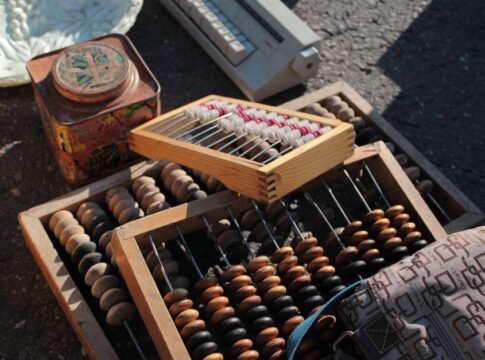
Ancient mathematical concepts continue to underpin modern technology and science. The Babylonians developed the base-60 number system around 3000 BCE, which still governs how we measure time and angles—sixty seconds in a minute, sixty minutes in an hour, and 360 degrees in a circle. The ancient Greeks contributed geometry principles that remain essential for architecture, engineering, and computer graphics. Indian mathematicians developed the concept of zero and the decimal system, which became fundamental to all modern mathematics and computing. These ancient mathematical innovations form the invisible framework supporting everything from smartphone apps to space exploration.
The Lasting Impact of Ancient Innovation
The persistence of these ancient inventions demonstrates that effective solutions to fundamental human needs transcend time and technological advancement. While we’ve refined materials and added sophisticated features, the core principles behind these innovations remain as relevant today as they were millennia ago. This continuity reminds us that human ingenuity has always been capable of remarkable achievements and that studying ancient technologies can still yield valuable insights for modern challenges. As we develop new technologies, we build upon foundations laid by civilizations that existed thousands of years before us, creating a bridge between humanity’s past, present, and future.