











1 / 10 Questions
0 Points

What percentage of Earth's surface is covered by water?

71%

82%

55%

61%

Points won
0
Correct score
0%

More Questions

More Articles

Did You Know These Fast Facts About Money?

Did You Know These Fast Facts About Money?

⏱️ 5 min read

Money shapes every aspect of modern life, yet many fascinating facts about currency, finance, and economic history remain unknown to most people. From the origins of paper money to surprising statistics about global wealth, understanding these quick facts provides valuable insight into how money functions in society. This collection of remarkable money facts reveals the unexpected, educational, and sometimes bizarre truths about the financial systems that govern our world.

The Ancient Origins of Currency

Long before paper bills and digital transactions, humans developed creative methods of exchange. The first standardized currency appeared in Lydia, modern-day Turkey, around 600 BCE. These early coins were made from electrum, a natural alloy of gold and silver. However, commodity money existed thousands of years earlier, with cowrie shells serving as currency in China as far back as 1200 BCE. These shells remained legal tender in some parts of Africa until the mid-20th century, making them one of the longest-used currencies in human history.

The Chinese also pioneered paper money during the Tang Dynasty in the 7th century, though it became widespread during the Song Dynasty. Marco Polo encountered this innovation during his travels and introduced the concept to Europe, where it was initially met with skepticism. Europeans didn't adopt paper currency on a large scale until the 17th century, nearly a thousand years after its Chinese invention.

The Real Cost of Producing Physical Money

Creating physical currency costs money itself, sometimes more than the face value suggests. In the United States, producing a penny costs approximately 2.1 cents, while a nickel costs about 8.5 cents to manufacture. This means the U.S. Mint loses money on every penny and nickel produced. Conversely, higher denomination bills are highly profitable—a $100 bill costs only about 15.5 cents to produce, creating significant seigniorage, the difference between the face value of money and its production cost.

The lifespan of currency also varies dramatically by denomination. A $1 bill typically circulates for about 6.6 years before becoming too worn for use, while a $100 bill can last over 22 years. This durability difference reflects usage patterns—smaller bills change hands more frequently and undergo more wear and tear. Paper money isn't actually made from paper but from a blend of 75% cotton and 25% linen, making it significantly more durable than standard paper.

Global Currency Peculiarities

Countries around the world have adopted unusual approaches to their currency systems. Canada discontinued the penny in 2013, yet the economy continues functioning smoothly with cash transactions rounded to the nearest five cents. Sweden has moved so far toward a cashless society that many businesses no longer accept physical currency, and some bank branches don't handle cash at all.

The world's smallest currency note was the 10-bani note from Romania, measuring just 27.5mm by 38mm. Conversely, some of the largest notes in history came from China during the Ming Dynasty, measuring approximately 9 inches by 13 inches. In terms of value, Zimbabwe holds the record for the highest denomination note: a 100 trillion Zimbabwean dollar bill issued during the country's hyperinflation crisis in 2008. Despite its impressive number, this note could barely purchase a loaf of bread at the time of its circulation.

Wealth Distribution and Money Statistics

The concentration of global wealth reveals stark disparities. According to recent data, approximately 1% of the world's population controls over 43% of global wealth. The world's billionaires possess more combined wealth than 60% of the global population. These statistics highlight the extreme inequality in wealth distribution across the planet.

Only about 8% of the world's currency exists as physical cash. The remaining 92% exists digitally as numbers in bank accounts, electronic transfers, and digital records. This shift toward digital money continues accelerating, with cryptocurrencies and digital payment systems further reducing reliance on physical currency. The total value of all money in the world, including broad money supply, derivatives, and other financial instruments, exceeds $1.3 quadrillion.

Counterfeiting and Security Measures

Counterfeiting has plagued currency systems throughout history. Modern security features combat this problem with increasing sophistication. The U.S. Bureau of Engraving and Printing estimates that less than 0.01% of U.S. currency in circulation is counterfeit, thanks to advanced security measures. These features include watermarks, security threads, color-shifting ink, and microprinting invisible to the naked eye.

The $20 bill is the most counterfeited denomination in the United States, while globally, the $100 bill faces the most counterfeiting attempts. Approximately two-thirds of all $100 bills circulate outside the United States, making it the most widely distributed American currency internationally. This global circulation reflects the U.S. dollar's status as the world's primary reserve currency.

Unusual Money Laws and Regulations

Legal tender laws contain surprising provisions. In the United States, businesses can legally refuse cash payments despite currency being labeled "legal tender for all debts." This designation means cash must be accepted for debt repayment but not necessarily for immediate transactions. Many countries limit how much small denomination currency can be used in a single transaction to prevent abuse and streamline commerce.

Damaging currency carries legal penalties in many jurisdictions. In the United States, defacing or destroying currency with the intent to defraud is illegal, though casual writing or stamping typically isn't prosecuted. Other countries maintain stricter rules—some nations prohibit any defacement, including artistic alterations that have become popular in certain circles.

The Future of Money

Digital currencies and blockchain technology are revolutionizing monetary systems. Central banks worldwide are exploring or developing digital currencies, known as CBDCs (Central Bank Digital Currencies). These government-backed digital currencies could eventually replace physical cash while maintaining centralized control. Meanwhile, cryptocurrencies offer decentralized alternatives, though their volatility and regulatory uncertainty present significant challenges to mainstream adoption.

Understanding these fast facts about money provides perspective on how far financial systems have evolved and where they're heading. From ancient shells to digital wallets, money continues adapting to meet society's needs while maintaining its fundamental role as a medium of exchange, store of value, and unit of account.
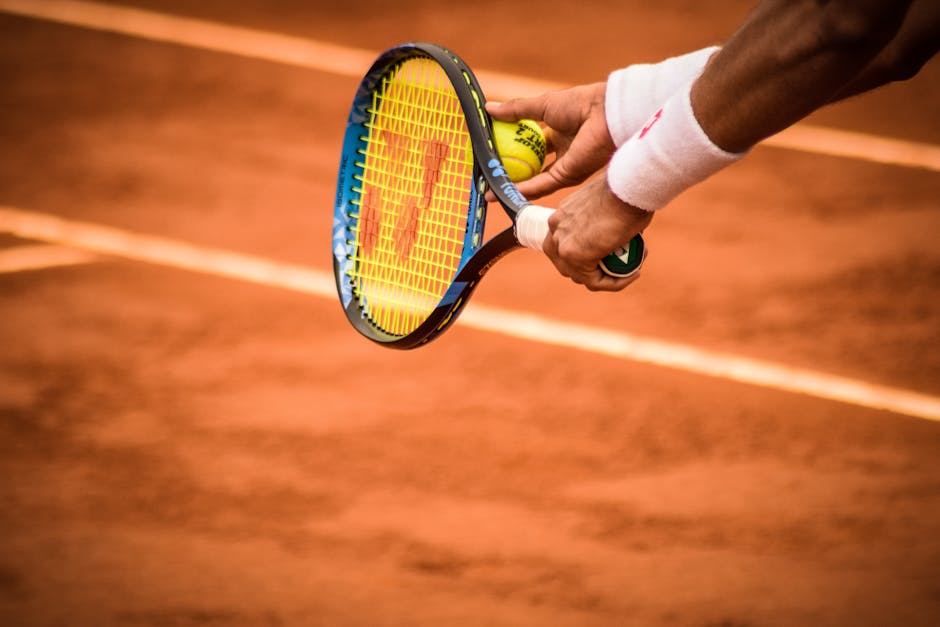
Top 10 Most Surprising Facts About Tennis Legends

Top 10 Most Surprising Facts About Tennis Legends

⏱️ 6 min read

The world of professional tennis has produced some of the most iconic athletes in sporting history. While fans may know their favorite players' Grand Slam victories and career statistics, the personal stories and lesser-known facts about these champions often remain hidden from public view. Behind the perfectly executed serves and championship trophies lie fascinating tales that reveal the human side of these sporting icons. From unusual pre-match rituals to unexpected talents beyond the court, tennis legends have accumulated stories that continue to surprise even their most devoted followers.

Remarkable Revelations from Tennis History

1. Roger Federer's Ball Boy Experience at His Home Tournament

Before becoming one of the greatest players in tennis history, Roger Federer worked as a ball boy at the Swiss Indoors Basel tournament, the very event he would later win ten times as a professional. The young Federer collected balls for his idol Stefan Edberg during matches, never imagining that he would one day surpass his hero's achievements. This humble beginning at his hometown tournament shaped Federer's appreciation for every role in professional tennis, and he has often spoken about the importance of ball kids in maintaining the flow of matches.

2. Serena Williams' Secret Career as a Nail Salon Owner

Beyond her dominance on the court, Serena Williams ventured into the beauty industry by investing in and helping design a chain of nail salons. Her passion for nail art and fashion extended well beyond personal interest, as she actively participated in creating unique designs and color combinations for her salons. This business endeavor demonstrated her entrepreneurial spirit and showed a creative side that many fans never associated with the fierce competitor who won 23 Grand Slam singles titles.

3. Bjorn Borg's Retirement at Age 26

In one of the most shocking decisions in tennis history, Swedish legend Bjorn Borg retired from professional tennis at just 26 years old, at the peak of his abilities. With 11 Grand Slam titles already to his name and potentially many more years of competition ahead, Borg walked away from the sport, citing burnout and loss of motivation. He had been playing professional tennis since age 14, and the constant pressure and travel had taken their toll. His premature retirement remains one of sport's great "what if" scenarios, as many experts believe he could have won 20 or more Grand Slam titles had he continued.

4. Arthur Ashe's Secret Heart Surgery During His Playing Career

Arthur Ashe, the first African American man to win Wimbledon, the US Open, and the Australian Open, underwent heart bypass surgery in 1979 while still an active player. Remarkably, he kept this major health issue private and returned to competition, continuing to play at a high level before eventually retiring in 1980. Later, he contracted HIV from a blood transfusion during a second heart surgery, which he also kept private for years. His courage in facing these health challenges while maintaining his dignity and continuing his advocacy work exemplified his extraordinary character.

5. Maria Sharapova's Inability to Legally Drive in the United States

Despite living in the United States from age seven and earning millions competing worldwide, Maria Sharapova didn't obtain a U.S. driver's license until her mid-twenties. The Russian champion had been so focused on tennis from childhood that learning to drive independently never became a priority. She was chauffeured to practice sessions and tournaments, making driving unnecessary for most of her teenage and early adult years. When she finally learned to drive, she admitted to being nervous about navigating American highways.

6. Rafael Nadal's Crippling Pre-Match Anxiety

One of the toughest competitors in tennis history, Rafael Nadal has publicly discussed his severe pre-match nervousness that sometimes makes him feel physically ill before important matches. Despite winning 22 Grand Slam titles, the Spanish champion experiences such intense anxiety that he has difficulty eating before matches and must follow strict pre-match routines to calm his nerves. His ability to transform this nervous energy into focused intensity on court demonstrates remarkable mental fortitude that belies the butterflies he experiences before stepping onto the court.

7. Martina Navratilova's Defection and Stateless Period

In 1975, at age 18, Martina Navratilova defected from Czechoslovakia during the US Open, seeking political asylum in the United States. For several years, she lived as a stateless person without citizenship in any country, as Czechoslovakia revoked her citizenship and she had not yet qualified for American citizenship. During this period, she faced uncertainty about her ability to travel for tournaments and visit her family. She eventually became a U.S. citizen in 1981, and decades later, reconciled with her homeland after the fall of communism, regaining her Czech citizenship as well.

8. Andre Agassi's Hairpiece Secret and Crystal Meth Use

In his revealing autobiography, Andre Agassi shocked the tennis world by admitting that his iconic 1990s hairstyle was partially a hairpiece, and that he once played a tournament worried it might fall off. Even more startling was his admission to using crystal methamphetamine in 1997 and lying to the ATP about a positive drug test, claiming his drink had been spiked. These confessions revealed the immense pressure and personal struggles behind his public image, showing a vulnerable side to the charismatic champion that fans had never seen during his playing career.

9. Venus Williams' Autoimmune Disease Diagnosis

In 2011, Venus Williams revealed that she had been diagnosed with Sjögren's syndrome, an autoimmune disease that causes fatigue and joint pain. The diagnosis explained her exhausted appearance and unexpected withdrawals from tournaments in the preceding months. Rather than retiring, Williams completely changed her lifestyle, adopting a raw vegan diet and modified training regimen. Her ability to continue competing at the highest level while managing a chronic illness, including reaching Grand Slam finals after her diagnosis, inspired countless people facing similar health challenges.

10. John McEnroe's Surprising Second Career as an Art Gallery Owner

The famously temperamental John McEnroe developed a sophisticated appreciation for contemporary art and became a serious art collector and gallery owner in New York City. His deep knowledge of artists and movements surprised those who only knew him for his on-court outbursts and tennis commentary. McEnroe has curated exhibitions, invested in emerging artists, and built a respected reputation in the art world that rivals his tennis legacy. This unexpected passion revealed an intellectual and cultured side that contrasted sharply with his "bad boy" image on the tennis court.

The Hidden Depths of Champions

These surprising facts about tennis legends remind us that even the most famous athletes are complex individuals with hidden struggles, unexpected talents, and fascinating personal journeys. Their achievements on the court represent only part of their stories, while their experiences with health challenges, career decisions, personal transformations, and pursuits beyond tennis reveal the full dimensionality of their lives. Whether facing autoimmune diseases, battling mental health issues, or pursuing creative passions, these champions demonstrated that greatness in sport often comes alongside very human vulnerabilities and interests. Understanding these lesser-known aspects of tennis legends deepens our appreciation not only for their athletic accomplishments but also for their resilience, creativity, and character in navigating life's challenges both on and off the court.