











1 / 10 Questions
0 Points
Points won
0
Correct score
0%

More Questions

More Articles

Did You Know These Stadiums Broke Attendance Records?

Did You Know These Stadiums Broke Attendance Records?

⏱️ 5 min read

Sports venues around the world have witnessed extraordinary moments when masses of passionate fans converged to create unforgettable atmospheres. These record-breaking attendance figures represent more than just numbers—they embody the power of sports to unite communities and create lasting memories. From football matches to boxing bouts, certain stadiums have pushed the boundaries of capacity, hosting crowds that seemed impossible to accommodate.

Maracanã Stadium: The Crown Jewel of Attendance Records

Located in Rio de Janeiro, Brazil, the Maracanã Stadium holds one of the most debated attendance records in sporting history. During the 1950 FIFA World Cup final between Brazil and Uruguay, the official attendance was listed at 173,850 spectators. However, numerous sources suggest the actual number may have exceeded 200,000 when accounting for gate-crashers and standing room crowds. This match, known as the "Maracanazo," not only broke attendance records but also became one of the most significant upsets in World Cup history when Uruguay defeated Brazil 2-1.

The stadium's design, featuring minimal seating and vast standing areas, allowed for this massive congregation. Modern safety regulations have since reduced the venue's capacity significantly, making this record likely to stand forever. The Maracanã has undergone several renovations, including updates for the 2014 World Cup and 2016 Olympics, but will never again see crowds of this magnitude due to contemporary safety standards.

The Indianapolis Motor Speedway: Racing's Permanent Giant

While not a traditional stadium, the Indianapolis Motor Speedway deserves recognition as the highest-capacity sporting venue in the world. With a permanent seating capacity exceeding 257,000 and the ability to accommodate over 400,000 spectators when including infield areas, the Indianapolis 500 consistently draws enormous crowds annually. The race has been selling out or near-capacity for decades, making it one of the most attended single-day sporting events globally.

The speedway's unique layout, with grandstands surrounding a 2.5-mile oval track, creates an amphitheater effect that can accommodate unprecedented numbers. Unlike many one-time attendance records, the Indianapolis Motor Speedway demonstrates sustained capacity excellence year after year, cementing its place in attendance history.

Michigan Stadium: College Football's Colossus

Known affectionately as "The Big House," Michigan Stadium in Ann Arbor has consistently broken and reset its own attendance records. The stadium's official capacity is 107,601, but it has regularly exceeded this number. In 2013, a record 115,109 fans attended a game between the University of Michigan and Notre Dame, setting a new benchmark for American football attendance in the United States.

The stadium has hosted over 100,000 fans for every home game since 1975, a streak unmatched in college football. This consistency demonstrates not only the venue's impressive capacity but also the unwavering dedication of Michigan football fans. The stadium's bowl design and strategic expansions over the decades have allowed it to maintain its position as one of North America's largest sporting venues.

Rungrado 1st of May Stadium: The Capacity Champion

Situated in Pyongyang, North Korea, the Rungrado 1st of May Stadium officially holds the title of the world's largest stadium by capacity, with room for 114,000 spectators. While primarily used for football matches and the mass games known as Arirang, the stadium has hosted numerous events that filled its massive capacity. The venue's eight-story structure and unique scalloped roof design make it an architectural marvel as well as a capacity powerhouse.

Due to North Korea's isolation, verifying exact attendance figures remains challenging, but the stadium has reportedly reached full capacity during major state events and international football matches. The venue represents a different approach to stadium design, prioritizing massive scale over the intimate fan experiences increasingly favored in modern sports architecture.

Memorable One-Off Records That Made History

Beyond permanent venues, temporary configurations have produced remarkable attendance achievements. The 1994 NBA Finals game between the Houston Rockets and New York Knicks drew 68,112 fans to the Alamodome in San Antonio—an NBA record. Similarly, a 2009 basketball game between the University of Kentucky and Michigan State at Ford Field attracted 78,129 fans, showcasing how creative venue usage can shatter traditional attendance expectations.

Boxing's Spectacular Gatherings

Combat sports have produced several notable attendance records. The 1926 boxing match between Jack Dempsey and Gene Tunney at Philadelphia's Sesquicentennial Stadium drew 120,757 spectators, a record that stood for decades. More recently, the 2010 fight between Manny Pacquiao and Antonio Margarito at Cowboys Stadium attracted 51,000 fans, demonstrating boxing's continued ability to draw massive crowds for marquee matchups.

The Evolution of Stadium Capacity and Safety

Modern stadium design has shifted priorities from maximum capacity to enhanced safety, comfort, and fan experience. Following tragedies such as the Hillsborough disaster in 1989, which claimed 97 lives at an overcrowded football match in England, sporting venues worldwide have implemented strict capacity limits and all-seater requirements. These regulations mean that many historical attendance records will likely never be broken.

Contemporary stadiums feature wider concourses, improved emergency exits, individual seating with adequate legroom, and comprehensive safety systems. While these improvements have reduced raw capacity numbers, they've created safer, more enjoyable experiences for attendees. The trade-off between historical attendance figures and modern safety standards reflects the sports industry's evolution toward prioritizing spectator welfare.

The Cultural Impact of Record-Breaking Crowds

Attendance records represent more than statistical achievements—they capture moments when sports transcended entertainment to become cultural phenomena. These gatherings demonstrate sports' unique ability to unite diverse populations around shared passion and create collective memories that endure for generations. Whether celebrating national pride, witnessing historic athletic performances, or simply participating in communal excitement, record-breaking crowds have shaped sports history's most memorable chapters.
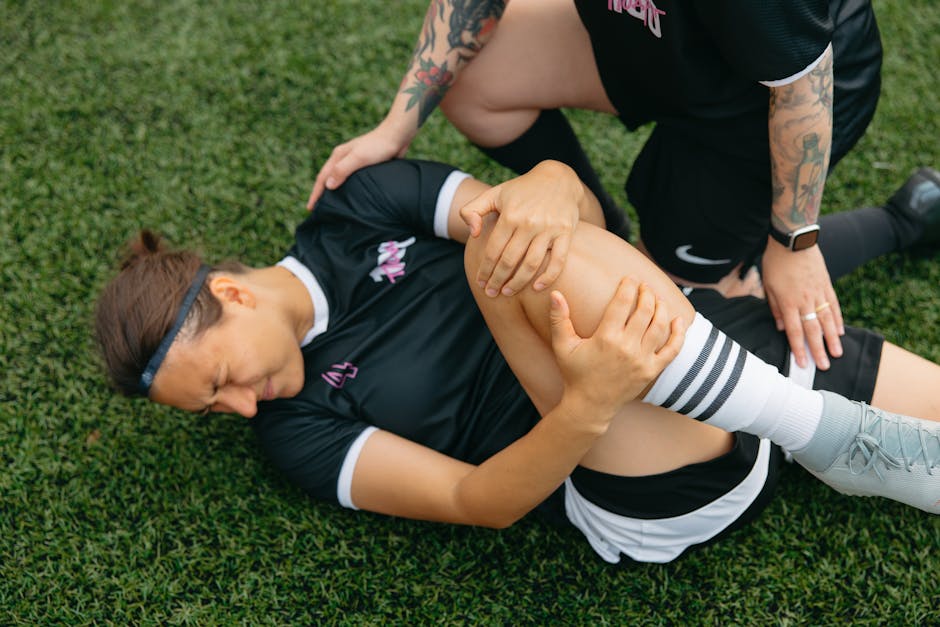
Top 10 Weirdest Injuries in Sports

Top 10 Weirdest Injuries in Sports

⏱️ 6 min read

Sports are filled with danger, from high-speed collisions to extreme physical exertion. While torn ligaments and broken bones are common, the athletic world has witnessed some truly bizarre injuries that defy logic and occasionally prompt laughter despite the pain involved. These unusual incidents remind us that sometimes the most unexpected circumstances can sideline even the most elite athletes.

The Strangest Athletic Mishaps Ever Recorded

1. Glenallen Hill's Spider Nightmare

In 1990, Toronto Blue Jays outfielder Glenallen Hill experienced one of baseball's most unusual injuries when his arachnophobia literally sent him through furniture. Hill suffered from an intense fear of spiders, and during a particularly vivid nightmare about the eight-legged creatures, he sleepwalked and crashed through a glass table in his hotel room. The incident left him with cuts and scrapes across his body, causing him to miss several games. Despite the embarrassing nature of the injury, Hill returned to the field and continued his professional career, though his teammates never let him forget the incident.

2. Lionel Simmons' Video Game Tendinitis

NBA player Lionel Simmons discovered that excessive gaming could be just as damaging as intense training sessions. During his rookie season with the Sacramento Kings in 1991, Simmons developed tendinitis in his right wrist from playing his Nintendo Game Boy for hours on end. The repetitive strain injury was serious enough to affect his shooting ability and required medical attention. This incident occurred long before the modern era of professional esports, making it one of the first documented cases of a professional athlete being injured by video games. The injury served as an early warning about the potential physical consequences of extended gaming sessions.

3. Sammy Sosa's Sneeze-Induced Back Spasm

Chicago Cubs slugger Sammy Sosa proved that even the simplest bodily functions can be dangerous for athletes. In 2004, Sosa severely strained his back after sneezing violently in the clubhouse. The sneeze was powerful enough to cause ligament damage and back spasms that landed him on the disabled list for several weeks. Sosa initially tried to cover up the real cause, claiming he had hurt himself while reaching for something, but the truth eventually emerged. The incident highlighted how the intense physical conditioning and muscle tension that makes athletes powerful can also make them vulnerable to injury from mundane activities.

4. Kevin Mitchell's Microwaved Donut Burns

New York Mets outfielder Kevin Mitchell suffered an injury that combined poor kitchen judgment with bad timing. In 1992, Mitchell decided to heat up a donut in the microwave but failed to let it cool properly before taking a bite. The scalding hot donut burned his mouth and throat, causing enough discomfort and swelling that he missed a game. The injury became legendary in baseball circles as an example of how off-field incidents can be just as career-threatening as on-field collisions. Mitchell's donut disaster became a cautionary tale about the importance of patience, even when dealing with breakfast pastries.

5. Chris Hanson's Axe-Swinging Catastrophe

Jacksonville Jaguars punter Chris Hanson took pregame rituals to a dangerous extreme in 2003. In an attempt to motivate his teammates, Hanson grabbed an axe from a staged locker room prop and began swinging it while delivering an inspirational speech. The dramatic moment turned disastrous when he accidentally brought the axe down on his non-kicking foot, severely injuring himself. The self-inflicted wound required immediate medical attention and placed him on injured reserve. This incident led to stricter policies regarding props and potential weapons in NFL locker rooms.

6. Marty Cordova's Tanning Bed Disaster

Baltimore Orioles outfielder Marty Cordova learned about the dangers of vanity in 2002 when he fell asleep in a tanning bed. Cordova sustained severe burns on his face and body from the excessive UV exposure, causing him to miss games due to pain and sensitivity. The injury was particularly embarrassing because it occurred during a day game, meaning he had used the tanning bed in the morning before a scheduled afternoon match. The incident sparked discussions about proper skin care and the potential health risks associated with artificial tanning, especially for professional athletes who need to maintain peak physical condition.

7. Paulo Diogo's Wedding Ring Fence Accident

Swiss footballer Paulo Diogo experienced every married person's nightmare in 2004 when he jumped a perimeter fence to celebrate a goal with fans. His wedding ring caught on the fence during the celebration, and as he jumped down, the ring ripped off part of his finger. Medical staff were unable to reattach the severed digit because it took too long to locate the missing piece. Adding insult to injury, Diogo received a yellow card for excessive celebration despite his gruesome injury. This incident led to discussions about the safety of wearing jewelry during athletic competitions and prompted many sports organizations to strengthen their policies on accessories.

8. Clarence Weatherspoon's Bubble Gum Choking Incident

Golden State Warriors forward Clarence Weatherspoon nearly choked during a 1996 game when he accidentally swallowed his chewing gum while running down the court. The gum lodged in his throat, causing breathing difficulties that required immediate medical attention. Weatherspoon had to be removed from the game while team physicians worked to dislodge the obstruction. Though he recovered quickly, the incident highlighted the potential dangers of chewing gum during intense physical activity. Many coaches subsequently discouraged the practice, citing Weatherspoon's experience as a cautionary example.

9. Joel Zumaya's Guitar Hero Inflammation

Detroit Tigers pitcher Joel Zumaya demonstrated that video games had evolved into even more physically demanding activities by 2006. During the American League Championship Series, Zumaya developed inflammation in his forearm and wrist from playing excessive amounts of Guitar Hero. The repetitive motions required by the rhythm game mimicked his pitching motion enough to cause overuse injuries. Zumaya initially tried to hide the true cause of his injury, but eventually admitted the embarrassing truth. This incident occurred during a crucial playoff series, making it one of the most poorly-timed video game injuries in sports history.

10. Wade Boggs' Boot-Removing Back Injury

Boston Red Sox legend Wade Boggs missed games in 1986 after throwing out his back while attempting to remove his cowboy boots. The Hall of Fame third baseman's injury was particularly ironic given his reputation as one of baseball's most durable players. Boggs had simply been trying to take off a particularly tight pair of boots when he twisted awkwardly and severely strained his lower back muscles. The injury required several days of rest and treatment, much to the amusement of his teammates and the media. This incident proved that even the simplest daily activities can pose risks to professional athletes whose bodies are finely tuned machines.

The Unpredictable Nature of Athletic Injuries

These bizarre injuries demonstrate that athletes face dangers far beyond the playing field. From nightmares and sneezes to video games and kitchen appliances, the human body can be vulnerable in countless unexpected ways. While these incidents often provide entertainment value, they also serve as reminders of how fragile even the most elite athletes can be. Each of these unusual injuries has become part of sports folklore, teaching valuable lessons about preparation, awareness, and the importance of taking precautions in every aspect of life. The next time a professional athlete sits out due to an undisclosed injury, there might be a much stranger story behind the absence than anyone could imagine.