











1 / 10 Questions
0 Points

What movie won the first-ever Academy Award for Best Picture?

Wings

Sunrise

The Jazz Singer

The Broadway Melody

Points won
0
Correct score
0%

More Questions

More Articles

Did You Know These Famous Quotes Are Misattributed?

Did You Know These Famous Quotes Are Misattributed?

⏱️ 5 min read

Throughout history, certain quotes have become so deeply embedded in our collective consciousness that we rarely question their origins. However, many of the most famous sayings attributed to historical figures, philosophers, and leaders were never actually spoken or written by them. These misattributions often spread through word of mouth, mistaken references, and the natural evolution of language over time. Understanding the true origins of these quotes not only corrects the historical record but also reveals fascinating insights into how information spreads and transforms across generations.

The Myth of Marie Antoinette's Callousness

Perhaps one of the most infamous misquoted lines in history is "Let them eat cake," allegedly spoken by Marie Antoinette in response to hearing that French peasants had no bread. This quote has been used for centuries to illustrate the disconnect between the French aristocracy and the suffering masses during the pre-Revolutionary period. However, there is no historical evidence that Marie Antoinette ever uttered these words.

The phrase actually appears in Jean-Jacques Rousseau's "Confessions," written when Marie Antoinette was only 11 years old and still living in Austria. Rousseau attributed the quote to "a great princess," but never identified her specifically. The attribution to Marie Antoinette appears to have been a later addition, possibly as propaganda against the unpopular queen. This misattribution has persisted despite being thoroughly debunked by historians, demonstrating how powerful narratives can override factual accuracy.

Einstein's Thoughts on Insanity and Repetition

The quote "Insanity is doing the same thing over and over again and expecting different results" is frequently attributed to Albert Einstein. This saying appears everywhere from addiction recovery programs to business seminars, lending scientific credibility to discussions about change and persistence. Unfortunately, there is no evidence that Einstein ever said or wrote this phrase.

The earliest known attribution to Einstein appears to come from the 1980s, decades after his death. Some researchers have traced similar sentiments to Rita Mae Brown's 1983 novel "Sudden Death," though even that connection remains uncertain. The misattribution to Einstein likely stems from the desire to give the quote more authority and intellectual weight, a common phenomenon when memorable phrases seek legitimate sources.

The Voltaire Quote That Wasn't

"I disapprove of what you say, but I will defend to the death your right to say it" has become synonymous with freedom of speech and is almost universally attributed to the French Enlightenment writer Voltaire. While this sentiment aligns with Voltaire's philosophical positions on freedom of expression, he never actually wrote or spoke these exact words.

The quote was actually written by Evelyn Beatrice Hall in her 1906 biography of Voltaire titled "The Friends of Voltaire." Hall used the phrase to illustrate Voltaire's beliefs, writing it as a summary of his attitude rather than as a direct quotation. Over time, the distinction between Hall's interpretation and Voltaire's actual words became blurred, and the quote was increasingly attributed directly to the philosopher himself.

Churchill's Supposed Wit About Democracy

Winston Churchill is credited with saying "Democracy is the worst form of government, except for all the others." While Churchill was indeed known for his sharp wit and memorable phrases, this particular quote requires important context. Churchill did say something similar in a House of Commons speech in 1947, but he was actually paraphrasing an unknown predecessor.

Churchill's actual words were: "No one pretends that democracy is perfect or all-wise. Indeed it has been said that democracy is the worst form of Government except for all those other forms that have been tried from time to time." By prefacing his statement with "it has been said," Churchill was explicitly acknowledging that he was repeating someone else's observation. The original source remains unknown, yet Churchill continues to receive sole credit for this insight into democratic governance.

Gandhi's Philosophy on Nonviolent Change

"Be the change you wish to see in the world" is one of the most popular quotes attributed to Mahatma Gandhi, appearing on posters, social media posts, and motivational materials worldwide. While the sentiment reflects Gandhi's philosophy of personal responsibility and peaceful transformation, he never actually said these words in this form.

The closest verified Gandhi quote is: "If we could change ourselves, the tendencies in the world would also change. As a man changes his own nature, so does the attitude of the world change towards him." This longer, more complex statement was paraphrased and simplified over time, eventually becoming the snappy, memorable version we know today. The transformation demonstrates how quotes are often edited for maximum impact, sometimes at the expense of accuracy.

Why Misattributions Persist and Spread

Several factors contribute to the persistence of misattributed quotes. First, attaching a famous name to a quote gives it instant credibility and memorability. People are more likely to remember and share a quote if it comes from a recognized authority figure. Second, in the age before easy fact-checking, misattributions could spread unchecked through books, speeches, and later, digital media.

Additionally, many misattributions fulfill a psychological need to have complex ideas endorsed by trusted figures. When we attribute wise sayings to Einstein, Churchill, or Gandhi, we're seeking validation for beliefs we already hold. The internet age has both helped and hindered this problem—while fact-checking is easier than ever, viral misinformation spreads faster than corrections can catch up.

The Importance of Historical Accuracy

Understanding the true origins of famous quotes matters for several reasons:

  • It preserves historical accuracy and gives credit to the actual authors of memorable phrases
  • It reveals how information transforms over time and across cultures
  • It encourages critical thinking about sources and the verification of information
  • It prevents the perpetuation of potentially misleading historical narratives
  • It honors the nuance and context often lost in paraphrasing

The next time you encounter a memorable quote attributed to a famous historical figure, take a moment to verify its authenticity. The true story behind these misattributions is often just as interesting as the quotes themselves, offering valuable lessons about how we consume, share, and remember information across generations.
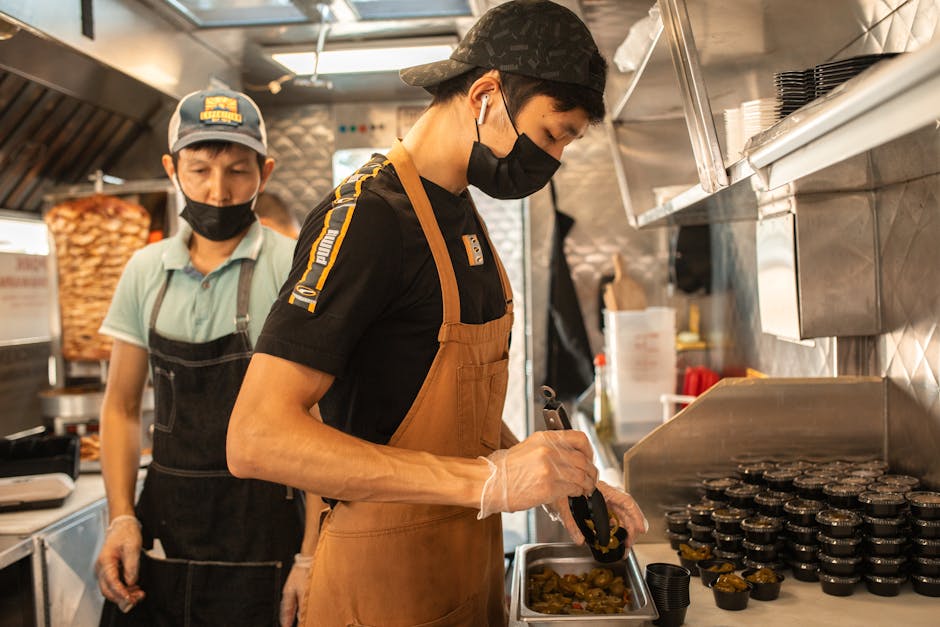
Did You Know These World-Famous Chefs Started Late?

Did You Know These World-Famous Chefs Started Late?

⏱️ 5 min read

The culinary world often appears dominated by prodigies who discovered their passion for cooking in childhood, training from their teenage years in prestigious kitchens. However, some of the most celebrated chefs in the world didn't step into a professional kitchen until their thirties, forties, or even later. These late bloomers prove that culinary excellence isn't reserved for those who start young, and that life experience can actually enhance a chef's perspective and approach to food.

Julia Child: The Revolutionary Who Changed American Cooking

Perhaps the most famous late-starting chef in history, Julia Child didn't attend cooking school until she was 37 years old. Before her culinary awakening, Child worked for the Office of Strategic Services during World War II and lived in France with her husband Paul. It was there, after tasting sole meunière at La Couronne restaurant in Rouen, that her passion for French cuisine ignited.

Child enrolled at the legendary Le Cordon Bleu in Paris in 1949 and struggled initially, being the only woman in her class. She persevered, eventually co-authoring "Mastering the Art of French Cooking" and launching her groundbreaking television career at age 51. Her influence on American home cooking remains unparalleled, demonstrating that starting late doesn't limit one's potential impact on the culinary world.

Prue Leith: From Business to Baking Show Stardom

Before becoming a judge on "The Great British Bake Off," Prue Leith had a diverse career path that didn't immediately lead to culinary fame. While she trained at Le Cordon Bleu in her twenties, her rise to television prominence came much later in life. Leith spent decades building catering businesses and writing cookbooks before becoming a household name in her late seventies when she joined Britain's most beloved baking competition.

Her extensive business experience and years of practical cooking knowledge have made her one of the most respected voices in British food culture, proving that sustained dedication and diverse experience create depth that early success cannot replicate.

Dominique Crenn: The Three-Michelin-Star Chef Who Found Her Calling

Dominique Crenn, the first female chef in the United States to receive three Michelin stars, didn't attend culinary school until her mid-twenties and worked in various restaurants before opening her own establishment in her forties. Before committing to the culinary arts, Crenn pursued a degree in international business and worked in various fields.

Her restaurant Atelier Crenn in San Francisco showcases "poetic culinaria," a unique approach that draws from her life experiences beyond cooking. Crenn's unconventional path provided her with perspectives that inform her innovative cooking style, making her one of the most distinctive voices in modern cuisine.

Why Starting Late Can Be an Advantage

The success of late-starting chefs reveals several advantages that come with beginning a culinary career after accumulating life experience:

  • Diverse perspectives from previous careers enrich cooking approaches and restaurant management
  • Greater emotional maturity helps navigate the intense pressure of professional kitchens
  • Established financial stability from previous work can provide resources for culinary training and business ventures
  • Broader life experiences inform menu development and understanding of guest preferences
  • Well-developed soft skills from other industries transfer effectively to kitchen leadership

Ken Oringer: From Late Start to James Beard Award Winner

Ken Oringer didn't attend culinary school until his mid-twenties and worked various jobs before committing to cooking. After training, he worked his way through several kitchens before opening his acclaimed Boston restaurant Clio at age 31. His later start didn't prevent him from earning multiple James Beard Award nominations and becoming one of America's most innovative chefs, particularly known for introducing authentic Japanese cuisine to Boston through his restaurant Uni.

Changing Career Paths: The Modern Culinary Landscape

The contemporary culinary world has become increasingly welcoming to career changers. Culinary schools now regularly enroll students in their thirties, forties, and beyond, recognizing that passion and dedication matter more than age. Many successful restaurants are helmed by chefs who previously worked in finance, healthcare, technology, and other unrelated fields.

This shift reflects broader changes in how society views career development. The linear path from culinary school to restaurant success is no longer the only route to becoming a celebrated chef. Alternative pathways through food trucks, pop-up restaurants, catering businesses, and social media have created opportunities for aspiring chefs at any age.

The Role of Life Experience in Culinary Innovation

Late-starting chefs often bring unique perspectives that influence their cooking in distinctive ways. Someone who has traveled extensively for another career might incorporate global influences more authentically. A former businessperson might approach restaurant management with sophisticated strategies. A parent might have deeper insights into family dining needs and preferences.

These varied experiences contribute to the diversity of voices in the culinary world, ensuring that food culture continues evolving in unexpected directions. The fusion cuisines, innovative dining concepts, and boundary-pushing techniques that define contemporary gastronomy often emerge from chefs who bring unconventional backgrounds to their work.

Practical Considerations for Aspiring Late-Starting Chefs

For those considering a culinary career change later in life, several factors merit consideration:

  • Research culinary programs that cater to adult learners with accelerated or flexible schedules
  • Consider starting with stages or externships to gain practical experience while maintaining current employment
  • Build financial reserves to support the transition period and potentially lower initial income
  • Network within the culinary community to find mentors and opportunities
  • Leverage existing skills from previous careers in marketing, management, or finance

The stories of world-famous chefs who started late serve as powerful reminders that culinary excellence isn't bound by age or early training. These individuals prove that passion, dedication, and life experience can combine to create extraordinary success in the kitchen, inspiring anyone who dreams of pursuing culinary arts regardless of when that dream emerges.