











1 / 10 Questions
0 Points

Which satellite shocked the world as the first artificial object to orbit Earth?

Vanguard 1

Sputnik 1

Explorer 1

Telstar 1

Points won
0
Correct score
0%

More Questions

More Articles

Top 10 Sports Records That Will Never Be Broken

Top 10 Sports Records That Will Never Be Broken

⏱️ 6 min read

Throughout the history of sports, athletes have pushed the boundaries of human performance, setting records that seemed impossible at the time. While many records are eventually surpassed as training methods improve and competition intensifies, some achievements stand so far above the rest that they appear permanently etched in the annals of sports history. These extraordinary feats represent a combination of exceptional talent, perfect timing, and circumstances that may never align again.

Legendary Achievements That Defy Time

1. Wilt Chamberlain's 100-Point Game

On March 2, 1962, Wilt Chamberlain scored 100 points in a single NBA game, a record that has stood for over six decades. Playing for the Philadelphia Warriors against the New York Knicks, Chamberlain shot 36-of-63 from the field and 28-of-32 from the free-throw line. In today's era of load management, defensive schemes specifically designed to stop individual scorers, and the emphasis on team basketball, reaching this milestone seems virtually impossible. Kobe Bryant's 81 points in 2006 is the closest anyone has come in the modern era, and even that remarkable performance fell 19 points short.

2. Joe DiMaggio's 56-Game Hitting Streak

During the 1941 Major League Baseball season, Joe DiMaggio recorded at least one hit in 56 consecutive games for the New York Yankees. This record has withstood challenges for over 80 years, with Pete Rose's 44-game streak in 1978 being the closest modern attempt. The difficulty of this record lies in the consistency required against different pitchers, in various ballparks, and under mounting pressure. With today's specialized relief pitchers, advanced defensive shifts, and the increasing strikeout rates in baseball, this record becomes even more unreachable.

3. Byron Nelson's 11 Consecutive PGA Tour Victories

In 1945, Byron Nelson won 11 consecutive PGA Tour events, an achievement that stands alone in professional golf. Nelson actually won 18 tournaments that year, but the 11-tournament winning streak remains the most untouchable aspect of his season. Modern professional golf features deeper fields with dozens of world-class players capable of winning any given week. The level of global competition, combined with the mental and physical demands of maintaining such perfection, makes this record one of the safest in all of sports.

4. Cy Young's 511 Career Wins

Denton True "Cy" Young won 511 games during his Major League Baseball career, which spanned from 1890 to 1911. The modern five-man pitching rotation, pitch counts, innings limits, and concern for pitcher health have fundamentally changed how starting pitchers are used. Walter Johnson ranks second with 417 wins, and no active pitcher is even close to 300 victories. The entire structure of baseball would need to revert to its 19th-century format for anyone to approach this record.

5. Wayne Gretzky's 2,857 Career Points

Wayne Gretzky, known simply as "The Great One," accumulated 2,857 points (goals plus assists) during his NHL career. What makes this record truly untouchable is that even if you removed all of Gretzky's goals, his assist total alone would still make him the NHL's all-time leading scorer. Jaromir Jagr, who played professionally until age 45, finished his NHL career with 1,921 points—936 points behind Gretzky. The modern NHL's defensive systems, goaltending improvements, and physical nature of the game make Gretzky's offensive dominance unrepeatable.

6. Cal Ripken Jr.'s 2,632 Consecutive Games Played

Baltimore Orioles shortstop Cal Ripken Jr. played in 2,632 consecutive games between 1982 and 1998, earning him the nickname "The Iron Man." This streak spanned over 16 years without missing a single game due to injury, rest, or any other reason. In today's sports culture that prioritizes player health, rest days, and injury prevention, teams and players alike recognize the value of strategic rest. The physical demands of playing 162 games per season at a premium defensive position make this endurance record nearly impossible to replicate.

7. Michael Phelps' 23 Olympic Gold Medals

Michael Phelps won 23 Olympic gold medals during his swimming career, more than twice as many as any other Olympian in history. His total of 28 Olympic medals (23 gold, 3 silver, 2 bronze) across five Olympic Games represents a level of sustained excellence and versatility unmatched in Olympic history. The unique advantage swimmers have—being able to compete in multiple events per Olympics—combined with Phelps' extraordinary talent and longevity creates a record that athletes in other sports cannot realistically challenge.

8. Martina Navratilova's 167 Singles Titles and 177 Doubles Titles

Martina Navratilova's combined 344 professional titles in singles and doubles represents perhaps the most comprehensive dominance in tennis history. She won 167 singles titles and 177 doubles titles during her career, demonstrating excellence across both disciplines. Modern tennis players typically specialize in either singles or doubles, rarely excelling at both simultaneously. The demanding year-round professional schedule and the physical toll of competing in both categories make matching Navratilova's versatility and longevity extremely unlikely.

9. Jahangir Khan's 555 Consecutive Squash Match Victories

Pakistani squash player Jahangir Khan won 555 consecutive matches between 1981 and 1986, losing only once during a five-year span. This winning streak included 11 major tournament titles and represents perhaps the most dominant stretch by any athlete in any sport. The physical demands of squash, combined with the mental challenge of maintaining perfection for over five years against professional competition, creates a record that seems mathematically impossible to surpass.

10. Julio Geordio's 7,382 First-Class Cricket Runs in a Single Season

During the 1947 English cricket season, Denis Compton scored 3,816 runs, a record for a single season that has stood for over 75 years. However, even more remarkable is the overall first-class cricket record of accumulating runs across all formats. The modern cricket schedule, with its emphasis on limited-overs formats, reduces opportunities for batsmen to compile massive seasonal run totals in first-class cricket. The changing economics and structure of cricket make the sustained dominance required to challenge historical run-scoring records virtually impossible.

The Immortality of Athletic Excellence

These ten records represent more than just numbers in record books—they symbolize perfect storms of talent, opportunity, and historical context that created unrepeatable achievements. While modern athletes benefit from advanced training methods, superior nutrition, and cutting-edge technology, they also face deeper competition, greater specialization, and different approaches to athlete management that make certain types of records obsolete. Whether through rule changes, strategic evolution, or simple statistical improbability, these records have secured their place as permanent monuments to athletic greatness. They remind us that while sports constantly evolve, some achievements transcend their eras and remain forever untouchable.
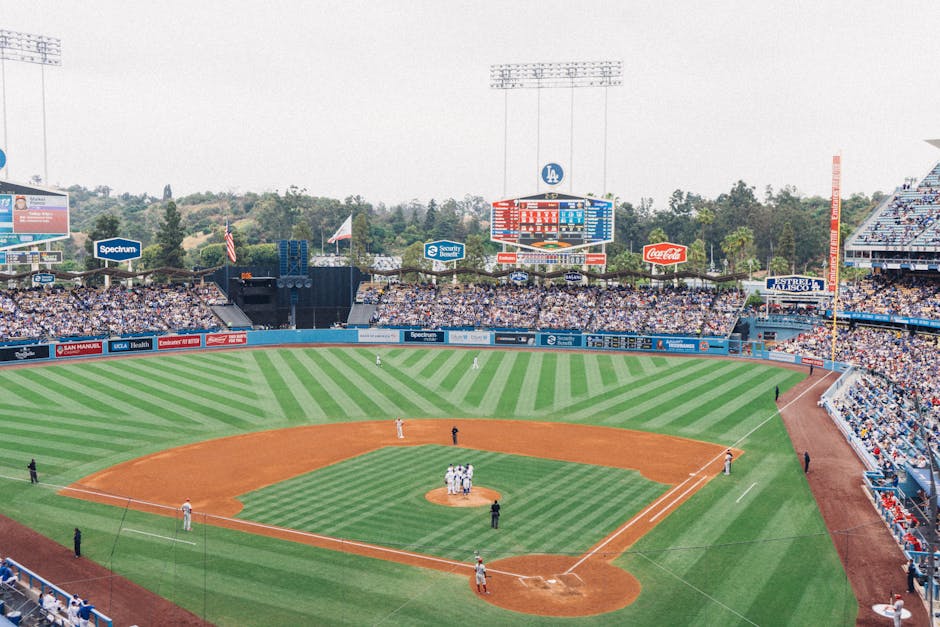
Top 10 Fun Facts About Sports Stadiums

Top 10 Fun Facts About Sports Stadiums

⏱️ 6 min read

Sports stadiums are more than just venues for athletic competition—they're architectural marvels, historical landmarks, and cultural icons that have witnessed some of humanity's most memorable moments. From their innovative designs to their quirky characteristics, these colossal structures hold fascinating secrets that even the most dedicated sports fans might not know. Let's explore some of the most intriguing facts about these remarkable buildings that host millions of spectators every year.

Remarkable Facts That Make Sports Stadiums Extraordinary

1. The Ancient Origins of Stadium Design

The word "stadium" originates from ancient Greece, specifically from a unit of measurement called a "stadion," which was approximately 600 feet. The first stadium, built in Olympia around 776 BCE, was designed to accommodate footraces of exactly this length. Modern stadiums still honor this heritage, with many incorporating classical architectural elements and maintaining the oval or horseshoe shape that allowed ancient spectators to view competitions from multiple angles. The Panathenaic Stadium in Athens, rebuilt for the first modern Olympics in 1896, remains the only stadium in the world built entirely of marble.

2. Moving Fields and Retractable Surfaces

Several modern stadiums feature removable or retractable playing surfaces that can be rolled in and out on massive trays. The University of Phoenix Stadium in Arizona houses a 19-million-pound natural grass field that slides outside the stadium on 546 steel wheels, allowing the turf to receive natural sunlight. This engineering feat takes approximately 75 minutes to complete and ensures the playing surface remains in pristine condition. Similar technology exists in stadiums across the globe, representing millions of dollars in mechanical innovation.

3. The Loudest Crowd Noise Ever Recorded

Arrowhead Stadium in Kansas City, home to the NFL's Chiefs, holds the Guinness World Record for the loudest crowd roar at an outdoor stadium, reaching 142.2 decibels in 2014. To put this in perspective, this noise level is louder than a jet engine at takeoff and can cause immediate hearing damage. The stadium's design, with its steep seating bowl and overhanging roof structure, naturally amplifies crowd noise and reflects it back onto the field, creating a genuine home-field advantage that opposing teams genuinely fear.

4. Stadiums That Generate Their Own Power

Environmental consciousness has entered the world of sports venues, with several stadiums now generating their own renewable energy. The Amsterdam Arena in the Netherlands features 4,200 solar panels that provide power to the stadium and surrounding neighborhood. Meanwhile, the Kaohsiung Stadium in Taiwan is topped with 8,844 solar panels forming the roof structure, making it the world's first stadium powered entirely by solar energy. These innovations represent a growing trend toward sustainability in sports architecture.

5. The Billion-Dollar Price Tags

Modern stadium construction costs have skyrocketed to unprecedented levels. SoFi Stadium in Los Angeles, which opened in 2020 as home to both the Rams and Chargers, cost approximately $5.5 billion to build, making it the most expensive sports venue ever constructed. This indoor-outdoor stadium features a translucent roof covering 3.1 million square feet and a 70,000-square-foot video board that hangs from the roof. The astronomical costs reflect not just construction expenses but also the integration of cutting-edge technology, luxury amenities, and architectural innovation.

6. Stadiums Built in Impossible Locations

Some stadiums have been constructed in locations that defy engineering logic. The Estadio Hernando Siles in La Paz, Bolivia, sits at 11,932 feet above sea level, making it the highest professional stadium in the world. The thin air at this altitude significantly affects gameplay, giving the home team a substantial advantage as visiting athletes struggle with reduced oxygen levels. Meanwhile, Singapore's Float at Marina Bay features the world's largest floating platform, where the stadium field literally sits on water in the city's harbor.

7. Hidden Underground Features and Facilities

Beneath the visible structures lie extensive underground networks that few fans ever see. Many stadiums feature subterranean locker rooms, training facilities, maintenance tunnels, and even underground parking for players. The Melbourne Cricket Ground in Australia has tunnels and rooms underground that date back to the 1850s, creating a historical labyrinth beneath the modern facility. Some stadiums also feature elaborate bunker systems, holdovers from Cold War-era construction when such venues were designated as potential emergency shelters.

8. Natural Grass at Impossible Heights

Maintaining natural grass in domed or retractable-roof stadiums presents unique challenges. The Principality Stadium in Cardiff, Wales, was the first stadium with a retractable roof to use real grass, requiring a sophisticated drainage and irrigation system that cost millions to implement. The grass sits on a specialized growing medium just four inches deep, supported by an intricate network of pipes that provide heating, drainage, and precise moisture control. Groundskeepers monitor soil conditions constantly using advanced sensors and computer systems.

9. Stadiums That Transform Into Lakes

Some stadiums have been intentionally designed to flood for special events. The Stadio Comunale in Florence, Italy, was famously flooded in 1989 to recreate a naval battle for a historical celebration. More recently, several stadiums worldwide have incorporated water features or the ability to flood portions of the field for concerts, shows, or special ceremonies. These transformations require complex engineering to ensure water doesn't damage the underlying infrastructure and can be drained efficiently.

10. The Fastest Stadium Construction Ever

While modern mega-stadiums take years to complete, the record for fastest stadium construction is impressive. The Braga Municipal Stadium in Portugal was built in approximately two years for Euro 2004, carved directly into the face of a granite quarry. However, temporary stadiums hold speed records—some World Cup qualifying venues have been erected in less than six months. These rapid constructions rely on prefabricated materials and modular designs that can be assembled quickly, though they typically lack the amenities and longevity of permanent structures.

Conclusion

Sports stadiums represent remarkable achievements in architecture, engineering, and human ambition. From ancient Greek origins to solar-powered modern marvels, from impossible construction sites to record-breaking crowd noise, these venues continue to push boundaries and capture imaginations. Whether through their environmental innovations, astronomical costs, or ingenious designs, stadiums remain testaments to our collective passion for sports and our willingness to create extraordinary spaces where communities gather, athletes compete, and memories are made. As technology advances and sustainability becomes increasingly important, future stadiums will undoubtedly continue this tradition of innovation, creating even more fascinating facts for generations to come.