





1 / 5 Questions
0 Points

Despite being commonly used as a vegetable in savory dishes, what is a tomato botanically classified as?

A berry

A vegetable

A tuber

A legume

Points won
0
Correct score
0%

More Questions

More Articles

Did You Know These Teams Once Changed Their Names?

Did You Know These Teams Once Changed Their Names?

⏱️ 5 min read

Sports franchises are often synonymous with their iconic names, but many beloved teams we know today weren't always called by their current monikers. Throughout sports history, numerous professional teams have undergone name changes for various reasons, including relocations, rebranding efforts, cultural sensitivities, and ownership changes. These transformations reveal fascinating stories about the evolution of sports culture and society itself.

The Washington Commanders: A Recent High-Profile Change

One of the most significant and recent name changes in professional sports occurred when the Washington Football Team became the Washington Commanders in 2022. However, this franchise's naming journey stretches back much further. The team was originally known as the Boston Braves when founded in 1932, then became the Boston Redskins in 1933 before relocating to Washington in 1937. After decades of controversy and pressure from various groups, the team retired its former name in 2020, spending two seasons as the Washington Football Team before settling on the Commanders name.

The New York Jets: From Titans to Jets

The New York Jets began their existence as the New York Titans when they joined the American Football League in 1960. The team struggled financially and competitively during its early years, leading to new ownership in 1963. The new owners rebranded the team as the Jets, a name chosen to reflect the jet age and the team's proximity to LaGuardia Airport. The change proved successful, as the Jets would go on to win Super Bowl III just six years later under the legendary Joe Namath.

Major League Baseball's Rich History of Name Changes

The Los Angeles Angels of Anaheim's Identity Crisis

Few teams have experienced as many name variations as the Angels franchise. Founded in 1961 as the Los Angeles Angels, the team became the California Angels in 1965 after moving to Anaheim. In 1997, they were renamed the Anaheim Angels, then became the Los Angeles Angels of Anaheim in 2005, a compromise that satisfied ownership's desire for Los Angeles marketing while acknowledging their Anaheim location. Most recently, they've simplified to the Los Angeles Angels, though they still play in Anaheim.

The Atlanta Braves' Nomadic Journey

The Atlanta Braves franchise boasts one of the longest and most complex naming histories in professional sports. The team was founded in 1871 as the Boston Red Stockings, later becoming the Boston Beaneaters, then the Boston Doves, the Boston Rustlers, and finally the Boston Braves in 1912. The franchise moved to Milwaukee in 1953, becoming the Milwaukee Braves, where they won the 1957 World Series. Their final relocation came in 1966 when they moved to Atlanta, where they've remained ever since.

Basketball Transformations Across the NBA

The New Orleans Pelicans' Recent Rebrand

The New Orleans Pelicans were known as the New Orleans Hornets until 2013. The Hornets name had originally belonged to Charlotte before that franchise relocated to New Orleans in 2002. When Charlotte was awarded a new expansion team in 2004, they were initially called the Bobcats. In a unique arrangement, when New Orleans changed to the Pelicans in 2013, the Hornets name and history were returned to Charlotte, and the Bobcats became the Hornets once again in 2014.

The Philadelphia 76ers' Revolutionary Name

The Philadelphia 76ers began as the Syracuse Nationals in 1946, one of the founding teams of the NBA. When the franchise relocated to Philadelphia in 1963, ownership chose the name 76ers to commemorate the signing of the Declaration of Independence in Philadelphia in 1776. This patriotic rebranding helped establish the team's identity in their new city.

Hockey's Notable Name Changes

The Colorado Avalanche's Quebec Origins

The Colorado Avalanche was originally the Quebec Nordiques, a franchise with deep roots in French-Canadian culture. When the team relocated to Denver in 1995, they adopted the Avalanche name, reflecting Colorado's mountainous terrain and the danger of avalanches in the region. The change proved immediately successful, as the team won the Stanley Cup in their first season in Colorado.

The Arizona Coyotes' Journey from Winnipeg

The Arizona Coyotes franchise originated as the Winnipeg Jets, one of the original World Hockey Association teams that joined the NHL in 1979. Financial difficulties forced the team to relocate to Phoenix in 1996, where they became the Phoenix Coyotes. The name was changed to Arizona Coyotes in 2014 to represent a broader geographic market. Ironically, Winnipeg would later receive a new NHL franchise in 2011, which reclaimed the Jets name.

Why Teams Change Their Names

Understanding the motivations behind team name changes reveals much about sports business and cultural evolution. Common reasons include:

  • Geographic relocation: Teams moving to new cities typically adopt names that resonate with their new fan base and regional identity
  • Marketing and branding: Organizations seek names that appeal to broader audiences and create stronger merchandise opportunities
  • Cultural sensitivity: Growing awareness of offensive or inappropriate names has prompted several recent changes
  • Ownership changes: New owners often rebrand teams to signal a fresh start and differentiate from previous regimes
  • Legal issues: Trademark disputes or copyright concerns sometimes necessitate name modifications

The Impact on Fans and Legacy

Name changes can be emotionally challenging for longtime fans who have deep connections to traditional identities. Teams must balance honoring their history while embracing new identities. Some franchises successfully integrate their past into new branding, while others make clean breaks. Regardless of approach, these changes become part of the rich tapestry of sports history, creating interesting trivia and reminding us that even our most beloved institutions continue to evolve with the times.
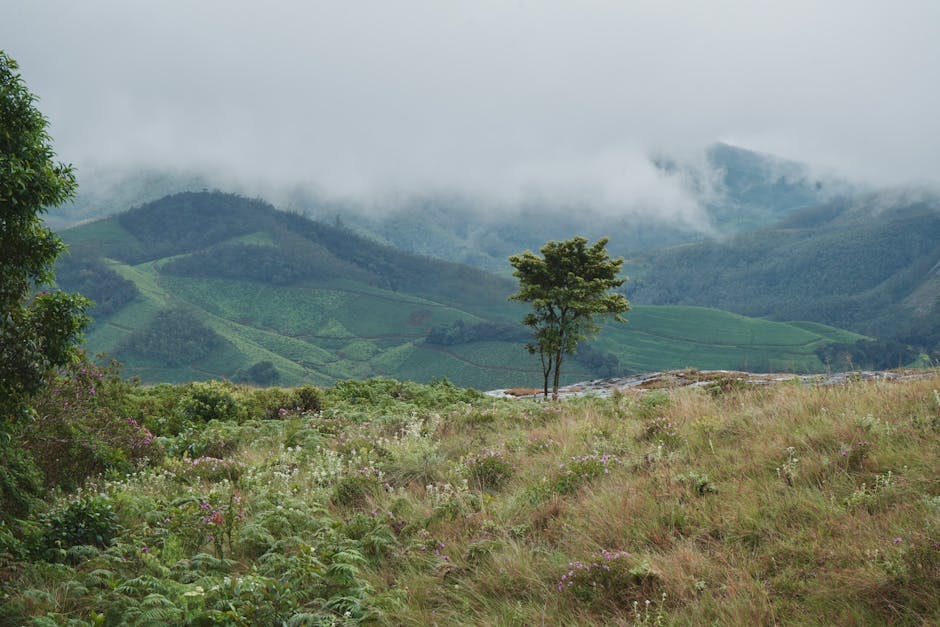
Did You Know These Fast Facts About Earth’s Climate?

Did You Know These Fast Facts About Earth’s Climate?

⏱️ 5 min read

Earth's climate system is one of the most complex and fascinating aspects of our planet, involving intricate interactions between the atmosphere, oceans, land surfaces, and living organisms. While climate change dominates headlines today, there are numerous surprising and lesser-known facts about Earth's climate that reveal just how dynamic and interconnected our planetary systems truly are. Understanding these facts provides valuable context for both historical climate patterns and current changes occurring around the globe.

The Ocean's Dominant Role in Climate Regulation

The world's oceans act as Earth's primary climate regulator, absorbing approximately 93% of the excess heat trapped by greenhouse gases since the 1970s. This massive heat absorption capacity has actually slowed atmospheric warming, though it comes with consequences including thermal expansion that contributes to sea-level rise. The oceans also store roughly 50 times more carbon dioxide than the atmosphere, making them critical carbon sinks that help moderate atmospheric CO2 levels.

Ocean currents function as a global conveyor belt, redistributing heat from equatorial regions toward the poles. The Gulf Stream alone carries an amount of heat energy equivalent to approximately 100 times the world's total energy demand. Without these oceanic circulation patterns, regional climates would be dramatically different, with much more extreme temperature variations between seasons and locations.

Antarctica's Climate Records Locked in Ice

Antarctic ice cores provide an extraordinary climate archive extending back approximately 800,000 years. Scientists drill deep into the ice sheet, extracting cylindrical samples that contain trapped air bubbles from ancient atmospheres. These bubbles preserve the exact composition of gases present when the snow originally fell and compacted into ice, offering direct evidence of past atmospheric conditions.

Analysis of these ice cores has revealed that current atmospheric carbon dioxide levels, which exceeded 420 parts per million in recent measurements, are higher than at any point during this 800,000-year period. The ice cores also demonstrate a tight correlation between atmospheric CO2 concentrations and global temperatures throughout multiple glacial and interglacial cycles, providing crucial evidence for understanding climate sensitivity to greenhouse gases.

The Surprising Speed of Past Climate Shifts

While climate change is often perceived as a gradual process, paleoclimate evidence reveals that Earth's climate can shift with remarkable rapidity under certain conditions. During the Younger Dryas event approximately 12,800 years ago, temperatures in the North Atlantic region plummeted by an estimated 15 degrees Fahrenheit within a single decade, returning much of the Northern Hemisphere to near-glacial conditions that persisted for about 1,200 years.

Ice core records from Greenland show instances where temperatures increased by up to 18 degrees Fahrenheit in less than 10 years during previous deglaciation periods. These abrupt climate transitions, though occurring under different baseline conditions than today, demonstrate that Earth's climate system can reach tipping points where feedback mechanisms accelerate change dramatically.

Atmospheric Carbon Dioxide's Extended Lifetime

A critical but often misunderstood aspect of climate science involves the residence time of carbon dioxide in the atmosphere. Unlike many pollutants that break down relatively quickly, CO2 molecules remain in the atmosphere for an extremely long period. Approximately 40% of emitted CO2 remains in the atmosphere after 100 years, about 20% after 1,000 years, and roughly 10% will persist for tens of thousands of years.

This longevity means that greenhouse gas emissions have cumulative and long-lasting effects on climate. Even if all emissions ceased immediately, atmospheric CO2 concentrations would decrease very slowly, and many climate impacts would continue for centuries due to the thermal inertia of the oceans and the persistence of atmospheric greenhouse gases.

Methane's Potent but Short-Lived Impact

While carbon dioxide receives the most attention, methane represents another critical greenhouse gas with distinctive characteristics. Methane traps approximately 84 times more heat than CO2 over a 20-year period, though it breaks down much faster in the atmosphere, with an average lifetime of about 12 years compared to centuries for carbon dioxide.

Natural sources of methane include wetlands, termites, and oceans, while human activities contribute through agriculture, particularly rice cultivation and livestock, as well as fossil fuel extraction and waste management. Concerningly, vast quantities of methane remain stored in permafrost and ocean floor sediments as methane hydrates. As temperatures rise, the potential release of these reserves represents a significant climate feedback risk that could accelerate warming.

The Albedo Effect and Reflective Surfaces

Earth's albedo—its reflectivity—plays a crucial role in regulating planetary temperature. Ice and snow reflect approximately 80-90% of incoming solar radiation back to space, while darker surfaces like forests and oceans absorb much more energy. This creates a powerful feedback loop: as ice melts due to warming, darker surfaces are exposed, absorbing more heat, which causes additional melting and warming.

The Arctic is experiencing this feedback mechanism intensely, warming approximately twice as fast as the global average—a phenomenon called Arctic amplification. The dramatic decline in summer sea ice extent, which has decreased by roughly 13% per decade since satellite measurements began in 1979, exemplifies how albedo feedback accelerates regional climate change.

Trees and Forests as Climate Engineers

Forests influence climate through multiple mechanisms beyond simple carbon storage. Through evapotranspiration, trees release water vapor that cools the surrounding environment and influences precipitation patterns. A single large tree can transpire hundreds of gallons of water daily, effectively functioning as a natural air conditioner. Additionally, forests affect albedo, cloud formation, and atmospheric circulation patterns, making them integral components of regional and global climate systems.

The Amazon rainforest generates approximately half of its own rainfall through this moisture recycling process, demonstrating how vegetation can create self-sustaining climate conditions. Deforestation therefore impacts not only carbon storage but also disrupts hydrological cycles and temperature regulation across vast areas.