






1 / 10 Questions
0 Points

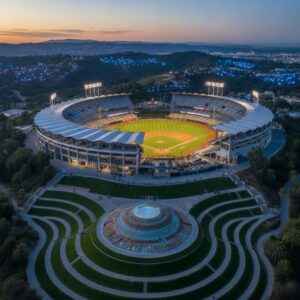
Which Major League Baseball stadium was built on land that once contained a Jewish cemetery established in 1855?

Dodger Stadium

Wrigley Field

Fenway Park

Yankee Stadium

Points won
0
Correct score
0%

More Questions

More Articles

Did You Know These Historical Firsts?

Did You Know These Historical Firsts?

⏱️ 5 min read

Throughout human history, countless individuals have achieved remarkable firsts that forever changed the course of civilization. These groundbreaking moments, often overlooked in mainstream historical narratives, represent pivotal turning points in technology, civil rights, exploration, and culture. From the first recorded patent to pioneering achievements in space exploration, these historical milestones demonstrate humanity's relentless drive to innovate, explore, and push beyond established boundaries.

The First Patent Ever Granted

While many associate patents with modern innovation, the concept of protecting intellectual property dates back much further than most realize. The first recorded patent was issued in 1421 in Florence, Italy, to architect and engineer Filippo Brunelleschi. This patent granted him a three-year monopoly on a barge design equipped with hoisting gear, intended to transport marble along the Arno River. This revolutionary legal framework established the foundation for intellectual property rights that would eventually fuel the Industrial Revolution and continue to shape innovation today.

England formalized the patent system in 1624 with the Statute of Monopolies, while the United States issued its first patent in 1790 to Samuel Hopkins for an improved method of producing potash, a key ingredient in fertilizer. These early patents demonstrated society's recognition that inventors deserved protection and reward for their creativity and ingenuity.

The First Person to Circumnavigate the Globe

Contrary to popular belief, Ferdinand Magellan was not the first person to sail around the world. While Magellan initiated the expedition in 1519, he was killed in the Philippines in 1521 before completing the journey. The honor of being the first person to circumnavigate the globe actually belongs to Juan Sebastián Elcano, a Spanish navigator who took command after Magellan's death. Elcano and the remaining crew members returned to Spain in September 1522, completing the three-year voyage aboard the ship Victoria.

This historic journey proved definitively that the Earth was round and demonstrated the vastness of the Pacific Ocean. Of the original 270 crew members who departed Spain, only 18 survived to complete the circumnavigation, making it one of history's most perilous yet significant voyages of discovery.

Pioneering Achievements in Aviation

The First Powered Flight

On December 17, 1903, Orville and Wilbur Wright achieved the first sustained, controlled, powered flight near Kitty Hawk, North Carolina. Orville piloted the Wright Flyer for 12 seconds, covering 120 feet during this historic first flight. The brothers completed four flights that day, with the longest lasting 59 seconds and covering 852 feet. This achievement launched the aviation age and transformed human transportation forever.

The First Woman to Fly Solo Across the Atlantic

Amelia Earhart became the first woman to fly solo across the Atlantic Ocean on May 20-21, 1932. She departed from Newfoundland, Canada, and landed in a pasture in Northern Ireland after flying for approximately 15 hours. This feat came five years after Charles Lindbergh's famous transatlantic flight and solidified Earhart's position as a pioneering aviator who shattered gender barriers in the male-dominated field of aviation.

Revolutionary Medical Firsts

The first successful organ transplant occurred on December 23, 1954, when Dr. Joseph Murray performed a kidney transplant between identical twins at Peter Bent Brigham Hospital in Boston. Ronald Herrick donated a kidney to his twin brother Richard, who was dying of kidney disease. The surgery was successful because, as identical twins, tissue rejection was not an issue. Richard lived for eight more years after the transplant, and Dr. Murray was later awarded the Nobel Prize in Physiology or Medicine in 1990 for this groundbreaking achievement.

Another monumental medical first came in 1796 when Edward Jenner developed the first successful vaccine. Jenner inoculated an eight-year-old boy with cowpox material, then later exposed him to smallpox to demonstrate immunity. This discovery laid the groundwork for immunology and eventually led to the complete eradication of smallpox in 1980, the only human disease ever to be eliminated worldwide.

The First Computer Programmer

Ada Lovelace, daughter of the poet Lord Byron, is recognized as the world's first computer programmer. In the 1840s, she worked with Charles Babbage on his proposed mechanical general-purpose computer, the Analytical Engine. Lovelace wrote extensive notes on the machine, including what is now considered the first algorithm intended to be processed by a machine. She also envisioned that computers could go beyond pure calculation, theorizing that they could create music and art if properly programmed—a remarkably prescient insight that predated modern computing by over a century.

Space Exploration Milestones

The space age began on October 4, 1957, when the Soviet Union successfully launched Sputnik 1, the first artificial satellite to orbit Earth. This basketball-sized satellite transmitted radio signals for three weeks and remained in orbit for three months before burning up in Earth's atmosphere. Sputnik's launch initiated the Space Race between the United States and Soviet Union and accelerated developments in science, technology, and space exploration.

Yuri Gagarin became the first human in space on April 12, 1961, completing a single orbit of Earth aboard the Vostok 1 spacecraft. His 108-minute flight demonstrated that humans could survive space travel and paved the way for future manned missions. Less than a month later, Alan Shepard became the first American in space, intensifying the competition that would ultimately lead to the Apollo moon landings.

Cultural and Social Firsts

The first feature-length film with synchronized dialogue, commonly known as the first "talkie," was "The Jazz Singer," released in 1927. While the film contained mostly silent sequences with live sound recorded during select scenes, it revolutionized the entertainment industry and marked the beginning of the end for silent films. Within just a few years, silent films became obsolete as theaters rapidly converted to sound technology.

These historical firsts represent merely a fraction of humanity's groundbreaking achievements. Each milestone built upon previous discoveries and opened doors to future innovations, demonstrating that progress is cumulative and collaborative. Understanding these pivotal moments provides valuable perspective on how far civilization has advanced and inspires continued pursuit of new frontiers in science, technology, and human achievement.

Top 10 Bizarre Facts About Weather

Top 10 Bizarre Facts About Weather

⏱️ 8 min read

Weather has fascinated humanity since the dawn of civilization, but beyond the familiar rain, snow, and sunshine lie extraordinary phenomena that challenge our understanding of atmospheric science. From balls of lightning that dance through buildings to rain that falls in colors, our planet's weather systems produce some truly remarkable and bizarre occurrences that scientists continue to study and occasionally struggle to explain.

Extraordinary Weather Phenomena That Defy Expectations

1. Ball Lightning: The Mysterious Floating Spheres

One of the most perplexing weather phenomena ever documented is ball lightning—glowing spheres of electricity that float through the air during thunderstorms. These luminous orbs, typically ranging from the size of a golf ball to several feet in diameter, have been reported passing through walls, windows, and even aircraft fuselages without causing damage. Witnesses describe them as lasting anywhere from a few seconds to several minutes, sometimes exploding and other times simply fading away. Despite thousands of reported sightings throughout history, scientists have only recently begun to understand this phenomenon, with theories ranging from vaporized silicon particles to quantum effects. The rarity and unpredictability of ball lightning make it one of the most difficult weather events to study in controlled conditions.

2. Raining Animals From the Sky

Throughout recorded history, there have been documented cases of fish, frogs, birds, and even larger animals falling from the sky during storms. This bizarre phenomenon occurs when powerful waterspouts or tornadoes pass over bodies of water or land, sucking up small creatures and carrying them considerable distances before depositing them elsewhere. In 2010, Australia experienced a rain of fish across multiple towns, with hundreds of spangled perch falling from the clouds. Honduras experiences this so regularly in the Yoro region that locals celebrate an annual "Rain of Fish" festival. While the scientific explanation involves strong updrafts and water-based storms, witnessing such an event remains an unsettling and surreal experience.

3. Frost Flowers: Nature's Ice Sculptures

When temperatures plummet under specific conditions, delicate ice structures called frost flowers bloom on the surface of newly formed sea ice, young lake ice, or even plant stems. These intricate formations look like frozen petals and can grow several inches tall, creating ethereal gardens of ice. Frost flowers form when water vapor from the relatively warmer water or plant sap below meets the frigid air above, causing instant crystallization into delicate, curved ribbons of ice. These fragile structures are incredibly ephemeral, often lasting only a few hours before wind or warming temperatures destroy them. The phenomenon is particularly notable because frost flowers concentrate salt and other minerals from seawater, creating pockets of extremely salty brine that can be up to four times saltier than the ocean itself.

4. Colored Snow and Rain

While precipitation is typically clear or white, history records numerous instances of colored rain and snow falling from the sky. Blood-red rain has fallen in Kerala, India, yellow snow has blanketed parts of Siberia, and orange snow has covered Eastern Europe and Russia. These colorful precipitations usually result from dust, sand, or algae particles being swept up into the atmosphere and mixing with water droplets. The famous Kerala red rain of 2001 initially sparked theories of extraterrestrial origins, but scientists eventually determined it was caused by spores from local algae. Similarly, Saharan dust regularly colors European precipitation orange or red when powerful storms carry fine sand particles thousands of miles northward.

5. Fire Whirls: Tornadoes Made of Flames

When intense heat from wildfires or volcanic eruptions meets specific atmospheric conditions, the result can be fire whirls—rotating columns of flame that act like tornadoes made of fire. These terrifying phenomena can reach temperatures exceeding 2,000 degrees Fahrenheit and generate winds over 100 miles per hour, spreading destruction far beyond the original fire. During the 1923 Great Kanto earthquake in Tokyo, a fire whirl killed an estimated 38,000 people who had gathered in an open area seeking refuge from the flames. Fire whirls can lift burning debris high into the air and transport flames across firebreaks, making them particularly dangerous during firefighting operations. Unlike regular tornadoes, these vortices are created by the fire itself rather than storm conditions.

6. Catatumbo Lightning: The Eternal Storm

At the mouth of the Catatumbo River in Venezuela, a unique meteorological phenomenon produces lightning storms up to 260 nights per year, for up to 10 hours each night. This area experiences more lightning than anywhere else on Earth, with up to 280 strikes per hour during peak activity. The phenomenon occurs due to the unique geography: warm Caribbean winds collide with cold air from the Andes Mountains, creating perfect conditions for continuous electrical storms. The lightning is so reliable and bright that it has historically served as a natural lighthouse for sailors, earning it the nickname "Maracaibo Beacon." Occasionally, the lightning mysteriously stops for weeks or months, as happened in 2010, causing concern among locals who view it as a natural treasure.

7. Morning Glory Clouds: Rolling Tubes in the Sky

In the Gulf of Carpentaria in northern Australia, a rare atmospheric phenomenon called Morning Glory clouds appears most frequently. These are spectacular roll clouds—long, tubular formations that can stretch for hundreds of miles, moving at speeds up to 35 miles per hour and reaching heights of up to 1.2 miles. Often appearing in sets of up to ten consecutive rolls, these clouds create an otherworldly sight as they roll across the sky like massive horizontal tornadoes. Glider pilots travel from around the world to ride the powerful updrafts created by these clouds. Despite extensive study, meteorologists still don't fully understand all the conditions necessary for their formation, though they're believed to result from colliding sea breezes and specific temperature inversions.

8. Brinicles: Underwater Icicles of Death

Beneath the sea ice of polar regions, a bizarre weather-related phenomenon called a brinicle—or "icicle of death"—can form when extremely cold, salty water sinks from forming sea ice above. As this supercooled brine descends, it freezes the surrounding seawater, creating a hollow tube of ice that grows downward like a frozen stalactite. When a brinicle reaches the seafloor, it spreads out and freezes everything in its path, including slow-moving sea creatures like starfish and sea urchins, killing them almost instantly. The process creates haunting underwater ice formations that can grow several inches per hour. These phenomena were only captured on film for the first time in 2011 by BBC camera crews in Antarctica after years of attempts.

9. Sprites, Elves, and Blue Jets: Lightning's Upper Atmosphere Cousins

High above thunderstorms, far beyond where regular lightning occurs, extraordinary electrical phenomena illuminate the upper atmosphere. Sprites are massive red flashes that shoot upward from storm clouds, reaching 50 miles high and spreading horizontally for 30 miles or more. Elves are expanding rings of light that last mere milliseconds but can span 200 miles in diameter. Blue jets are blue-colored cones of electricity that shoot upward from the tops of thunderclouds. These phenomena were only confirmed to exist in 1989 when captured on video, despite pilot reports dating back decades. They're challenging to observe from ground level because they occur above the clouds and last only milliseconds, requiring specialized high-speed cameras positioned above storm systems to capture.

10. Snow Donuts: Nature's Perfect Rolls

Under rare and specific conditions, snow can roll itself into nearly perfect cylinders or donuts without any human intervention. These natural snow rollers form when a thin layer of wet snow falls onto icy ground, followed by strong winds. The wind catches an edge of the snow, rolling it forward like a snowball, but because the inner layers are often thin and fragile, the center collapses, creating a hollow tube or donut shape. Snow donuts can range from the size of a tennis ball to several feet across. The phenomenon requires such a precise combination of snow consistency, ground conditions, wind speed, and temperature that many people live their entire lives in snowy climates without ever witnessing one forming naturally.

Understanding Our Atmosphere's Mysteries

These ten bizarre weather phenomena remind us that despite centuries of scientific advancement, Earth's atmosphere continues to surprise and perplex us. From electrical spheres that float through walls to ice formations that kill sea creatures and clouds that roll like cylinders across the sky, weather produces effects that seem more like science fiction than scientific fact. Each of these phenomena results from specific combinations of temperature, pressure, humidity, and geographical features, yet many still contain elements that scientists are working to fully understand. As climate patterns shift and observation technology improves, researchers continue discovering new variations and documenting rare events that expand our knowledge of atmospheric science. These remarkable occurrences serve not only as subjects of scientific inquiry but as reminders of nature's power to create beauty and wonder in unexpected ways.