










1 / 10 Questions
0 Points

What Punctuation Mark Was Once Called a 'Dog's Bollocks'?

Colon and Dash (:-)

Semicolon

Exclamation Point

Question Mark

Points won
0
Correct score
0%

More Questions

More Articles

Did You Know These Words Don’t Mean What You Think?

Did You Know These Words Don’t Mean What You Think?

⏱️ 5 min read

Language is constantly evolving, and over time, many words have strayed far from their original meanings. Whether through common misuse, cultural shifts, or deliberate changes, numerous words in the English language are regularly used in ways that contradict their true definitions. Understanding these discrepancies not only enriches our vocabulary but also helps us communicate more precisely and avoid embarrassing misunderstandings.

Common Misconceptions in Everyday Vocabulary

The phenomenon of words taking on meanings different from their intended definitions is more widespread than most people realize. Linguists refer to this as semantic change, and it occurs gradually through repeated misuse or contextual evolution. Some of these changes have become so ingrained in everyday speech that correcting them might seem pedantic, yet recognizing the proper meanings remains valuable for clear communication.

Literally: The Most Misunderstood Word

Perhaps no word exemplifies meaning confusion more than "literally." Originally intended to denote something that occurs in a strict, factual sense without exaggeration, this word has paradoxically become an intensifier for figurative statements. When someone says "I literally died laughing," they obviously did not expire. The word has been so frequently misused that many dictionaries now include its informal usage as an acceptable definition, much to the dismay of language purists.

Ironic Versus Coincidental

The word "ironic" is frequently confused with situations that are merely coincidental or unfortunate. True irony involves a contrast between expectations and reality, often with a humorous or poignant effect. For instance, a fire station burning down is ironic because we expect such buildings to be especially fire-resistant. However, rain on your wedding day, while disappointing, is simply unfortunate weather—not ironic unless you specifically chose that date because meteorologists predicted sunshine.

Words That Mean the Opposite of What People Think

Nonplussed

Many people use "nonplussed" to mean unfazed or unimpressed, but it actually means the opposite: so surprised or confused that one is unsure how to react. When someone is truly nonplussed, they are perplexed and at a loss for words, not calm and unbothered.

Bemused

Similarly, "bemused" does not mean amused or entertained. Instead, it describes a state of bewilderment or confusion. If you are bemused by a situation, you are puzzled by it, not finding it humorous.

Enormity

While commonly used to describe something of great size, "enormity" actually refers to extreme evil or moral offensiveness. The enormity of a crime relates to its wickedness, not its scale. For describing size alone, "enormousness" or "immensity" would be more appropriate.

Misused Words in Professional Settings

Comprise Versus Compose

The phrase "is comprised of" appears frequently in business writing, but it is technically incorrect. "Comprise" means to contain or include, so the whole comprises the parts, not the other way around. The correct usage is "The committee comprises five members" or "The committee is composed of five members." The parts compose the whole; the whole comprises the parts.

Decimate

In corporate environments, "decimate" is often used to mean complete destruction. Historically, however, the term referred to the Roman practice of killing one in every ten soldiers as punishment. While modern usage has expanded to mean severe damage, the word technically indicates reducing something by one-tenth, not destroying it entirely.

Scientific and Technical Terms Gone Astray

Quantum Leap

Popular culture uses "quantum leap" to describe a massive, revolutionary change. In physics, however, a quantum leap refers to the smallest possible discrete change in a system—the tiniest imaginable jump. The scientific meaning is essentially the opposite of its colloquial usage.

Exponential

While people use "exponential" to mean rapid or significant growth, it has a specific mathematical definition. Exponential growth occurs when a quantity increases by a fixed percentage over regular intervals, creating a characteristic curve. Not all fast growth is exponential; sometimes it is simply linear or accelerated.

Food and Dining Misunderstandings

The culinary world contains several commonly misused terms. "Entrée" originally meant an introductory dish served before the main course in French cuisine, but in American usage, it refers to the main course itself. "Cordon bleu" does not mean fancy or high-quality; it specifically refers to dishes prepared with ham and cheese, typically in a breaded cutlet.

Why Proper Usage Matters

Understanding the correct meanings of words serves several important purposes. In professional communication, precision prevents misunderstandings that could affect business outcomes. In academic settings, accurate terminology demonstrates intellectual rigor. Even in casual conversation, knowing proper definitions enriches expression and prevents confusion.

However, language is inherently flexible and democratic. If enough people use a word in a particular way, that usage eventually becomes accepted. Many of today's "correct" definitions were yesterday's mistakes. The key is awareness—understanding both traditional meanings and contemporary usage allows for informed choices about communication.

Moving Forward with Language Awareness

Rather than viewing these discrepancies as failures of education, we can appreciate them as evidence of language's dynamic nature. Being aware of words whose common usage differs from their traditional definitions empowers us to communicate more effectively. Whether we choose to use words in their technical sense or their popular meaning depends on our audience and purpose, but making that choice consciously rather than through ignorance represents true linguistic competence.
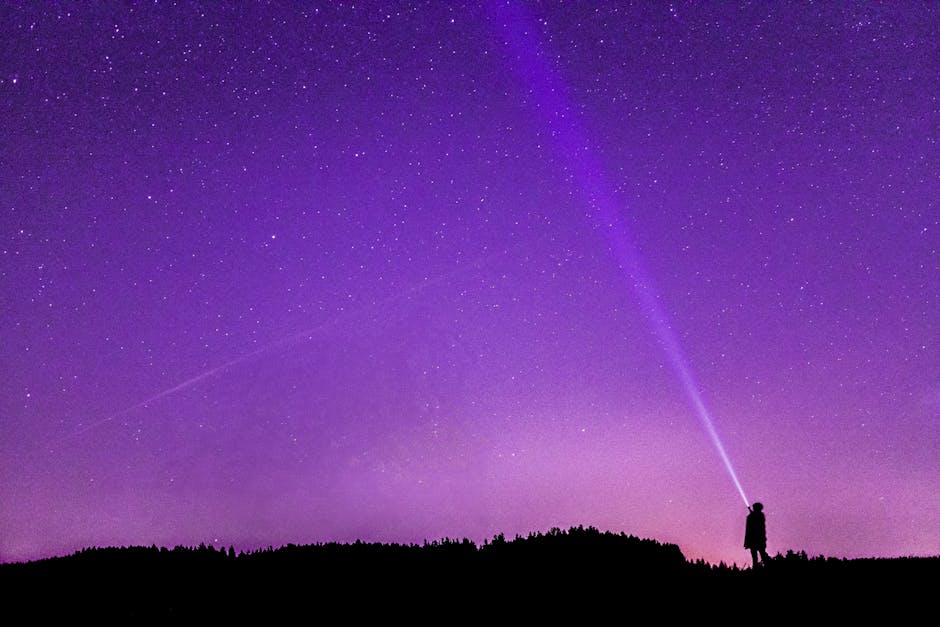
Top 10 Eye-Opening Facts About the Universe

Top 10 Eye-Opening Facts About the Universe

⏱️ 6 min read

The universe is vast beyond human comprehension, filled with phenomena that challenge our understanding of reality itself. From the smallest particles to the largest cosmic structures, space continues to reveal secrets that both answer fundamental questions and raise entirely new ones. These remarkable facts about our universe demonstrate just how extraordinary the cosmos truly is, and how much we have yet to discover about the space we inhabit.

Fascinating Discoveries That Redefine Our Understanding of Space

1. The Observable Universe Contains More Stars Than Grains of Sand on Earth

Astronomers estimate that the observable universe contains approximately 200 billion trillion stars. To put this in perspective, this number far exceeds every grain of sand on every beach and desert across our entire planet. Each of these stars represents a sun, potentially with its own planetary system. This staggering quantity reminds us that Earth is but a tiny speck in an almost incomprehensibly large cosmos. The Milky Way galaxy alone contains between 100 and 400 billion stars, and scientists estimate there are about 2 trillion galaxies in the observable universe.

2. The Universe Is Expanding Faster Than the Speed of Light

While nothing can move through space faster than light, space itself is not bound by this limitation. The universe's expansion means that distant galaxies are moving away from us at velocities exceeding light speed. This phenomenon doesn't violate Einstein's theory of relativity because the galaxies aren't moving through space faster than light—rather, the space between us and those galaxies is expanding. This expansion is accelerating due to dark energy, a mysterious force that comprises roughly 68% of the universe's total energy content.

3. One Day on Venus Lasts Longer Than One Year

Venus has an incredibly slow rotation on its axis, taking about 243 Earth days to complete one full rotation. However, it only takes Venus about 225 Earth days to orbit the Sun. This means that a single day on Venus (one complete rotation) actually lasts longer than a Venusian year (one orbit around the Sun). Additionally, Venus rotates in the opposite direction to most planets in our solar system, meaning the Sun rises in the west and sets in the east on this peculiar world.

4. Neutron Stars Are So Dense That a Teaspoon Would Weigh Billions of Tons

Neutron stars are the collapsed cores of massive stars that have exploded in supernovae. These stellar remnants are so incredibly dense that their matter is compressed beyond normal atomic structure. A single teaspoon of neutron star material would weigh approximately 6 billion tons—about 900 times the weight of the Great Pyramid of Giza. These objects pack more mass than our Sun into a sphere only about 20 kilometers in diameter, creating gravitational fields so intense that they warp spacetime itself.

5. The Coldest Known Place in the Universe Exists on Earth

Despite the vast cold regions of space, the coldest known place in the universe is actually a laboratory on Earth. Scientists have achieved temperatures just billionths of a degree above absolute zero (-273.15°C) in controlled laboratory conditions. While the cosmic microwave background radiation that fills space maintains a temperature of about -270°C, human technology has managed to create even colder environments. These ultra-cold temperatures allow researchers to study quantum mechanics and the fundamental behavior of matter in ways impossible to observe under normal conditions.

6. Time Moves Slower in Stronger Gravitational Fields

Einstein's theory of general relativity reveals that time is not a universal constant but rather is affected by gravity. Clocks tick more slowly in stronger gravitational fields, a phenomenon called gravitational time dilation. This means that time passes slightly slower at sea level than on a mountaintop, and significantly slower near massive objects like black holes. GPS satellites must account for this effect to maintain accuracy, as time moves faster for them in orbit than it does for users on Earth's surface. Near a black hole's event horizon, time dilation becomes so extreme that from an outside observer's perspective, time appears to nearly stop.

7. Most of the Universe Is Made of Mysterious Invisible Substances

Everything we can see—stars, planets, galaxies, and all visible matter—makes up less than 5% of the universe. The remaining 95% consists of dark matter (approximately 27%) and dark energy (approximately 68%), neither of which we can directly observe. Dark matter doesn't emit, absorb, or reflect light, but its gravitational effects are evident in the rotation of galaxies and the bending of light around massive objects. Dark energy is even more mysterious, appearing to be the force driving the accelerated expansion of the universe. Despite decades of research, scientists still don't fully understand what these substances actually are.

8. Jupiter's Moon Ganymede Has More Water Than All of Earth's Oceans

Ganymede, Jupiter's largest moon and the biggest moon in our solar system, contains more water than all of Earth's oceans combined. Scientists estimate that beneath Ganymede's icy surface lies a subsurface ocean that may contain more water than exists on our entire planet. This ocean is sandwiched between layers of ice and could be up to 100 kilometers deep. Similar subsurface oceans are believed to exist on other moons like Europa and Enceladus, making these distant worlds prime candidates in the search for extraterrestrial life.

9. The Great Attractor Is Pulling Our Galaxy Toward an Unknown Destination

The Milky Way galaxy, along with hundreds of thousands of other galaxies, is being pulled toward a mysterious region of space known as the Great Attractor. This gravitational anomaly lies about 150 million light-years away, hidden behind the plane of the Milky Way, making it difficult to observe directly. Our galaxy and its neighbors are moving toward this region at approximately 2 million kilometers per hour. The Great Attractor itself appears to be part of an even larger structure called the Laniakea Supercluster, a massive collection of galaxies spanning 520 million light-years.

10. Light From Distant Stars Shows Us the Past

When we look at stars and galaxies, we are literally looking back in time. Light travels at a finite speed of about 300,000 kilometers per second, so the light we see from distant objects left those objects long ago. The light from the Sun takes about 8 minutes to reach Earth, meaning we see the Sun as it was 8 minutes in the past. When we observe the Andromeda Galaxy, we see it as it appeared 2.5 million years ago. The most distant objects we can observe show us the universe as it existed over 13 billion years ago, less than a billion years after the Big Bang. This time-delay effect makes telescopes into time machines, allowing us to study the universe's history directly.

Contemplating Our Place in the Cosmos

These remarkable facts about the universe reveal a cosmos far stranger and more wonderful than our ancestors could have imagined. From the mind-bending properties of space and time to the vast scales involved and the mysterious substances that dominate existence, the universe continues to challenge and expand our understanding. Each discovery opens new questions and reminds us that despite centuries of scientific progress, we have only begun to scratch the surface of cosmic knowledge. As technology advances and our methods of observation improve, we will undoubtedly uncover even more astonishing truths about the universe we call home.