
⏱️ 6 min read
The human sensory system is far more complex and fascinating than the traditional five senses most people learned about in school. While sight, hearing, taste, smell, and touch form the foundation of sensory perception, the reality involves numerous unexpected capabilities and surprising limitations. Scientific research continues to uncover remarkable facts about how humans experience and interpret the world around them, revealing abilities that seem almost superhuman alongside peculiar blind spots that challenge common assumptions.
Extraordinary Sensory Capabilities
1. Your Nose Can Detect Over One Trillion Scents
For decades, scientists believed humans could distinguish approximately 10,000 different odors. However, groundbreaking research published in 2014 shattered this assumption, demonstrating that the human nose can actually discriminate between more than one trillion different scents. This extraordinary capability far exceeds previous estimates and positions the sense of smell as one of the most sophisticated detection systems in the human body. The olfactory system contains approximately 400 types of scent receptors, and the combinations of these receptors activating in different patterns create this immense range of smell discrimination. This makes smell considerably more nuanced than previously understood.
2. Humans Possess Magnetoreception Abilities
While magnetoreception is well-documented in birds, sea turtles, and other animals that navigate using Earth’s magnetic field, evidence suggests humans retain this ancient sense as well. Research conducted by Caltech scientists in 2019 found that human brains respond to changes in magnetic fields, even though people remain consciously unaware of this detection. Brain wave patterns shifted measurably when participants were exposed to rotating magnetic fields similar to Earth’s. This vestigial ability may explain certain navigation instincts and the phenomenon some people report of having an innate sense of direction.
3. Touch Receptors Can Detect Movements as Small as 0.001 Millimeters
The sensitivity of human touch extends far beyond casual appreciation. Specialized mechanoreceptors in fingertips can detect surface variations and vibrations smaller than a single cell. These Meissner’s corpuscles and Merkel cells allow humans to feel textures, identify materials, and even read Braille through microscopic elevation differences. This extreme sensitivity means fingertips can sense objects moving across the skin by as little as one micrometer, roughly one-hundredth the width of a human hair. This remarkable precision makes human hands incredibly sophisticated sensory organs.
Surprising Sensory Limitations
4. Humans Cannot See the Majority of Light That Exists
The visible light spectrum represents only a tiny fraction of electromagnetic radiation. Humans can see wavelengths roughly between 380 and 700 nanometers, experiencing them as colors from violet to red. However, this narrow window excludes infrared radiation, ultraviolet light, radio waves, microwaves, X-rays, and gamma rays. Many animals possess visual ranges extending into ultraviolet or infrared spectrums. Certain species of mantis shrimp can see twelve color receptive channels compared to humans’ three, allowing them to perceive colors humans cannot imagine. This limitation means humans navigate through an ocean of invisible information constantly.
5. Taste Buds Regenerate Completely Every Two Weeks
Unlike many cells in the body that persist throughout life, taste receptor cells have remarkably short lifespans. The entire population of taste buds regenerates approximately every ten to fourteen days. This rapid turnover explains why burned tongues heal relatively quickly and why taste sensitivity can be temporarily affected by illness or medication but typically recovers. Each person possesses between 2,000 and 8,000 taste buds, and these constantly dying and regenerating cells ensure the sense of taste remains consistently functional. However, this regeneration capacity diminishes with age, explaining why elderly individuals often experience reduced taste sensitivity.
Interconnected Sensory Phenomena
6. The McGurk Effect Proves Senses Override Each Other
The McGurk effect demonstrates how sight can fundamentally alter what people hear. When individuals watch a video of someone pronouncing one syllable while hearing audio of a different syllable, the brain typically perceives a third sound entirely, blending the visual and auditory information. This powerful illusion reveals that sensory perception is not simply received data but rather constructed interpretation where different senses compete and integrate. The phenomenon has significant implications for understanding speech perception, language processing, and demonstrates that humans cannot trust their senses in isolation.
7. Proprioception Functions as an Invisible Sixth Sense
Beyond the traditional five senses exists proprioception, the body’s awareness of its position in space. This sense allows people to touch their nose with eyes closed, walk without watching their feet, and coordinate complex movements without visual guidance. Specialized receptors in muscles, tendons, and joints constantly send signals to the brain about body position and movement. Damage to proprioceptive systems can leave individuals unable to control their limbs without watching them, demonstrating how this unnoticed sense provides crucial continuous feedback that enables everyday movement and coordination.
Unexpected Sensory Processing
8. Humans Hear Through Bone Conduction
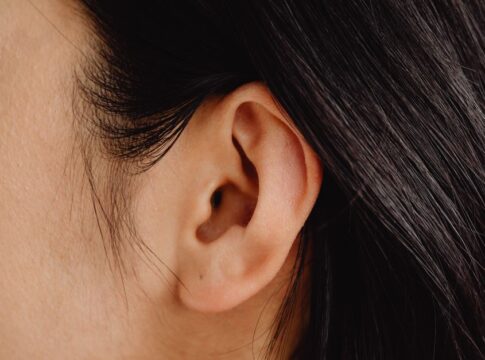
Sound reaches the inner ear through two pathways: air conduction through the ear canal and bone conduction through skull vibrations. This explains why recorded voices sound different from how individuals hear themselves speaking. When talking, people hear their own voice through both air and bone conduction, while recordings capture only the air-conducted sound. Bone conduction technology exploits this principle, allowing headphones to transmit sound through cheekbones or behind ears, leaving ear canals open. This pathway also explains why people with certain types of hearing loss can still perceive sound through vibrations.
9. The Tongue Map Is Completely Incorrect
The popular diagram showing different taste regions on the tongue is a persistent myth. The tongue map suggesting sweet tastes are detected at the tip, bitter at the back, and sour and salty along the sides has no scientific basis. In reality, all taste sensations can be detected across the entire tongue surface, though some areas may show slightly higher concentrations of certain receptor types. This misconception originated from a mistranslation of German research from 1901 and became entrenched in textbooks despite being debunked. All tongue regions can detect sweet, salty, sour, bitter, and umami tastes relatively equally.
10. Sensory Adaptation Makes Constant Stimuli Disappear
The nervous system is designed to notice change rather than constant conditions, causing unchanging stimuli to fade from conscious awareness. This phenomenon, called sensory adaptation, explains why people stop feeling clothes on their skin shortly after getting dressed or why consistent background noise becomes unnoticeable. Receptor cells actually decrease their firing rate when stimulation remains constant, filtering out unchanging information to focus on new or changing stimuli. This biological filtering prevents sensory overload but creates blind spots where persistent conditions remain undetected despite ongoing presence. Temperature, pressure, sound, and even smell all undergo this adaptation process.
Conclusion
The complexity of human sensory systems extends far beyond simplified educational models. From the trillion-scent discrimination capability of the nose to the invisible proprioceptive sense that guides movement, human perception involves sophisticated biological machinery that both exceeds expectations and reveals surprising limitations. Understanding phenomena like the McGurk effect, bone conduction hearing, and sensory adaptation demonstrates that perception is an active construction rather than passive reception. These ten facts illustrate how human senses create a highly filtered, interpreted version of reality rather than direct access to objective truth. As research continues, undoubtedly more surprising revelations about human sensory capabilities will emerge, further expanding appreciation for the remarkable ways humans experience their world.