




⏱️ 7 min read
Trivia enthusiasts know that the most fascinating facts often come from the most unexpected places. Whether you're preparing for your next game night, looking to impress friends with your knowledge, or simply enjoy learning quirky details about our world, having a diverse collection of random facts can make all the difference. These carefully selected pieces of information span various subjects and time periods, offering you conversation starters and knowledge bombs that will elevate your trivia game to new heights.
Fascinating Facts to Expand Your Knowledge Base
1. Cleopatra Lived Closer to the Moon Landing Than the Pyramids
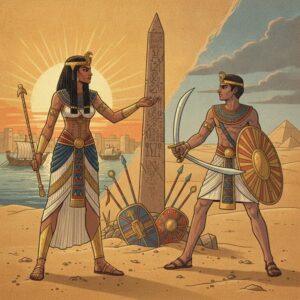
One of the most mind-bending historical facts relates to everyone's favorite Egyptian queen. Cleopatra lived around 30 BCE, while the Great Pyramid of Giza was built around 2560 BCE. This means approximately 2,530 years separated Cleopatra from the construction of the pyramids. In contrast, only about 2,000 years separate Cleopatra from the 1969 moon landing. This fact perfectly illustrates how ancient Egyptian civilization truly was and challenges our perception of historical timelines. The Egyptian empire lasted so long that Cleopatra was actually closer to our modern era than to the beginning of her own civilization's greatest architectural achievements.
2. Honey Never Spoils When Stored Properly
Archaeologists have discovered pots of honey in ancient Egyptian tombs that are over 3,000 years old and still perfectly edible. Honey's unique composition makes it virtually immortal. Its low moisture content and acidic pH create an inhospitable environment for bacteria and microorganisms. Additionally, bees add an enzyme called glucose oxidase to honey, which produces hydrogen peroxide as a byproduct, further contributing to its antimicrobial properties. This makes honey one of the few foods that can last indefinitely without spoiling, provided it's kept in a sealed container. While it may crystallize over time, this doesn't mean it's gone bad—it can simply be warmed to return to its liquid state.
3. Bananas Are Berries, But Strawberries Aren't
In botanical terms, the classification of fruits often contradicts our everyday understanding. A true berry is defined as a fruit that develops from a single flower with one ovary and typically has several seeds. Bananas fit this definition perfectly, as they develop from a flower with one ovary and contain seeds (though modern cultivated bananas have very tiny, virtually unnoticeable seeds). Strawberries, however, are not berries at all—they're classified as "accessory fruits" because the fleshy part we eat comes from the receptacle that holds the ovaries, not from the ovaries themselves. The actual fruits are the tiny seeds on the outside. This same botanical logic means that raspberries and blackberries also aren't true berries, while grapes, kiwis, and even watermelons are.
4. Octopuses Have Three Hearts and Blue Blood
The octopus possesses one of the most unusual circulatory systems in the animal kingdom. Two of their hearts pump blood to the gills, where it picks up oxygen, while the third heart circulates oxygenated blood to the rest of the body. What makes this even more fascinating is that octopus blood is blue rather than red. This blue coloration comes from hemocyanin, a copper-based protein that carries oxygen in their blood, as opposed to the iron-based hemoglobin found in human blood. Hemocyanin is more efficient than hemoglobin at transporting oxygen in cold, low-oxygen environments, making it perfectly suited for the octopus's ocean habitat. Interestingly, when an octopus swims, the heart that delivers blood to the body actually stops beating, which is why these creatures prefer crawling to swimming—it's less exhausting.
5. The Eiffel Tower Can Grow More Than Six Inches in Summer
The iconic Parisian landmark demonstrates a fascinating principle of physics: thermal expansion. When the iron structure heats up during summer months, the metal expands, causing the tower to grow taller by as much as six inches (about 15 centimeters). When temperatures drop in winter, the tower contracts and returns to its original height. This phenomenon affects the sun-facing side more than the shaded side, causing the tower to lean slightly away from the sun. Engineers accounted for thermal expansion when designing the tower in the 1880s, ensuring it could safely expand and contract with seasonal temperature changes without sustaining damage.
6. There Are More Trees on Earth Than Stars in the Milky Way
A comprehensive study published in the journal Nature estimated there are approximately 3 trillion trees on our planet. In comparison, astronomers estimate the Milky Way galaxy contains between 100 and 400 billion stars. This means Earth has roughly seven to eight times more trees than there are stars in our entire galaxy. However, this fact comes with a sobering reality: humans cut down approximately 15 billion trees each year, and since the beginning of human civilization, the number of trees on Earth has fallen by roughly 46 percent. This puts into perspective both the incredible abundance of trees remaining on our planet and the urgent need for conservation efforts.
7. A Day on Venus Is Longer Than Its Year
Venus has one of the most peculiar rotations in our solar system. The planet takes about 243 Earth days to complete one full rotation on its axis, but only 225 Earth days to orbit the Sun. This means a single day on Venus (one complete rotation) is longer than a Venusian year (one complete orbit around the Sun). To make matters even stranger, Venus rotates backwards compared to most other planets in our solar system—a phenomenon called retrograde rotation. If you could stand on Venus's surface (which you couldn't due to its extreme conditions), you would see the Sun rise in the west and set in the east.
8. The Human Brain Uses 20% of the Body's Energy
Despite accounting for only about 2% of the body's total weight, the human brain consumes approximately 20% of the body's total energy expenditure. This makes it the most energy-demanding organ in the human body relative to its size. The brain requires this enormous amount of energy to maintain the electrical charges of neurons, which are constantly firing even when we're at rest. This high energy consumption is why thinking-intensive activities can leave us feeling physically tired, and why getting adequate nutrition and sleep is crucial for cognitive function. The brain's energy demands also explain why it evolved to develop shortcuts and heuristics—efficiency mechanisms that help conserve energy while still allowing us to make quick decisions.
9. Wombats Produce Cube-Shaped Droppings
The Australian marsupial known as the wombat has a truly unique claim to fame in the animal kingdom: it's the only animal that produces cube-shaped feces. Scientists long puzzled over this unusual phenomenon until recent research revealed the answer. The shape forms in the last portion of the wombat's intestine, where varying elasticity of the intestinal walls molds the feces into cubes. But why cube-shaped? Wombats use their droppings to mark territory and communicate with other wombats, and the cubic shape prevents the droppings from rolling away, allowing them to be strategically placed on rocks and logs where they're more visible. A single wombat can produce 80 to 100 of these distinctive cubes each night.
10. The Unicorn Is Scotland's National Animal
While many countries choose fierce predators or majestic real animals as their national symbols, Scotland proudly claims the mythical unicorn as its national animal—a tradition dating back centuries. The unicorn was first used on the Scottish royal coat of arms in the 12th century by William I. In Celtic mythology, the unicorn symbolized purity, innocence, and power, and was also seen as a symbol of masculinity and dominance. When Scotland and England unified under James VI of Scotland (James I of England) in 1603, the Scottish unicorn joined the English lion on the royal coat of arms, where both animals remain to this day. Interestingly, the unicorn is typically depicted in chains on Scottish heraldry, as ancient Celts believed a free unicorn was a dangerous creature.
Conclusion
These ten random facts demonstrate the incredible diversity and wonder of knowledge available to curious minds. From astronomical oddities and biological marvels to historical perspective-shifters and botanical surprises, each fact offers a window into the fascinating complexity of our world. Memorizing these nuggets of information not only enhances your trivia prowess but also provides engaging conversation starters and a deeper appreciation for the unexpected connections that exist across different fields of knowledge. The next time you're at a trivia night or simply chatting with friends, these facts will serve you well, proving that the most memorable information often comes from the most surprising sources.