
1 / 10 Questions
0 Points

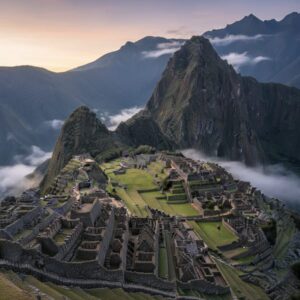
Which legendary Incan citadel was revealed to the world in 1911, perched high in the Peruvian Andes?

Petra

Machu Picchu

Pompeii

Angkor Wat

Points won
0
Correct score
0%

More Questions

More Articles

Did You Know These Fun Geography Facts?

Did You Know These Fun Geography Facts?

⏱️ 5 min read

The world is full of geographical wonders that challenge our perceptions and spark curiosity. From mind-bending size comparisons to unexpected climate zones, our planet constantly surprises even the most knowledgeable geography enthusiasts. These remarkable facts reveal just how diverse, complex, and fascinating Earth's geography truly is.

Africa Is Much Larger Than Most Maps Suggest

Standard world maps significantly distort the size of continents due to the Mercator projection, which was designed for maritime navigation. In reality, Africa is enormous—approximately 30.37 million square kilometers. To put this in perspective, the entire United States, China, India, Japan, and most of Europe could fit within Africa's borders simultaneously. This misrepresentation has perpetuated misconceptions about the true scale of the African continent for generations. The distortion occurs because it's mathematically impossible to accurately represent a three-dimensional sphere on a two-dimensional surface without some form of compromise.

Russia Spans Eleven Time Zones

Russia's vastness is truly staggering, stretching across eleven time zones from Kaliningrad in the west to Kamchatka in the east. This means when residents in one part of the country are having breakfast, people on the opposite side are preparing for bed. The country covers more than 17 million square kilometers, making it the largest nation on Earth by land area. In fact, Russia is larger than Pluto's surface area, which measures approximately 16.6 million square kilometers. This immense territory encompasses diverse climates, from arctic tundra to subtropical beaches.

The Nile River's Surprising Flow Direction

The Nile River is one of the few major rivers in the world that flows from south to north, defying many people's intuitive expectations. Stretching approximately 6,650 kilometers, it runs through eleven countries before emptying into the Mediterranean Sea. This northward flow is determined by the elevation gradient of the terrain, not by compass directions. The Nile's journey begins in the highlands of East Africa, near the equator, and descends toward the lower elevations of northern Egypt, following the fundamental principle that water flows downhill regardless of cardinal direction.

The Dead Sea Is Getting Lower Every Year

The Dead Sea, bordered by Jordan, Israel, and Palestine, sits at approximately 430 meters below sea level, making it the lowest point on Earth's surface. However, this saltwater lake is receding at an alarming rate of about one meter per year. The water level decline is primarily caused by diversion of water from the Jordan River for agricultural and drinking purposes, combined with mineral extraction operations. The Dead Sea's salinity is nearly ten times that of ocean water, at around 34 percent, making it impossible for most aquatic life to survive—hence its ominous name.

Mount Everest Isn't the Tallest Mountain

While Mount Everest holds the record for the highest elevation above sea level at 8,849 meters, it isn't technically the tallest mountain on Earth. That distinction belongs to Mauna Kea in Hawaii, which measures over 10,200 meters from its base on the ocean floor to its summit. However, only about 4,200 meters of Mauna Kea rise above sea level. This distinction highlights the difference between "highest" (elevation above sea level) and "tallest" (total height from base to summit). Additionally, if measured from Earth's center, Mount Chimborazo in Ecuador is the farthest point from the planet's core due to the equatorial bulge.

Antarctica: The Driest Continent

Despite containing approximately 90 percent of the world's ice and 70 percent of its fresh water, Antarctica is classified as a desert—the largest desert on Earth, in fact. The Antarctic interior receives less than 50 millimeters of precipitation annually, qualifying it as a polar desert. Some areas, like the McMurdo Dry Valleys, haven't seen rain for nearly two million years. The extreme cold creates conditions where atmospheric moisture is minimal, and what little precipitation occurs falls almost exclusively as snow. This paradox of being covered in ice while simultaneously being one of the driest places on the planet makes Antarctica a unique geographical marvel.

Istanbul: The City on Two Continents

Istanbul, Turkey, is the only major city in the world that spans two continents. The Bosphorus Strait divides the city, with the western portion in Europe and the eastern portion in Asia. This strategic location has made Istanbul a crucial cultural and economic bridge between East and West throughout history. Approximately 15 million people call this transcontinental metropolis home, making it one of the largest cities in Europe and Asia simultaneously. Residents can literally commute from one continent to another during their daily travels across the various bridges and tunnels connecting the two sides.

The Pacific Ocean Covers More Area Than All Land Combined

The Pacific Ocean is so vast that it covers more surface area than all of Earth's landmasses combined. Spanning approximately 165 million square kilometers, it represents about 46 percent of the world's water surface and roughly one-third of the total surface area of the planet. The Pacific contains more than 25,000 islands and reaches its deepest point at the Mariana Trench's Challenger Deep, approximately 11,000 meters below sea level. This single ocean is larger than all land on Earth, emphasizing just how much of our planet is covered by water—earning it the nickname "the Blue Planet."

Did You Know These Quick Facts About Mythology?

Did You Know These Quick Facts About Mythology?

⏱️ 5 min read

Mythology has captivated human imagination for thousands of years, weaving intricate tales of gods, heroes, and mythical creatures that continue to influence modern culture, literature, and entertainment. These ancient stories served as more than mere entertainment; they provided explanations for natural phenomena, established moral frameworks, and preserved cultural identity across generations. The following fascinating facts about mythology reveal surprising connections, lesser-known details, and intriguing insights that demonstrate the enduring power of these timeless narratives.

The Universal Flood Myth Appears in Over 200 Cultures

One of the most remarkable discoveries in comparative mythology is the prevalence of flood narratives across diverse civilizations. While the biblical story of Noah's Ark remains the most widely known version in Western culture, similar tales exist in Mesopotamian, Greek, Hindu, Chinese, and Indigenous American traditions. The Epic of Gilgamesh, predating the biblical account by at least a millennium, describes Utnapishtim building a boat to survive a catastrophic flood sent by the gods. This widespread motif suggests either common ancestral memories of actual catastrophic flooding events or a universal human tendency to conceptualize divine judgment through natural disasters.

Greek Gods Had Roman Counterparts With Different Personalities

Many people recognize that Greek and Roman mythologies share overlapping deities, but these gods weren't simply renamed. The Romans absorbed Greek mythology but fundamentally altered the character traits of many divine figures. Zeus became Jupiter, but while Zeus was portrayed as temperamental and frequently unfaithful, Jupiter embodied dignified authority and state power. Similarly, Ares, the Greek god of war characterized by bloodlust and chaos, transformed into Mars, a more disciplined and honored figure representing military might and agricultural protection. These adaptations reflected the distinct cultural values of Roman society compared to their Greek predecessors.

The Days of the Week Derive From Norse and Roman Deities

The English names for weekdays contain hidden references to ancient mythology that most people use without recognition. Tuesday honors Tyr, the Norse god of war and justice. Wednesday derives from Woden, the Anglo-Saxon name for Odin, the chief Norse deity. Thursday celebrates Thor, the thunder god, while Friday commemorates Frigg or Freya, Norse goddesses associated with love and wisdom. Sunday and Monday reference the sun and moon, which many ancient cultures personified as deities. Saturday stands as the exception, maintaining its connection to the Roman god Saturn, demonstrating the blended mythological heritage embedded in modern language.

Egyptian Mythology Dominated for Over 3,000 Years

Ancient Egyptian religious beliefs represent one of the longest continuously practiced mythological systems in human history, spanning more than three millennia. The stability of Egyptian civilization allowed their mythological framework to develop remarkable complexity and consistency. Unlike Greek mythology, which featured relatively static divine narratives, Egyptian myths evolved and incorporated regional variations as different cities rose to prominence. The sun god Ra merged with Amun to become Amun-Ra, reflecting political changes in Thebes. This adaptability, paradoxically combined with core consistency, enabled Egyptian mythology to survive through dramatic historical transitions including foreign invasions and dynastic changes.

Hindu Mythology Contains the Oldest Continuously Practiced Religious Traditions

Hindu mythology, rooted in texts like the Vedas and the Upanishads, preserves religious narratives that have remained active in worship and cultural practice for over 4,000 years. Unlike Greek, Roman, and Norse mythologies, which became primarily academic subjects after their practitioners converted to other religions, Hindu myths continue to shape daily religious observance for over one billion people worldwide. The epic narratives of the Mahabharata and Ramayana are not merely historical curiosities but living traditions regularly recited, performed, and celebrated through festivals. This continuity provides invaluable insights into how mythological systems function within active religious contexts.

Many Mythological Creatures Have Practical Origins

Modern research suggests that numerous legendary creatures may have originated from misinterpreted fossil discoveries or exaggerated accounts of real animals. The griffin, a creature combining eagle and lion features, possibly emerged from ancient peoples encountering Protoceratops fossils in Central Asia, where beaked dinosaur skulls and four-legged bodies could suggest such a hybrid. Cyclopes legends in Greek mythology may have developed from elephant skull discoveries, as the central nasal cavity resembles a single large eye socket. The kraken of Norse mythology likely derived from giant squid sightings, real creatures that can reach extraordinary sizes and occasionally surface in northern waters.

Mythology Influenced Modern Psychology and Language

The impact of mythological narratives extends deeply into contemporary psychology and everyday vocabulary. Sigmund Freud named the Oedipus complex after the Greek tragic hero who unknowingly fulfilled a prophecy by killing his father and marrying his mother. Carl Jung developed his theory of archetypes partially through studying recurring mythological patterns across cultures. Common expressions like "Achilles' heel," "Pandora's box," "narcissism," and "mentor" all originate from Greek myths. The word "cereal" derives from Ceres, the Roman goddess of agriculture, while "volcano" comes from Vulcan, the Roman god of fire and metalworking. These linguistic remnants demonstrate how thoroughly mythological thinking has permeated modern consciousness.

Different Cultures Created Similar Creation Myths Independently

Remarkably similar cosmological narratives emerged in geographically isolated cultures, suggesting fundamental patterns in human attempts to explain existence. The concept of primordial chaos preceding ordered creation appears in Greek, Egyptian, Chinese, and Babylonian traditions. The motif of cosmic eggs from which the universe hatches exists in Finnish, Hindu, Chinese, and Pacific Islander mythologies. Many traditions describe the separation of earth and sky as a crucial creative act, whether through Egyptian deities Geb and Nut being pulled apart or the Maori gods Rangi and Papa being separated by their children. These parallels reveal universal human concerns about origins and our place in the cosmos, addressed through remarkably similar narrative structures despite vast cultural differences.